The hummingbird season got off to a slow start for me this year.
I didn’t see a single hummingbird at my feeder in April or May. I saw a few in the backyard in June, but they zipped by my feeding station like it wasn’t even there. That contrasts with last year when a few hummingbirds visited daily from spring through fall.
This year’s fortunes have changed, thankfully, as hummingbirds became a regular occurrence once August hit. I believe the visits are coming from a combination of a hummingbird family that nested nearby and some southward migrants.
Ruby-throated hummingbirds, the only hummingbird species that regularly occurs in the eastern U.S., start their southward migration out of New England in August (some as early as late July.) Just like adult males were the first to arrive in the spring, they are the first to leave on the southward journey.
Plenty of adult male hummingbirds remain in New England. My most frequent visitor over the last few weeks has been a male. They will mostly be gone by the end of the month. Females and first-year birds will mostly be gone by the middle or end of September. Hummingbird feeders can remain up into October as the stragglers heading out of New England will need to fuel up too.
Hummingbirds need plenty of fuel as these tiny birds make their way to Central America for the winter. The arduous nonstop flight across the Gulf of Mexico takes a lot out of the birds. Whether a bird’s route takes it directly across the gulf or a more coastal route, it’s still a long, perilous journey. Their typical weight is just over three grams. They bulk up to about six grams for the journey and are between two and three grams when they get to the other side of the gulf.
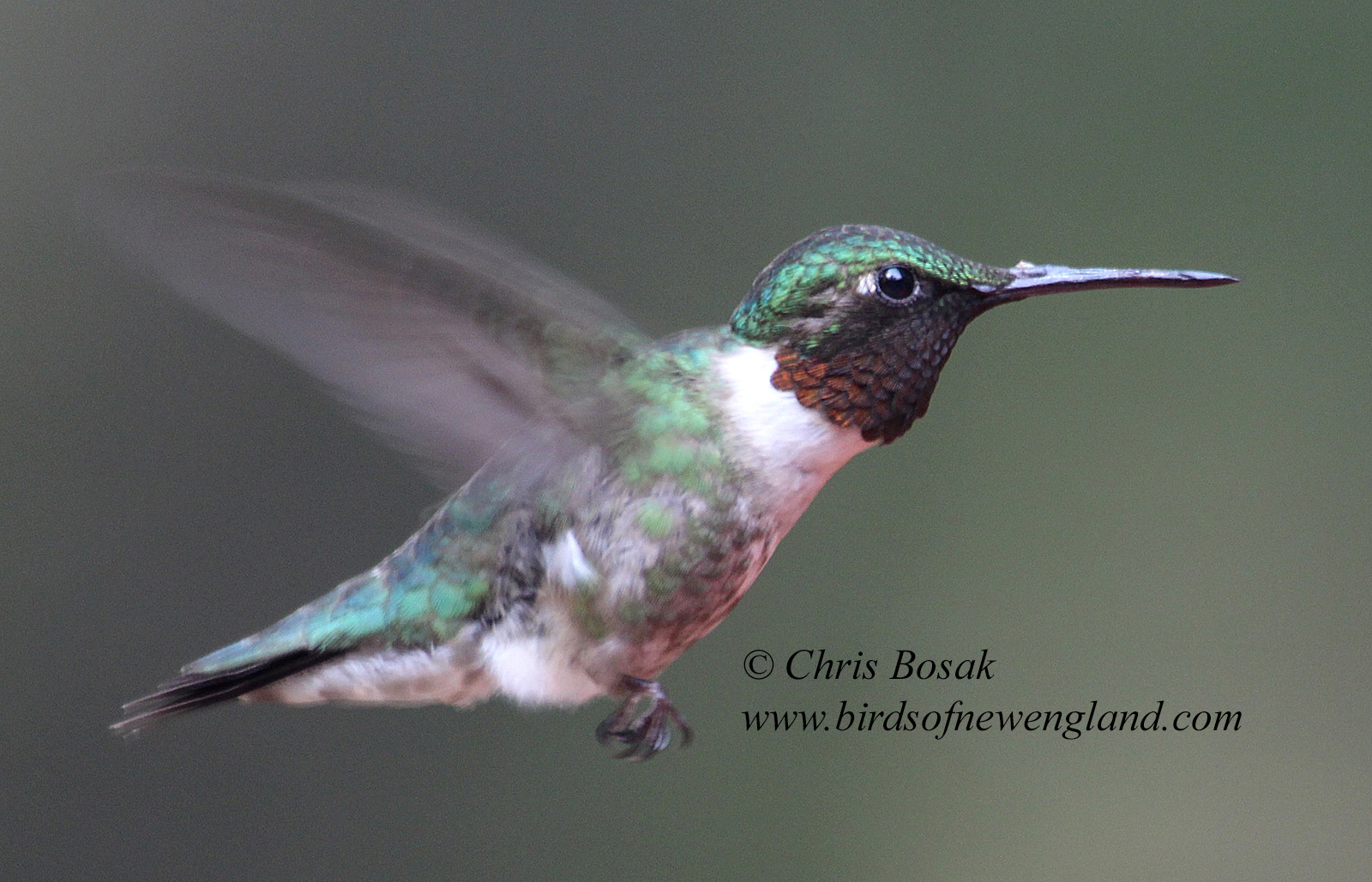
Let’s not rush the hummingbirds out of New England, however. We still have about a month left to enjoy their antics. Soon, it will be mostly female and first-year hummingbirds remaining. Unless you have the bird in hand for a close inspection, it is nearly impossible to tell apart the adult females from the first-year birds. (Only males have the namesake ruby throat, or gorget.) Some first-year males may show some streaking and perhaps a red spot or two on the throat.
While the ruby-throated hummingbird is the only species to regularly occur in New England, different species have been known to visit the region, particularly in the fall and even winter. That’s why some people keep their feeders up well past October. Identifying these species can be tricky because a hummingbird’s appearance is often determined by how light is hitting it. Ruby-throated hummingbirds can sometimes appear almost black and other times the same bird will appear brilliant, metallic green.
Similarly, the gorget of the male ruby-throated hummingbird often appears black or dark maroon. It can also appear an electrifying red. One of the species that occasionally is seen in New England is the black-chinned hummingbird. You can’t rule out that species when you see a hummingbird with a dark gorget, but it’s most likely a male ruby-throated in “bad lighting” or from a “bad angle.” This is especially true if the bird is seen in spring, summer or early fall.
Keep those hummingbird feeders filled with fresh sugar water for at least another month. A migrating hummingbird that discovers the feeder will likely remember the location and visit next spring or fall along its migratory journey. Individual hummingbirds are known to travel similar routes on their north- and south-bound migrations year after year.
I hope you have good luck attracting these fan-favorite birds as their season winds down.
 Birds of New England.com
We are in the lakes region of NH and have enjoyed the lil buzzy critters for 50+ years. I always leave my feeder dishes up till late Fall just to assist those late departing beauties with sustenance on their travels. ❤️🧡💛💚💙💜🖤💖
LikeLiked by 1 person