
Visions of warblers, tanagers, orioles and grosbeaks may dance in the heads of birdwatchers in May, but the woods and fields are filled with a myriad of other types of birds as well.
While birds such as vireos and flycatchers continue to fascinate (and confuse) me, it has been thrushes that have captured a large portion of my attention so far this spring.
Wood thrushes in particular have been plentiful and conspicuous on my walks. By conspicuous, I mean I hear their flute-like songs several times as I wander through the woods. They can be amazingly difficult to find even as the song makes it seem like the bird is right in front of you. My actual find rate on wood thrushes is embarrassingly low — about on par with my batting average from my high school baseball days.
When I do find the bird, I can’t help but stand there and marvel at it. How can that awesomely musical song come from a relatively nondescript bird about seven inches long? Lang Elliot, who is well-known for his bird recordings, wrote: “The song of the wood thrush is undeniably one of the most beautiful of all forest melodies.”
Wood thrushes also have a distinctive call of repeated sharp notes that also echoes throughout the woods. The Cornell Lab of Ornithology describes it as “machine-gun-like alarm notes.” I hadn’t thought of that before, but it does make sense.
Wood thrushes are one of several members of the thrush family to grace New England’s woods. Most thrushes sport a distinctive brown body with spots on the chest. The shade of brown and the amount of spots on the chest vary from thrush to thrush.
The wood thrush is a rich brown with several distinctive spots that cover the chest and belly. The other thrushes — including hermit thrush, Swainson’s thrush, Bicknell’s thrush and veery — have lesser degrees of spotting with the veery having the least amount. Hermit, Swainson’s and Bicknell’s thrushes are very similar looking and often take an expert to tell them apart. Of those thrushes, the hermit thrush is the most common.
Ovenbirds and waterthrushes are similar in appearance to thrushes but are actually warblers. American robins and eastern bluebirds are indeed thrushes but do not resemble the aforementioned family members in appearance or song.
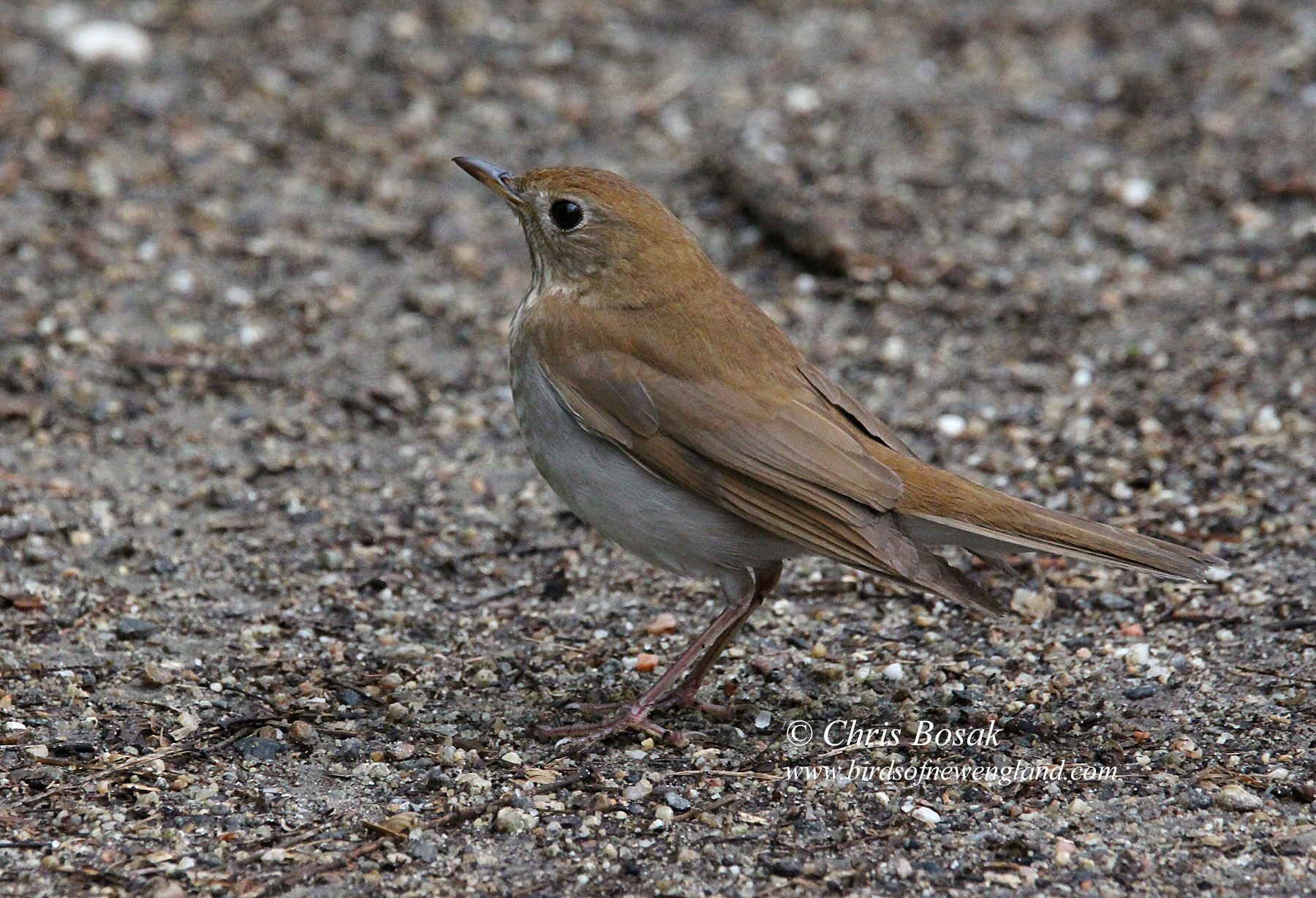
I was surprised during a walk the other day when I heard a thrush’s alarm call and turned to see a veery on the trail right behind me. I took a few photos of the bird before it hopped up onto a nearby branch and posed for a few more photos. Veeries have one of my favorite songs: a twirling melody that reminds me of the old Space Invaders game on Atari 2600. (Yes, I am that old.)
Early and mid May is always a whirlwind for birdwatchers. As soon as you get home from a walk, you’re ready for the next one and wondering what you’re missing by not being out there. The only thing you can do is be out there as much as possible. The season goes fast.
 Birds of New England.com