
A few weeks ago, I wrote about some common myths and misconceptions about the natural world. Dragonflies don’t sting or bite people, tarantulas aren’t deadly, and quicksand is not likely to swallow you up on your next walk in the woods.
In this column, we’ll look at a few more wildlife myths, compliments of readers who wrote in with their thoughts.
Al from Nelson wrote, “We have eight species of frogs in the Monadnock area (bullfrogs, green frogs, wood frogs, gray tree frogs, spring peeper, American toad, pickerel frog, leopard frog) and another three species in other parts of New England. Not one of them makes a ‘ribbit’ sound. I have heard that there is a frog that says ‘ribbit’ in southern California, where many TV shows, movies, and ads are made, and that’s why the media has frogs saying ‘ribbit.’ I don’t know for sure if that’s true, but it makes a nice yarn.”
Al also mentioned that he volunteered for a black bear research program in Minnesota and found that the “danger of black bears is way overblown.” He added that there is little danger in getting between a mother black bear and her cubs. He did stress black bears, not other types of bears. Also, Al writes, the myth persists that when a bear stands on two feet, it is ready to attack. It is merely trying to see better, Al wrote.
Aud commented on my website that a popular (and annoying) myth is that lemmings hurl themselves over cliffs en masse. “They don’t do this. They never do this,” Aud wrote. Apparently, it was done only once when a filmmaker, trying to make a more exciting narrative, deliberately pushed the creatures off a cliff to create the illusion of a mass suicide, hence reinforcing a myth that had already existed.
Aud also sent a link to a Wikipedia page that included several more myths of the natural world. It’s Journalism 101 to not use Wikipedia as an official source, so I can’t vouch for the veracity of all these claims, but they all seem to make sense. Here are several of the alleged myths, without much explanation:
Bulls are not angered by the color red, rather it is the motion of the bullfighter’s cape that agitates the bull. (I knew that one, having read it in a book when I was a child. It always stuck with me.)
Wolves do not howl at the moon. They howl at night to keep in communication with the pack. The moon just happens to be out at night.
“Blind as a bat,” is a misnomer. In fact, many bats have good eyesight. It is true that most bats use echolocation to hunt and navigate, but they can also see.
Tomato juice and sauce do not neutralize the smell of skunk spray. That one surprised me as I’ve heard that myth a million times. Thankfully, I’ve never been sprayed and none of my pets have ever been sprayed. If they had, however, I would have tried tomato juice because that’s what I’ve always heard. Good to know. A blog on The Nature Conservancy site notes that a mixture of hydrogen peroxide, baking soda and dish soap is your best bet.
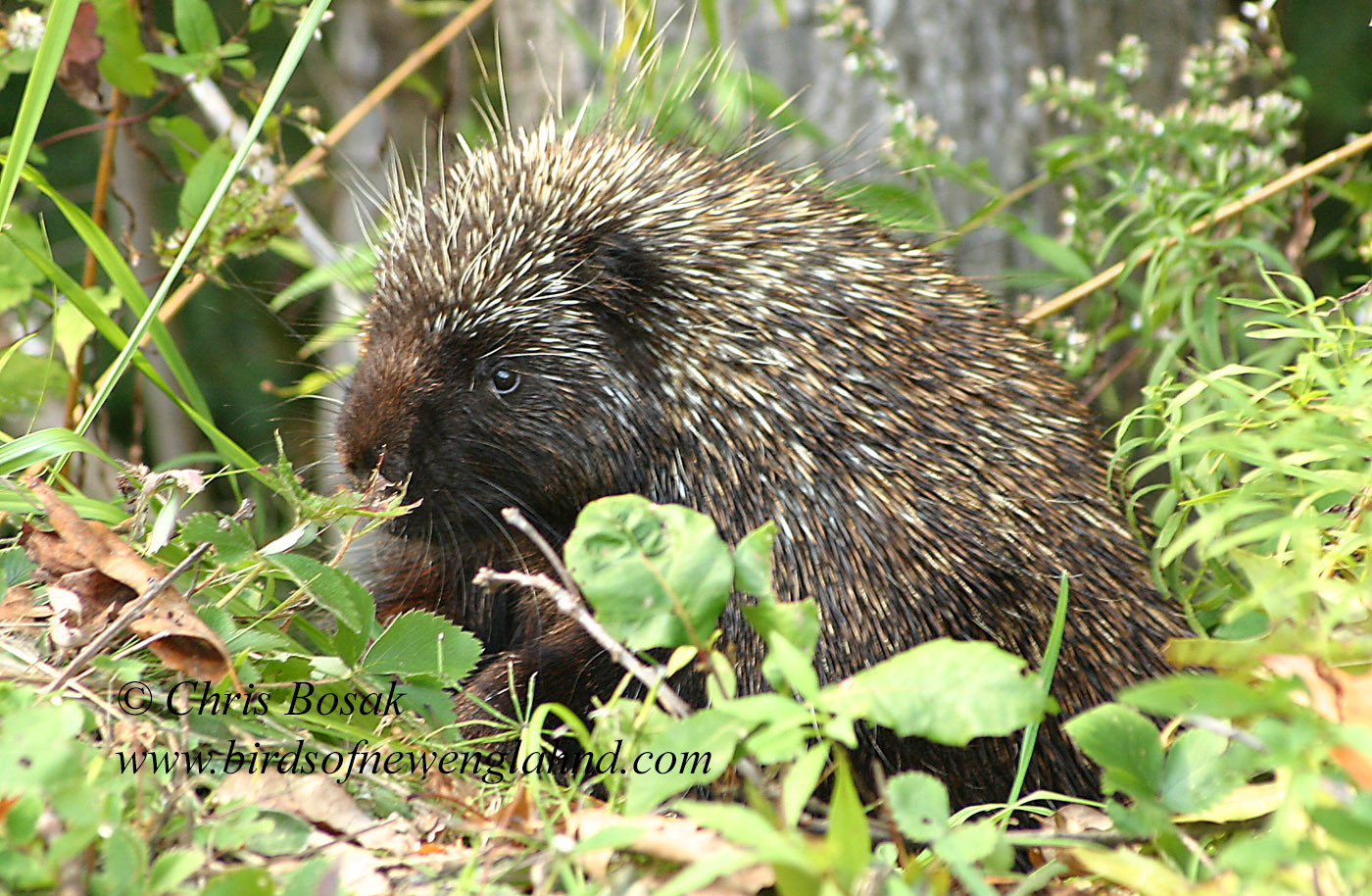
Porcupines do not shoot their quills. This is another one I heard over and over as a kid and believed until I eventually read in a book that it is not true. The quills do detach and have barbs on the business end for painful sticking power, but the animals do not throw their quills.
Piranhas are not the wicked, vicious, man-eating fish they are made out to be. Attacks on humans are rare and are usually in self-defense. Similar to tarantulas and quicksand, I think Hollywood has a lot to do with that myth.
It’s been a fun exploration looking at some of the common myths of the natural world. I’m curious what “facts” today will eventually be disproven and relegated to myth or old wives’ tale status. Today’s facts often become tomorrow’s myths.
 Birds of New England.com
The recommended solution for treating skunk spray worked well on our cat some years back when she got sprayed not once but twice in six months.
LikeLiked by 1 person
Thanks Brian. Somehow my cat has avoided that even though I know there are skunks nearby. I hope I’m not jinxing myself!
LikeLike