Some bird sightings are better than others.
Even if you love all birds and nature, as I do and imagine everyone who reads this column does, you still have your favorites. I don’t know many people who enjoy a house sparrow sighting as much as a bald eagle sighting.
Even a particular bird can be more exciting to see depending on the circumstances. I was struck by this realization during a recent birdwalk.
I was doing an eBird list and wanted to be as thorough as possible, so my senses were carefully attuned to my surroundings. Still, the birding was fairly slow, and my species count was well below what I was expecting. I approached the large pond, or perhaps it’s a small lake, with anticipation as I’ve seen cormorants, wood ducks, black ducks, osprey and a variety of waders there on previous walks.
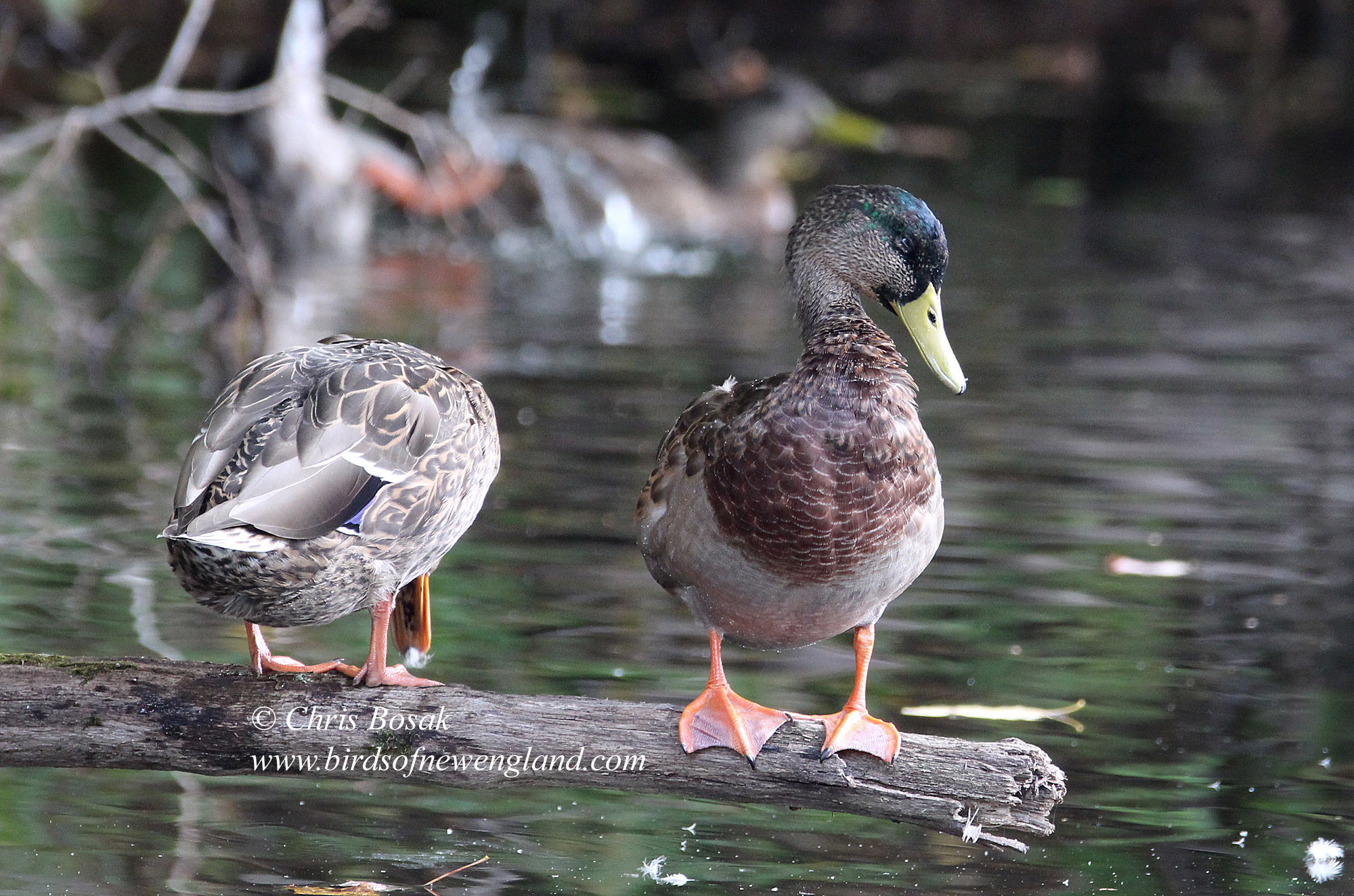
The only birds at the pond were mallards. There were about 10 of them, and they all sat on a fallen log not far from the shore. I greatly appreciated the sighting. It was a mix of old and young males and females. The way they sat on the log preening themselves reminded me of a wildlife painting, maybe even a duck stamp.
My feelings toward these mallards greatly differed from many of my mallard sightings. Often I see mallards at an urban park, and I pay them very little mind, other than perhaps a little annoyance because there are so many of them and they are swimming up looking for bread or other handouts.
Birding is a matter of perspective, and we all have our own. Personally, I typically don’t like to see house finches at feeders. They hog the perches as chickadees, titmice and nuthatches perch in nearby bushes waiting for their turns. But if the action at the feeder has been slow and the chickadees, titmice and nuthatches haven’t been around, then I welcome the visits by house finche.s
I also enjoy seeing house finches on walks or otherwise “in the wild.” Again, it’s all a matter of perspective.
Robins are another example. They are so common in the spring and summer that I tend to be apathetic toward my robin sightings by the time July comes around. But seeing a flock of robins in January or February brightens up a cold, winter walk.
Crows can be found just about anywhere. They perch on lampposts at Walmart parking lots, are common in city parks and form flocks of literally thousands of birds in the evening that roost near major metropolitan areas.
They are also found in the wildest of places. I was canoeing just before sunrise on Lake Umbagog several years ago, and it was completely still and silent. No traffic noise, no airplanes overhead, no early morning chorus of birds and insects yet. Suddenly, an unseen crow in the distance broke the silence with a caw. The morning chill, smell of pine, still water, rolling mountains, and cawing crow made for an unforgettable multi-sensory experience.
It goes without saying that that crow made a stronger impression on me than the ones that greet visitors at the local strip mall parking lot.
Contrast that with the red-tailed hawk and great blue heron, for instance. It doesn’t matter if I see them in the wild or in a cityscape, I get excited about the sighting. Red-tailed hawks have adapted well to city life and can often be seen among the tall buildings in urban centers. Similarly, a small pond in an urban park is all it takes to attract the occasional great blue heron.
Those sightings continue to stir me as much as seeing them in the wild.
I like and appreciate all birds and wildlife, but some sightings stick out more than others. Perspective matters.
 Birds of New England.com
always enjoy your columns 🐦🦉🦅🦃🦆🦢🦩🦤🐧
LikeLiked by 1 person