
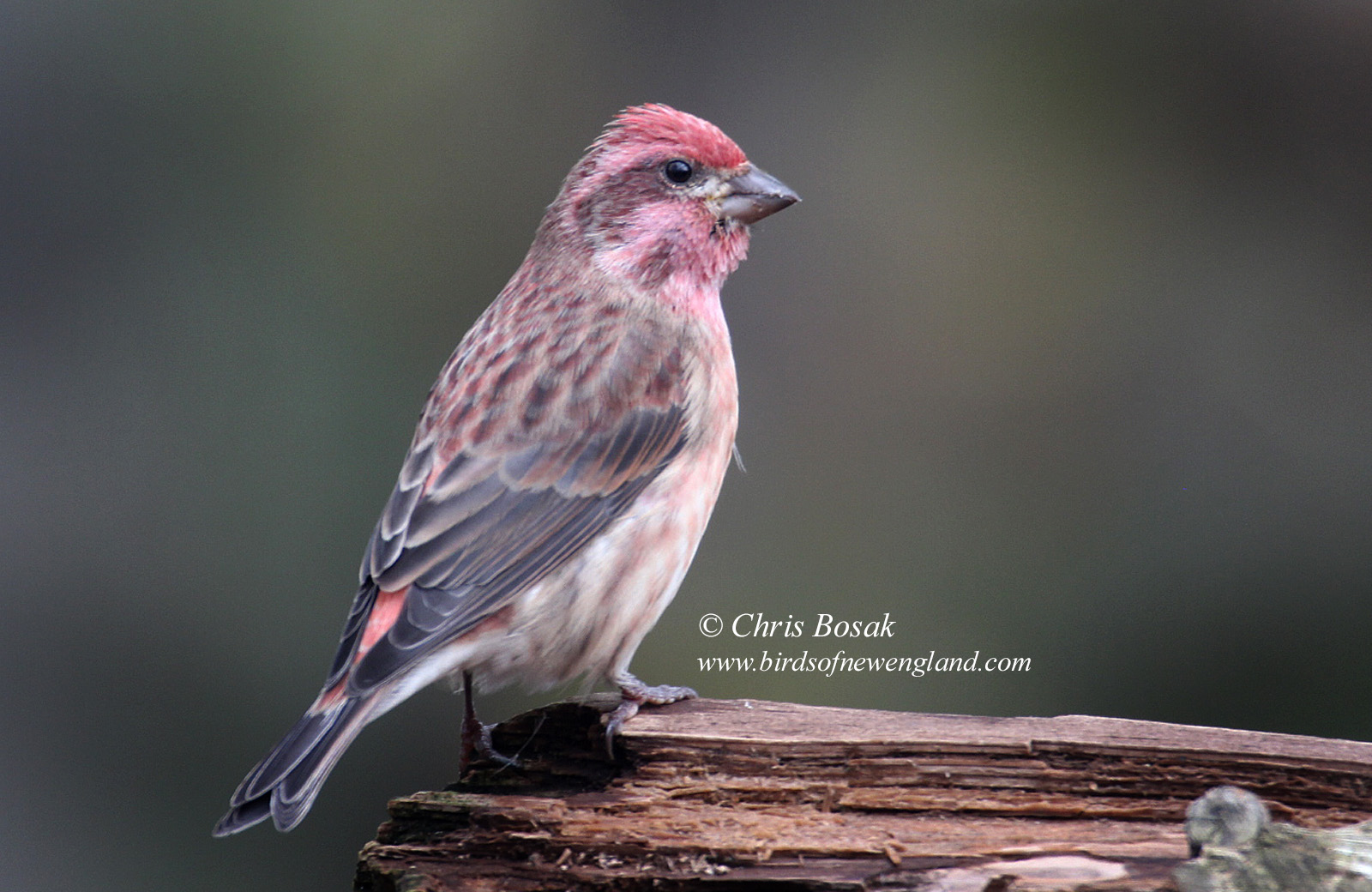
Something looked a little off at the birdfeeders. I get more house finches at my feeders than I can count, but as I entered the living room and glanced out the window, the five brown birds eating seeds didn’t look like the birds I have become so accustomed to seeing.
Nor did they look like house sparrows, another brown bird I have become all too accustomed to seeing at the feeders.
I got a little closer, being careful not to flush them by approaching too quickly, and noticed they were female purple finches. While I get daily visits from house finches, I hadn’t seen purple finches at my feeders in several years. That’s why it took me a second or two to figure out what they were.
Differentiating between purple finches and house finches is one of the most common birding quandaries in New England. It’s also one of those things where once you get it, you wonder why it was so difficult for so long.
The confusion is understandable, as they are very similar in appearance and behavior. It is particularly difficult when the birds are far away. It’s much easier when the birds are closer, such as at a feeder. It’s even easier when they are visiting the same feeder at the same time, offering a side-by-side comparison.

Female house finch, left, female purple finch, right.
There are two parts to solving this puzzle and having confidence in your identification: males and females. Purple finches and house finches are sexually dimorphic (males and females differ in appearance), so you need to learn both.
Let’s start with the male. Years ago, someone told me, “When you see a male purple finch, you’ll know it.” At the time, I found the statement to be not at all helpful. Eventually, it made sense and still guides my identification to this day.
When you see a common bird like a house finch so often, it is obvious when something is a bit different and warrants added attention. To me, purple finches always seem a bit larger and stockier, but that’s not always a reliable clue as the smaller purple finches and larger house finches overlap in terms of size. House finches also have smaller heads than purple finches.
Male purple finches are a deep pinkish-red, and the coloration is more widespread than the rosy red on the house finch. Color is usually a good differentiator, but as we know, the colors can vary widely among house finches depending on their diet. Also, from a distance, it can be difficult to differentiate between pinkish red and rosy red.
For me, the facial markings are the biggest differentiator. Purple finches have a dark line extending back from the eye with a light stripe above and below the eye. Again, these markings will be tough to see from a distance, but when seen up close, the facial markings are a dead giveaway. House finches do not have distinctive facial markings.
With females, these markings are the biggest differentiator as well. Female purple finches are brown overall but are heavily streaked throughout, while female house finches are light brown all around with much less notable streaking. A female purple finch somewhat resembles a female rose-breasted grosbeak, while a female house finch looks nothing like a grosbeak.
No one differentiator holds the key all the time, but combining the differences in color, size, bulkiness and markings should enable a confident identification. I will post photos of male and female purple and house finches on www.birdsofnewengland.com soon to give a more visual comparison. In the meantime, keep an eye on your feeders and let me know what shows up.
 Birds of New England.com