It’s always good to know where a little open water exists.
Whether the water doesn’t freeze during the winter because of a dam, waterfall, fountain or otherwise, these spots are great for duck watching on even the coldest of days. In fact, the coldest days may be the best time to visit these spots, as very little open water exists elsewhere, and the ducks concentrate in these little oases.
I find it interesting when different species of ducks that usually are not found together congregate in these pools of open water. I’ve seen huge rafts of scaup on Long Island Sound and some large lakes throughout the Northeast. The ducks usually stick with their own kind on these large bodies of water. But when a freeze forces them to find open water, it is not uncommon to see scaups swimming among goldeneyes, buffleheads and redheads.
It is common to see other types of ducks joining forces in the winter as well. The other day, I visited a section of a river that remains open throughout most of the winter. A hooded merganser pair had the place to themselves. I visited the next day, and three ring-necked ducks had joined the mergansers.
A little ways away near the dammed section of a reservoir, a small pool of water held at least six varieties of waterfowl. Common birds such as mallards, Canada geese and mute swans were joined by less common ducks buffleheads, ring-necked ducks and hooded mergansers.
It’s a good idea to look carefully at groups of ducks. What appears to be 100 mallards may actually be 99 mallards and a wood duck. Last summer, I went to an urban park in Baltimore during a trip to visit my son at school and walked around a small pond with more mallards than I cared to count. Suddenly, a ring-necked duck swam out of the reeds and mingled with the mallards. Ring-necked ducks should be well north of Maryland in the summer, but this one must have gotten lost or injured and stayed behind with the mallards.
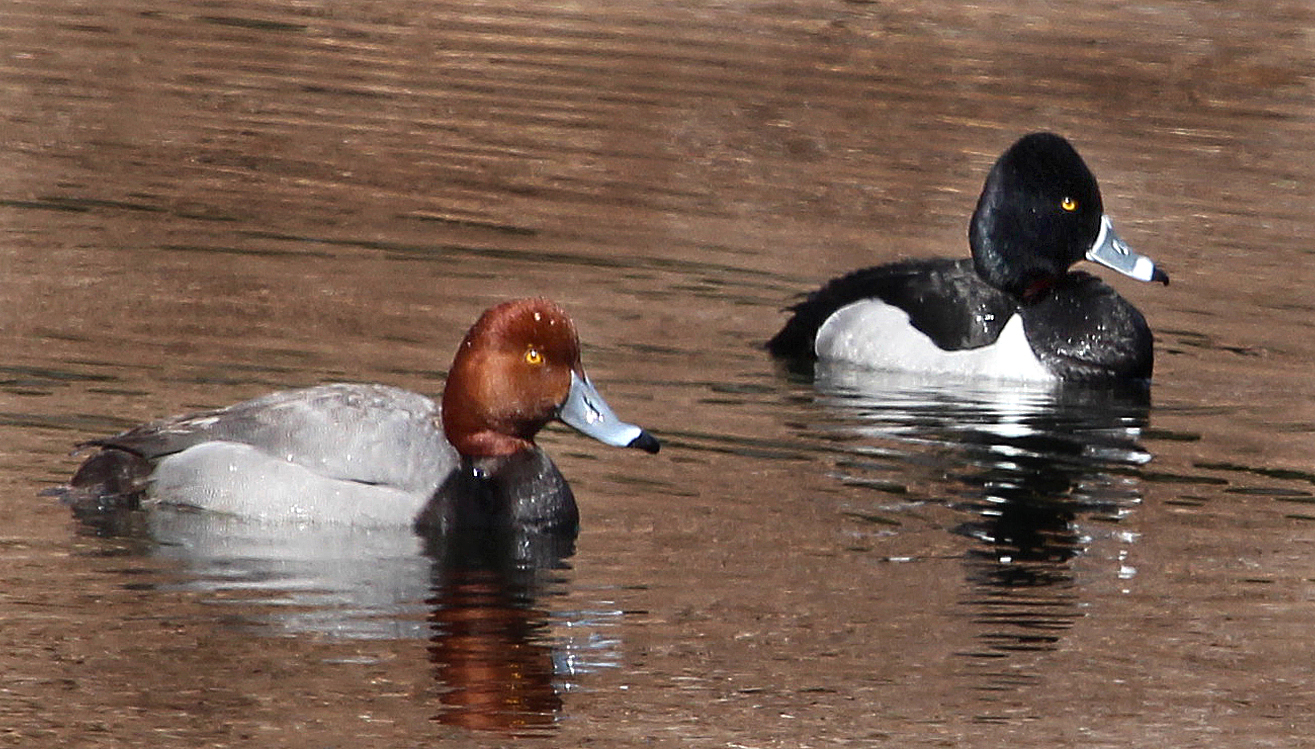
One of my favorite examples of seeing an “odd duck” came several years ago at a small pond in a cemetery. Mallards, wood ducks and ring-necked ducks were on the pond this late fall day. There was also a lone male redhead, a diving duck not often seen in New England. It was fun to watch the redhead swim among the ring-necked ducks and mallards. The wood ducks apparently didn’t share my enthusiasm for the visitor as they snapped and hissed at the outsider when their paths crossed.
Caution should be used to not flush the ducks when approaching these bodies of water, especially the small pools of open water when everything else is frozen. Causing the ducks to fly off on these cold days could put the birds in jeopardy as open water is rare when the temperatures drop, and they may have to fly a long distance to find another safe place to land. Ducks will usually give some sort of sign that they are stressed before flying off. If that happens, it’s best to back up and give them their space.
Ducks aren’t the only birds that utilize these open water spots. Ducks are not at the top of the food chain, so where there are lots of ducks, there may be birds of prey overlooking the water. When I visited the spot near the dam with six waterfowl species the other day, two bald eagles were perched on a branch over my head.
Everything in nature, up and down the food chain, is about taking advantage of opportunities.
For the Birds runs on Mondays in The Sentinel. Chris Bosak may be reached at chrisbosak26@gmail.com or through his website www.birdsofnewengland.com
 Birds of New England.com