
I was finishing up a bird walk the other day when I came across another birder just starting their day’s adventure. She asked a question common among birdwatchers: “Did you see anything good out there?”
Of course, all birds are good, but the underlying question is whether anything rare or uncommon was spotted. I shared that there were a few warblers and songbirds around, but I hadn’t seen anything too noteworthy.
I started naming off some of the highlights. I had found a bluebird nest in a snag (dead tree) and the parents were busy feeding the youngsters. The warblers included American redstart, common yellowthroat, yellow warbler, ovenbird and black-and-white warbler. I had spotted a few rose-breasted grosbeaks and Baltimore orioles, but no scarlet tanagers or indigo buntings.
It started to sound, even in my own head, that I wasn’t excited about the trip or walk I was finishing up, which could not have been further from the truth. I added that I was submitting a checklist to eBird with 46 species. The number surprised my new birding friend and even gave me pause when I said it out loud.
Even though it was well past the peak of migration and I hadn’t seen anything “out of the ordinary,” I had still found 46 different species of birds. The habitat at the park is mostly wooded with a few fields and a small lake. A more varied habitat would have yielded even more bird species.
It says a lot about birding in New England when you can see dozens of species without trying very hard or visiting multiple parks. Many of these birds are taken for granted and hardly noticed by many birdwatchers. I’m guilty of that myself on many walks. But the birds add up quickly on a New England bird walk.
Almost any bird walk in New England, regardless of whether it is a backyard, park or forest, or rural, suburban or urban, will yield a high number of birds. Even a casual observer will likely see robins, cardinals, blue jays, house sparrows, starlings, grackles, mourning doves, catbirds, chickadees and titmice on a walk. There’s 10 species right there. Add in a few other common species and you’ve got 20 birds without batting an eye.
Although a few competitions do exist, birding is, for the most part, a casual hobby done strictly for fun. The exact number of species seen on a walk, for the year or in a lifetime, ultimately doesn’t mean a whole lot. But let’s face it, it is fun to keep track, even for your own edification.
Birding in New England is fun and challenging. If someone took a weekend (or longer) to visit all the different habitats in New England, they could easily find hundreds of different bird species. From the Atlantic Ocean and Long Island Sound to the boreal forest and inland lakes, and everything in between, New England is a treasure trove for birdwatchers.
New England may not have herons, egrets and pelicans that are practically tame for photographers like Florida, or the gaudy number of species like Texas or California, but I’ll take New England over any other region any day.
 Birds of New England.com
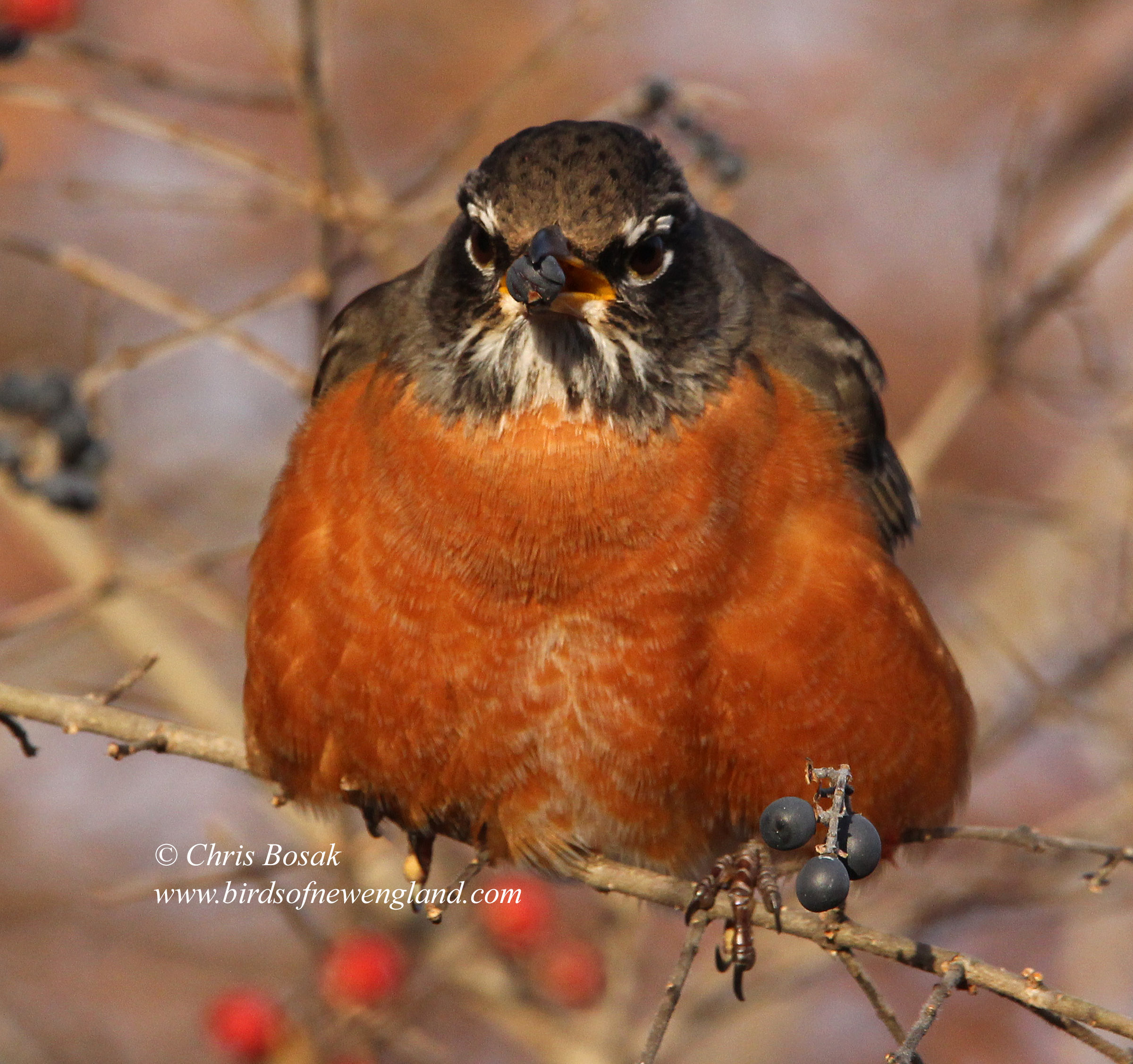
I love seeing my fat robins in our backyard, frequently pulling up a great big night crawler. I get a kick out of them following the mower too for the same reason…and I enjoyed this writing, as I am in total agreement that all birds are interesting and provide a thrill…we are typical in our sightings of warblers of all kinds, a variety of finches and sparrows, chickadees, titmice, cardinals, blue birds, purple martins, very fat robins along with crows, ravens, assorted woodpeckers, those infernal hawks constantly trying to kill my fledging robins and the like….
LikeLiked by 2 people