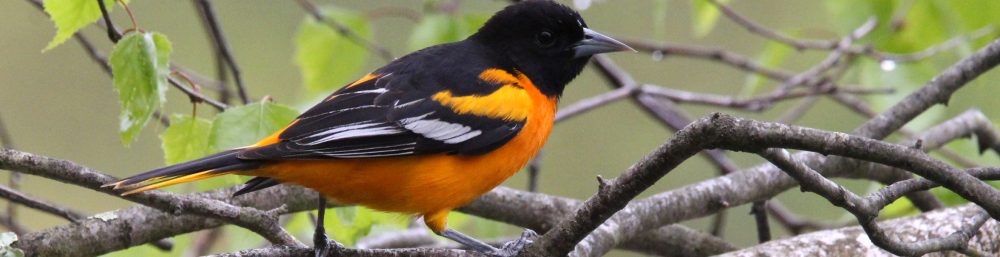

A dozen or more eastern bluebirds, just as many yellow rumped-warblers and a few palm warblers highlighted the walk.
The fall migration does not get the attention and building excitement that the spring migration gets, but if you hit it on the right day, it can be a day worth remembering. This walk started out extremely slowly, in terms of seeing birds anyway. For the first hour, I heard a few cardinals, catbirds and eastern towhees in the brush and a few crows and blue jays “cawing” and “jaying” overhead. That was about it.
Even the pond was void of any birds. I don’t think I’ve ever been there and not seen geese and mallards. Often, there is a great blue heron or two and some American black ducks. Not this time.
On my way back to the parking lot, I decided to take the path through the fields instead of the usual path through the brush. It turned out to be a good call.
The fields on either side of the path are maintained for bobolinks and other grassland birds and are not mowed until October. It had been mowed recently and some of the haying equipment remained in the middle of the field. A tractor with its hay mower behind it made for a quintessential New England farm scene.
It also made for a convenient perching spot for birds in an otherwise wide-open area. I noticed the birds flying onto and off the hay mower from a fair distance away and even training my binoculars on the equipment could not yield a positive identification.
As I got closer, I could tell even without the binoculars that they were bluebirds, and lots of them. I had suspected all along that they were bluebirds because this area of the park often has bluebirds perched in the outlining trees.
When I got back to the parking lot, instead of going home, I decided to walk along the road and cut through the sliver of trees and brush that separates the field from the road. The branches overhanging the field featured a nice assortment of birds. This is where there were more than a dozen bluebirds and the aforementioned warblers.
The palm warblers were mostly in the field eating the insects exposed by the recent mowing. The bluebirds and yellow-rumped warblers went back and forth from the field and branches. The yellow-rumped warblers also had a feast on the fall berries growing in the brush.
A small flock of starlings, two eastern phoebes and a lone female rose-breasted grosbeak joined the insect and berry party as well at the newly mowed field.
Other than the grosbeak, the birds I saw were fairly typical of a mid-autumn walk. Birds that I surprisingly did not see were common yellowthroats and ruby-crowned kinglets. Yellowthroats, another type of warbler, are common fall migration sightings, and I had seen them during a different walk earlier in the week. I almost always see ruby-crowned kinglets on my autumn walks, but have been largely shut out this year, including on this walk.
I saw a lone monarch on the walk as well. It seems like yesterday that the field was covered in monarchs, swallowtails and other butterflies. The color is gone, and wildlife variety is dwindling in the fields. It is New England and the year is getting old, after all.
It’s still a great time to be out there, whatever “there” means to you: woods, fields, ponds, parks, your backyard. There is no off-season when it comes to wildlife in New England.
 Birds of New England.com