I wanted to do something a little different for my annual Christmas column this year.
I typically do a gift guide column, but I will keep that part of the article brief, only to say that giving someone a membership to a conservation organization, particularly a local one, is always a great gift for your birder. Material gift ideas, such as binoculars or spotting scopes, are readily available online.
For this year, I want to do something that is perhaps a bit corny, but fun anyway. I am going to break down the classic carol The Twelve Days of Christmas and relate each of the days to birdwatching in New England.
Here we go …
12 drummers drumming. My first thought was to use the ruffed grouse as it makes a drumming sound by flapping and rotating its wings in the woods to claim territory. I am, however, going to save the grouse for later. So the 12th day will be the drumming of New England woodpeckers. Hopefully the image you have of drumming is a woodpecker drumming on a tree in the woods rather than drumming on the side of your house.
11 pipers piping. This one is obviously for piping plovers, which nest along New England beaches. The small shorebird is a favorite among birdwatching beachgoers. It is also a species of concern and many New England conservationists put a lot of work into making sure plovers have the best chance of a successful nesting season.
10 lords a-leaping. OK, I’m stretching with this one a little bit, but I am going with the ivory-billed woodpecker, a bird that is believed to be extinct and has the nickname Lord God Bird because of what people said upon seeing it for the first time. The traditional range of the ivory-billed woodpecker is a bit south of New England, but I’m going with it anyway. Hopefully, the Lord God Bird is not actually gone, but rather just keeping out of sight all these years.
Nine ladies dancing. I’m going with the belted kingfisher here. In almost all cases of New England dimorphic (male and female look different) birds, males are the more colorful sex. That is not the case with the belted kingfisher, however, as the females sport some rusty-red coloration on their upper bellies. It’s not a glaring difference, but it is noticeable enough for kingfishers to get the ladies dancing nod.
Eight maids a-milking. This one belongs to the song sparrow. The reason a rather nondescript bird gets this one is because of its cheerful song that is sometimes translated to “maids, maids, maids, put on your teakettle-ettle-ettle-ettle.
Seven swans a-swimming. This one is rather obvious as New England is home to a swan species. The mute swan, an introduced species that is proliferating throughout much of America, has not become overly abundant in the middle or northern parts of New England, but it is a common sighting in southern New England, for better or worse.
Six geese a-laying. This one is pretty obvious too as Canada geese are about as common as they come in terms of waterfowl in New England. Other geese will show up occasionally, such as brant or snow geese, but how do you not go with Canada geese here?
Five gold rings. Let’s go with golden-crowned kinglet here. I could have gone with goldfinch here, but I like kinglet because it has “crowned” and “king” in the name. Obviously, that brings up images of the three kings that visited the nativity. Golden-crowned kinglet it is.
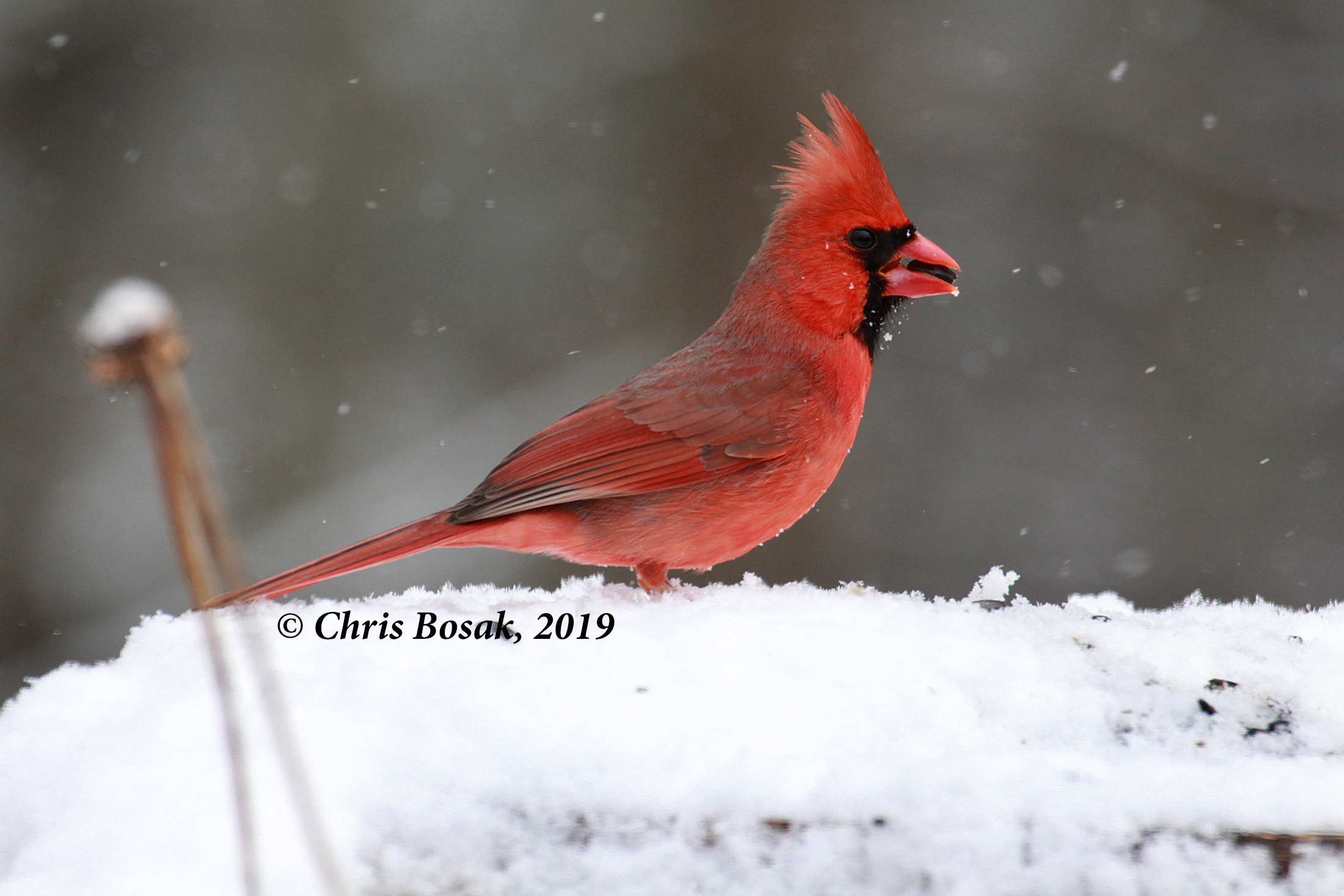
Four calling birds. I could have gone in a few different directions here, but I am going with a tie between cardinals and Carolina wrens. Carolina wrens, relative newcomers to New England, brighten up even winter days with their boisterous melodic songs. They are one of the few birds that sing in the winter, although not as often as in other seasons. Cardinals also sing in the winter on occasion, and when they do, it is always a pleasure to hear, so I am putting cardinals in this category as well.
Three French hens. After some debate, I decided to go with the northern bobwhite for this category. The small ground game birds have largely been erased from the New England landscape, but they do show up on occasion in the region. It is likely that most or all of the bobwhites that show up in New England are escapees from a farm. Nonetheless, New England is part of their historic range and perhaps one day they will thrive in our corner of the United States again.
Two turtle doves. Mourning doves, of course, fit this category nicely. They are plentiful throughout New England and their “cooing” sounds are relaxing on a spring morning.
A partridge in a pear tree. Here is where I am going with ruffed grouse. There is another bird species officially called a partridge, but the ruffed grouse is often called a partridge by many people, especially in New England. Ruffed grouse are a favorite game bird in New England. I am not a hunter, but I still get a thrill every time I find one in the woods.
I hope you enjoyed this break from the everyday bird column. Feel free to send me your thoughts on what birds could have been included. Have a great Christmas and enjoy the rest of the holiday season.
 Birds of New England.com
Merry Christmas wishes for you and yours Mr. Bosak. 🎄
LikeLiked by 1 person
Amazing
LikeLiked by 1 person