
The Cornell Lab of Ornithology and other bird conservation organizations released the 2025 U.S. State of the Birds Report last week. Not surprisingly, the news was rather somber and highlighted alarming decreases in bird populations over the last 50 years.
It largely echoes the 2019 study that showed the loss of three billion birds in North America since 1970. Unfortunately, the news has gotten worse for many birds in the five years since that landmark study.
Rather than recapping the press release here, I wanted to point out some of the figures that jumped out at me personally. The full news release may be found online by searching for “2025 U.S. State of the Birds Report” or by visiting birdsofnewengland.com.
Like many studies, there is good news and bad news to be found. This study, sadly, is mostly bad news, but we’ll take a look at both sides.
It’s good news that 489 (68 percent) of the assessed bird species are listed as low concern. That doesn’t necessarily mean that these species are increasing or thriving; in fact, many are declining in number, but they haven’t reached the threshold for priority conservation planning.
The bad news, of course, is that the rest of the bird species (32 percent) are in the high concern or moderate concern categories. Most alarming are the 42 birds listed as “red alert tipping point” species (perilously low populations), 37 birds as “orange alert tipping point” species and 33 birds as “yellow alert tipping point” species. All tipping point species, regardless of alert level, have experienced a population decrease of 50 percent or more since 1970.
While I am not overly familiar with any of the 42 species on red alert, except for perhaps the saltmarsh sparrow, as they are mostly seabirds or western birds, the orange alert birds strike a little closer to home. Birds such as sanderling, long-tailed duck, chimney swift, ruddy turnstone, lesser yellowlegs, least tern, evening grosbeak, eastern towhee and bobolink are in this category.
Waterfowl and other waterbirds continue to be a bright spot in population surveys with a 24 percent increase in numbers since 1970. The increase is due in large part to policies that protect wetland resources and habitats.
The news is not all good for waterfowl, however. While optimism was high in the 2019 report for waterfowl, their numbers have unfortunately shown signs of decline in the recent survey. Loss of wetlands is accelerating in areas important for waterfowl, and wetland protection regulations have weakened, resulting in the no-net-loss wetlands policy (first announced by President George H.W. Bush in 1989) not being achieved.
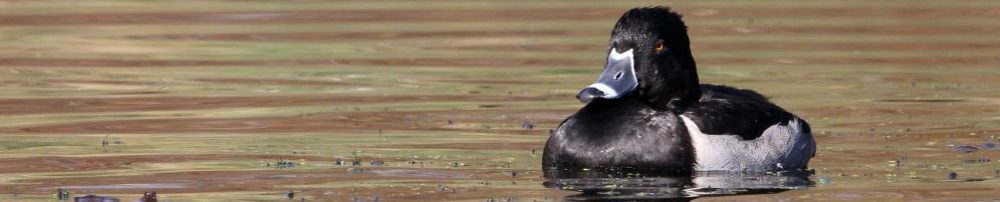
Ducks, of course, are one of my favorite types of birds to watch, and this spring has been a boon for species such as hooded merganser, common merganser and ring-necked duck. Here’s hoping the recently downward trend reverses soon.
Grassland birds continue to be in the most peril as that habitat is disappearing at an alarming rate. The report notes that more than half of the bird species that depend on grasslands for breeding are in steep decline. As a category, grassland birds have declined 43 percent since 1970.
The report states that conversion to agriculture, woody-plant invasion and drought are the primary causes of grassland loss. I have personally witnessed the destruction invasive plant species can have on this critical habitat. The small field at my work that supported wildflowers, birds, butterflies and other insects just a few years ago has been almost completely taken over by the invasive vine porcelain berry. My favorite place to watch bobolinks is slowly being encroached upon by invasive small trees and bushes.
Another bright spot noted in the report is the increasing interest in birdwatching and the growing economic impact the hobby has throughout the country. It estimates that birding (travel, equipment, bird feeding, etc.) accounts for $279 billion in annual economic output in the U.S. That number continues to grow.
Perhaps the money spent and associated tax revenue will spur policy makers to get behind the efforts urged by so many conservation organizations. I’d hate to think that money is a driving force behind getting people interested in bird conservation, but whatever it takes, I guess.
For the Birds runs on Mondays in The Sentinel. Chris Bosak may be reached at chrisbosak26@gmail.com or through his website http://www.birdsofnewengland.com
 Birds of New England.com