
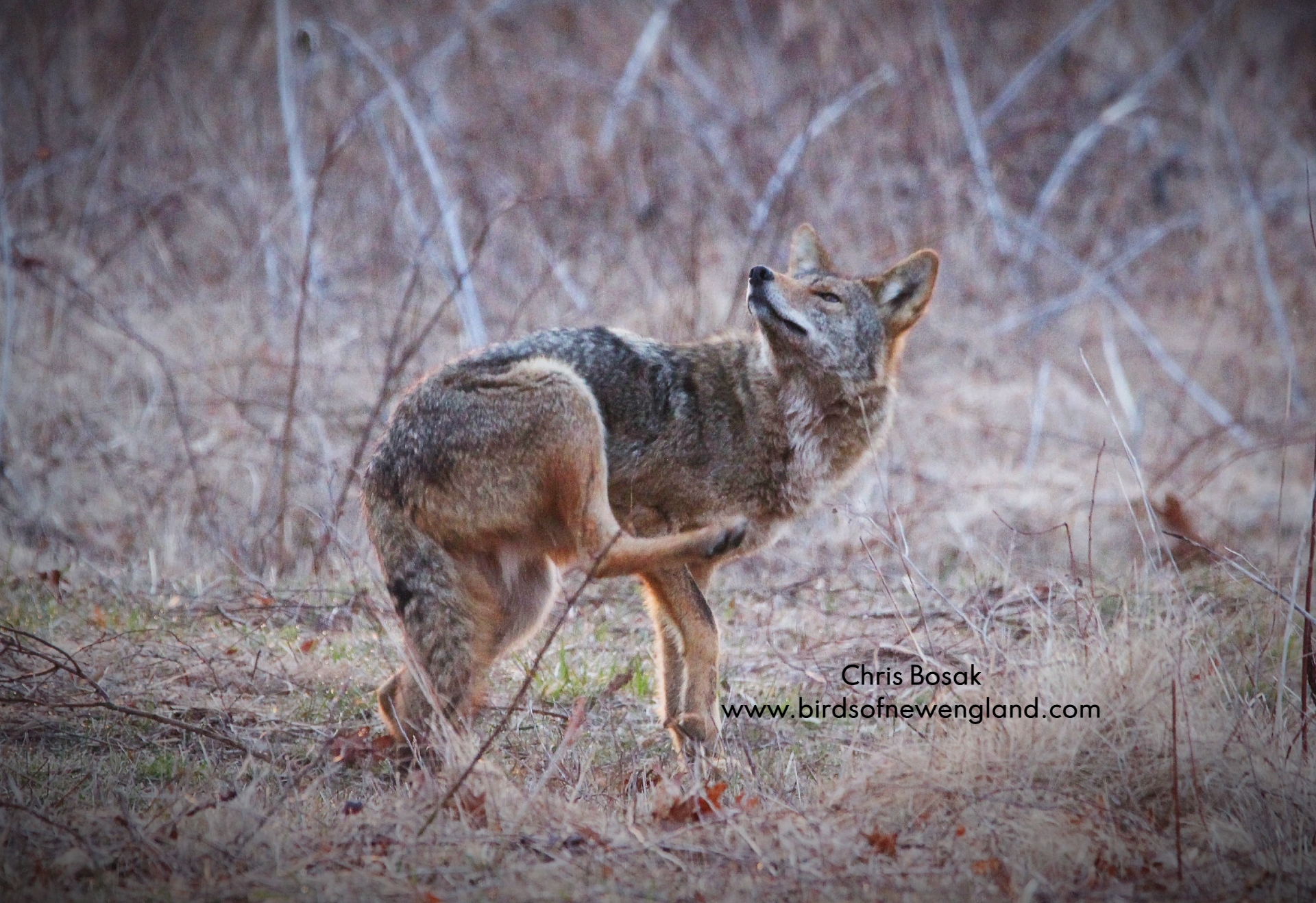
This is the second column in the last few weeks where I end up writing about and using a photograph of an unintended subject because the primary target fell through.
A few weeks ago, you may recall, I wrote about a missed opportunity to photograph blue jays harassing a barred owl. The blue jays successfully drove off the owl before I could get into position for a photo. On the walk back to the car, I came across a flock of cedar waxwings eating berries and stopped to photograph them.
This time, the intended target was American woodcock, but I ended up coming home with more photos of my coyote friend. Late in 2024, I wrote about getting lucky and spotting a coyote in a field as I passed a small break in the thick, tangled, brushy border between the woods and field. I’m assuming this was the same coyote, as I spotted it in the same field very near where I had seen it before.
But first, my intended target. American woodcocks, or timberdoodles, have been a nemesis species of mine for many, many years. I’ve seen their evening aerial displays a few times, but I haven’t found one during the day when getting a photograph would be possible. The aerial displays come shortly after sunset when the evening light has faded.
I’ve seen photos from others of American woodcock, so I know they can be found during the day. I see photos of them in backyards, along the road or other places where they are seen incidentally. Meanwhile, I spend hours in the woods and fields and come up empty. I did find one last year, but I had flushed the well-camouflaged bird, and all I saw was it flying away.
Last week, I went to a field where I know woodcocks perform their aerial displays in the evening during early spring. The Cornell Lab of Ornithology describes the display as follows:
“The male woodcock’s evening display flights are one of the magical natural sights of springtime in the East. He gives buzzy peent calls from a display area on the ground, then flies upward in a wide spiral. As he gets higher, his wings start to twitter. At a height of 200–350 feet the twittering becomes intermittent, and the bird starts to descend. He zigzags down, chirping as he goes, then lands silently (near a female, if she is present). Once on the ground, he resumes peenting and the display starts over again.”
I went there right before sunset and saw nothing for a long time. Did the woodcocks head north already? Were they not at this field this year? Or was I too early?
It turns out I was too early, or just impatient, depending on your perspective. About half an hour after sunset, I heard the familiar nasal “peent” song of the American woodcock. I headed in that direction and quickly spotted the bird along a narrow trail cutting through the field. It was way too dark to get any photos. I studied this bird as best I could in the near darkness. I heard other woodcocks flying around the field and chirping (I didn’t realize woodcocks chirped too), but this bird stayed put and peented every 20 seconds or so.
I stayed with the woodcocks in that field for several minutes before heading back to the car while a smidge of light remained. I vowed to come back at sunrise to see if I could find the birds again with maybe a little bit of light to work with. I heard several more woodcocks peenting on my walk back to the car in the dark.
The next morning, I came up empty on finding woodcocks. They were either in the woods or heading north. I didn’t linger for too long. I had to get to work, and time was short. I decided to return to the car the long way by walking along the perimeter of the field instead of using the trail that cuts through the middle.
I didn’t get very far in the field when I noticed a coyote stand up from the grass 40 or 50 yards ahead of me. It didn’t bolt like I expected it would, but it casually walked a few feet into the higher grass and watched me. Then it started scratching itself with its hind leg and, eventually, walked off and disappeared into the high grass.
The woodcocks were a no-go, but the coyote more than made up for it.
A few months ago, I mentioned in a column that I like coyotes and think of them as a welcome and exciting part of the New England landscape. Of course, I’ve never had a coyote kill a pet or livestock or impact me negatively in any way. I may feel differently if I had.
They also make for good photographic subjects, whether they are the intended target or not.
 Birds of New England.com