
It’s funny how you can still discover new things after so many years.
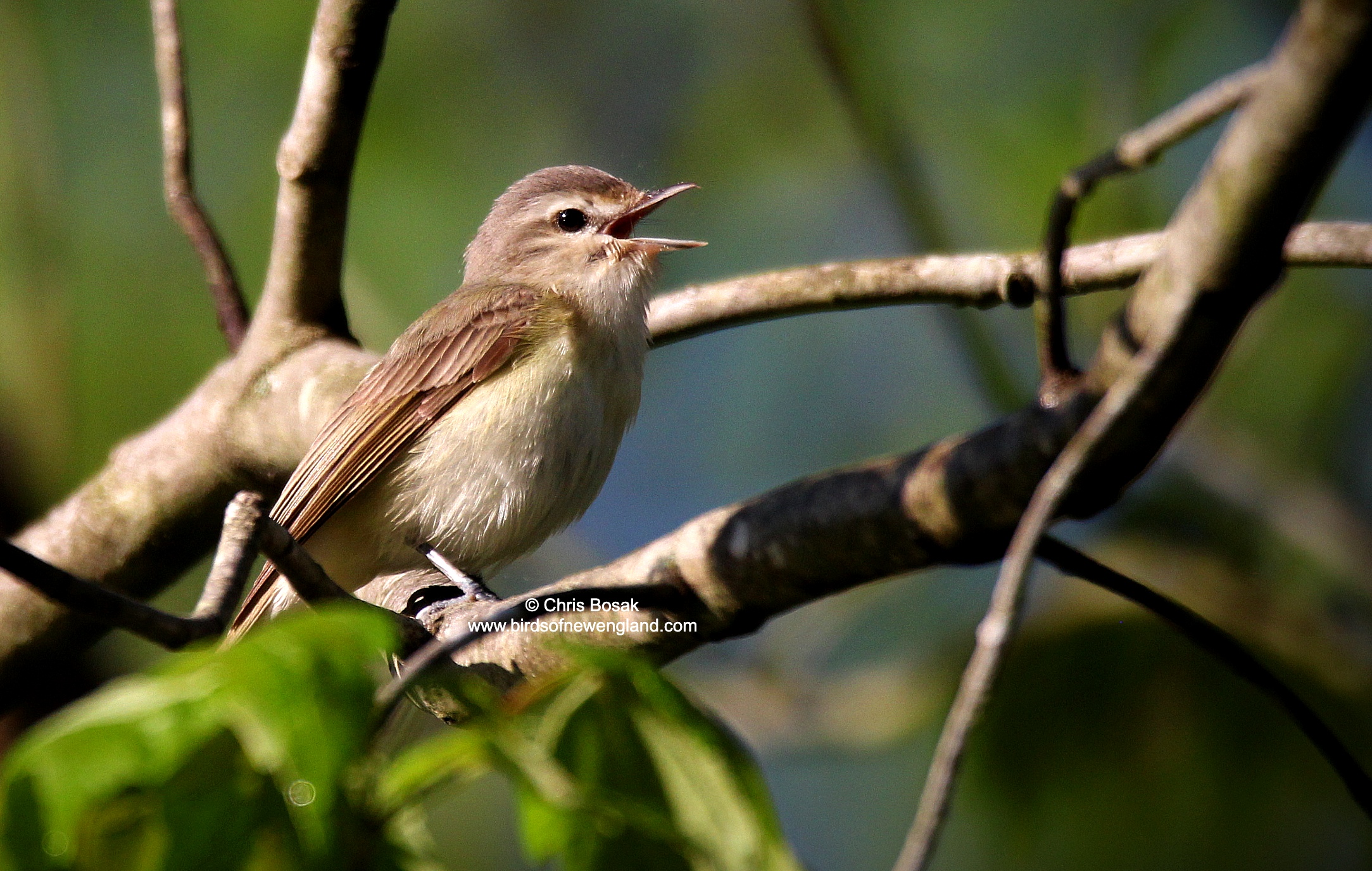
I’m sure that applies to most hobbies, but it certainly applies to birdwatching. I have only recently “discovered” the warbling vireo. The small, loquacious bird, of course, has been around for far longer than I have been birdwatching, but I am only recently taking notice of it.
Part of the reason I may not have paid it much mind previously is that it is a small, fairly nondescript bird that typically hangs out in the middle to upper branches among the leaves. It is not like some birds that take an obvious perch somewhat low in the trees or brush and are easily found on a birdwalk.
Over the last couple of years, however, I have come to know warbling vireos not only because the males sing constantly, but I am finding them almost everywhere I go in the spring.
The warbling vireo is aptly named as its song, to me anyway, seems to be a random jumble of notes strung together. And it sings constantly. The Cornell Lab of Ornithology describes the song as “a rapid, undulating, highly variable song with a rich, burbling quality.” That’s as good a description as any, I suppose.
I have two birdwatching spots that I frequent and the warbling vireo is by far the most talkative bird I come across. At times, catbirds give it a run for its money but the vireo is still the most chatty. Now that I recognize and take note of the song, I recognize the presence of the vireos immediately. Warbling vireos are also a steady presence along my short walk at work.
Some of the other well-known vireos in New England are the red-eyed vireo and the blue-headed vireo. There are at least three other vireos that may be found in our region.
As I mentioned in last week’s column, vireos typically do not get the attention that warblers get. I think that is because vireos are not as colorful and typically stay hidden among the leaves, and it takes a sharp eye and persistence to find them. Warblers, on the other hand, at least many types of warblers, are more colorful and easier to spot.
The other day, red-eyed vireo came up almost every time I activated the Merlin app, which recognizes birds by their sounds. I found a few of them among the branches, but they mostly remained unnoticed, as I gave up after a short search. Red-eyed vireos are also very chatty birds like their warbling cousins.
I have mentioned several times over the years in this column that one of the best things about birdwatching is that there is always something new to learn, discover and appreciate. The vireo family is my latest “discovery,” and I am thankful for it.
 Birds of New England.com