Photo by Chris Bosak A male piping plover (back) pursues a female at Milford Point in New England, April 16, 2026.
I took a trip to the Connecticut Audubon Society Coastal Center at Milford Point today to see piping plovers, American oystercatchers, and whatever else may be around. I timed it nicely, as I found several piping plover pairs doing their mating ritual and even saw one pair copulating.
The male plovers followed the females around the rocks and sand, standing tall and performing a type of stomp dance with their feet and legs. It was quite entertaining.
While the plovers and oystercatchers were the highlight, there were dozens (hundreds maybe) of brant still hanging around New England.
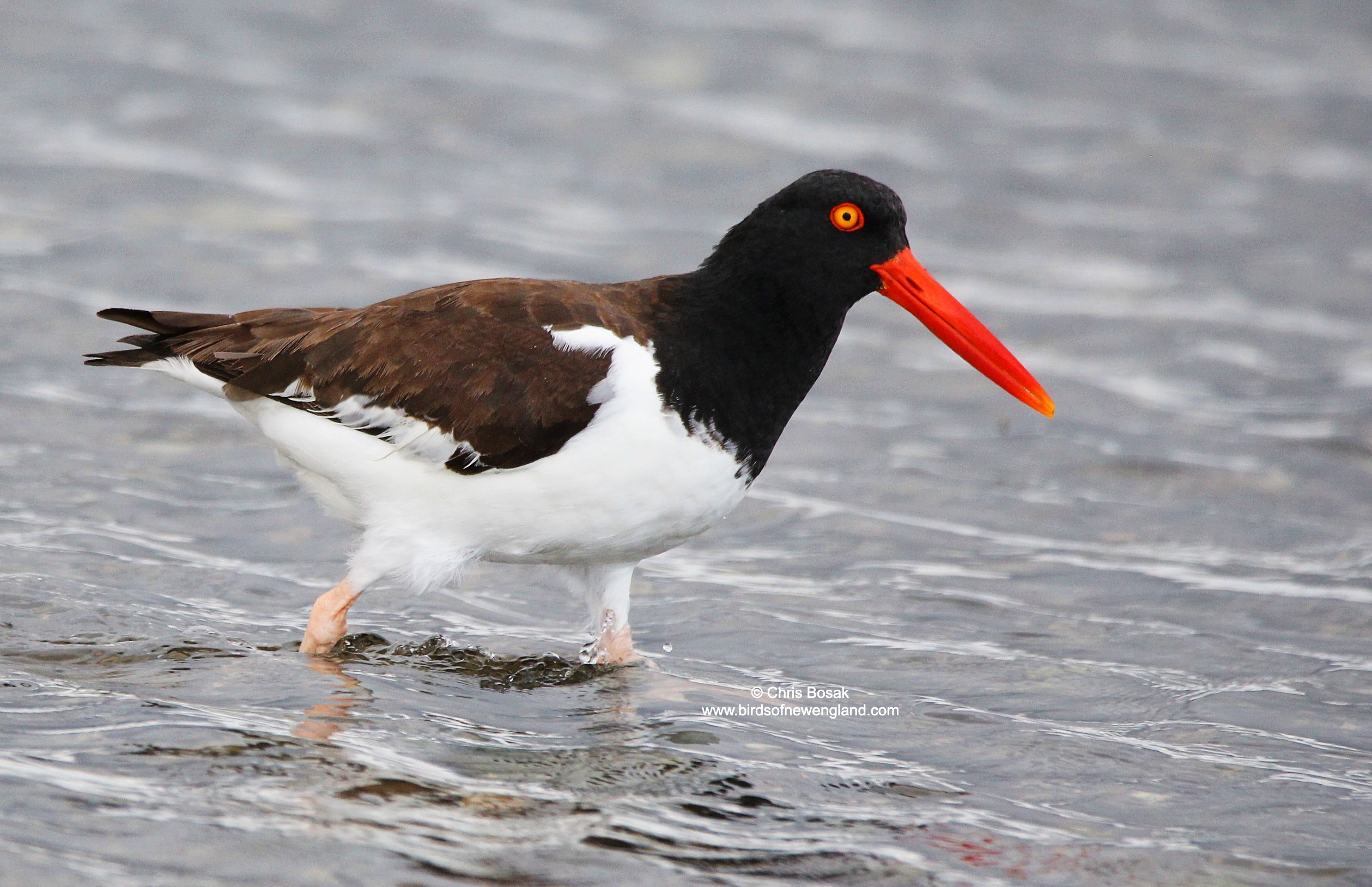
Photo by Chris Bosak A male piping plover (back) pursues a female at Milford Point in New England, April 16, 2026.Photo by Chris Bosak A male piping plover (back) pursues a female at Milford Point in New England, April 16, 2026.Photo by Chris Bosak Piping plovers copulate at Milford Point in New England, April 16, 2026.Photo by Chris Bosak Piping plovers copulate at Milford Point in New England, April 16, 2026.Photo by Chris Bosak Piping plovers copulate at Milford Point in New England, April 16, 2026.Photo by Chris Bosak American oystercatcher pair at Milford Point in New England, April 16, 2026.Photo by Chris Bosak Brant at Milford Point in New England, April 16, 2026.Photo by Chris Bosak A male piping plover (back) pursues a female at Milford Point in New England, April 16, 2026.
Photo by Chris Bosak – A male common merganser swims on a small pond in New England.
There is a pond 20 minutes from my house that I pass frequently. For 50 weeks of the year, the pond holds little interest for me other than being an aesthetically pleasing landmark to look at as I drive past.
In the summer, a few mallards and Canada geese are the only birds present. It being a small pond in New England, it is frozen for most of the winter, which is great for the skaters who have fun on the ice, but not so much for birdwatchers.
However, during one week in early spring and one week in late fall, the pond holds a surprisingly solid variety of migrating ducks.
The other day when I drove past, I noticed a bunch of white blobs in the water, and, even at 40 mph, I knew just what they were.
I pulled over at the closest spot where it was safe to do so and turned the car around. From a spot along the road about 30 yards from the pond’s edge, I was able to confirm that indeed they were common mergansers. For a small pond, it held quite a few of the large waterfowl. Common mergansers happen to be one of my favorite birds, so I lingered at that spot along the road for close to an hour watching them.
In previous years, I have seen hooded mergansers perform their courtship display on this pond. To my delight, the common mergansers were doing their courtship display on this day.
Also to my pleasant surprise, the mergansers were not the only duck species on the pond. As I was watching the mergansers dive and resurface, a small group of ring-necked ducks came over to join the party. They did not stay long among the common mergansers but rather silently floated to the other side of the pond. As I followed the ring-necked ducks’ path through my binoculars, I spotted a pair of gadwall on the opposite edge of the pond as well. A few mallards and Canada geese rounded out the fowl sightings.
It was a pleasant hour spent at the pond, especially considering a busy road runs adjacent to one long edge of the pond and the other edge is a residential area. My parking spot was along the residential road.
Yet another pleasing moment of this unexpected birding experience came in the form of a songbird. I had turned off my radio so as to not spook the mergansers away from the pond’s edge. Instead of listening to old songs I’ve heard hundreds of times before or some divisive news channel, I was treated to the sounds of a northern mockingbird showing off his repertoire from a nearby perch. At first, I thought it was an eastern phoebe, but that was just the first mimicked song I heard from the mocker.
I love the spring waterfowl migration. It serves as a link between the early songbird migrants, such as red-winged blackbirds and eastern phoebes, and the multitude of other birds that follow. While the spring waterfowl migration is somewhat predictable (look at just about any unfrozen body of water and you’ll see ducks of some sort), it is fleeting. Ducks and other fowl feel a sense of urgency to get to their northern breeding grounds, and they tend not to linger too long on their migratory stopover spots.
Depending on your location, the variety of waterfowl that pass through New England (and some stay, of course) is pretty impressive. Some of my favorites include common merganser, hooded merganser, northern pintail, northern shoveler, bufflehead and common goldeneye.
The trick is getting out there as often as possible during these few weeks when they are passing through. The other trick is to check all open water. Migrating ducks often end up in unexpected places such as swelled roadside ditches, fast-moving streams, and, of course, small ponds along busy roads.
Photo by Chris Bosak – A young yellow-bellied sapsucker visits a suet feeder in New England, January 2026.
At first it looked like a growth on the tall bush near my bird feeding station. I quickly realized it wasn’t a growth at all but rather a yellow-bellied sapsucker hugging a small branch.
It was a first-year bird, and its dark coloration, lack of red head or throat, and barred plumage made it look like part of the bush. It also caught me by surprise because yellow-bellied sapsuckers are migratory and are not frequent visitors to feeders. It was also perfectly still for several minutes as, from the comfort of my living room, I watched it brave the single-digit temperatures.
Photo by Chris Bosak A red-shouldered hawk perches on a branch during a snowy day in New England, January 2026.
It should come as no surprise that birdwatching is growing in popularity, according to several studies and other metrics. It had been gaining in popularity for years, but the pandemic greatly accelerated the movement.
As I researched the Great Backyard Bird Count for this column, I was surprised at how much birdwatching had gained in popularity, at least as it is measured by the number of GBBC participants.
Photo by Chris Bosak White-throated sparrow in snow, New England, January 2026.
You didn’t think I’d let a snowy weekend go by without posting a few snowy bird photos, did you?
Photo by Chris Bosak American goldfinch eats seeds from a spent flower in New England, January 2026.Photo by Chris Bosak Eastern bluebird in a birdbath in New England, January 2026.Photo by Chris Bosak A fox sparrow perches on a snowy branch in New England, January 2026.Photo by Chris Bosak A Carolina wren searches for food under a feeder in New England, January 2026.Photo by Chris Bosak A red-breasted nuthatch takes a safflower seed from a feeder in New England, January 2026.
Mike Quinn of Ticonderoga, N.Y. had these evening grosbeaks visit recently (December 2025.)
There is a thing in birding called a “spark bird.”
It is not a species of bird like a bluebird, mockingbird or blackbird, but rather the type of bird that piqued (or sparked) someone’s interest in birding and got them hooked. For many people, it is something big or colorful, like a loon or eagle or Baltimore oriole or great blue heron.
Because I have to be different, my spark bird is actually a moose. Yes, I know a moose is not a bird, but my quest to see a moose in the Vermont woods led me to my love of birdwatching.
I’ve participated in the Christmas Bird Count in all types of weather.
I can recall bitter cold days, unusually warm days, pouring rain, sleet, light snow and blustery snow squalls. Once a date is set far in advance, it is usually held on that day regardless of the weather.
This year, the count I did with my friend Frank in southern New England took place in a wet snow that accumulated before our eyes. It made for beautiful scenery but also frozen fingers and toes, damp clothing, steamed optics and fewer birds than usual.
Photo by Chris Bosak A northern flicker sips from a birdbath in New England, fall 2025.
I looked out and saw that the water in the birdbath was a solid block of ice. I poured in enough warm water that the ice broke free, so I tossed the frozen block onto the ground and filled the bath with warm water. Within 10 minutes, a northern flicker arrived and took a few sips. What a design on this bird.
Great blue heron in snow, Christmas Bird Count 2025, Stamford, CT.
It was that type of day for the Christmas Bird Count today (Sunday, Dec. 14, 2025). Frank and I did the Cove area of Stamford (Connecticut) and nearby Darien.
The heavy snow in the morning kept many of the land birds hidden, but many of the water birds were still around, braving the elements. A few highlight species were: harlequin duck (one female), greater white-fronted goose, killdeer, yellow-bellied sapsucker, and snow bunting.