
Here’s a green heron hunting among the algae.

Here’s a green heron hunting among the algae.

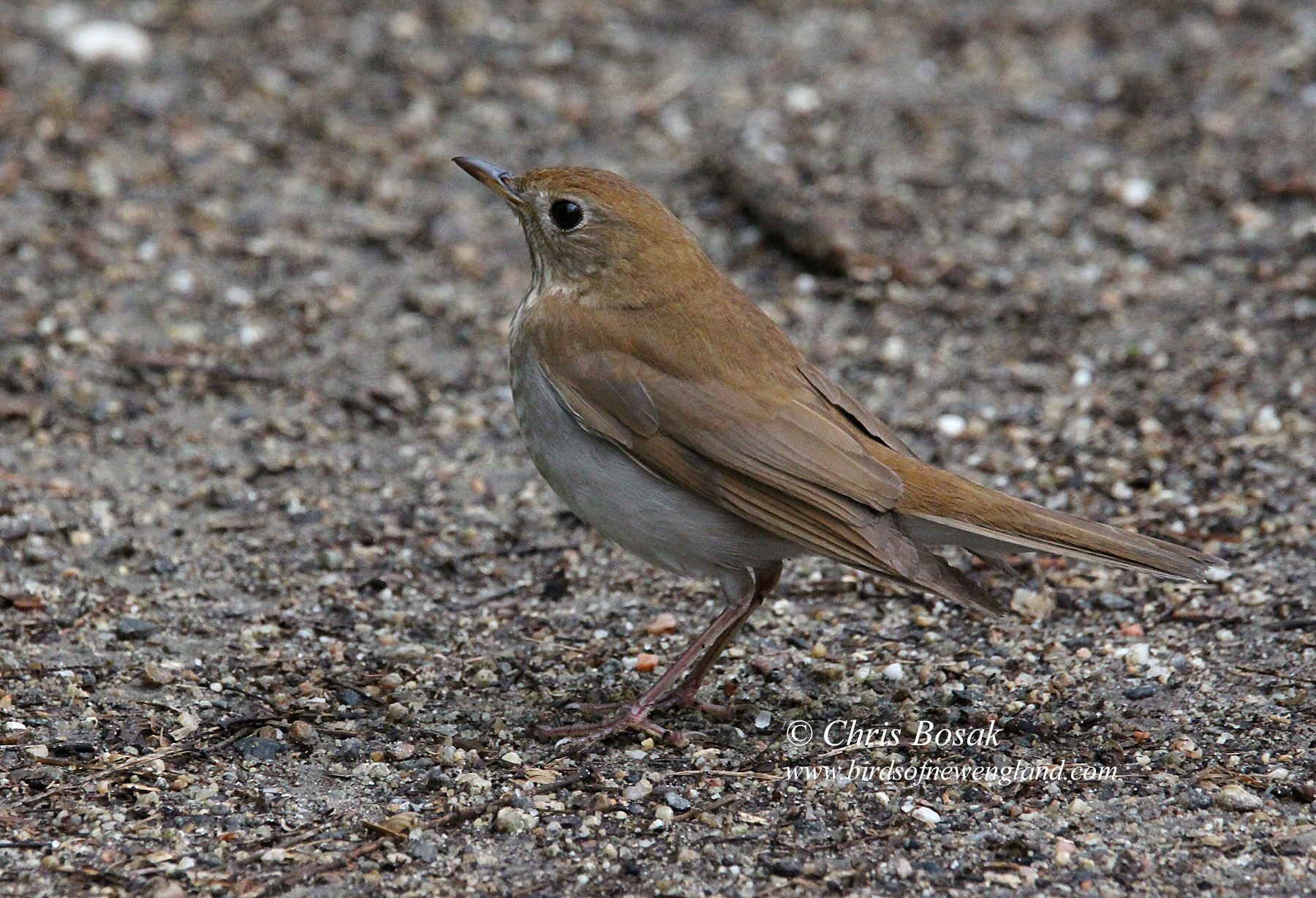
Here are a few more shots of the veery I encountered on a recent walk in New England. Here is the original For the Birds post.


Visions of warblers, tanagers, orioles and grosbeaks may dance in the heads of birdwatchers in May, but the woods and fields are filled with a myriad of other types of birds as well.
While birds such as vireos and flycatchers continue to fascinate (and confuse) me, it has been thrushes that have captured a large portion of my attention so far this spring.
Wood thrushes in particular have been plentiful and conspicuous on my walks. By conspicuous, I mean I hear their flute-like songs several times as I wander through the woods. They can be amazingly difficult to find even as the song makes it seem like the bird is right in front of you. My actual find rate on wood thrushes is embarrassingly low — about on par with my batting average from my high school baseball days.
When I do find the bird, I can’t help but stand there and marvel at it. How can that awesomely musical song come from a relatively nondescript bird about seven inches long? Lang Elliot, who is well-known for his bird recordings, wrote: “The song of the wood thrush is undeniably one of the most beautiful of all forest melodies.”
Continue reading
Catbirds always brighten up a spring, summer or fall walk. Here’s a brave one I came across singing his heart out a few weeks ago.


Birds aren’t the only animals you encounter during walks in the woods in New England. Squirrels, including red and gray, are a common “incidental” sightings.

Photo by Chris Bosak – A squirrel finds a meal in New England, May 2024.

Here’s a magnolia warbler I encountered during a recent gray morning.

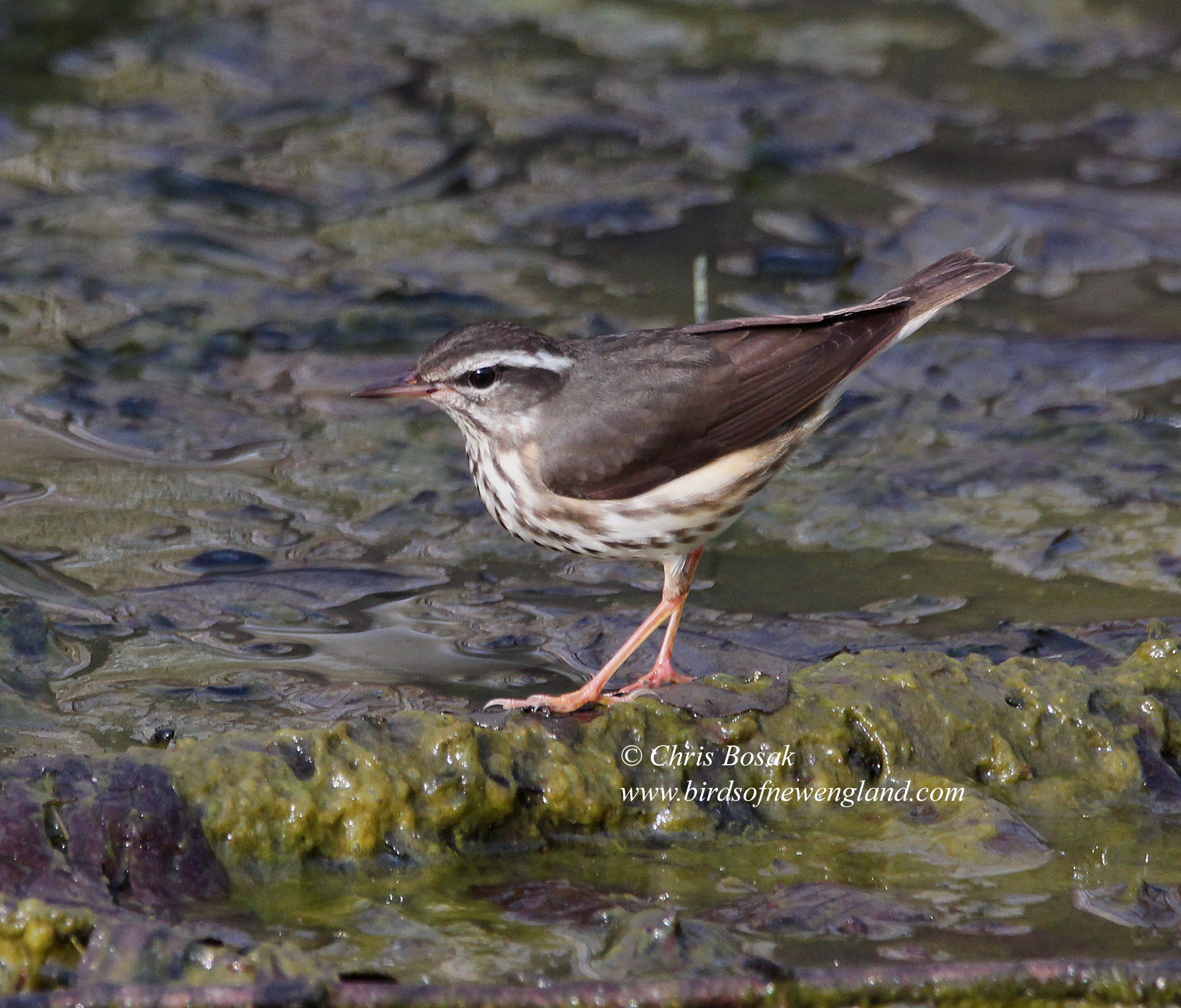
Here are a few more shots of the Louisiana waterthrush I saw the other day. Waterthrushes look like thrushes and even have thrush in their name, but they are actually warblers.
Continue reading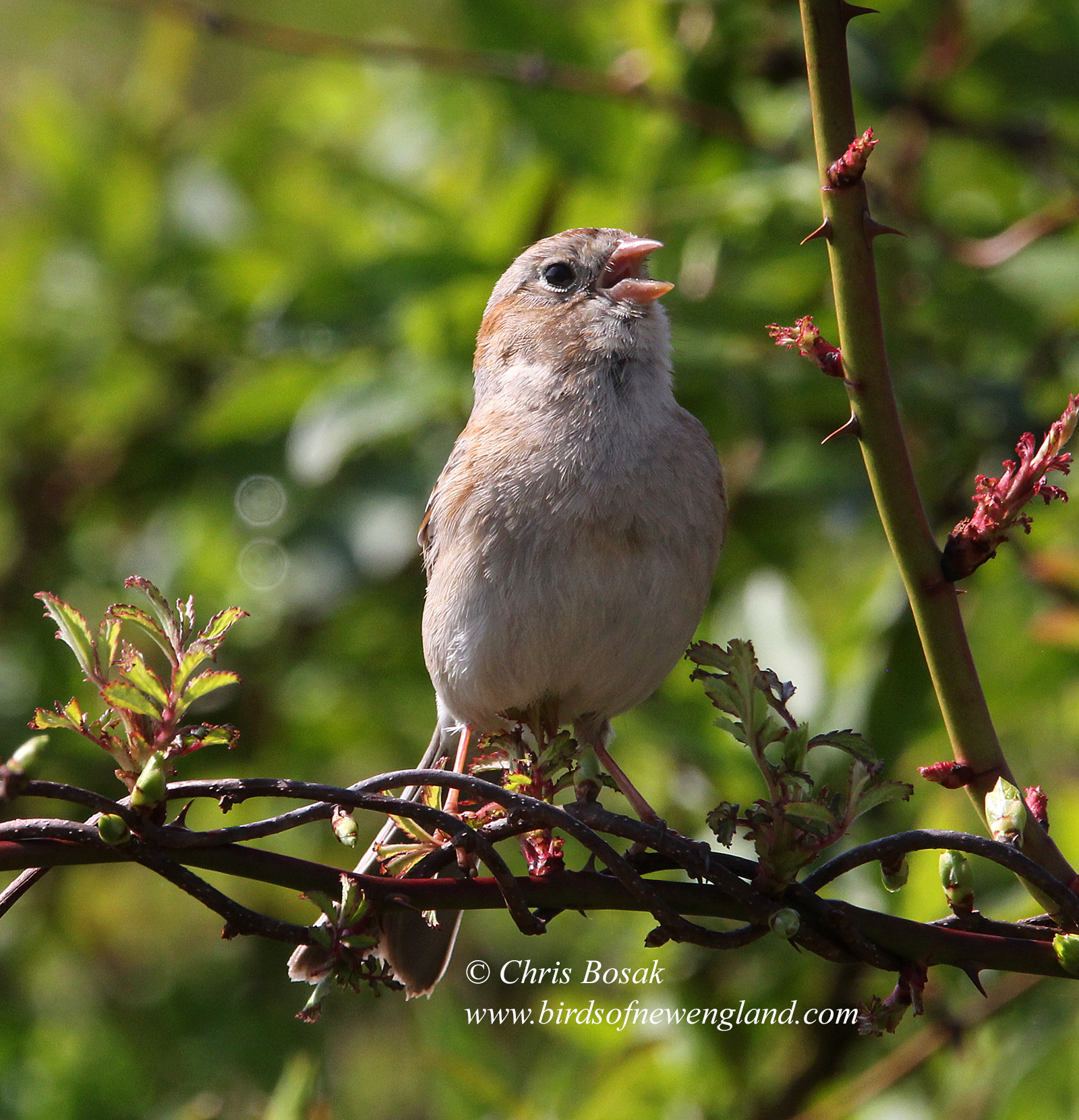
Note: This article was originally published in early May and the story is based on a walk taken on April 29.
It was one of those “quick walks” that ended up being a three-hour birding journey.
I hit the trail shortly after sunrise and was immediately greeted by the awesome cacophony of bird sounds that can only happen during spring migration. The loud voices of cardinals, robins, and Carolina wrens were the dominant sounds. American crows cawed in the distance and red-winged blackbirds belted out their “conk-a-ree” songs from a nearby field. That was all good stuff, of course, but the real auditory treats came from birds with less conspicuous songs.
The softer calls of field sparrows and savannah sparrows emanated from the field, and a high-pitched, nearly inaudible, song came from the top of a maple tree near the parking lot.
It was a warbler, but which one? Since it was the beginning of spring migration and my warbler song identification skills are rusty, it took me a few seconds to realize it was a prairie warbler singing up there.
Continue reading
The Merlin app really came through this time.
I have written about the smartphone application that identifies birds by their songs and calls a few times before. I always stress, and I’m sure the app creators would agree, to confirm identifications by sight if you can find the bird.
The other day I was walking at a park, and the app showed that a brown thrasher was singing nearby. The app included a red dot by the species name, signifying that it is a rare bird to be seen where I was walking.
My immediate reaction, as a skeptic, was to not believe the app and assume it was a mockingbird instead. I have seen mockingbirds where I was walking several times. Brown thrashers are mimics like mockingbirds, so the misidentification would be understandable.
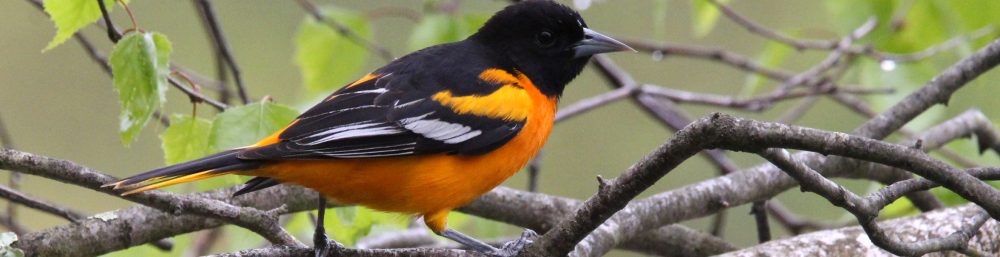
Continue readingJudging from my own experience this morning and several posts on birding community websites, last night was a good night for migration with many of the long-awaited warblers and other songbirds arriving this morning. I had 43 species on my eBird list, including a few warblers, rose-breasted grosbeak, Louisiana waterthrush, Baltimore oriole, and American woodcock.
Here are a few shots from the day.



 Birds of New England.com