Unknown's avatar

About Chris Bosak

Bird columnist and nature photographer based in New England.

For the Birds: Red-winged blackbirds getting an early jump

Photo by Chris Bosak A red-winged blackbird sings from the top of a tree at Happy Landings in Brookfield, Conn., spring 2017.

Winter officially may still have about four weeks to go and, in New England, goodness knows how many weeks or months left unofficially, but it’s not too early to start discussing spring migration.

I’m not trying to jinx the mild weather we’ve had and cause a winter that lingers into May like some of our recent winters. Even if winter does roar back, there are still plenty of birdwatching opportunities to be had. It’s a hobby for all seasons.

Regardless of what happens in the weeks ahead, signs of spring from the world of birds are here already. One morning as I walked to fill the feeders I noticed the extremely pleasant and welcomed sounds of cardinals, Carolina wrens and song sparrows singing their hearts out.  

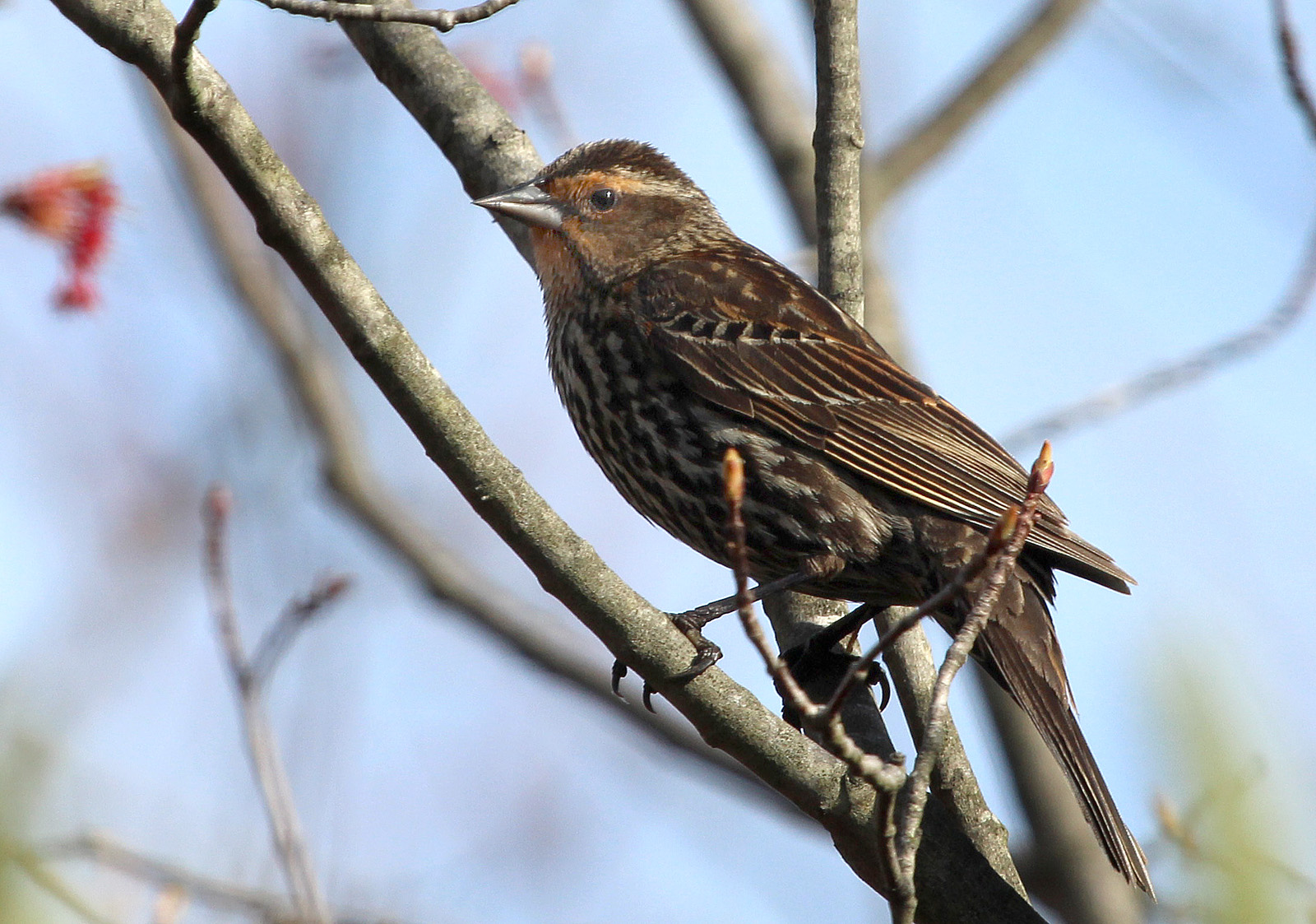
Red-winged blackbirds, one of the earliest signs of spring, have returned already to many parts of New England. Pat from Sandwich wrote to say she had six red-winged blackbirds in her backyard last week. There have been other reports of red-winged blackbirds in New Hampshire, including one report by Brian of Keene, who included the sighting on the American Birding Association’s bird news website.

Continue reading

For the Birds: Winter birdbath brings them in

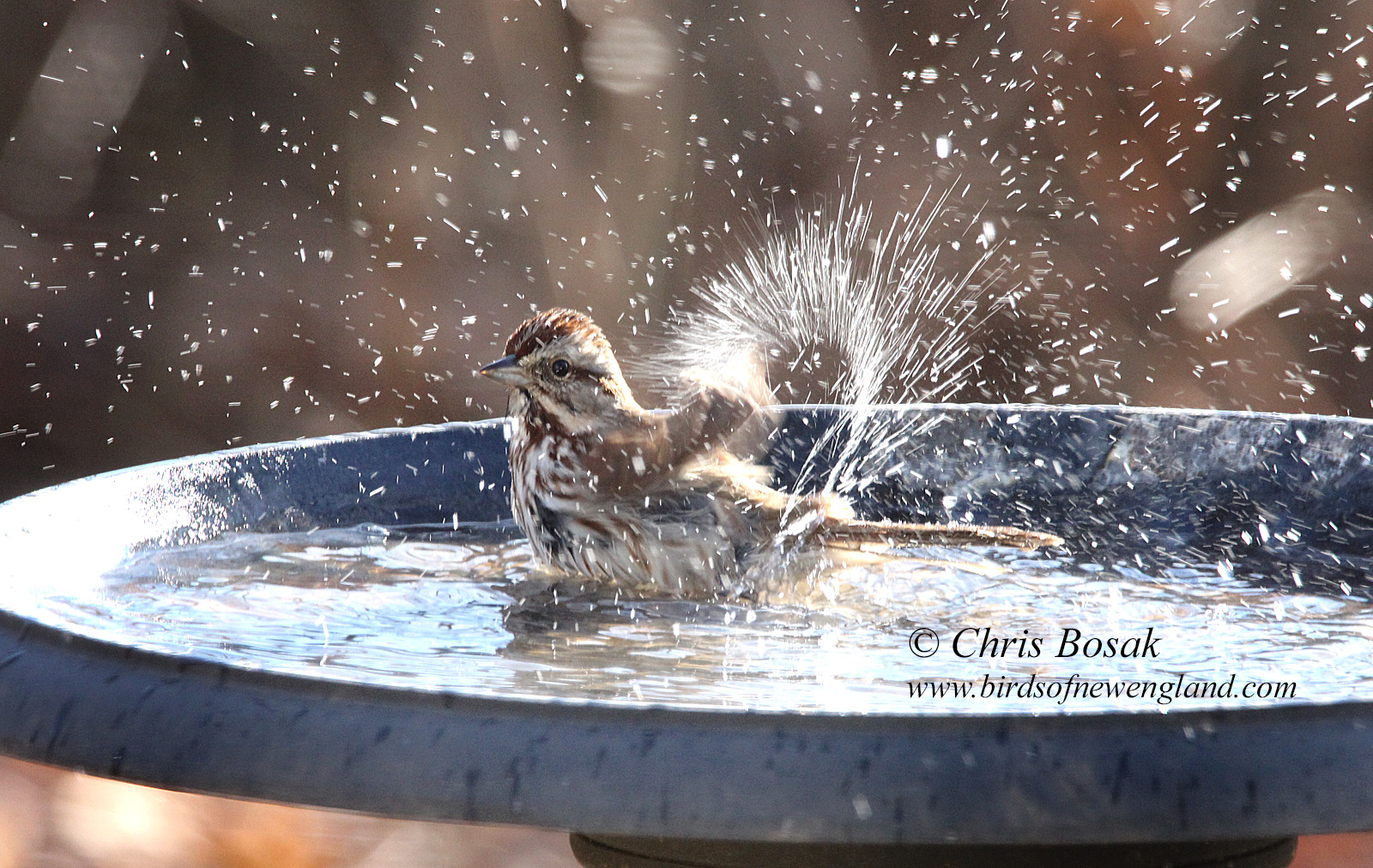
Attracting birds to a birdbath is one of the more underrated joys of the hobby.

Perhaps it is because I failed on my first several attempts to get birds to visit the birdbath I offered. I started to think it was a waste of time to even try, but about then, I glanced out at the birdbath and saw a magnolia warbler cleaning itself. Of course, birds such as magnolia warblers are not going to visit your birdbath too often, but to see even the most common of birds at a birdbath is a thrill.

Many people focus the majority of their attention on bird feeding, and rightfully so, as that has a high success rate of attracting birds. Bird houses are another aspect of the hobby that get a lot of attention, particularly bluebird boxes. That is also understandable as it is nice to know that you are helping to assure the next generation of birds.

I have found that far fewer people discuss the birds that show up at their birdbath. It is a bit trickier to attract birds to a birdbath than to a feeder, but when it does happen, it makes the extra effort well worth it. 

Continue reading

For the Birds: Variations for a variety of reasons

Photo by Chris Bosak A downy woodpecker with yellow coloration visits a suet feeder in Danbury, CT, May 2019.

Birds don’t always look like they do in field guides.

There are variations within a bird species due to obvious reasons such as age, time of year or sex. Immature birds take time to achieve adult plumage. That could be a few months or, in the case of the bald eagle, four or five years. Male wood ducks, one of the most splendid birds in New England during breeding season, is a dull brown duck after shedding its breeding feathers. Sexually dimorphic birds, such as cardinals, have obvious differences between males and females.

Sometimes, even the sun can make birds look different. Grackles may appear purple, green, blue or black, depending on how the light hits it. Male indigo buntings can look spectacular or rather ordinary depending on the sun.

There are also regional differences among bird species. Blue jays in New England, I have found, are much brighter and larger than the blue jays in Florida. I’m also surprised when I see how small the blue jays are when I visit my brother in southern Florida.

Some bird species have different morphs. Most of the red-tailed hawks in New England are lighter overall than their western counterparts. This is also commonly referred to as a phase. The best example of a morph I can think of is not a bird at all, but the gray squirrel. Gray squirrels also come in white and black. In fact, in some parts of the country, black gray squirrels are the norm and gray ones are the rarity.

Continue reading

For the Birds: Count the birds

Photo by Chris Bosak A Carolina wren perches on a branch following a snowfall in New England, Jan. 2022.

Note: This was written for my New Hampshire audience, but the Great Backyard Bird Count applies to all.

I have received a few emails from folks who have seen evening grosbeaks this winter. There have not been many emails regarding pine siskins or purple finches, and not a single one about redpolls.

As had become typical, there have been plenty of emails about Carolina wrens and red-bellied woodpeckers.

The birds mentioned in the first paragraph as known as irruptive species in New England. Some years we see many of them, some years we see a few and some years we don’t see any. The birds in the second paragraph are species that are expanding their range northward and are now fairly common throughout the southern and middle parts of New England.

Continue reading

For the Birds: Looking back on a fine 2022

It already seems as if 2022 is a mere dot in the rearview mirror. Before it fades even more, I want to present my annual “top birding moments of the year” column. It’s a tradition that goes back several years and is one of my favorite columns to write. I also encourage readers to send to me their favorite birding (or wildlife) moments of 2022.

10. Bears! On my drive home from looking at land in far north New Hampshire, I noticed three dark blobs at the far edge of a huge field. I hit the brakes, turned around and pulled over. The blobs were three bears — a mother and two cubs. Bears are becoming increasingly common throughout New England. I hope we learn to co-exist peacefully. 

Continue reading

For the Birds: Hawks in a New England winter

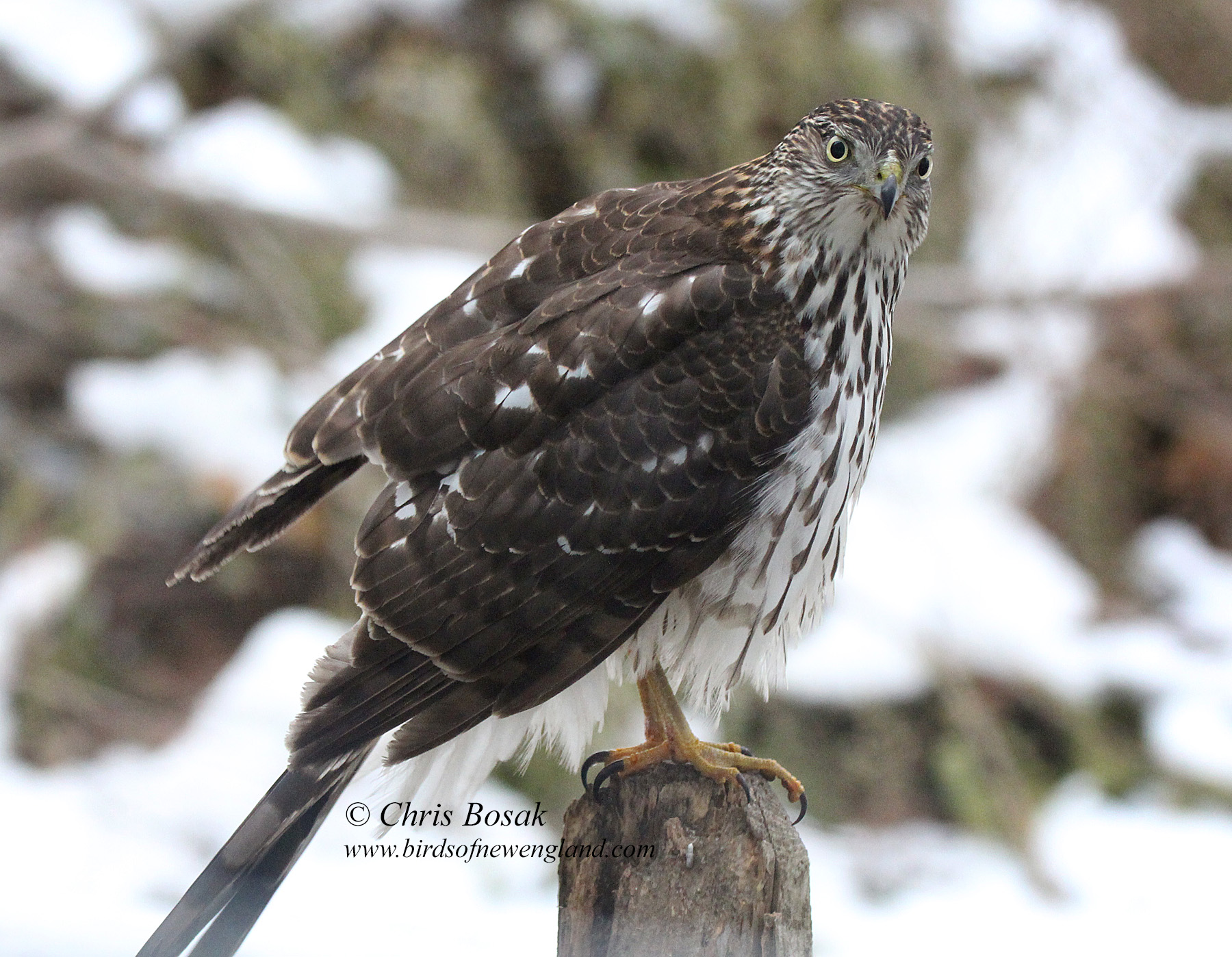
Photo by Chris Bosak – Young Cooper’s hawk in New England, January 2023.

It is not uncommon for birders at designated hawk watch sites to see more than 1,000 hawks in a single day. The fall hawk migration is most certainly a sight to see, particularly if the conditions are right.

With the sheer number of hawks and other birds of prey that migrate south through New England in the fall, it is tough to imagine that any of them remain in our region once the migration is over. But, of course, we do see a fair amount of hawks throughout the winter months in New England. 

Red-tailed hawks, red-shouldered hawks and our accipiters, sharp-shinned and Cooper’s hawks, are the most common hawks we see in New England during the winter. Other birds of prey that we continue to see in our coldest months are the peregrine falcon, vultures and, of course, bald eagles, which congregate in large numbers where water remains unfrozen.

Continue reading

More American wigeon photos

Photo by Chris Bosak – An American wigeon in Norwalk, CT.

I posted one American wigeon photograph last month to accompany my Christmas Bird Count article. Here are a few more shots of this interesting duck.

Here is the description of the American wigeon by AllAboutBirds.com, a website of the Cornell Lab of Ornithology. “Quiet lakes and wetlands come alive with the breezy whistle of the American Wigeon, a dabbling duck with pizzazz. Breeding males have a green eye patch and a conspicuous white crown, earning them the nickname “baldpate.” Females are brushed in warm browns with a gray-brown head and a smudge around the eye. Noisy groups congregate during fall and winter, plucking plants with their short gooselike bill from wetlands and fields or nibbling plants from the water’s surface. Despite being common their populations are declining.” Click here for further information.

Photo by Chris Bosak – An American wigeon in Norwalk, CT.
Photo by Chris Bosak – A female American wigeon in Norwalk, CT.

For the Birds: Winter birding delights

Photo by Chris Bosak Redhead seen in a New England pond.

There may be a hot-looking red head at the lake or perhaps a bleach-blonde beauty.

Oh, and don’t forget about that Icelandic number that’s been hanging out at New England beaches.

Don’t worry, you have the right column. I’m still talking about birds.

The aforementioned attractions are just a few of the unusual birds that may be seen in the area during winter.

News of such sightings travel quickly along the grapevine, but Rare Bird Alerts are also available to everyone with access to the internet. Simply do an internet search for “rare birds” for the state or specific location you are interested in. Dedicated birders keep the alert lists updated and it is extremely helpful when you’re trying to track down something rare or unusual, or just interested in knowing what’s out there.

Continue reading

For the Birds: Good times, bad times …

Photo by Chris Bosak — A northern cardinal and red-bellied woodpecker share a feeding station in New England.

For those who feed birds, it seems that there are slow times, busy times, and routine times.

It can be disconcerting and frustrating during the slow times. You glance out of the window hoping to see a few birds to lift your spirits or to just appreciate a bit of nature during the day, and nothing is there. It can be worrisome because the thought often arises as to whether or not the lack of birds indicates that something is wrong with bird populations.

Populations of many bird species, of course, are indeed in decline. But a slow period at the feeder is typically not an indication of a broader concern. There are certain times of the year when birdfeeders go through a slow period. Seasonal fluctuations are normal. We are perhaps going through one of those fluctuations now as I’ve received a few emails recently wondering why the birds have suddenly stopped visiting. 

Continue reading