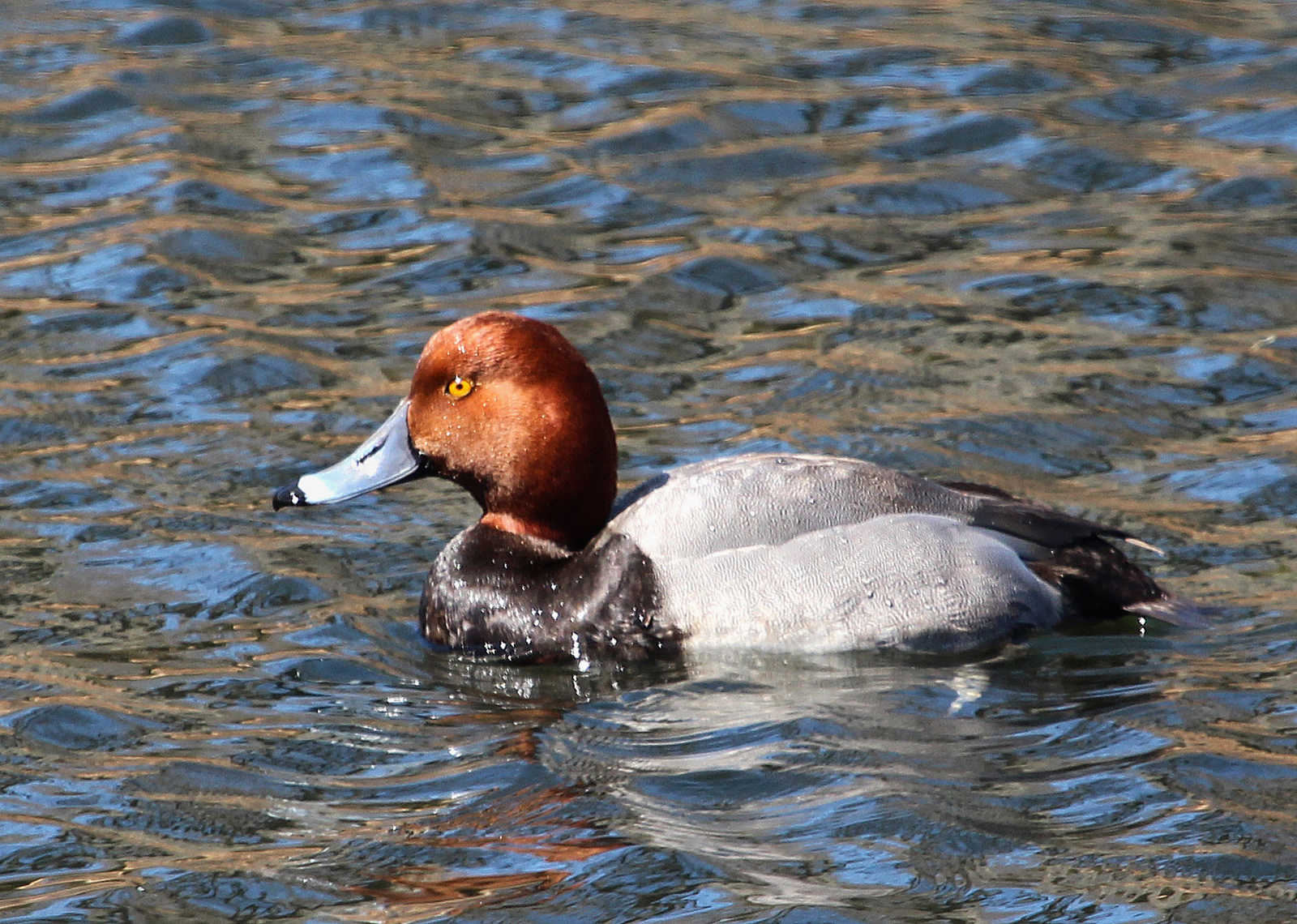
Photo by Chris Bosak Redhead seen in a New England pond.
There may be a hot-looking red head at the lake or perhaps a bleach-blonde beauty.
Oh, and don’t forget about that Icelandic number that’s been hanging out at New England beaches.
Don’t worry, you have the right column. I’m still talking about birds.
The aforementioned attractions are just a few of the unusual birds that may be seen in the area during winter.
News of such sightings travel quickly along the grapevine, but Rare Bird Alerts are also available to everyone with access to the internet. Simply do an internet search for “rare birds” for the state or specific location you are interested in. Dedicated birders keep the alert lists updated and it is extremely helpful when you’re trying to track down something rare or unusual, or just interested in knowing what’s out there.
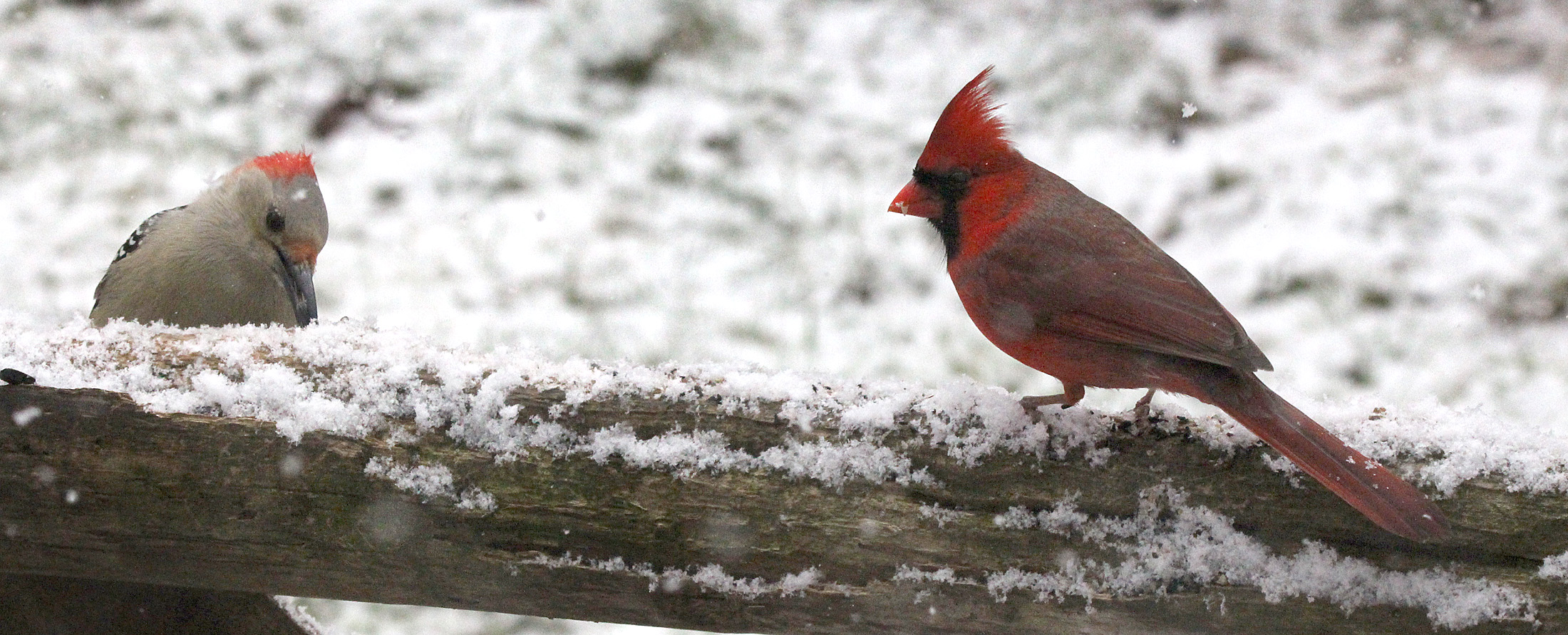
Photo by Chris Bosak — A northern cardinal and red-bellied woodpecker share a feeding station in New England.
For those who feed birds, it seems that there are slow times, busy times, and routine times.
It can be disconcerting and frustrating during the slow times. You glance out of the window hoping to see a few birds to lift your spirits or to just appreciate a bit of nature during the day, and nothing is there. It can be worrisome because the thought often arises as to whether or not the lack of birds indicates that something is wrong with bird populations.
Populations of many bird species, of course, are indeed in decline. But a slow period at the feeder is typically not an indication of a broader concern. There are certain times of the year when birdfeeders go through a slow period. Seasonal fluctuations are normal. We are perhaps going through one of those fluctuations now as I’ve received a few emails recently wondering why the birds have suddenly stopped visiting.
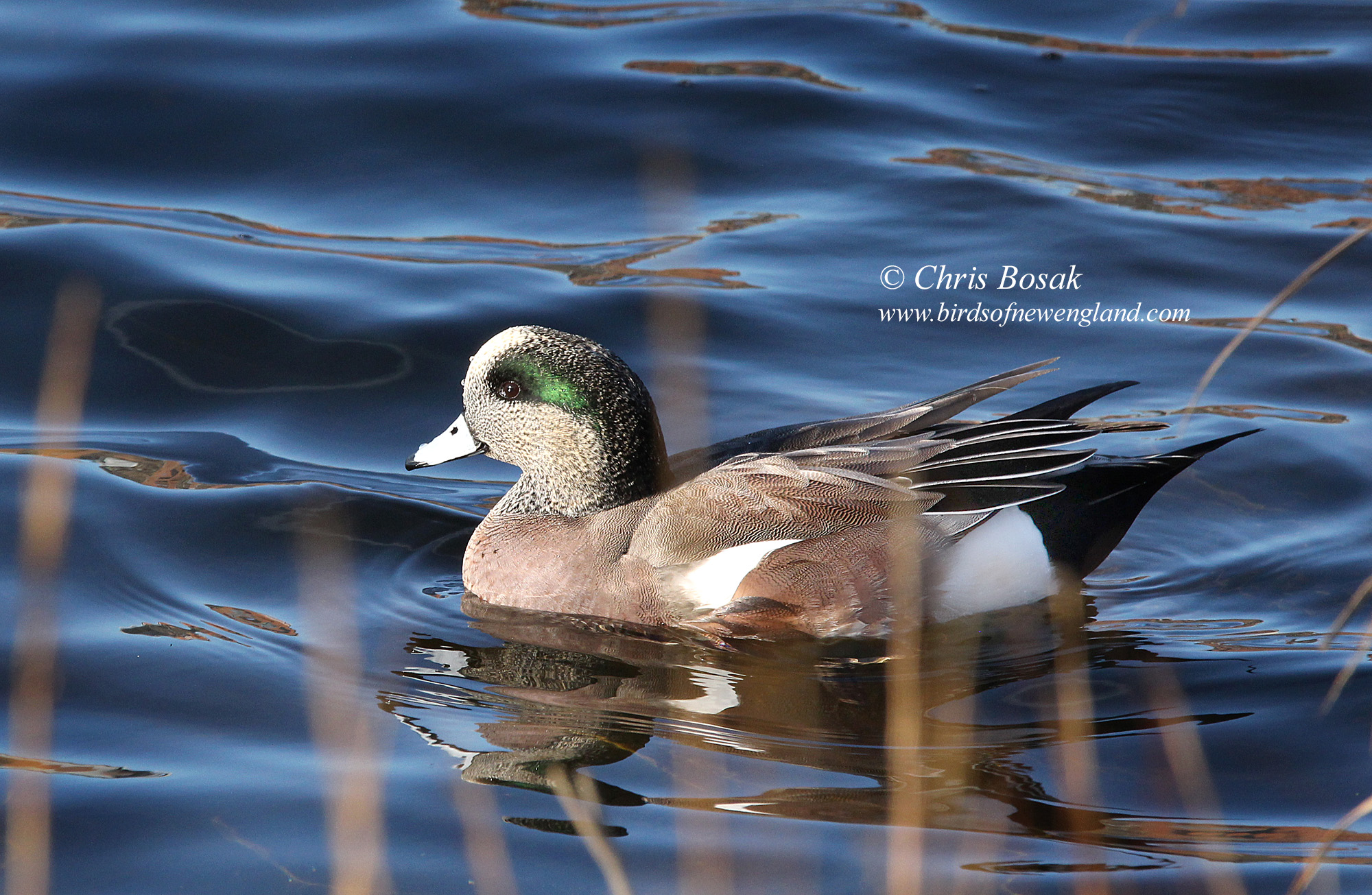
Photo by Chris Bosak — American wigeon, Christmas Bird Count, Westport (CT) Circle, 2022.
It was an abbreviated Christmas Bird Count for me this year due to nagging foot problems and family obligations. I’ll take it, though, as I missed last year completely due to the foot problems. Progress is good.
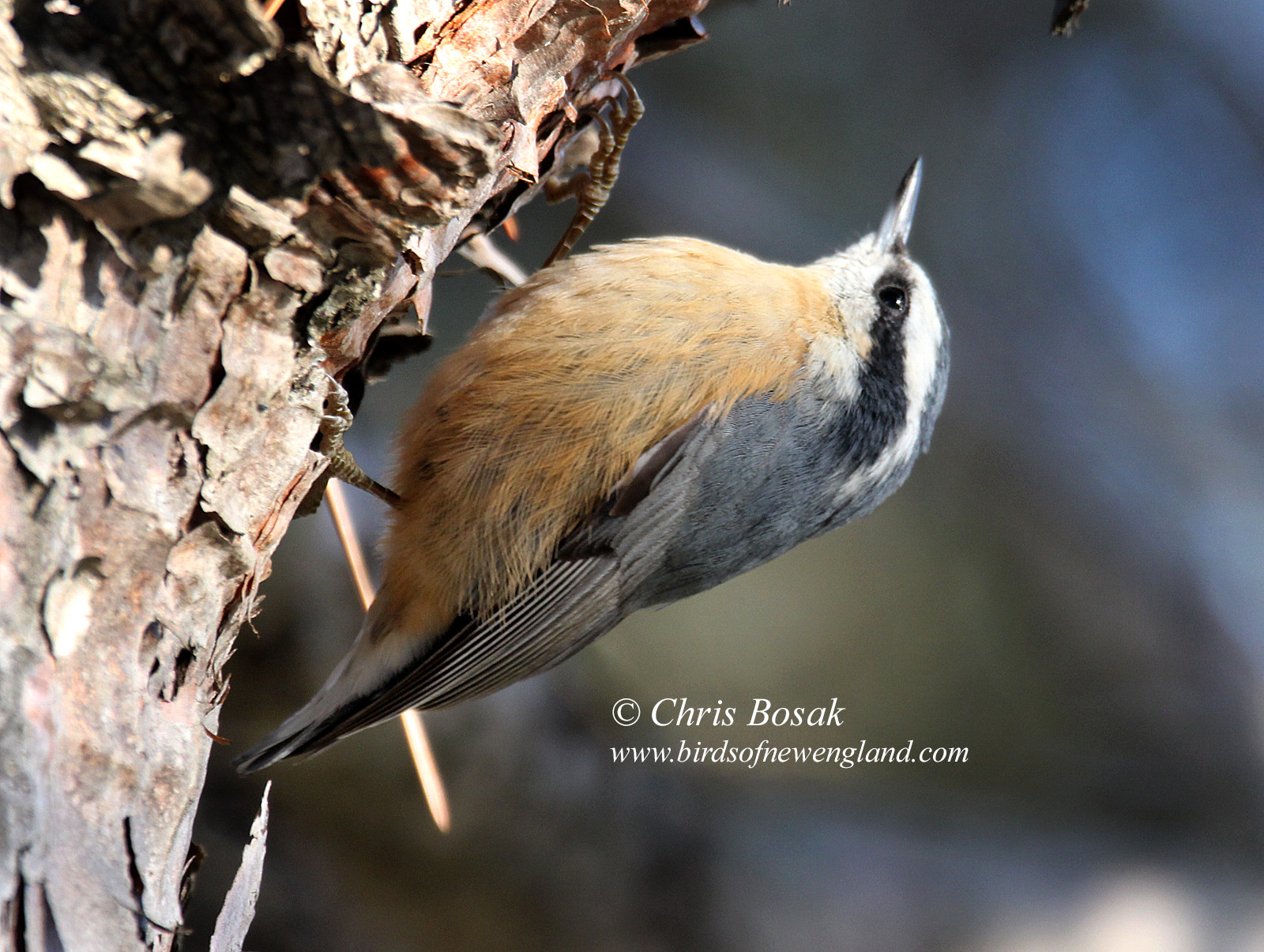
Frank, Tom and I packed a lot into the time we did have together. Tom and I ducked out early, and Frank birded until dark. I was there for a good cross-section of water and land hot spots. Some highlights included 3 warbler species (pine, yellow-rumped and Nashville), red-breasted nuthatch, American wigeon (close views), common goldeneye, common and red-throated loon, and American pipit.
Click here for more information about the Christmas Bird Count, one of the longest-running wildlife censuses in the world.
Here are a few more photos from the day. It was good to be back out there. Hopefully next year I’ll be back at full strength.
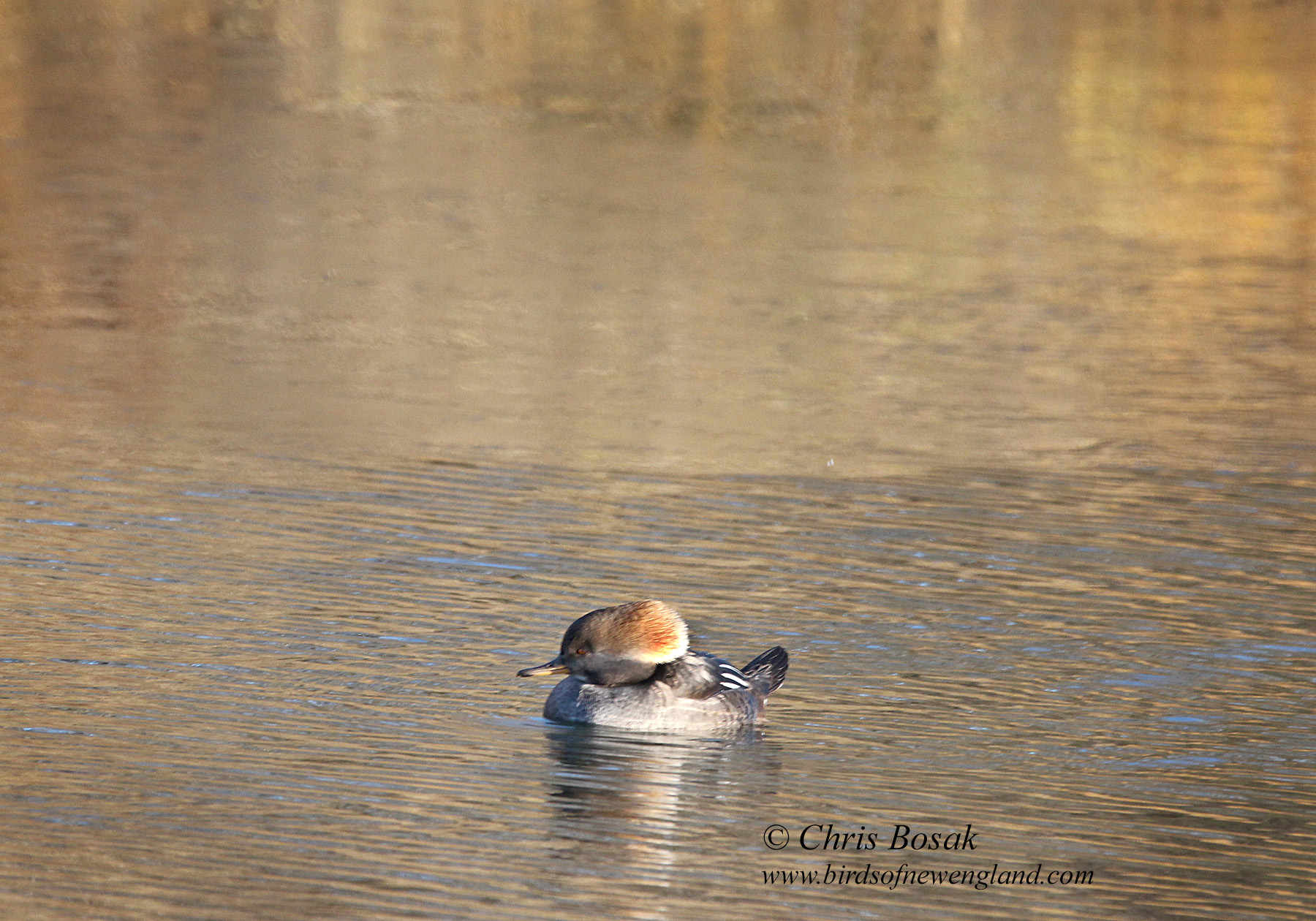
Photo by Chris Bosak — Red-breasted nuthatch, Christmas Bird Count, Westport (CT) Circle, 2022.Photo by Chris Bosak — Red-shouldered hawk, Christmas Bird Count, Westport (CT) Circle, 2022.Photo by Chris Bosak — Hooded mergansers, Christmas Bird Count, Westport (CT) Circle, 2022.
There will be more about this past weekend’s Christmas Bird Count coming soon, but here’s a shot of a female hooded merganser I got during the successful event.
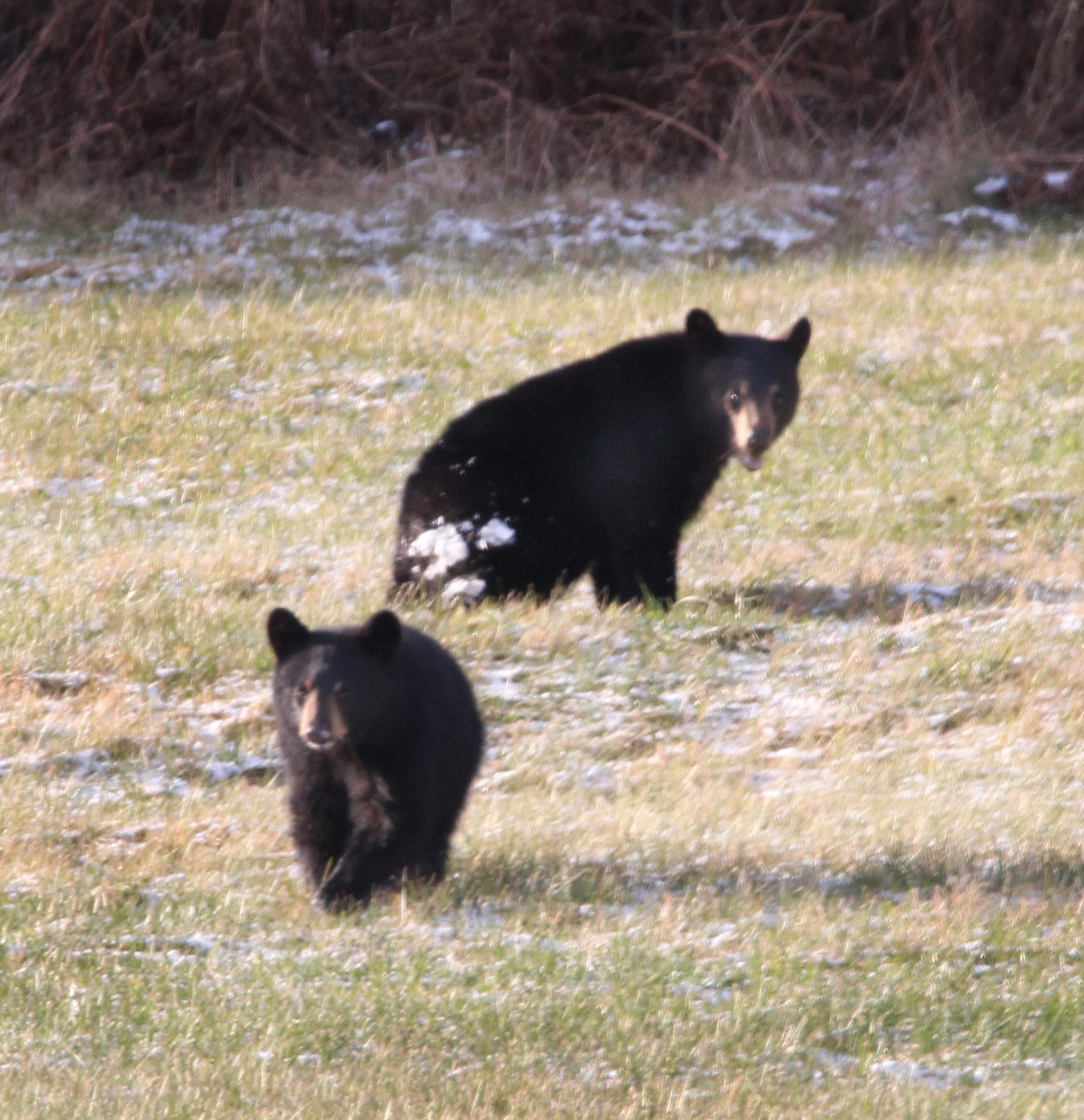
Photo by Chris Bosak — Black bears in northern New Hampshire.
…
Bears are among us. We all know that, of course, but it seems that the bear population throughout New England is thriving, and the large animals are showing up more than ever and in places not seen before.
My closest call with a bear came about three years when I was jogging through the woods. It was a hilly trail with many twists, turns and curves. Heavy metal music blared through my in-ear headphones. My eyes were trained on the ground to watch for roots, rocks, downed branches and anything else that might trip me up.
I turned a blind corner and noticed a blur cross before me. I stopped in my tracks, killed the music and looked to my left to see a large black bear sitting next to a tree about 15 feet off the trail. The bear had crossed the trail in front of me and settled at that spot. It was as curious of me as I was of it. Thankfully, it was showing no signs of stress or feeling threatened. It was just kind of there looking at me.
I looked at the beautiful animal for a minute or two and headed back the way I had come.
Photo by Chris Bosak – Northern cardinal, December 2022.
Snow has been scarce so far in southern New England (not that I’m complaining), so when it does snow I make sure to have the feeders filled and the camera handy.
Photo by Chris Bosak – Carolina wren, December 2022.Photo by Chris Bosak – Red-bellied woodpecker, December 2022.
Photo by Chris Bosak – Purple finches sometimes irrupt into New England in the winter.
For one of the few times in this column’s history, the accompanying photo will not match the content.
The reason for that is quite simple. I am yet to get a decent photo of the main subject. Even as I receive emails from readers across New England about evening grosbeaks showing up at feeders, I have yet to host them at my feeding station. I am also yet to see them in the “wild” closely enough to get a good photo.
Tricia from Alstread wrote in the day after Thanksgiving to say she had evening grosbeaks at her feeder. She was hopeful there may be an irruption of the birds this winter. I, too, am hopeful.
One of my favorite places is a small pond in northern New Hampshire near the Canadian border.
It is miles from the nearest house and, in fact, miles from the nearest utility pole. It is truly wild, and over the years I have seen a lot of wildlife there, including dozens of moose, otters, bald eagles and osprey. The pond (technically it’s a fen) is too small for loons to nest on, but there is usually a loon or two using it for hunting and rest.
One morning, I was canoeing there, and as I made my way through a serpentine-like creek that feeds the pond, I noticed a sign attached to a tree. This is a strange place to see a sign, I thought, out here in the middle of nowhere and particularly this far down the creek.
As I got closer, I noticed it was a sign for the Nature Conservancy. I hadn’t really thought of it before, but some entity had to own the land that I enjoy visiting so much. In this case, obviously, it was land owned by the Nature Conservancy.
When you think of it, all land that we enjoy our nature watching, hiking, or any other outdoor recreational activity on is owned by someone or some thing. One of my favorite photos that I have taken is of a Baltimore oriole sipping nectar from a crab apple blossom. I took the photo many years ago in the spring on land owned by a local land trust. Without that land trust’s passion for conservation, I never would have gotten the opportunity to photograph the beautiful bird, and the land likely would have been a house, condominium complex, or strip mall.
Pretty much any photo or memory of the outdoors that I can think of will have a similar story. The land on which the photo was taken or the memory was made is owned by an entity that cares about land conservation and the importance of outdoor recreation. In many cases, the land is owned by a nonprofit organization that relies on philanthropy to support its mission.
Many people wait until December to make their charitable gifts for the year, and indeed, most of these organizations receive the bulk of their gifts at the end of the year. I certainly am not about to tell people how to spend their money, but if you are planning to make contributions to nonprofit organizations this year, I would encourage you to at least consider one of the many valuable conservation organizations out there.
There are terrific conservation organizations at the international, national, state, and local levels. I am usually partial to the smaller state and local organizations, but all of these organizations are worthy of consideration. The Nature Conservancy, which I mentioned at the beginning of this column, is an international entity that has preserved land throughout the world.
I have been looking for years to purchase some land for camping and birdwatching but have been priced out of the market with the recent surge in real estate value. Land is expensive, finite and valuable. I am grateful for the organizations that understand the importance of outdoor recreation and keep their land available to the public.
These organizations are certainly worthy of support.
Photo by Chris Bosak – American goldfinch in late fall/winter plumage.
November is an interesting time to watch the feeders. The regular birds are still around, although some of them look a little different than they did in the summer.
A few new birds are also likely to show up. The trick is spotting them and seeing which ones actually do make an appearance. November is also a time when the weather can be unpredictable, and ahead of a good storm is always a terrific time to see the birds as they prepare for a rough day or days ahead.
My regular birds these days are chickadees, titmice, white-breasted nuthatches, blue jays and cardinals. Over the years, for whatever reason, I’ve never had great luck attracting cardinals. But this fall is different with daily visits from several males and females. I also get house finches, house sparrows and starlings.
One day last week, a flock of 50 to 60 grackles showed up in the evening, which was interesting to see. Carolina wrens show up on occasion as do mourning doves.
As I mentioned in a previous column, I have also seen a few red-breasted nuthatches. I am looking forward to seeing what else shows up this fall and winter.







 Birds of New England.com