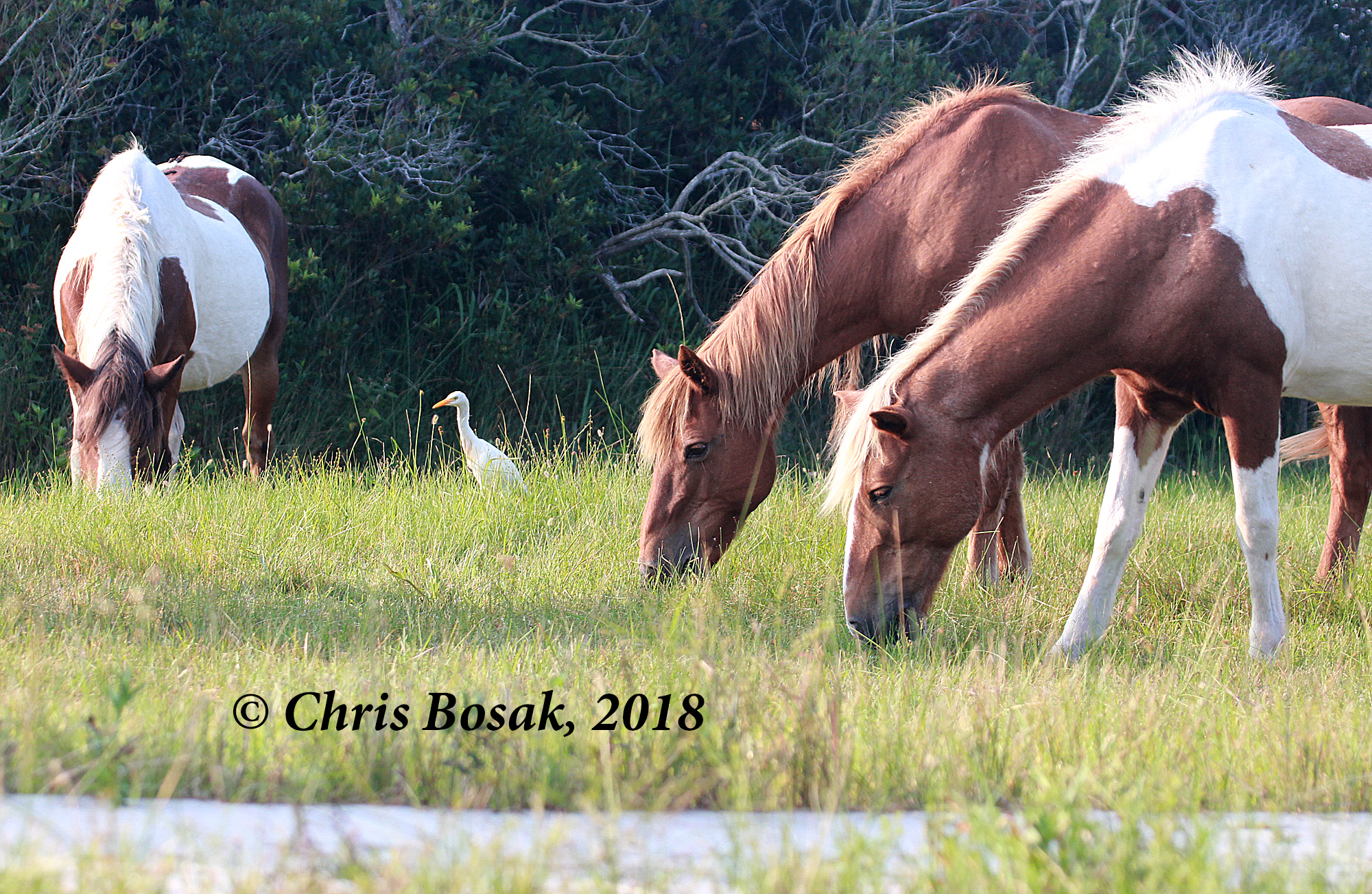
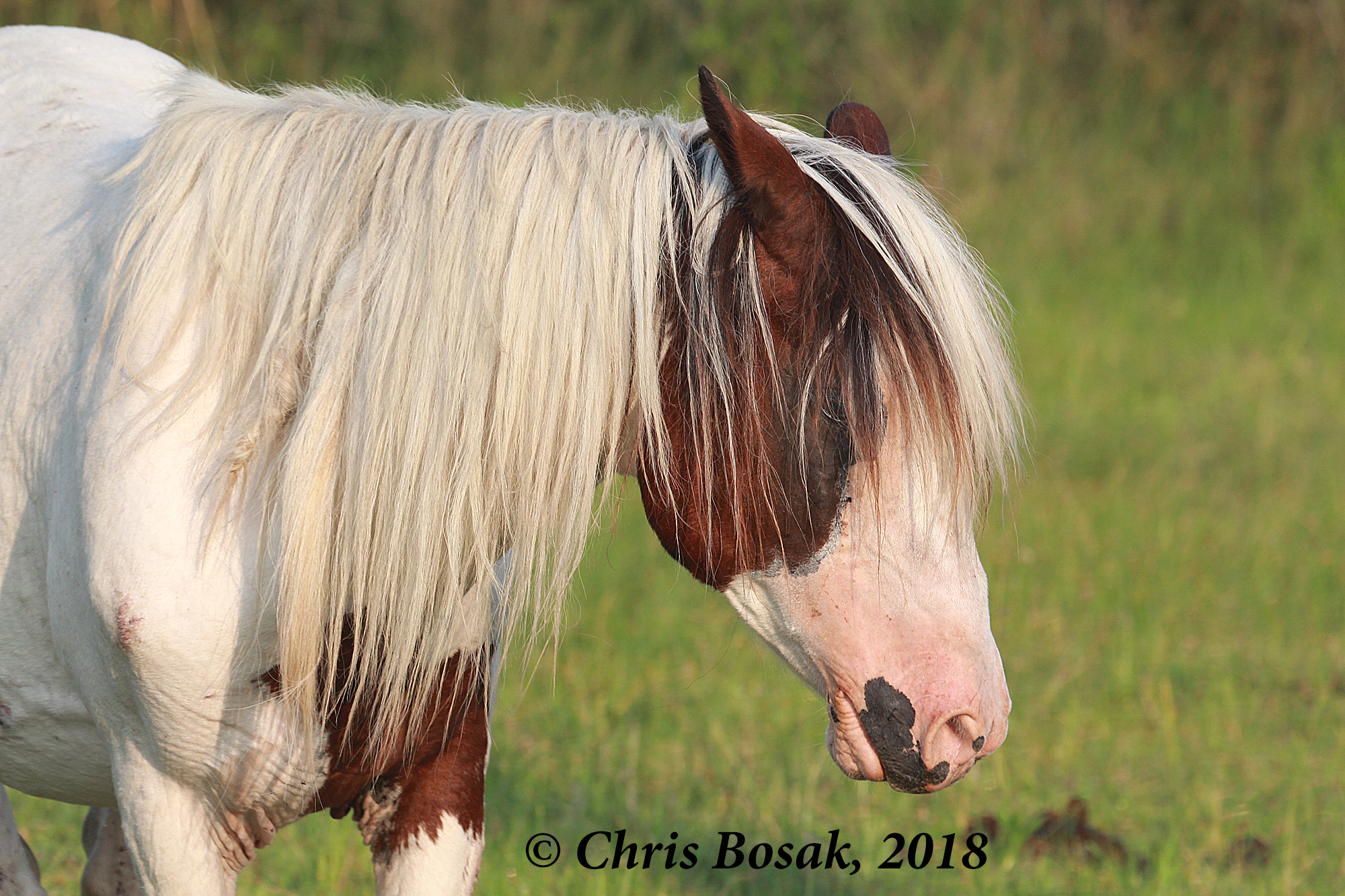
Here’s the third and final post of the beautiful wild horses of Assateague Island National Seashore. Next post, back to New England.
More information about the horses may be found here.
Here’s the third and final post of the beautiful wild horses of Assateague Island National Seashore. Next post, back to New England.
More information about the horses may be found here.
Here are the beautiful wild ponies at Assateague Island National Seashore. This link can explain the better than I can. Click here.
We’ll travel back north to New England after a few posts of the horses.

Photo by Chris Bosak
A semi-palmated plover looks for food at Assateague Island National Seashore, Maryland, summer 2018.
The wild ponies are coming next, I promise. But first a few more shots of the semipalmated plover I spotted at Assateauge Island National Seashore.

Photo by Chris Bosak
A semi-palmated plover looks for food at Assateague Island National Seashore, Maryland, summer 2018.
Semipalmated plovers are fairly common sightings up and down the coast, including New England, but I got a good look at this bird as it hunted the shoreline of a marsh at Assateague Island National Seashore. I even caught him pulling a worm of some sort out of the mud.

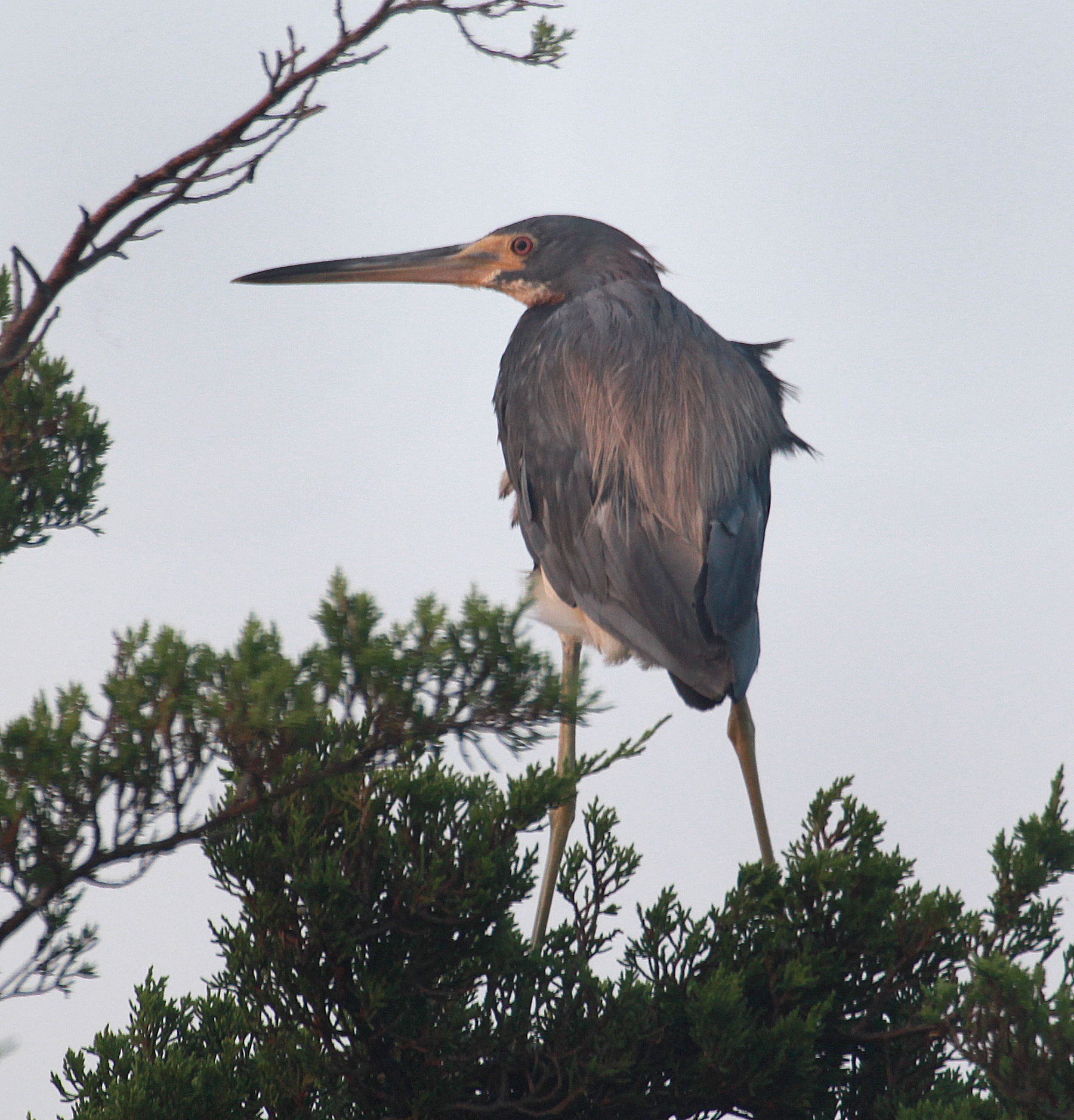
Photo by Chris Bosak
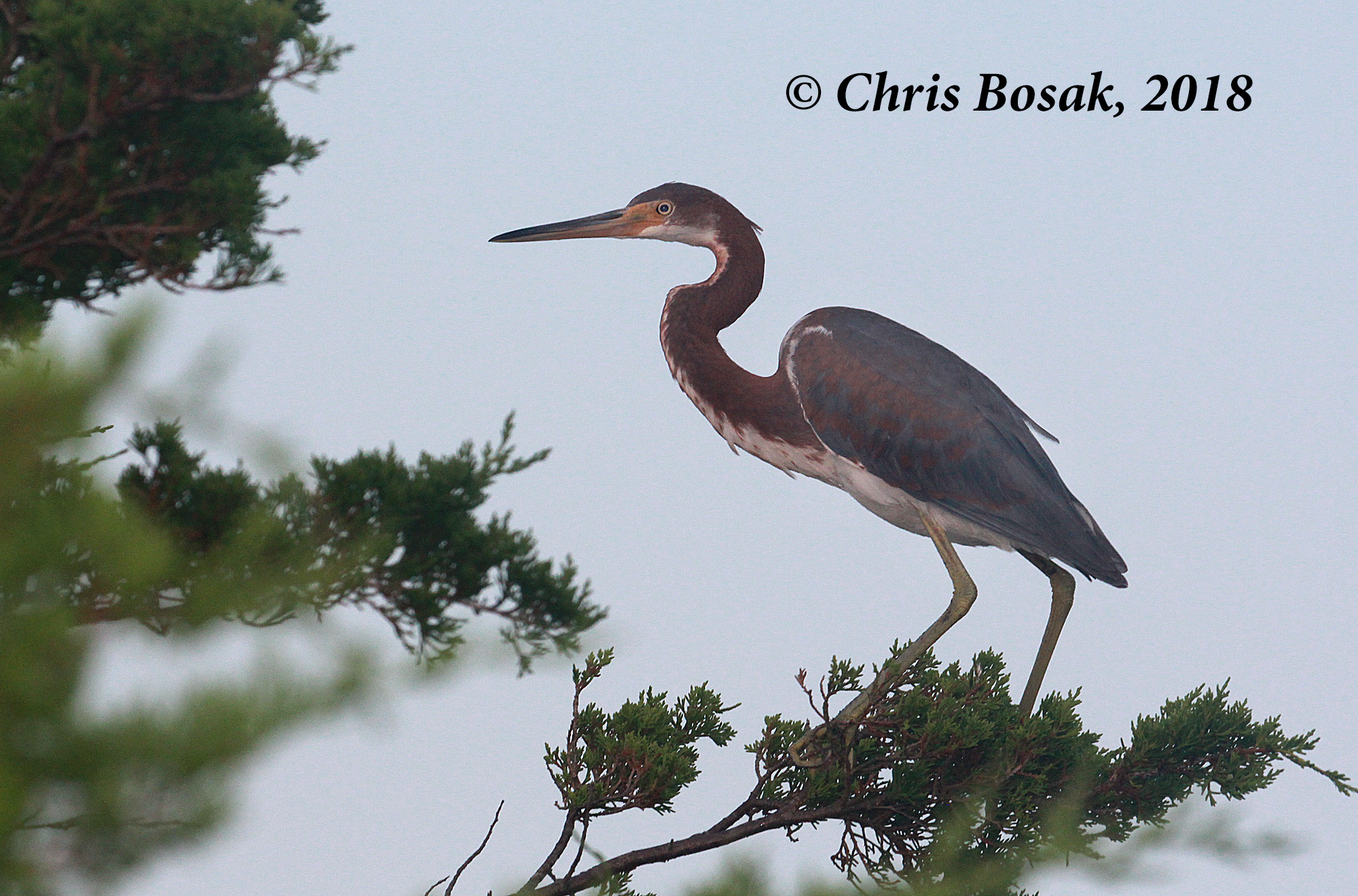
A tri-colored heron at Assateauge Island National Seashore, Maryland, summer 2018.
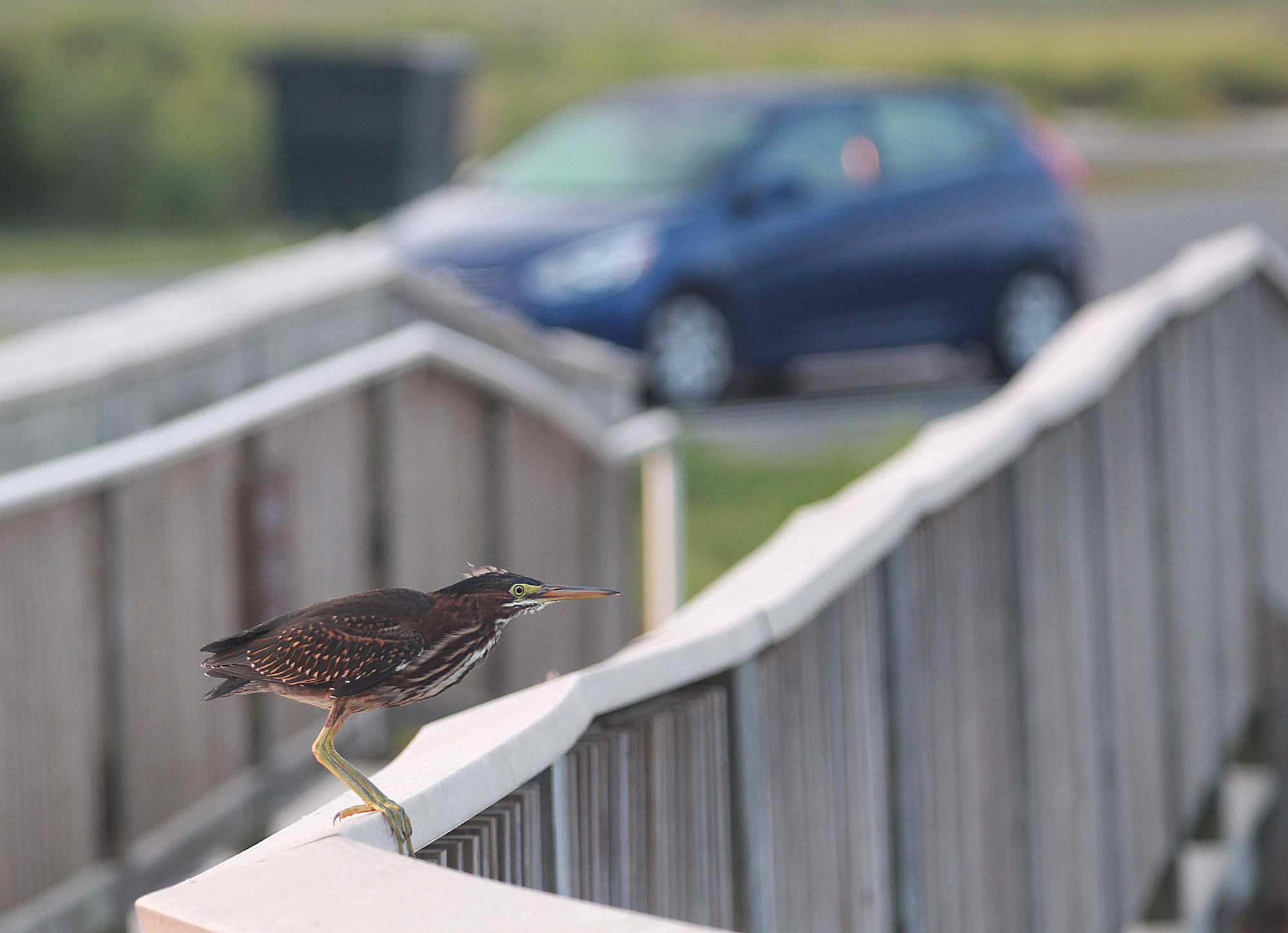
The other day I posted a few shots of a brave green heron I found at Assateague Island National Seashore in Maryland. Here are a few more shots from that trip.
Coming soon: Shots of the wild ponies at Assateague.
Yes, that’s my car in the background. Couldn’t resist getting a shot of the bird with the car in it, too.
When someone posts to a rare bird alert a sighting that occurred outside of the specific designation area (a Rhode Island bird on Connecticut Rare Bird Alert, for example) they call it extralimital. Well, this post is extralimital in that the photos were not taken in New England, but rather on Assateague Island during a recent visit to the Maryland beaches.
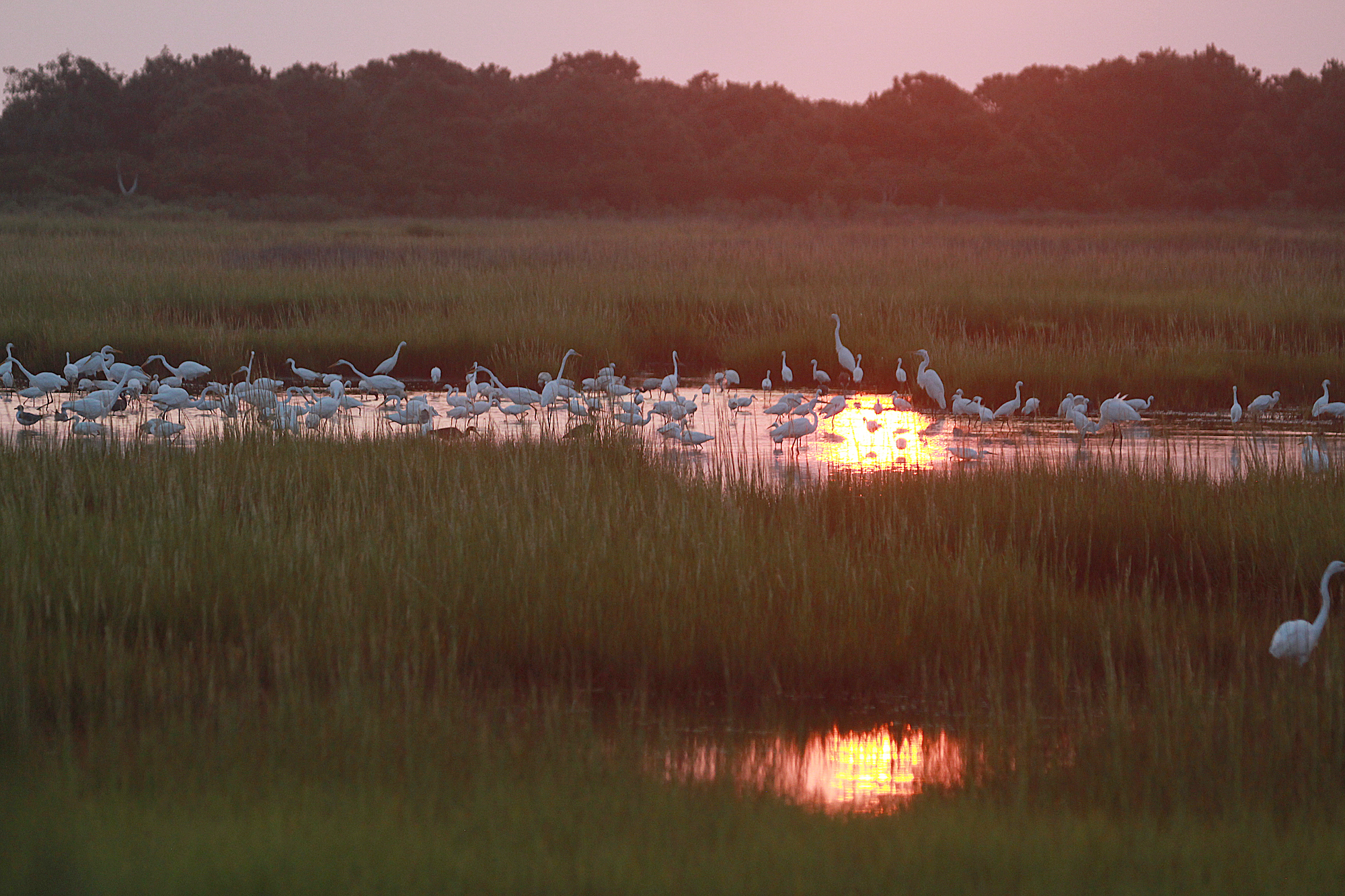
I got up well before sunrise and arrived at a spot as dawn was breaking where hundreds upon hundreds of waders could be seen in the shallow marsh ponds. I walked to the edge of a short wooden walkway to get a different angle of the sunrise. As I turned to walk back along the walkway I was caught off guard by a green heron literally feet away from me on the railing.
The New England green herons I’ve seen and photographed over the years have been very wary. They certainly aren’t approaching me to within a few feet. Well, this bird did. So, of course, I took a bunch of photos of it. Here are a few.
I hope to post a few more photos of that trip (including some of the wild ponies), temporarily making this site http://www.birds of new england and a bit beyond.com
Here is the latest For the Birds column, which appears in several New England newspapers.

Photo by Chris Bosak
An American Goldfinch perches on a sunflower and picks out seeds in a New England garden.
A large field grows next to the driveway of my son’s friend’s house. When I drop my son off, I always look there to see if anything is happening.
Usually I don’t see much, except maybe a butterfly or a dragonfly or two from a good distance. But lately the field has been alive with activity, mostly from a familiar bird with a familiar song. Goldfinches are there — by the dozens. Three or four pop up from the tall grasses and sing their “potato chip” song as they fly in their undulating pattern to another spot in the field. This happens about every 15 seconds.
So why all the goldfinches lately? Most of the other birds that nest in New England are relatively quiet when August rolls around. Other birds are largely done with nesting and tend to lay low as they raise their first-year broods.
Goldfinches are different. They are late-nesters, especially by New England standards. While many birds time their nesting to coincide with insect hatches, goldfinches time their nesting to that of another food source: seeds.
When the babies arrive, growing goldfinches have their pick of thistle, milkweed and other flowers going to seed. Nesting typically begins in late June or even into July — when most young birds of other species have already fledged or are getting ready to fledge. By the time young goldfinches fledge, their food sources are Continue reading
Thanks for ag.Purdue.edu for the info.

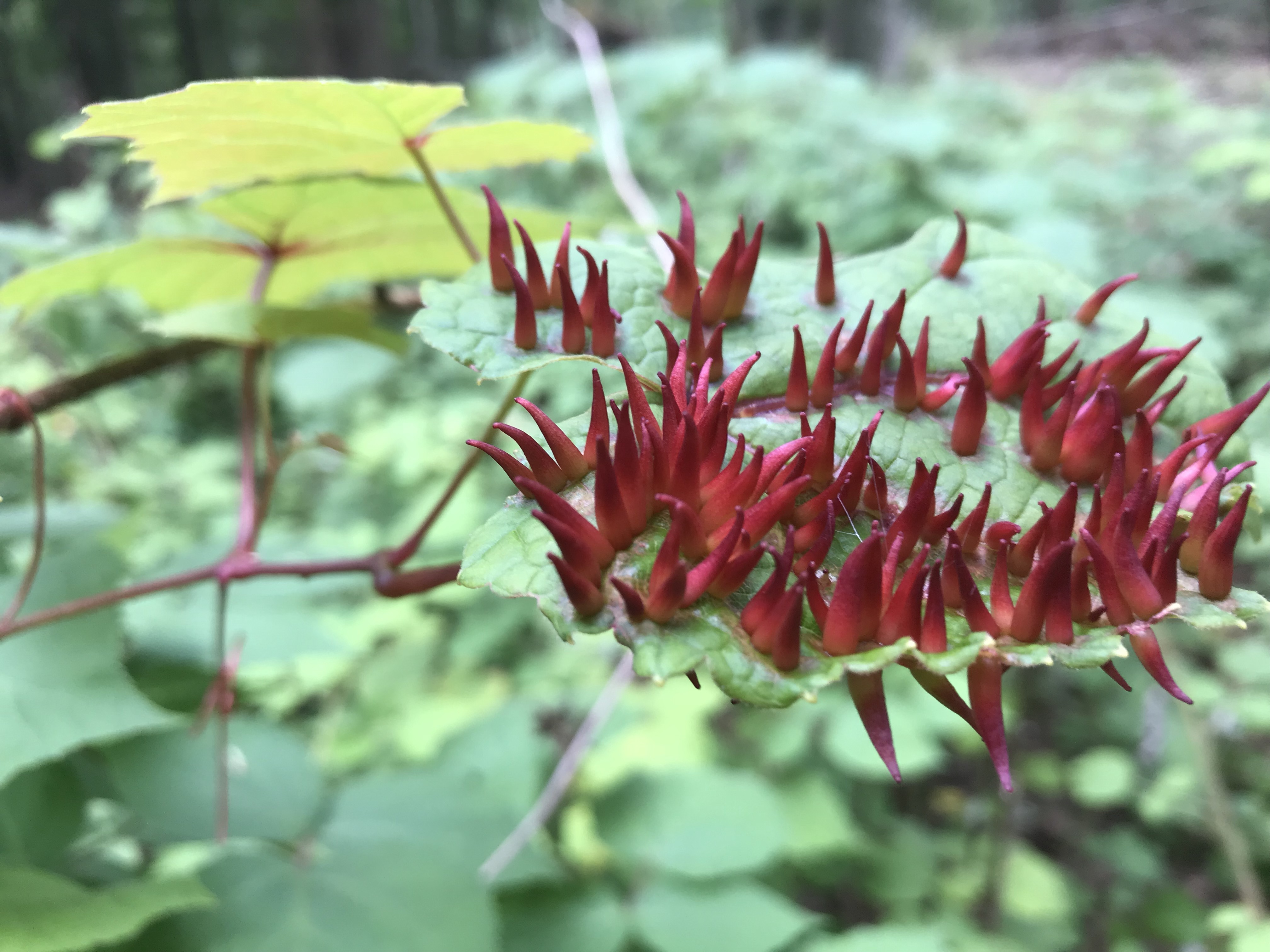
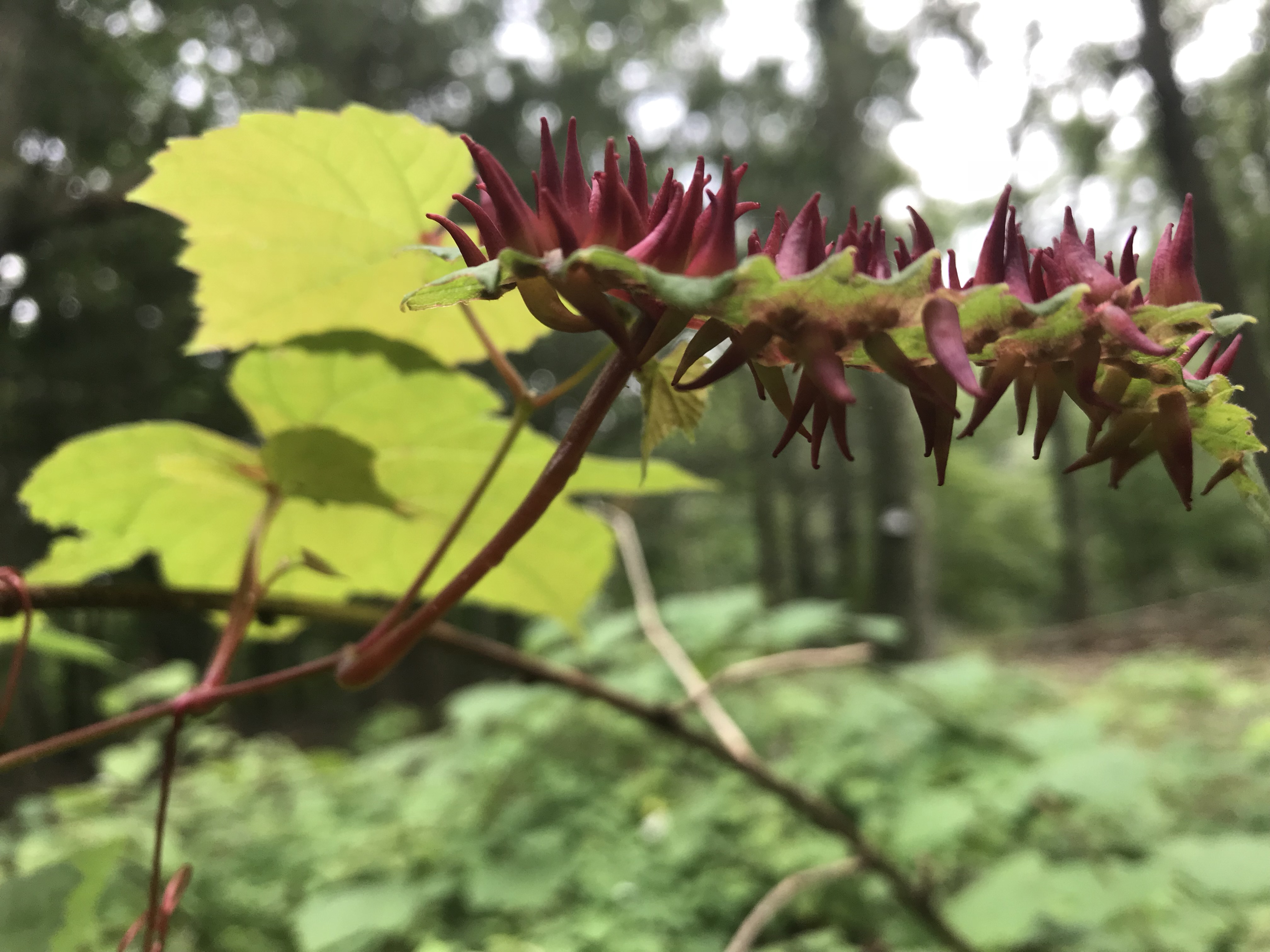
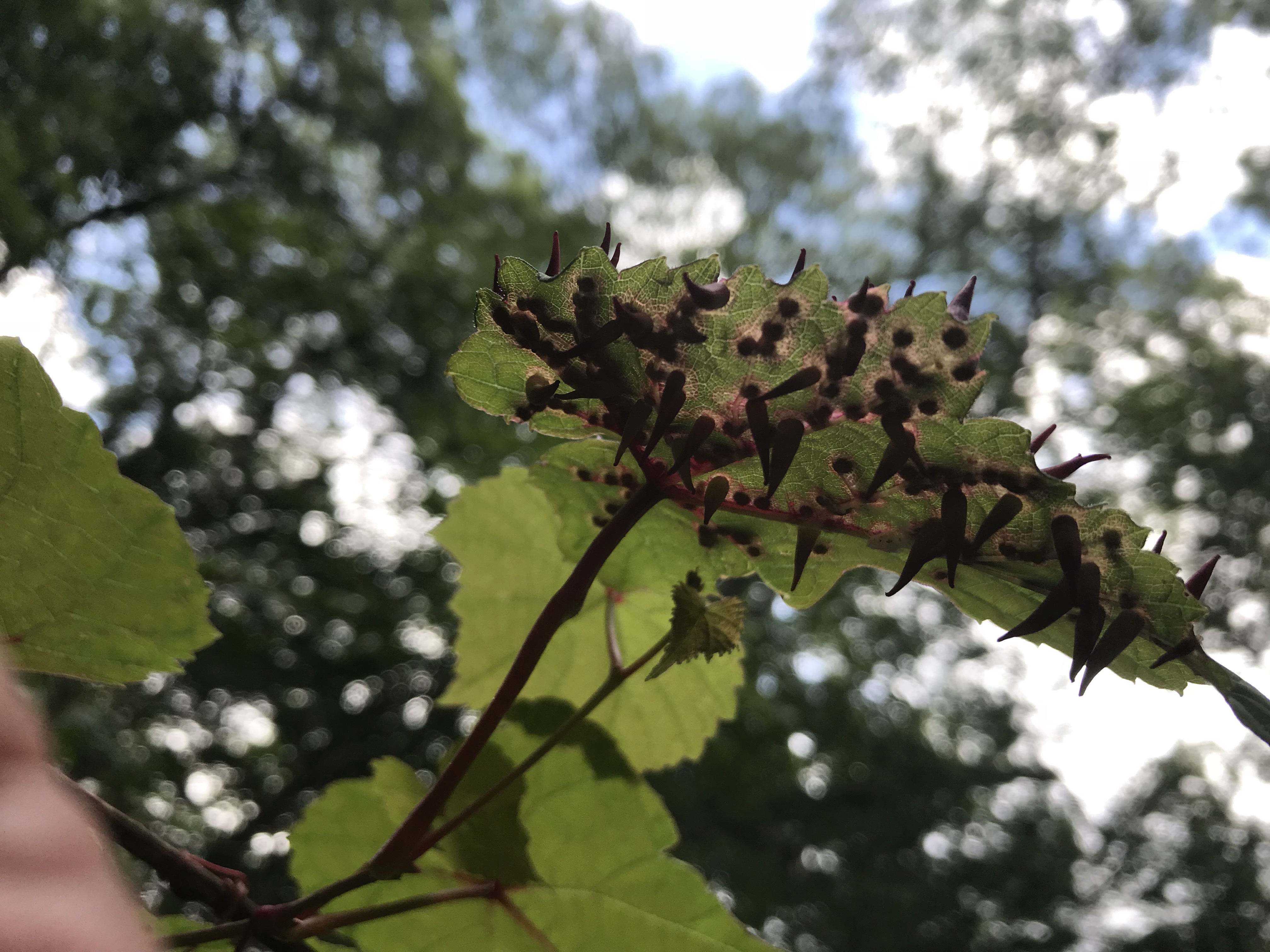
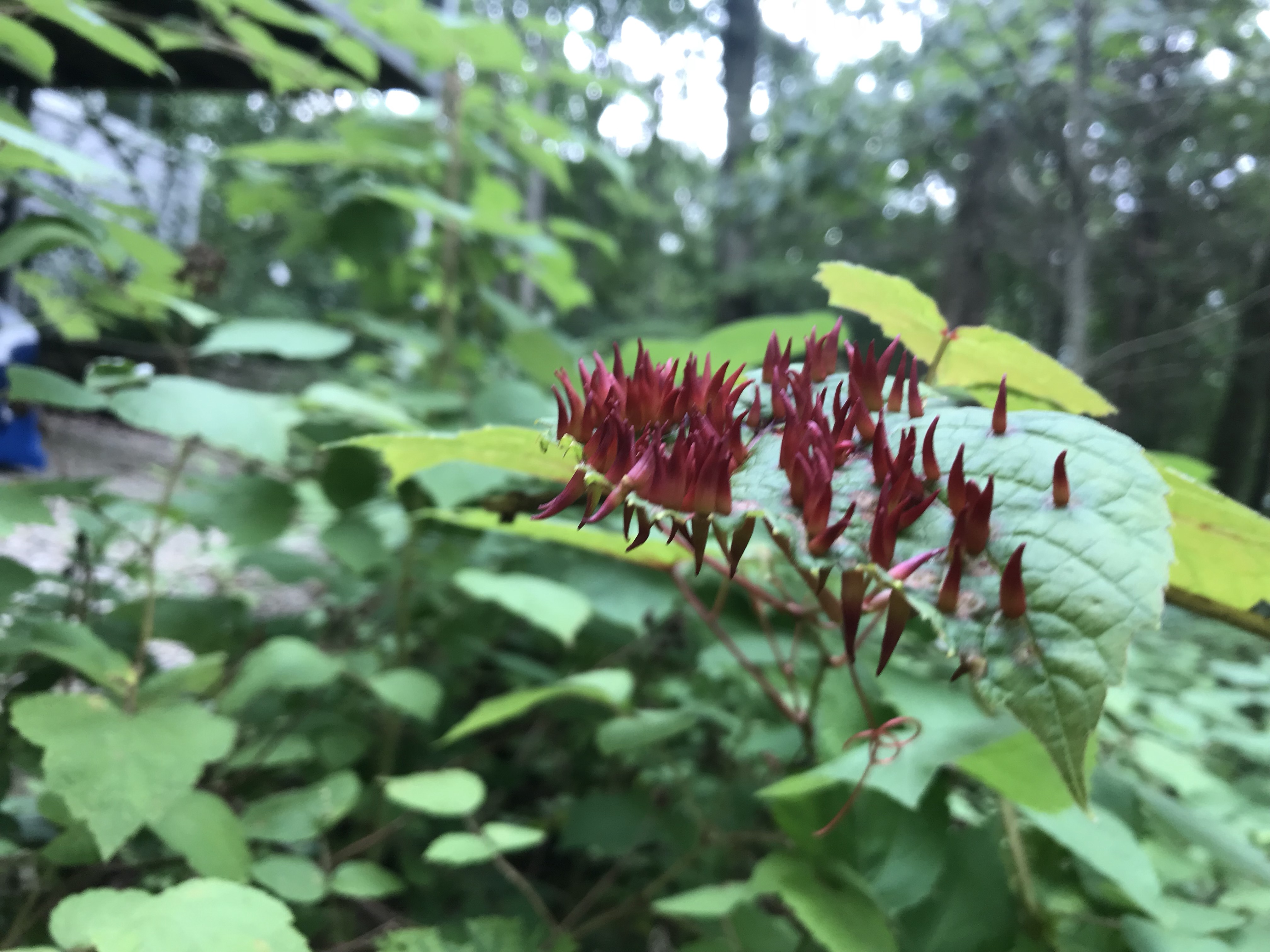
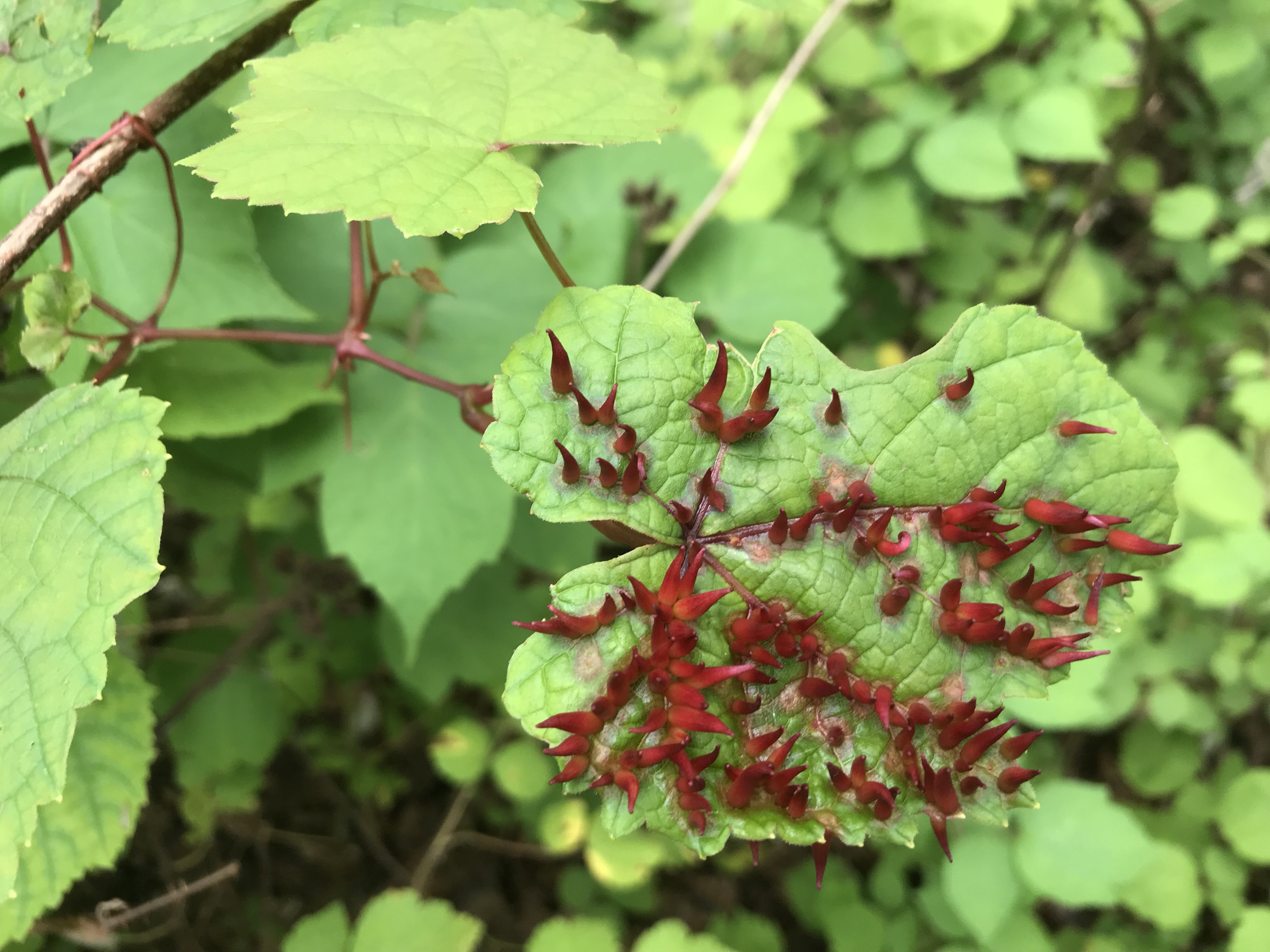
Any plant experts out there? Because I certainly have no idea what is going on with this leaf.
This is a leaf on an unknown vine that is growing among a large patch of wineberry, an invasive and nonnative bush that produces edible berries. This patch just happens to be in my yard. I noticed this leaf a few days after my son Will and I picked the plants clean of their berries. (We made jam for the first time and, boy, is it good.)
The vine may be a wild grape, but I’m not positive. It is the only such vine growing among the wineberry, so far as I can tell. The leaf appears to have red double-sided daggers sticking out the top and bottom. Perhaps it is a growth coming from either direction. I have no idea. It is the only leaf that looks like this. Of the thousands of leaves surrounding it, this is the only one with this phenomenon.
So, any ideas??
Here are a few more photos.