
A Day on Merganser Lake
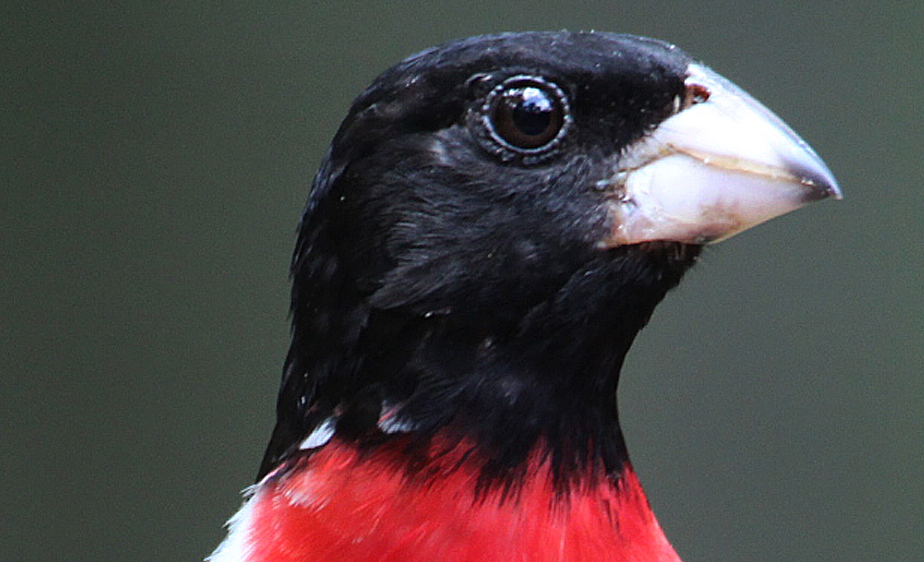
Here’s a random close-up of a rose-breasted grosbeak. Why not?
A Day on Merganser Lake
Here’s a random close-up of a rose-breasted grosbeak. Why not?

A Day on Merganser Lake
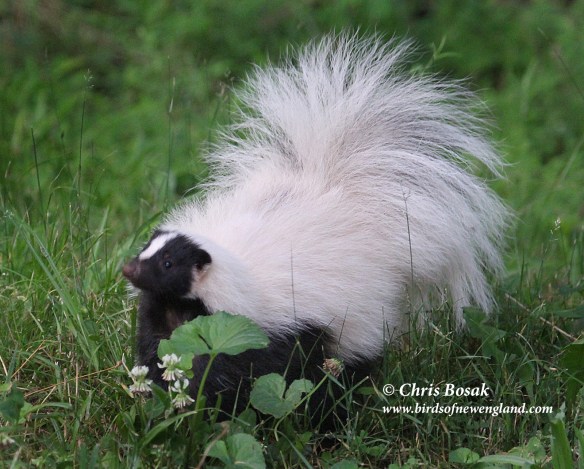
I have two skunks that visit my yard each night. They are both striped skunks and one looks very much the part, as if it stepped out of a field guide. The other, shown above and below, is predominately white. Both are welcome, of course. As long as they stay out of my garden.

The yellow-crowned night heron resembles the black-crowned night heron (featured a few days ago) with a few differences. The yellow-crowned night heron has a skinnier neck, for one. Just like the great egret may be found on the coast or inland, while the snowy egret tends to hug the coast; black-crowned night herons are more likely to be found away from the coast than yellow-crowned night herons.


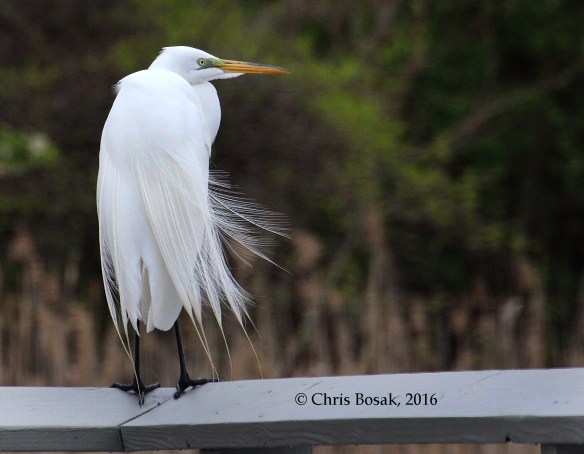
Just like yesterday’s great egret photo, this photo of a snowy egret has stood the test of time. The copyright says 2015, but the photo was taken many years before that, in the Norwalk Harbor in Norwalk, Connecticut.
Snowy egrets are less likely to be seen away from the coast than great egrets, which can often be found far inland. Snowy egrets are much smaller than great egrets, as the name suggests. The photo below is pretty low in quality, but it gives you an idea of the size difference between the two. The snowy egret is on the left.


I took the above photo almost 20 years ago and it’s still one of my favorites. Central Park in New York City is a great place to see and photograph birds. It’s a large green oasis among a sea of concrete and steel.
The egret below was photographed in a slightly more “wild” place: the Norwalk River.
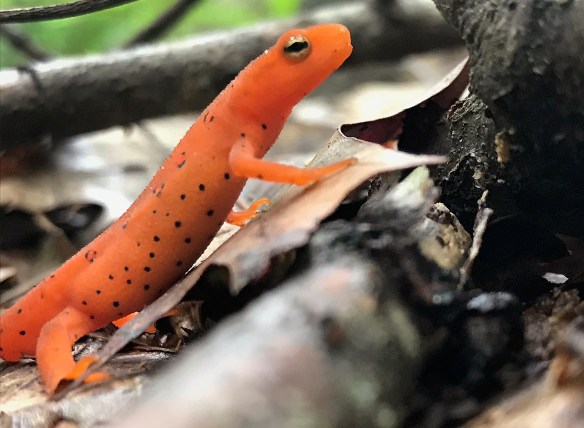
To err is human and I am about as human as they come.
Of course, no one is perfect and trying to solve nature’s mysteries is fraught with pitfalls.
I was walking down a trail one morning not too long ago. It had rained heavily the night before and the trail was damp. I had to watch my step because there were so many efts on the trail. I remembered a time when I mistakenly referred to the bright orange amphibians as newts.
I wasn’t completely off base, of course, as efts are the terrestrial stage of the newt. After being born in the water and then crawling around the ground as an eft for a while (sometimes a few years), they return to the water to live out their time as a newt.
That is just one example of many mistakes and misidentifications I used to make. I’m sure there are some things I currently mistakenly identify and there will certainly be things in the future that I errantly call the wrong name.
Here are some examples I often hear from others that are not correct. There is no judgment, of course, as we have already determined that no one is perfect.
I think I hear the “fisher” called a “fisher cat” more often than its proper name. The fierce, large member of the weasel family is simply called a fisher, no “cat” necessary. Indeed, it is not a cat at all. It is a weasel. Now that the red-bellied woodpecker is expanding its range north throughout New England, it is a good time to remind everyone that it is not actually a red-headed woodpecker. The red-bellied woodpecker does indeed have a mostly red head, but the name red-headed woodpecker is already taken by a bird that does indeed have a fully red head. Adding to the confusion is that the reddish-pink belly of the red-bellied woodpecker is not often seen and not an obvious field mark.
Here’s a tough one that took me years and years to get: the difference between a house finch and purple finch. They look very similar and many people automatically default to the purple finch, which is understandable as it is the state bird of New Hampshire and native to New England. House finch, however, is far more common these days even though they are transplants from western U.S. Purple finches are more colorful (at least the males), slightly larger and have more substantial bills. No, not the type of bills that are due every month.
I often hear people think an owl is singing during the day when they hear a mourning cooing. The mourning dove’s song does have an owl-like quality to it, but it is softer and unique to the dove. The owl that typically sings during the day is the barred owl and its song is much more gruff sounding than the cooing of a dove.
Finally, the osprey is sometimes confused with the bald eagle. Both are large, majestic birds of prey with white heads found near water so the confusion is understandable. The best way to tell them apart is by size. As impressive as the osprey is, the eagle is substantially larger. The typical wingspan of an osprey is about five feet, while an eagle’s is six-and-a-half feet. Also, the underside of an osprey is white and that of an eagle is brown. Either way, it’s great to see the population of both species rebounding so significantly.
In the end, whether people get the name or identification correct pales in comparison to the species being noticed and appreciated.
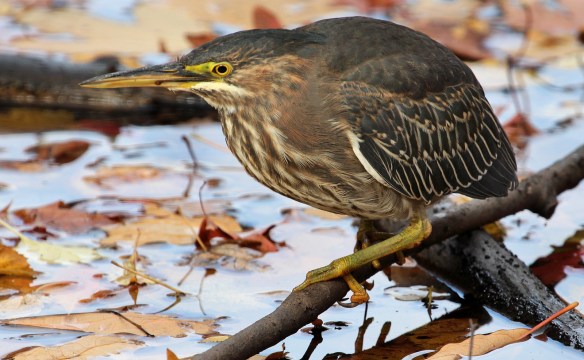
I find that green herons are typically difficult to photograph because they tend to be wary. On occasion, I have come across green herons that are so wrap up in finding food that they basically ignore me. Those are fun.


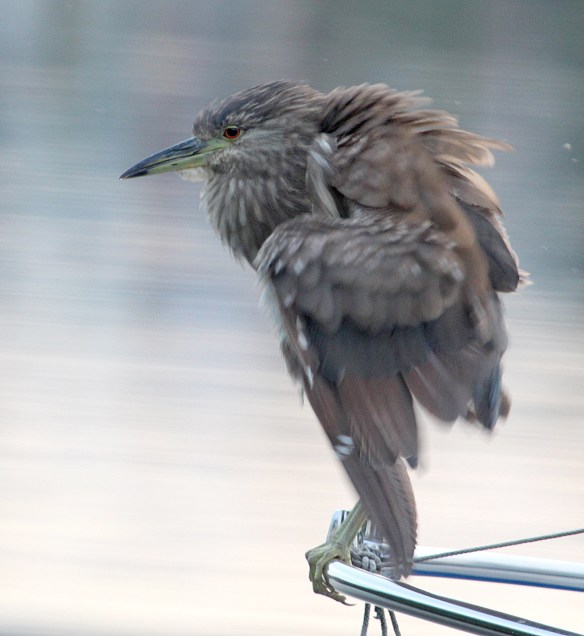
Yesterday I started a series of wader photos. I kicked off the series with the great blue heron, which is probably our most common and well known wader. The black-crowned night heron is not as well known, although it is fairly common along the coast and some inland waters during the summer.
Here’s what a young one looks like …
Back to the adult …
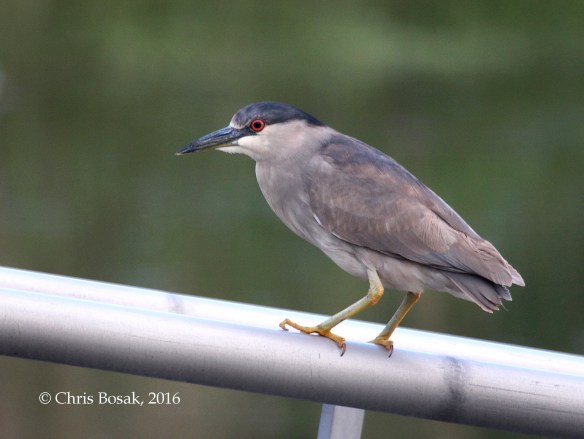
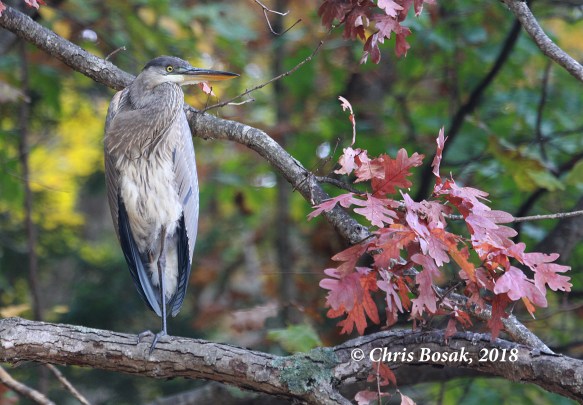
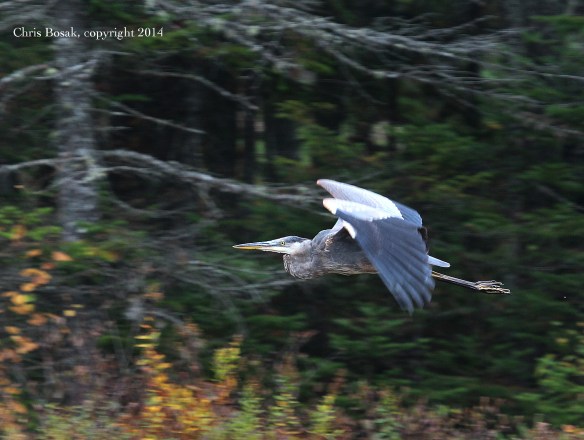
Summer wouldn’t be summer without our waders, birds such as herons and egrets. We may not get as many individuals or different types as Florida, but New England boasts a good number of these recognizable birds. Here’s the start of a short photo series on these long-legged beauties.

A Day on Merganser Lake
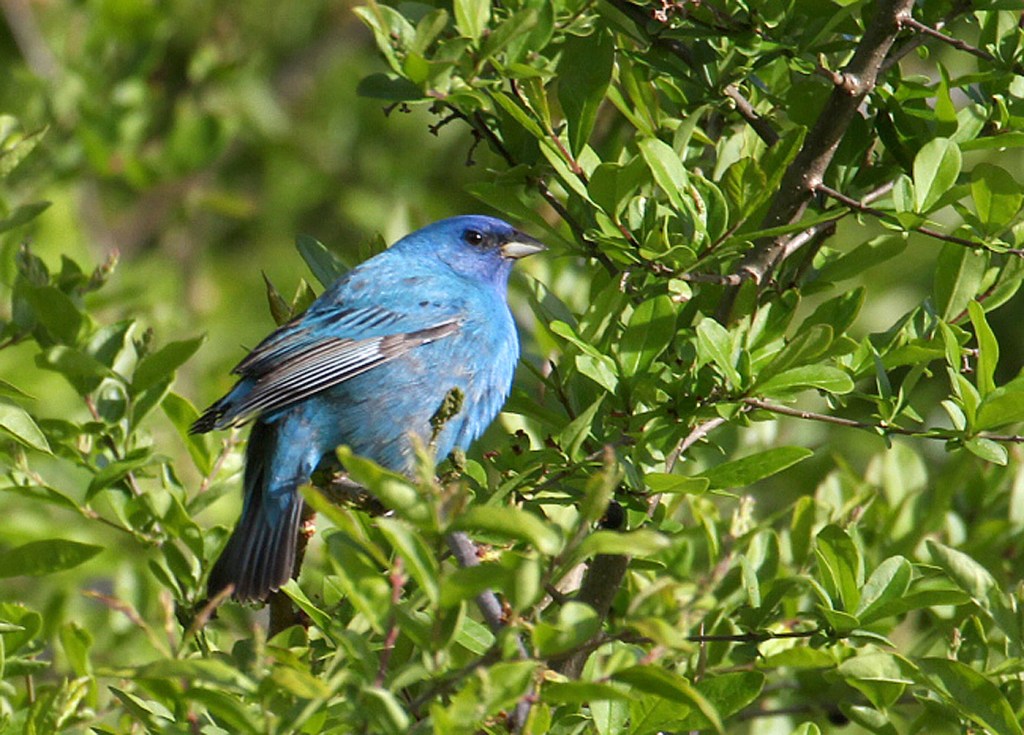
No words are necessary when an indigo bunting is the subject.
 Birds of New England.com