American Goldfinch at window feeder

American Goldfinch at window feeder.

American Goldfinch at window feeder.

99.9 percent of the birds that visit the window feeder right over
my desk are either titmice or chickadees. 
I love seeing them, but a little variety would be nice. 
So it was a nice surprise to see these American Goldfinches pay a 
visit the other day. 
Photo taken with iPhone.

How do birds know when a new feeder is out?

Here’s my latest For the Birds Column, which runs weekly in The Hour (Norwalk, Conn.) and The Keene (N.H.) Sentinel:

Photo by Chris Bosak A Northern Cardinal, left, and an American Goldfinch perch in a tree near a feeding station at Cove Island Wildlife Sanctuary in Stamford, Conn., in March 2015.

Photo by Chris Bosak
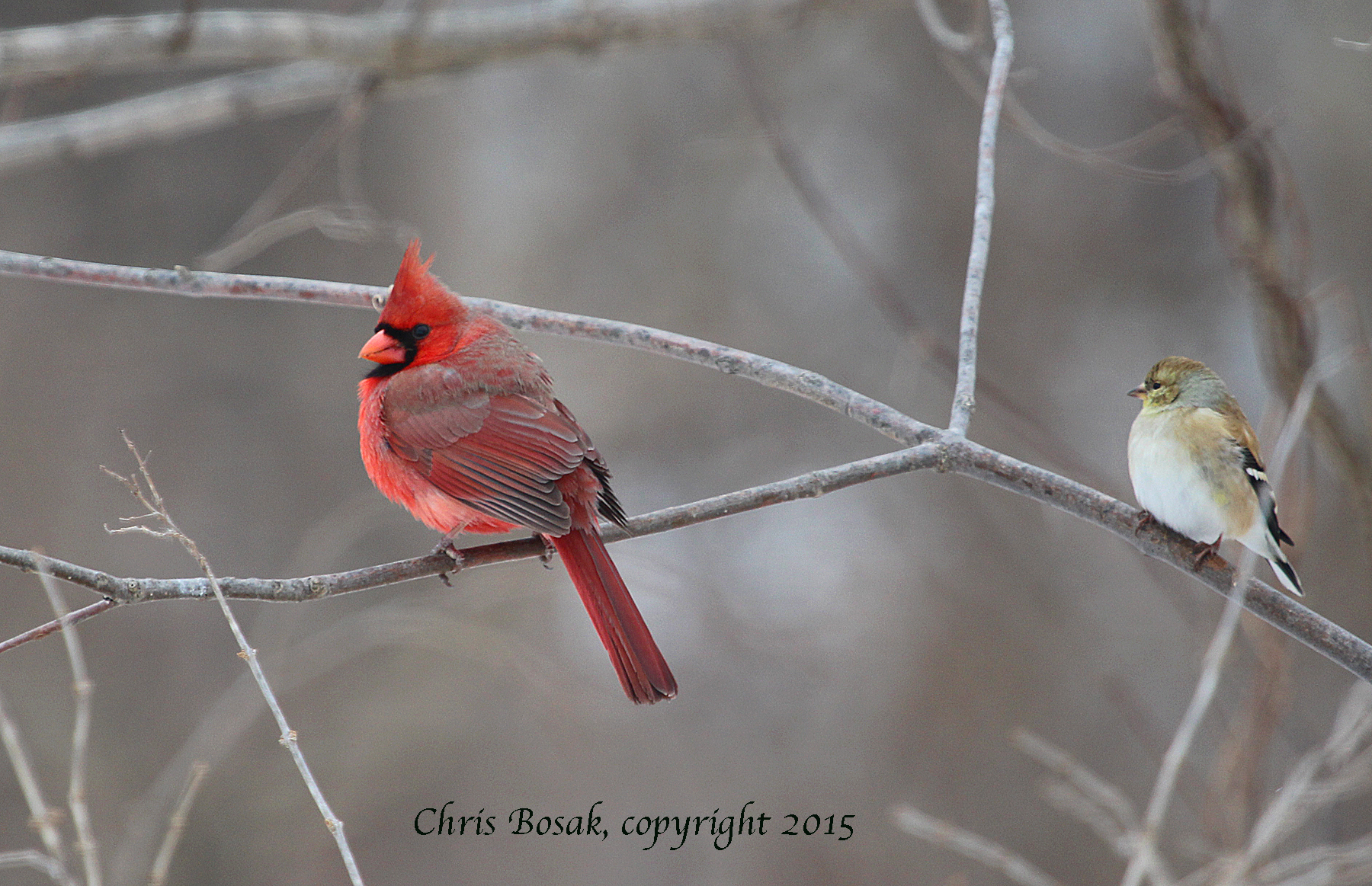
A Northern Cardinal, left, and an American Goldfinch perch in a tree near a feeding station at Cove Island Wildlife Sanctuary in Stamford, Conn., in March 2015.


An interesting question came my way via email the other day. It came from a long-time Norwalk resident who wondered how the goldfinches in her yard knew that she suddenly switched to Nyjer seed. She had never seen goldfinches before at her feeders, but when she put up a sock feeder filled with the small, black seeds, the goldfinches came within one day.

“How did they know? Are they sock experts? Do they have X-Ray eyes that could penetrate the sock and see the thistle? Does thistle smell so they could sniff a trail? Do they have scouts always watching every yard?”

Great question. As a quick aside, what is commonly referred to as thistle seed is really either niger or the trademarked name Nyjer seed.

Whatever you call it, how do the birds know it’s there? Common sense may dictate that they smell it. How else could they know? But most birds, including our favorite backyard birds, have a poor sense of smell. Also, the seeds are largely odorless so even if the birds did have a strong sense of smell, it’s unlikely they’d be able to pick up the scent anyway. It’s not like a neighbor barbecuing chicken on a breezy day. The most likely scenario is that the birds saw the new feeder and recognized it — probably from past experience — as a food source. American Goldfinches are very nomadic  …

Read the rest of the column here.
Two backyard favorites in one shot

Photo by Chris Bosak A Northern Cardinal, left, and an American Goldfinch perch in a tree near a feeding station at Cove Island Wildlife Sanctuary in Stamford, Conn., in March 2015.

Photo by Chris Bosak
A Northern Cardinal, left, and an American Goldfinch perch in a tree near a feeding station at Cove Island Wildlife Sanctuary in Stamford, Conn., in March 2015.

You don’t always see cardinals and goldfinches perched near each other, but when you are watching a feeding station at which the birds are somewhat skittish, anything can happen. The usual assortment of birds were enjoying the feast at Cove Island Wildlife Sanctuary in Stamford, Conn., the other day, but other than occasionally being perched on the same feeder, the species generally kept away from each other.

However, the birds scattered every five minutes or so because of some unseen (by me anyway) force and sometimes the birds would find themselves perched next to an individual of another species.

I was focused on getting a photo of this cardinal, but noticed the goldfinch off to the right, so I decided to get them in the same frame. Why not?