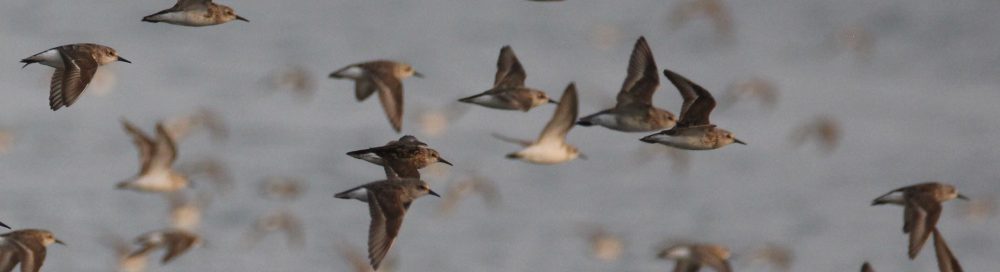
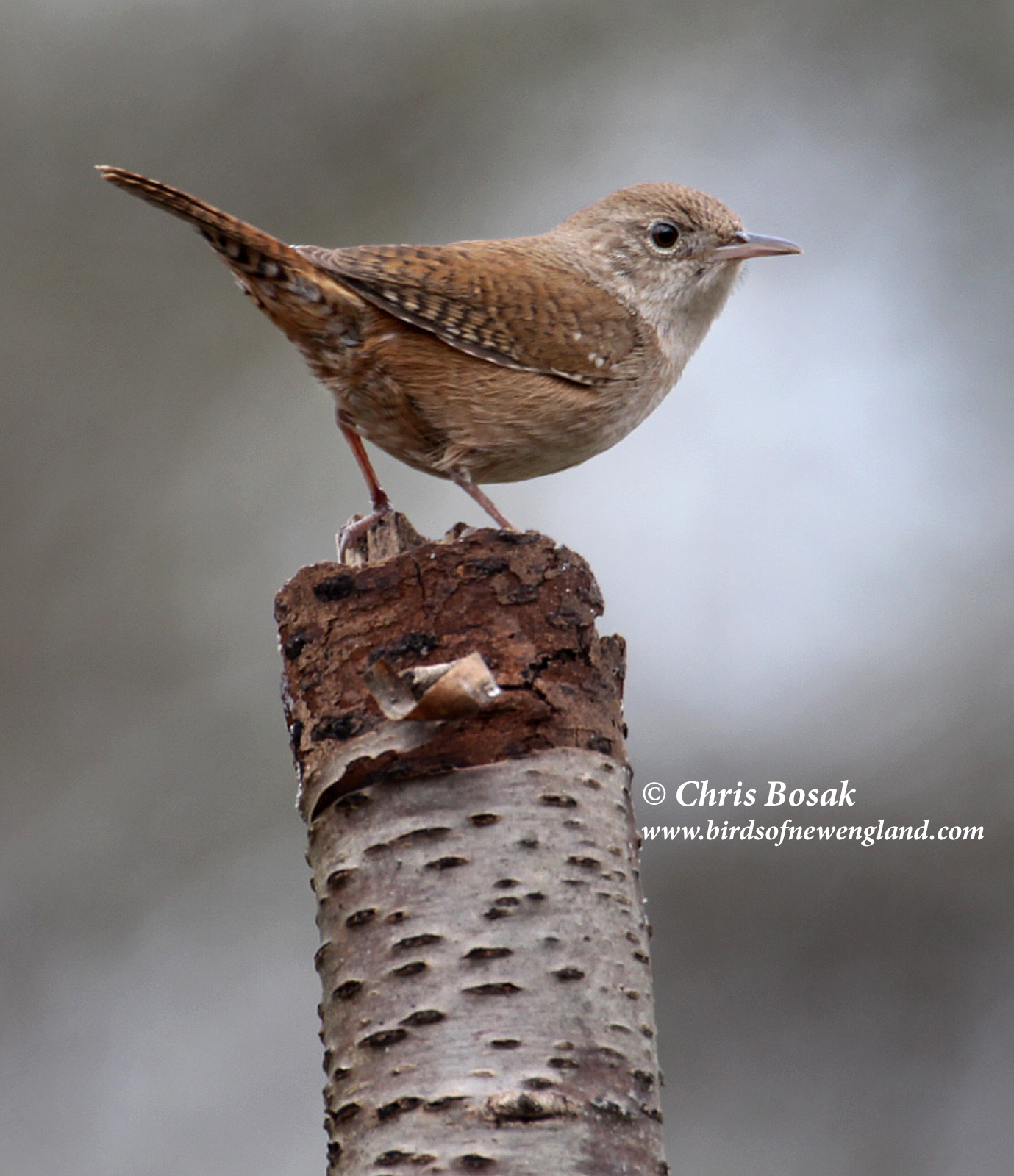
A house wren perches on a branch in New England.
My brother and I were on our favorite birding trail in my old hometown of Erie, Pennsylvania, when one of those fantastic bird flurries happened.
It was mid-May and the flurry consisted of four or five types of warblers, two brown thrashers, a blue-gray gnatcatcher, Baltimore orioles, a house wren and a few other species. When the flurry died down and I entered the species into my eBird report, I noticed something that struck me as odd.
When I entered house wren, the only option that came up was northern house wren. What the heck is that? I thought. I assumed that was the species I’ve always known as house wren, but I still wondered where the “northern” came from.
A quick internet search confirmed that the new official name for the house wren species that occurs in the U.S. is northern house wren. The southern house wren, formerly considered the same species as the northern, lives south of the U.S. and there are also five separate Caribbean endemic species. The split and name changes happened in 2024. Somehow, I missed the memo until now.
The website of the American Ornithological Society says the change was made based on a “variety of data, including genetics, song, morphology (plumage and measurements), ecology, behavior, and habitat.”
So, the house wren, or Jenny wren as many people call it, is no longer merely the house wren but rather the northern house wren. I believe the vast majority of people will still call it the house wren in casual conversation, just like people say cardinal instead of northern cardinal or mockingbird instead of northern mockingbird. It’s still good to know the new official name regardless.
The split and renaming of the house wren was not the only significant change that occurred in 2024, as I found out. The opposite happened with the redpoll, those small finches from the north that sometimes irrupt into New England in the winter. Instead of one species becoming several like the house wren, three redpoll species became one. It’s called lumping in bird nomenclature jargon, and the common redpoll, hoary redpoll and lesser redpoll are now one species known simply as redpoll.
Another noteworthy change in 2024 was the splitting of barn owl into multiple species. The species that occurs in the U.S. is now the American barn owl, not just the barn owl.
Each year, usually in July, the American Ornithological Society publishes a supplement to its Check-list of North American Birds. This supplement usually includes a few changes in bird names. It could be a straight name change like oldsquaw to long-tailed duck in 2000, a splitting of species like the house wren or a lumping of species like the redpoll.
It will be interesting to see what is published this year. Big changes are likely afoot in the years to come as most birds named after people (such as Wilson’s warbler or Cooper’s hawk) will get names that help describe their appearance. The elimination of these names is in response to the questionable pasts of many of the namesakes.
This will not impact New England birdwatchers to a significant degree as not many common birds that occur in our region are named after people. It will still be interesting to see it all go down. Stay tuned.
 Birds of New England.com
Who decides these things? We’ve had some of ours messed around with too, multiple Redpolls lumped together ( I never could tell the diff anyway) 🙂
LikeLiked by 1 person
As you noted, good to know the new nomenclature of birds, though I agree most everyone will refer to the darling Northern House Wren as simply a Wren…
LikeLiked by 1 person