I was heading to my car at work when four or five relatively large birds emerged on the ground from around the corner of a building. I didn’t immediately recognize them, as their sudden appearance surprised me and my mind was elsewhere.
I took a few more steps and quickly realized what they were: baby turkeys. By that time, I had progressed enough that the mother turkey was now visible and only a few yards away. Will she attack like a mute swan or Canada goose might? Never get between a mother and her babies, the saying goes. I wasn’t actually between them, but I was certainly close enough to some of the babies that I could be considered a threat.
The mother took the opposite tactic and slowly walked in the opposite direction without a hiss, strut or even a glance in my direction. The babies, eight or nine in all, instinctively followed their mother. Within seconds, they had crossed the parking lot and silently disappeared into the woods.
It wasn’t my only experience with baby birds and their parents on that day. The back entrance to the office has an eastern phoebe nest built under a wooden stairwell. I usually take one quick photo a day to document the progress and compare it to previous years. The parents perch on a nearby branch or wire and utter endless chip notes, so I keep my intrusions to a few seconds at a time.
I’ve been documenting this phoebe couple for several years now. I’m not positive they are the same birds, but they come back to the same spot year after year like clockwork. They arrive in March and lay their first eggs sometime in late April. This is the third consecutive year that a cowbird egg has appeared in the nest in April. Weeks later, only a baby cowbird is present in the nest with no sign of the phoebe eggs. After the cowbird fledges, the phoebe pair tries again and, soon enough, the nest is crowded with young phoebes.
This is the time of year to watch the next generation of birds being born and raised. Of course, the nesting season starts much earlier in the spring, but there are other birding interests, such as spring migrants, to keep our attention. In the dead of summer, watching young birds being raised is a birding focus and highlight.
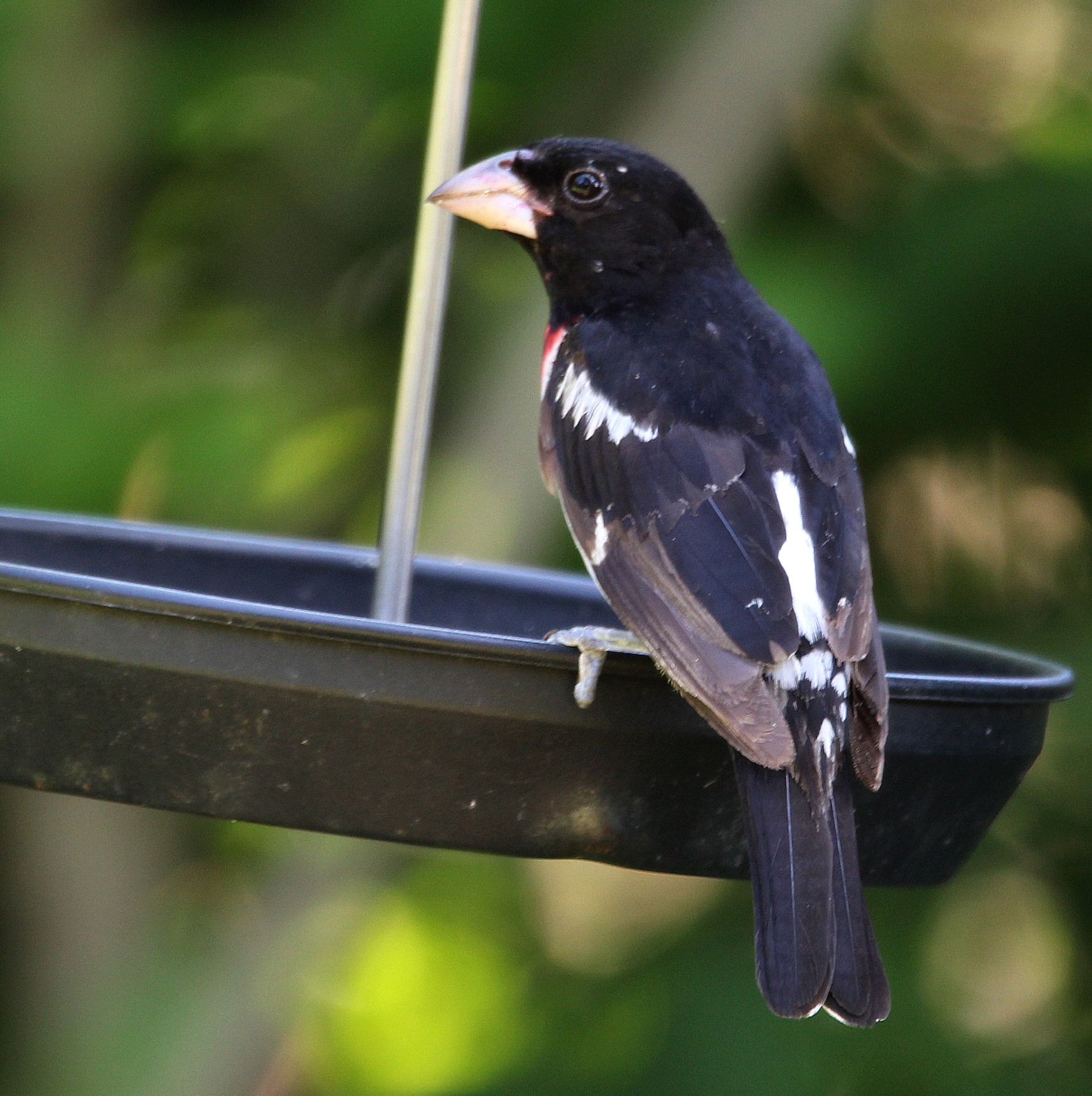
In my backyard, which is close to a downtown and not the most “birdy” spot in New England, I enjoy watching the young catbirds, cardinals, robins and chickadees learn the ropes from their parents. Chimney swifts flitter overhead by the dozens, so I can imagine many of those birds are youngsters as well. The other day, I was surprised to see a young male rose-breasted grosbeak at the feeder. It looked similar to an adult male, but was more heavily streaked, had brown patches on its back and the red triangle was not as bright.
In that case, it was obvious that it was a young bird. In many cases, it is difficult to determine whether it is an adult bird or a first-year bird. Young chickadees quickly resemble adults and gain familiar plumage, although there is a time when they appear more unkempt. Young sparrows quickly resemble adults as well, mostly because adult birds are mostly brown and not heavily patterned in the first place.
Birding may slow down in the summer, especially following the excitement of spring migration, but watching the next generation of birds thrive is always a treat. It’s a bright spot and glimmer of hope in a world that has become so negative and divisive in so many ways. No wonder birdwatching is getting so popular.
 Birds of New England.com
As I sit on my front porch in the early afternoon warmth of summer, I watch the fledged robins hop about my yard enjoying an insect or having a cooling drink from the ground level baby bird waterer. Am reading your commentary as I watch them stumble over a tiny branch they tried to hop up on as Mom and Dad bounce around in the grass watching and assisting if needed as their young ones become increasingly independent. This nest of 3 had fledged about 5 days ago and if they follow suit with their folks they’ll leave fully on their own in about another 5-6 days. We so enjoy watching all aspects of our yard birds….
LikeLiked by 1 person