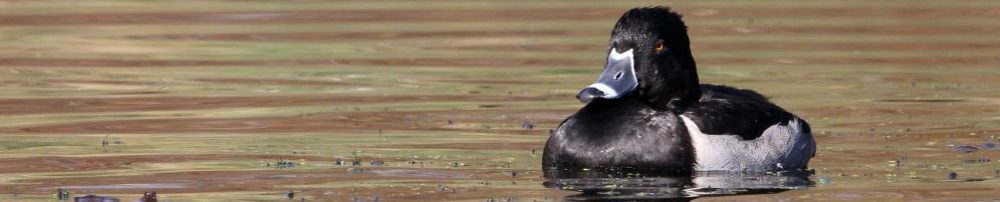
My favorite part of winter birdwatching has always been looking for waterfowl on whatever open water remains. Searching for bald eagles in those same areas has become another favorite of mine as the population of our national bird soars, and we see them more frequently.
Winter is also arguably the best time to watch feeders in the yard, although one can easily make a case for spring being the best time when the grosbeaks, buntings and other surprises arrive. Watching the feeders in winter, particularly before a storm, is a constant treat of chickadees, titmice, nuthatches, woodpeckers, cardinals, blue jays, juncos and white-throated sparrows.
In my opinion, an underrated part of winter birding is the finch irruption, or lack thereof, depending on the year. Birds such as siskins, redpolls, purple finches, crossbills, pine grosbeaks and evening grosbeaks sometimes irrupt into our region as food supply dictates. Other birds such as red-breasted nuthatches are also lumped into the category of unpredictable winter bird visitors.
An irruption is when unusually large numbers of birds venture into an area where they are not often seen. In our case, it’s the northern birds such as the aforementioned finches that irrupt into New England irregularly in the winter.
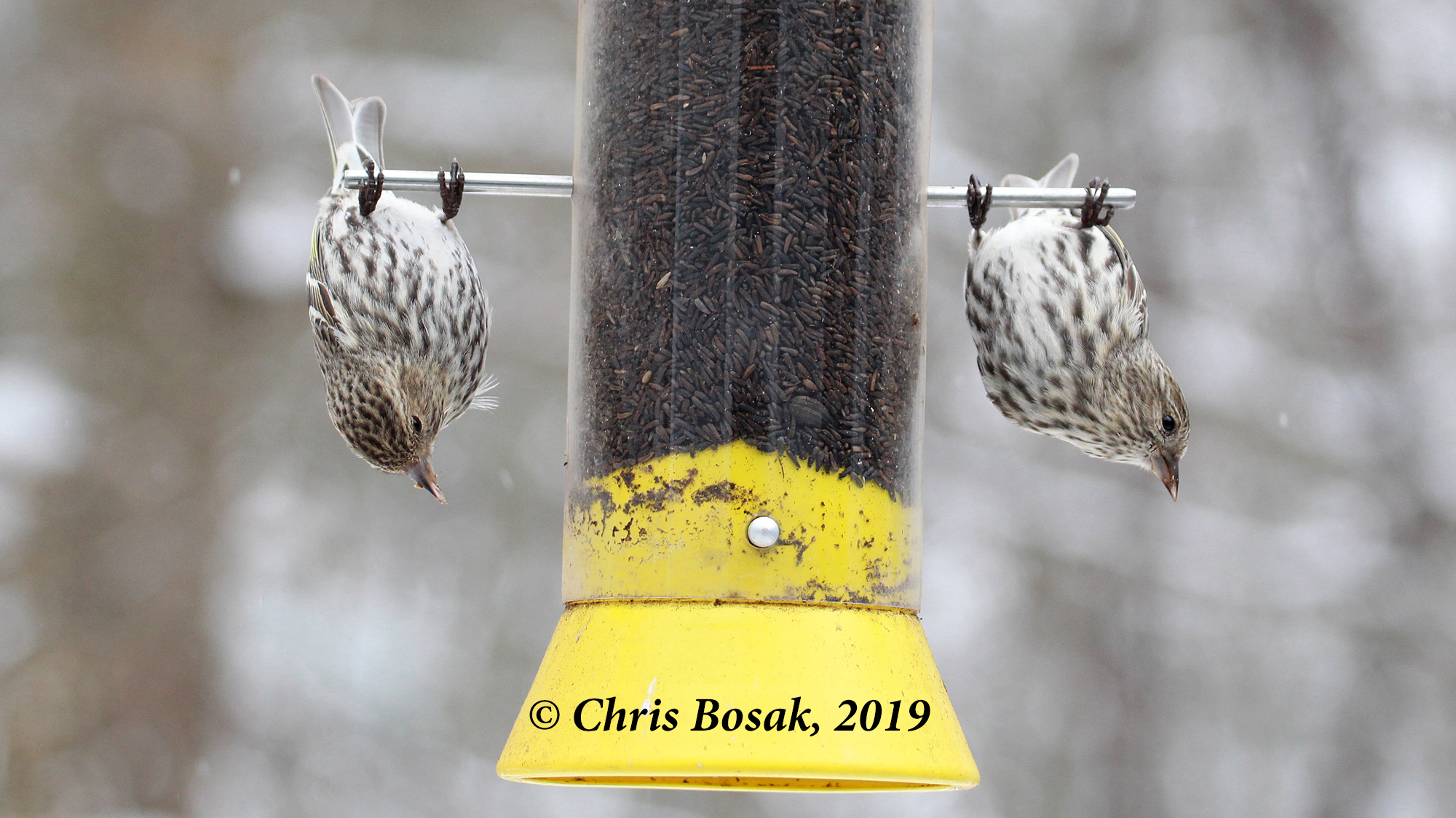
I’ve never had great luck with spotting winter finches, but I do have some experiences with this phenomenon. I can recall more than one winter when siskins visited in huge numbers. During one three-day stretch of mixed precipitation, I had a mixed flock of pine siskins and American goldfinches. They went through many bags of Nyjer seeds as they are voracious eaters.
I’ve also seen redpolls at a local park and crossbills at a coastal Connecticut state park. For as many years as I’ve been feeding birds, I’ve never had redpolls visit my feeder. Nor have I hosted evening grosbeaks. I’ve seen them “in the wild” a few times, but never at my feeders. It will be an exciting day when and if that ever happens.
Two questions may come to mind at this point. What will this year bring? Why am I writing about winter birding when it’s only early fall?
To answer both questions, the Winter Finch Forecast by the Finch Research Network and bird researcher named Tyler Hoar was released last week. It’s as scientific as it gets when it comes to predicting what finches will be around this winter. The predictions are based largely on how certain trees in the boreal forest and other parts of Canada have fared over the summer and what kind of crop they will produce. If a certain type of tree yields a poor crop, then the birds that rely on those seeds will likely disperse in search of food.
In general, Hoar predicts the biggest flight year since 2020-2021. A poor crop year from trees such as white spruce, tamarack and white birch, as well as black spruce and alders, is likely to force many finches south. Hoar noted that New England, which is south for these birds, is a region with a strong cone crop this year.
For pine grosbeaks, Hoar predicts a small to moderate flight. Purple finches have already started making their way south. A “probable strong flight south” is the forecast for redpolls. White-winged crossbills will mostly head west this winter, but New England may see a few later in the season. Pine siskins are expected to have a moderate to strong flight south.
As for my nemesis, evening grosbeaks, a moderate flight south is expected, and some may winter farther south than usual. Maybe this will be my year after all.
Hoar noted in his report that birders may follow eBird, the Finch Research Network and the Finches, Irruptions and Mast Crops Facebook page for more information and updates.
No one knows for sure what the cold months will bring, but here’s to a banner winter for myself and everyone reading this.
 Birds of New England.com
Finches of all kinds are such happy, enjoyable lil birds. They flit into, under and around my feeders in feeder season and feed by the multitudes in my bird garden the other seasons in the lakes region of central NH
LikeLiked by 1 person