
I pulled into the lot at the park, and a small flock of dark-eyed juncos scurried into the tall grass as my wheels came to a stop. The white border on the tail makes for an easy identification of juncos, even from behind.
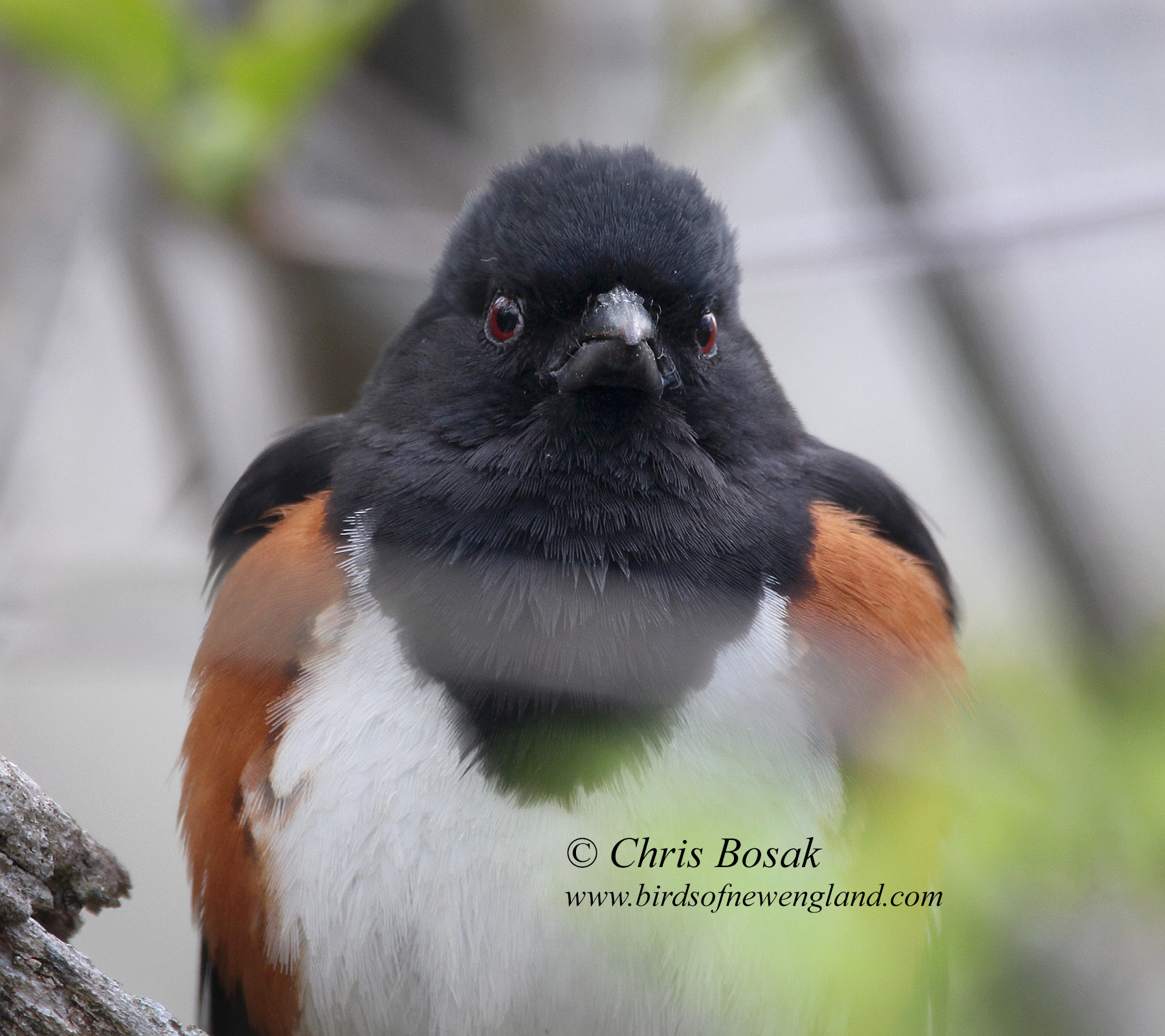
Ten minutes later, as I walked along a trail with brush on either side of me, I heard the unmistakable call of the eastern towhee: “tow-hee,” with the second part rising in pitch. I spotted the beauty a few moments later.
There is a fairly short window in New England to see both of these birds on the same day. Towhees, the vast majority of them anyway, fly south before the juncos arrive from their northern breeding grounds. Juncos do breed throughout New England, but they are much more visible and numerous when the weather gets colder. Towhees are early arrivals in the spring and late departures in the fall, offering windows to see them and juncos on the same bird walk.
Eastern towhees and dark-eyed juncos look nothing alike. They aren’t even the same size, as the towhee is larger and much bulkier. Yet they are from the same family. Even more interesting is that neither one of them looks like other members of their family.
What comes to mind when you hear the word “sparrow”? Many people likely think of a house sparrow. Even though they are not native to the U.S., they are the dominant member of the sparrow family, in terms of numbers anyway. House sparrows look like sparrows. They are mostly brownish and rather plain-looking, at least from a superficial glance.
Other New England sparrows, such as song, field, chipping, fox, white-throated, tree, swamp, and Savannah, have the same overall look: brownish, buffy, streaked. They don’t call them LBJs (little brown jobs) for nothing. Of course, closer observation yields differences and incredible beauty in these native sparrows.
But towhees and juncos are sparrows as well, even though they deviate greatly from the typical sparrow look. One is heading south soon, and the other is settling in for the winter.
Juncos are often found in mixed flocks with white-throated sparrows around feeders during the winter. Before and after a snowstorm, those who feed birds can count on seeing those sparrows in great numbers.
I saw my first white-throated sparrows of the season a few weeks ago. I immediately recognized their clear, whistled “Old-Sam-Peabody-Peabody-Peabody” song coming from the brush, even though it had been many months since I had seen one. It’s impossible for me to pick a favorite sparrow, but if I were backed into a corner and forced to name one, it would be the white-throated sparrow. The crisp white throat and yellow lores add colorful elements to their otherwise typical sparrow look.
New England’s sparrows are a surprisingly varied bunch, from big and bold towhees to dainty chipping sparrows. They typically do not garner the attention warblers or other colorful songbirds do, but they are a steady and welcome presence in the New England birdscape.
 Birds of New England.com
I’ve never seen an Eastern Towhee…I bet their beautiful lil birds….
LikeLike