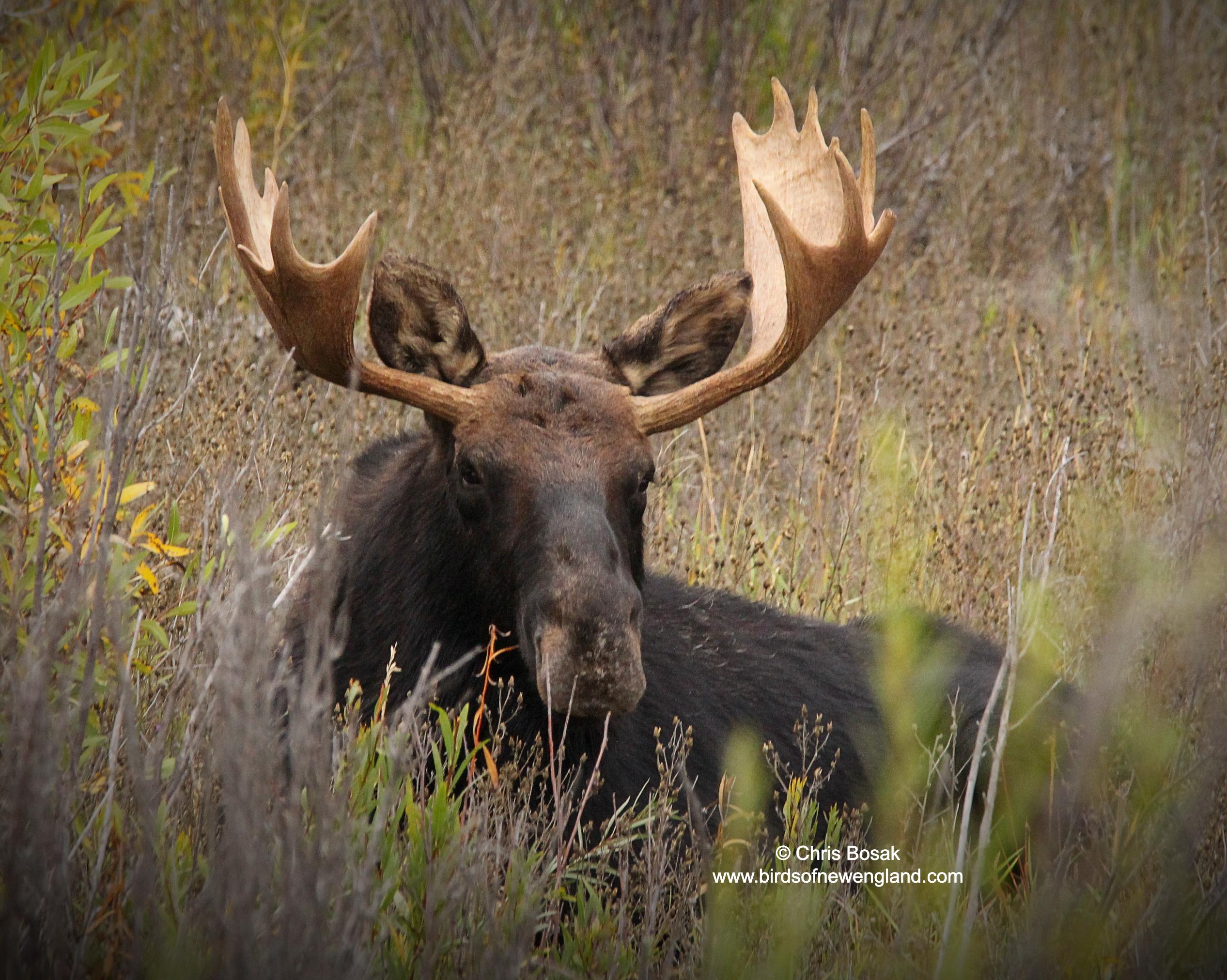
Bull moose in Grand Teton National Park, fall 2026.
If the trip took place somewhere in New England, I would get a year’s worth of columns out. But, since the trip took place far from New England, I’ll jam it all into one column.
I took a trip early this fall to Montana, Grand Teton National Park and Yellowstone National Park. The goal was to see and photograph moose, elk, bison, pronghorn and bighorn sheep. I was fairly confident about getting elk, bison and pronghorn. My recent lack of luck finding moose in New England made me uncertain about seeing moose out there. I also thought bighorn sheep may be a stretch.
At the end of the trip, I got better moose photos than I ever thought I would, many solid elk photos, a few bison photos but far less than I had thought, a few pronghorn and no bighorn sheep.
The moose photos, of course, were the most exhilarating. I met a group of professional wildlife photographers, and they allowed me to tag along to their secret moose locations. At one point, we watched a bull moose and two cow moose bedded down for more than two hours. We kept a safe and respectable distance away and did not alter the animals’ behavior.
Prior to meeting the professionals, my photo opportunities had been limited to subjects far away and sharing the space with 100 or more other people who had pulled off to the side of the road to see what people were looking at. It was after the summer season, but the parks were still crowded. The campgrounds were full (I had made reservations ahead of time), and the parking lots for popular hikes were overflowing to the point of people parking on the side of the road for nearly a mile in each direction.
Keeping up with the professional photographers was not easy as we hit the woods well before first light, crossed swift-moving streams, bushwhacked through the brush and tried to find each other by following a GPS pin on our phones. The scout of the group was in the woods at 4:30 a.m. with infrared binoculars. It was worth it though. One morning, we watched three cows, three calves and one bull walking in a field. Bulls are notorious for fighting during the rut (fall breeding season), but we saw two cows with their calves cross paths and square off. The altercation lasted about two seconds and consisted of each cow raising onto their hind legs, kind of like when a horse rears, and moving on their way.
It was great to be among moose again. The New England moose population has taken a serious hit from winter ticks and brainworm and they are becoming more difficult to find. For me anyway, a trip to northern New England in the late 1990s would yield a dozen or more moose sightings. Now, it’s been years since I’ve seen a single moose on my trips up north.
The other wildlife highlights in Grand Teton were a coyote hunting in a field and a grizzly bear mother and cub. The bear sighting was nice, of course, but park rangers kept visitors quite a distance away. There was also a huge crowd of people clamoring for a peek.
Then it was northward into Yellowstone on my way to Mammoth with a quick stop to see Old Faithful do its thing. It was around Old Faithful where I had my only bison sightings. I thought I’d see great herds of bison and eventually get tired of seeing them, but I saw only about five lone bulls in total. I did get one photo of a bison with the hot springs near Old Faithful steaming in the background.
Mammoth Campground, on the other hand, was filled with elk. One bull lorded over his harem, which consisted of 30 or more cows and calves. The cows and calves walked among the campground as if it were the most normal thing in the world. They had no fear of humans and were just part of the landscape. At one point, I sat at the picnic table at my site and six elk walked around me like I wasn’t even there. In the evening, the bull started bugling, and everyone (including me) grabbed their cameras and rushed toward the noise.
I saw several pronghorns along the side of the highways, particularly on the drive from Montana to Idaho. Pronghorns are commonly called pronghorn antelope, but they are not officially antelope and are their own distinct species. They are the fastest land animal in North America, reaching speeds of up to 60 miles per hour. They also look completely different than any other animal in the U.S. and look as if they belong on the African savanna instead.
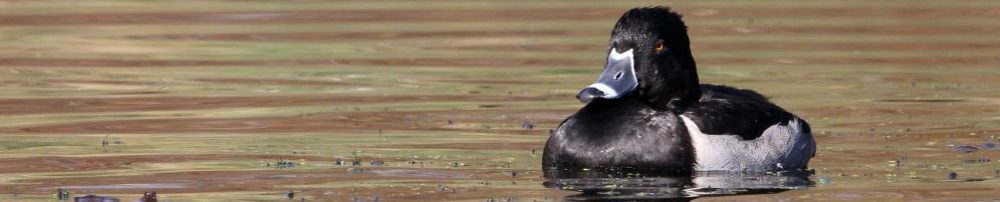
Oh yeah. There were some birds to be seen as well. Among the notable birds were bald eagles, mountain bluebirds, tons of yellow-rumped warblers, yellow-headed blackbirds, redheads, American coots, horned grebes, sandhill cranes, white pelicans, and magpies–lots and lots of magpies.
I could go on and on, of course, but I like to keep this column focused on New England as much as possible. Feel free to visit my other posts on this site for more photos of the trip.


in 1978 I, an undeserving barely 20 something y.o. drove X C with a friend from NH to Encinada Mexico on a whim. I say ‘undeserving” because I opted for speed over quality, not knowing what an opportunity was presented to me. I blissfully skipped Yellowstone ignored Yosemite, Zion, + other areas of grandeur despite driving with in mere miles of them, ignoring roadsigns suggesting turn for this or that, including Old Faithful…I made it to all my destinations, visiting unknown brothers in OH + CA, along with reuniting with a family I’d known here in NH who’d moved to Long Beach. Along with our subsequent travels to about 30 miles below Encinitas and back. How I wish now at nearly 71 y.o. that I’d taken those turns. I’ve never seen the Nat’l Parks in the mid-west, nor Old Faithful, or bison, elk, wolves or all of the splendor to be viewed…I don’t regret the trip or the wonderful places I did see, just wish I had expanded my travels. Not alone in those thoughts I imagine. You’ve shared quite some beautiful times + images. Thank you
LikeLike