For the Birds: Long live the butterbutt

Photo by Chris Bosak
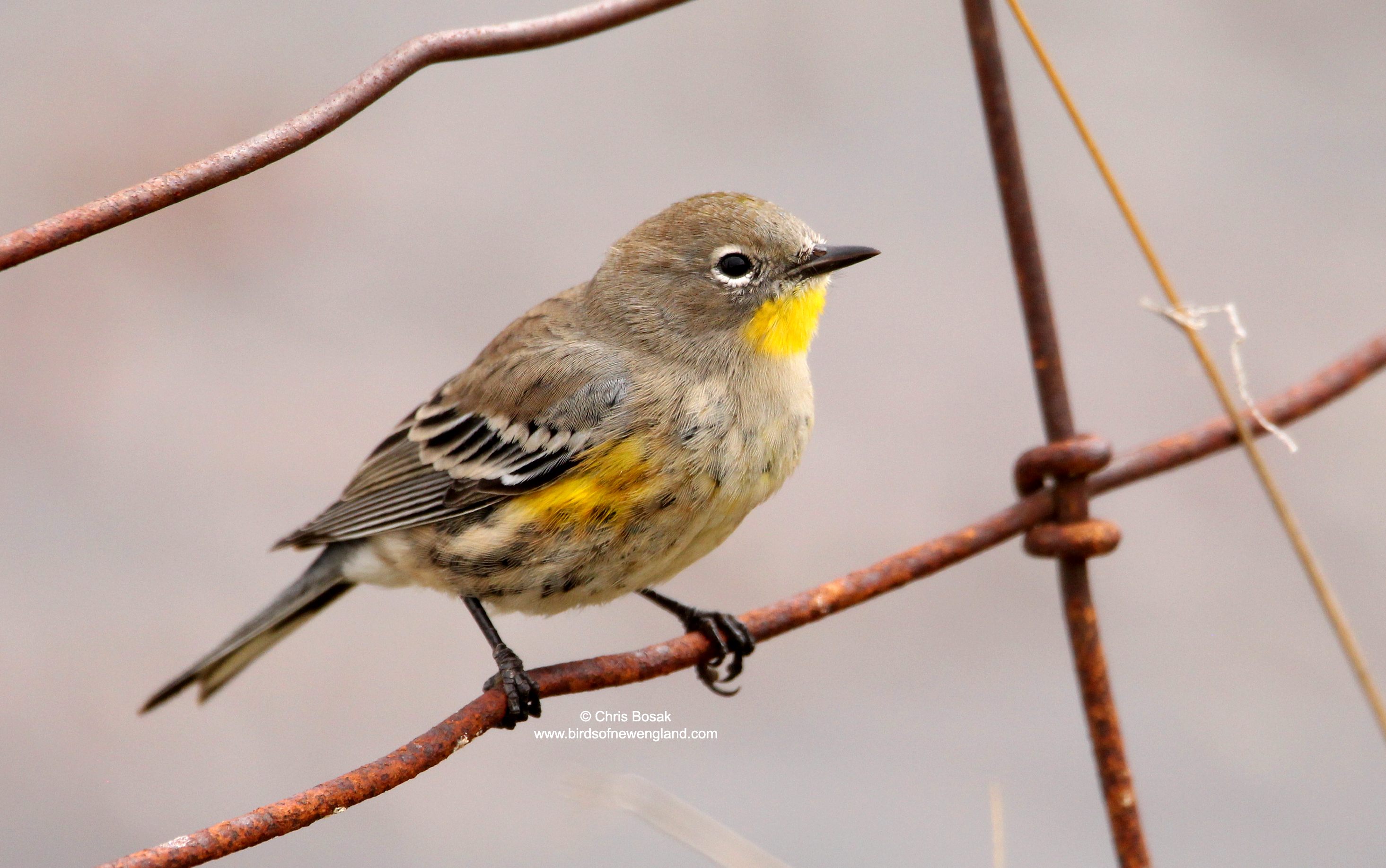
Yellow-rumped (Audubon’s) warbler just south of Grand Teton National Park, fall 2026.

It has one of the better nicknames in the birding world: butterbutt.

It makes perfect sense too because the yellow butt is a key field mark. Of course, it’s the yellow-rumped warbler, one of New England’s most commonly seen warblers. There are fall days when I’ll see dozens of butterbutts and hardly anything else, except for maybe a few palm warblers.

Yellow-rumped warblers can be tricky in the fall, however, as the flocks are a mixed bag of adult males and females and first-year males and females. All four varieties look fairly similar this time of year.

In the spring, we have adult males and adult females coming up from the south, and they look completely different from each other with males sporting an attractive mix of bluish gray, white, black and yellow. In the fall, they are all much duller than they are in the spring.

Their trademark and namesake is the yellow patch on their rump, which is visible at rest and in flight in all seasons. They also have small yellow patches on their sides. The western subspecies also has a yellow throat while the eastern subspecies sports a white throat.

The yellow-rumped warbler is an interesting study in bird names and splits. It used to be considered two separate species: Audubon’s warbler and myrtle warbler, which are now each considered subspecies of the yellow-rumped warbler. That change took place in 1973. There has been talk for years about splitting them again, but that hasn’t happened yet.

To add to the confusion, there are two more forms of the yellow-rumped warbler: black-fronted from Mexico and Goldman’s of Guatemala. I’ve never seen one in person, but from photos, the Goldman’s form looks like a really cool bird that is mostly black with yellow and white markings.

To add even more confusion, the Audubon’s and myrtle subspecies interbreed where their ranges cross somewhere around the Rocky Mountains. It was there where I saw dozens of yellow-rumps during a recent trip to Grand Teton National Park. It being fall, it was difficult to tell males from females and adults from immatures, but they were definitely yellow-rumped warblers. Whether they were the Audubon’s or myrtle subspecies is another question. I believe they were Audubon’s based on the yellow throats.

Who knows when or if the split will take place again. In the last few years, the American Ornithologists’ Union seems to be on a splitting kick. I wrote recently about the splitting of the warbling vireo, house wren and yellow warbler ─ all common New England birds.

In a way, I’d prefer the bird to remain a single species. Yellow-rumped warbler is much more fun to say than Audubon’s warbler or myrtle warbler. Either way, butterbutt remains a fitting nickname, so there’s that.
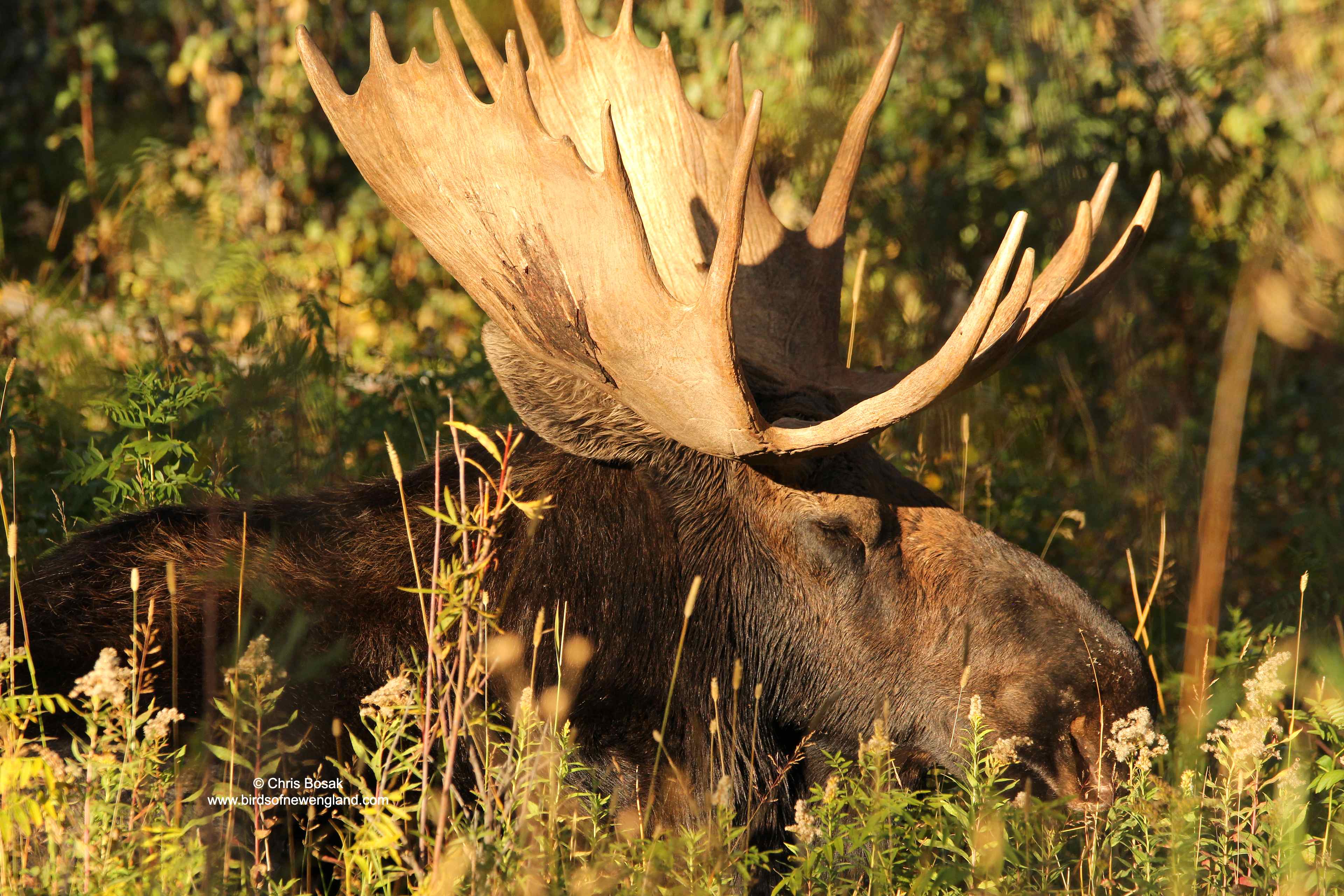
For the Birds: Big animals highlight trip out west

Photo by Chris Bosak
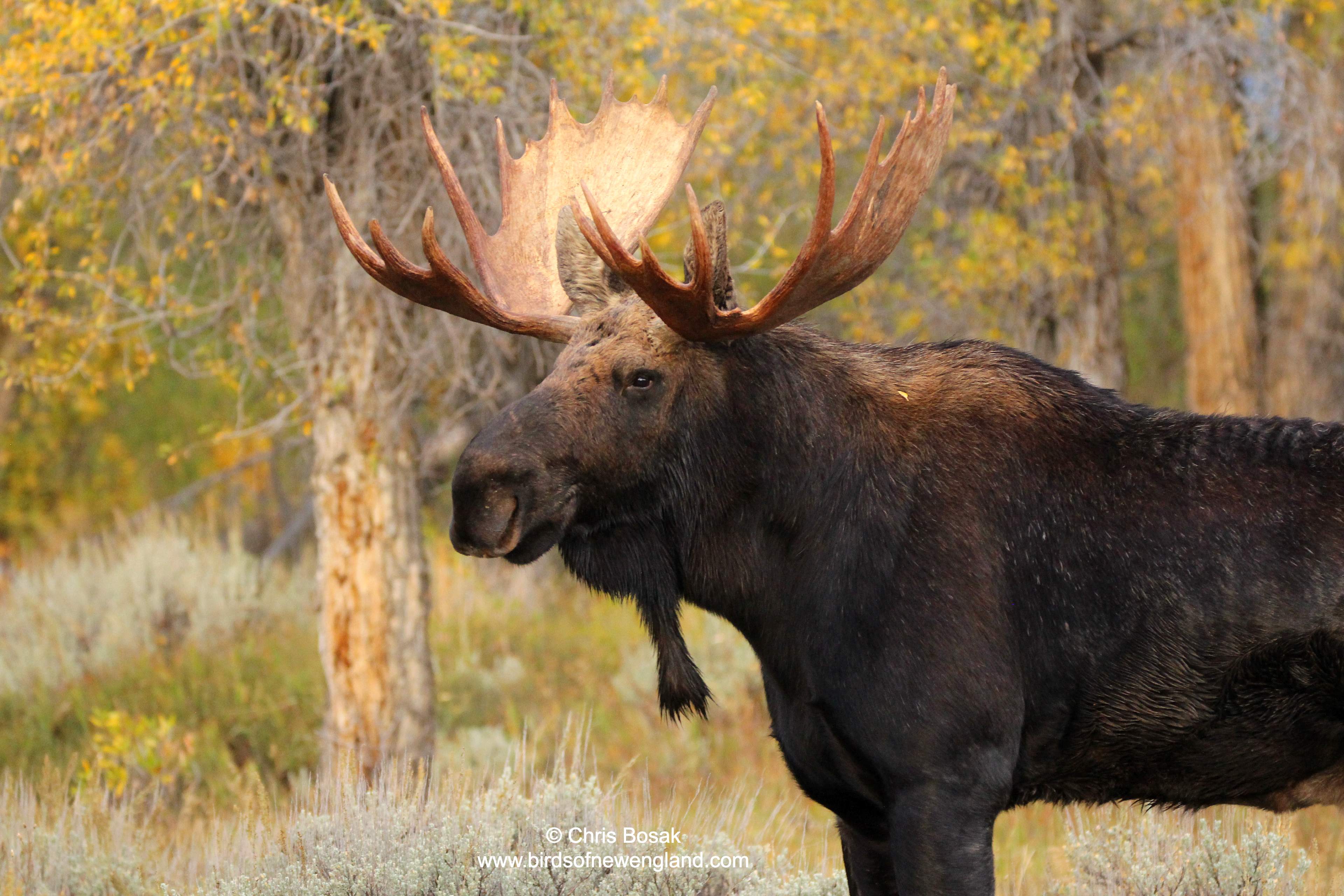
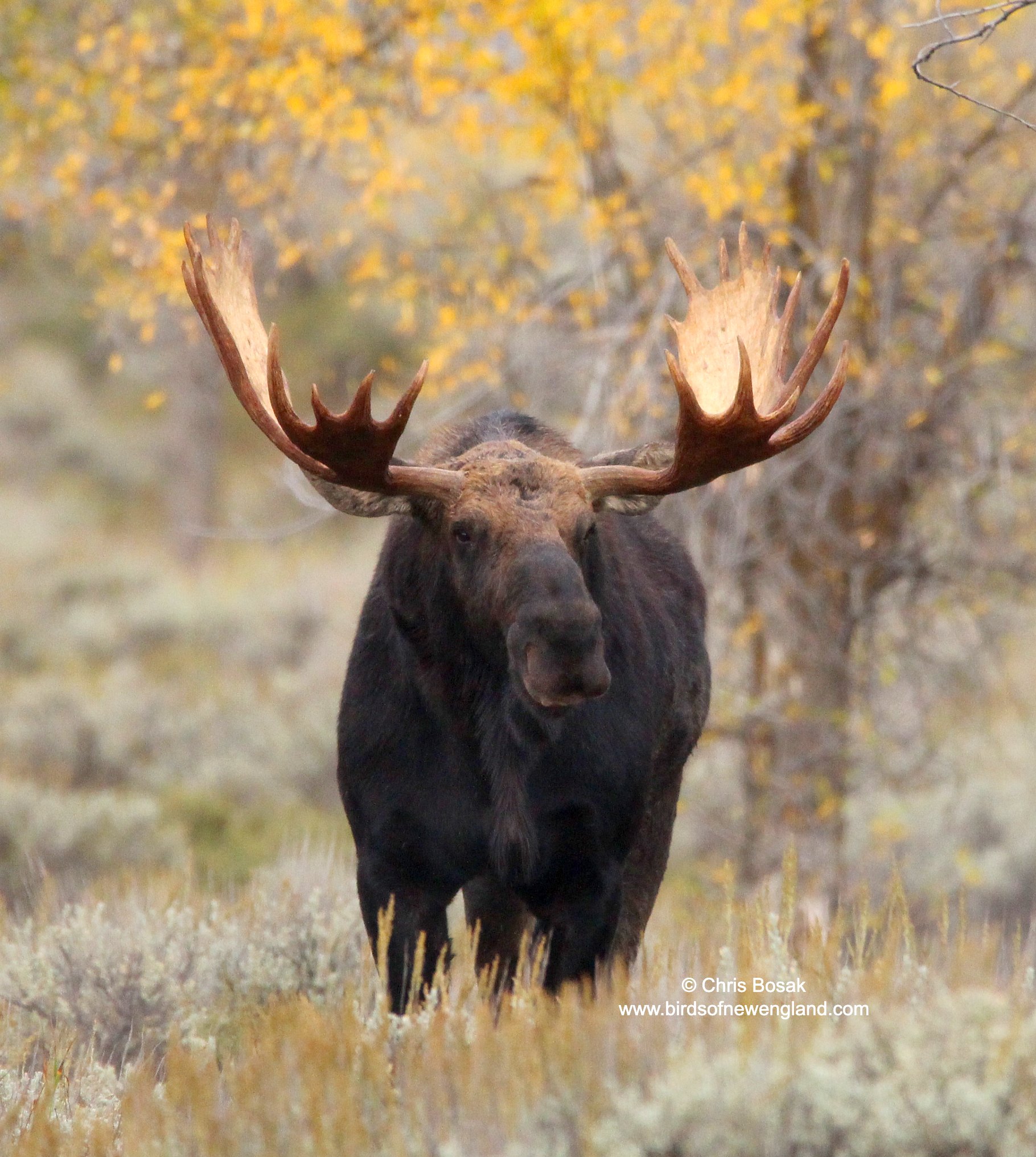
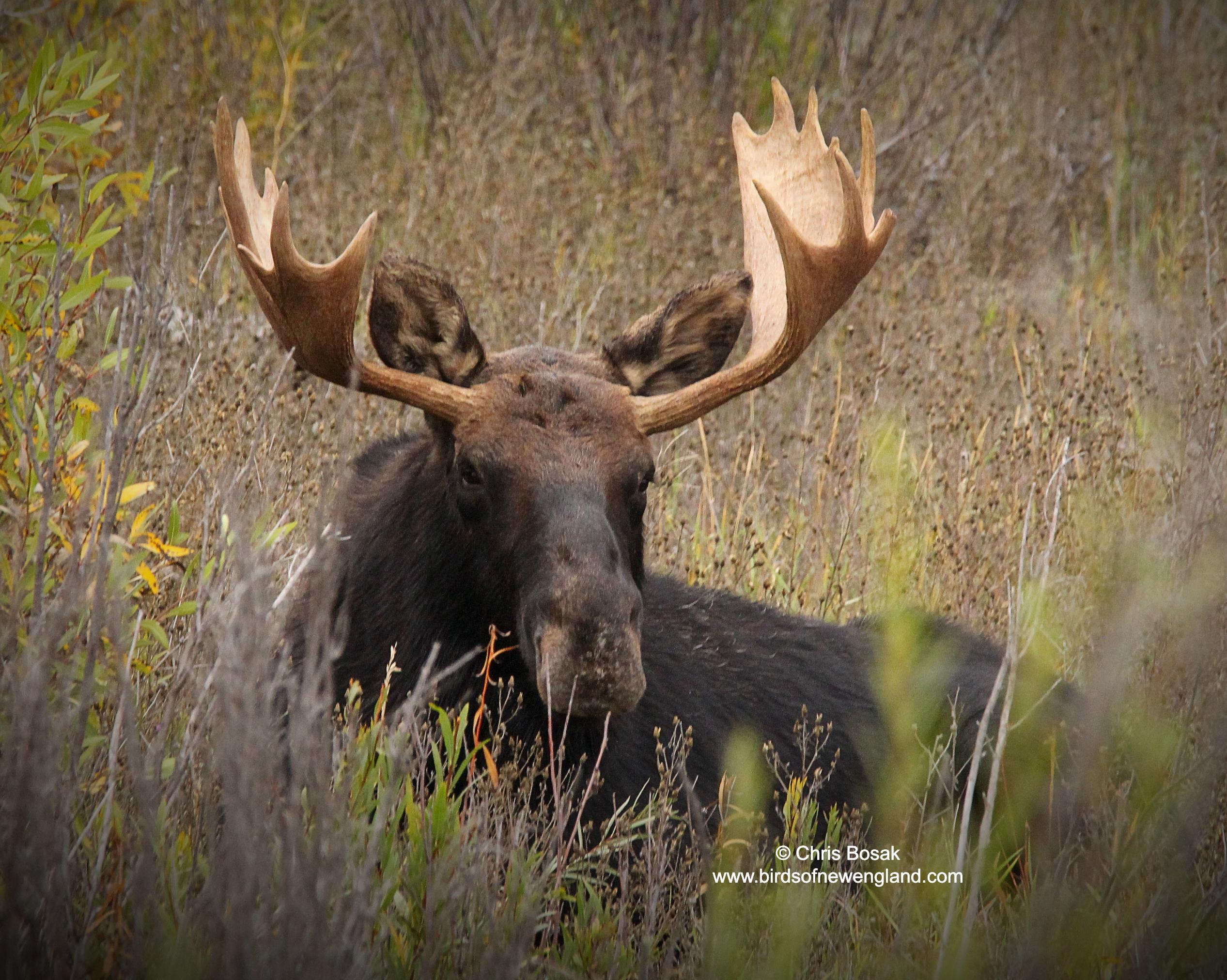
Bull moose in Grand Teton National Park, fall 2026.

If the trip took place somewhere in New England, I would get a year’s worth of columns out. But, since the trip took place far from New England, I’ll jam it all into one column.

I took a trip early this fall to Montana, Grand Teton National Park and Yellowstone National Park. The goal was to see and photograph moose, elk, bison, pronghorn and bighorn sheep. I was fairly confident about getting elk, bison and pronghorn. My recent lack of luck finding moose in New England made me uncertain about seeing moose out there. I also thought bighorn sheep may be a stretch.

At the end of the trip, I got better moose photos than I ever thought I would, many solid elk photos, a few bison photos but far less than I had thought, a few pronghorn and no bighorn sheep.

The moose photos, of course, were the most exhilarating. I met a group of professional wildlife photographers, and they allowed me to tag along to their secret moose locations. At one point, we watched a bull moose and two cow moose bedded down for more than two hours. We kept a safe and respectable distance away and did not alter the animals’ behavior.

Prior to meeting the professionals, my photo opportunities had been limited to subjects far away and sharing the space with 100 or more other people who had pulled off to the side of the road to see what people were looking at. It was after the summer season, but the parks were still crowded. The campgrounds were full (I had made reservations ahead of time), and the parking lots for popular hikes were overflowing to the point of people parking on the side of the road for nearly a mile in each direction.

Keeping up with the professional photographers was not easy as we hit the woods well before first light, crossed swift-moving streams, bushwhacked through the brush and tried to find each other by following a GPS pin on our phones. The scout of the group was in the woods at 4:30 a.m. with infrared binoculars. It was worth it though. One morning, we watched three cows, three calves and one bull walking in a field. Bulls are notorious for fighting during the rut (fall breeding season), but we saw two cows with their calves cross paths and square off. The altercation lasted about two seconds and consisted of each cow raising onto their hind legs, kind of like when a horse rears, and moving on their way.

It was great to be among moose again. The New England moose population has taken a serious hit from winter ticks and brainworm and they are becoming more difficult to find. For me anyway, a trip to northern New England in the late 1990s would yield a dozen or more moose sightings. Now, it’s been years since I’ve seen a single moose on my trips up north.

The other wildlife highlights in Grand Teton were a coyote hunting in a field and a grizzly bear mother and cub. The bear sighting was nice, of course, but park rangers kept visitors quite a distance away. There was also a huge crowd of people clamoring for a peek.

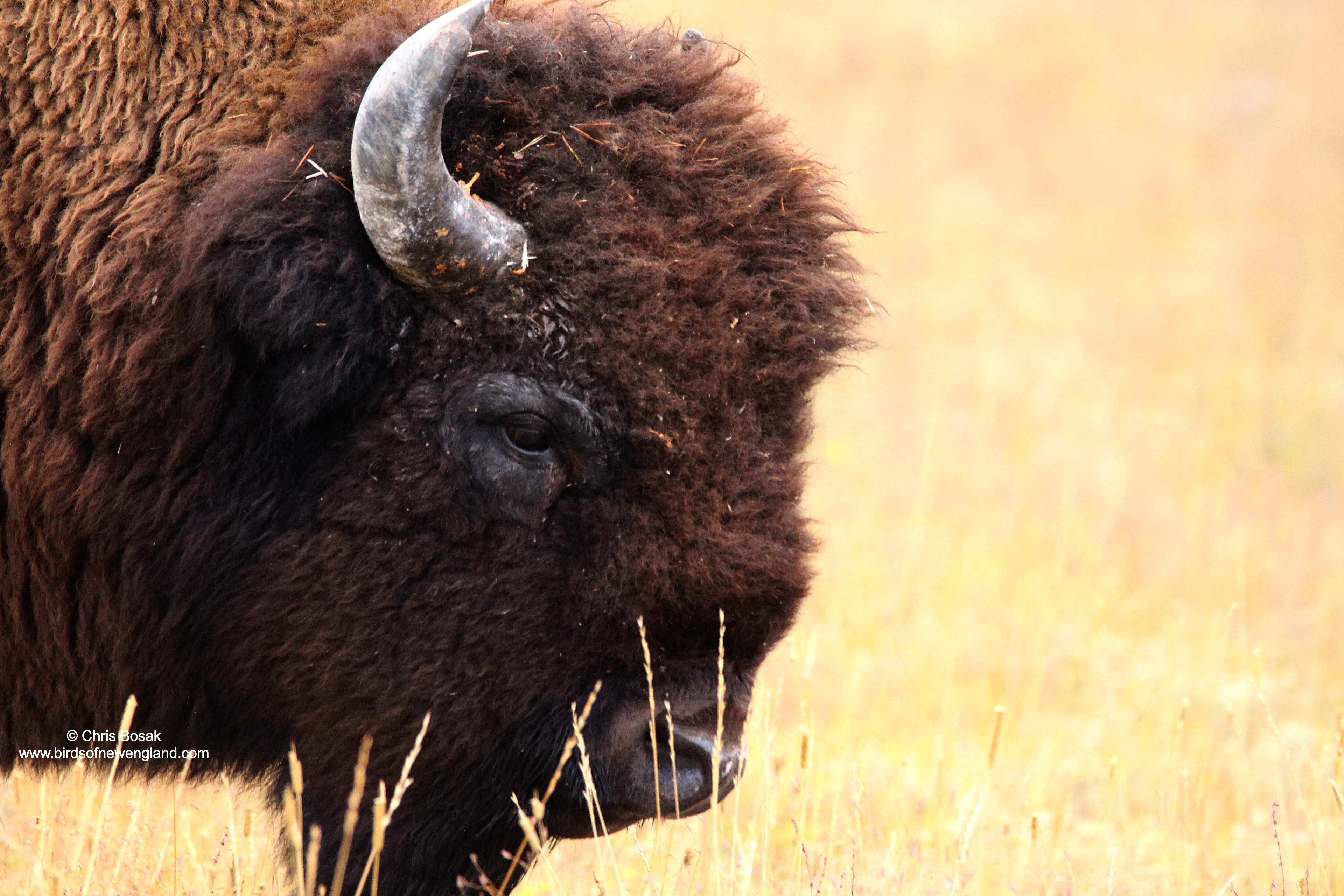
Then it was northward into Yellowstone on my way to Mammoth with a quick stop to see Old Faithful do its thing. It was around Old Faithful where I had my only bison sightings. I thought I’d see great herds of bison and eventually get tired of seeing them, but I saw only about five lone bulls in total. I did get one photo of a bison with the hot springs near Old Faithful steaming in the background.

Mammoth Campground, on the other hand, was filled with elk. One bull lorded over his harem, which consisted of 30 or more cows and calves. The cows and calves walked among the campground as if it were the most normal thing in the world. They had no fear of humans and were just part of the landscape. At one point, I sat at the picnic table at my site and six elk walked around me like I wasn’t even there. In the evening, the bull started bugling, and everyone (including me) grabbed their cameras and rushed toward the noise.

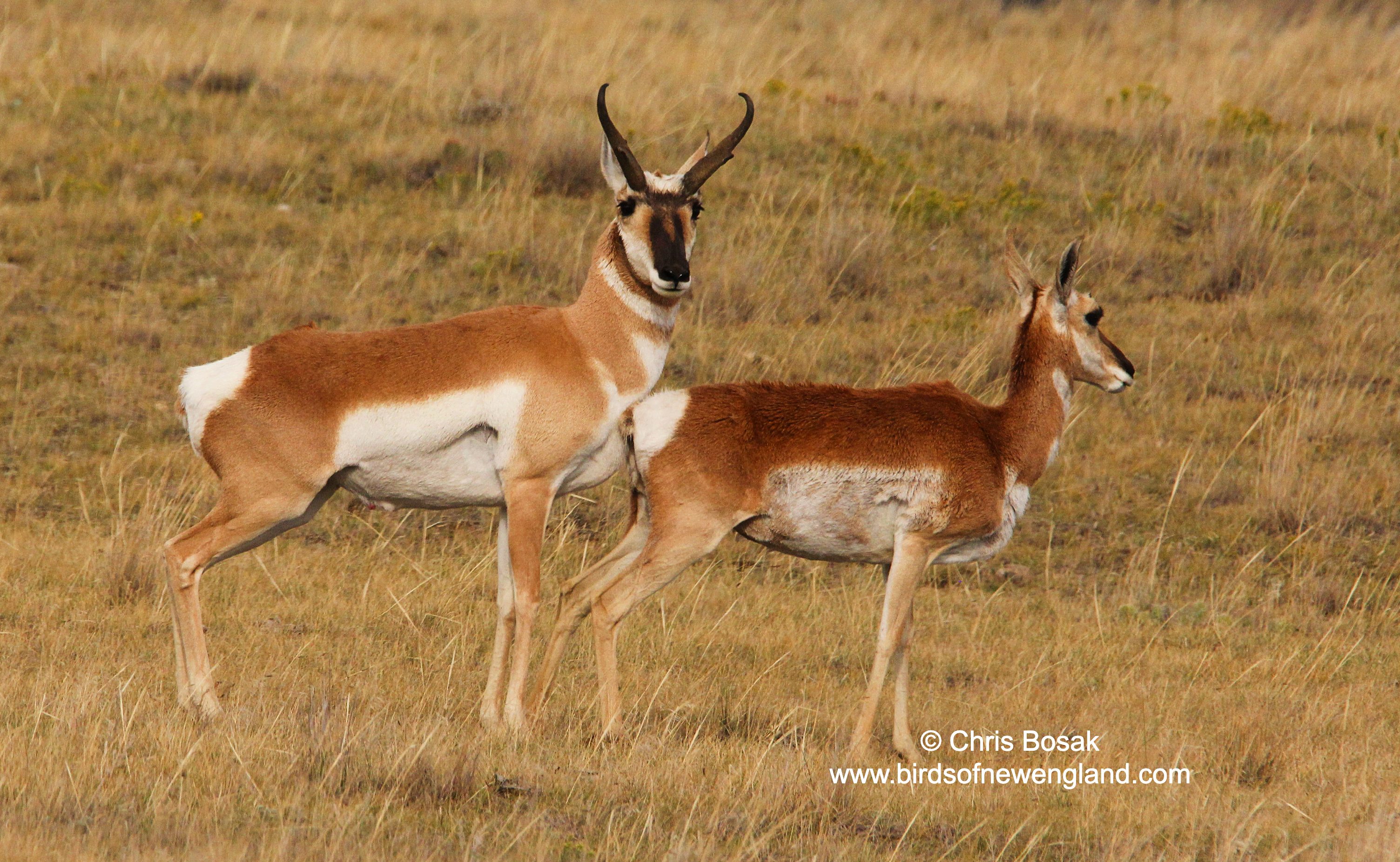
I saw several pronghorns along the side of the highways, particularly on the drive from Montana to Idaho. Pronghorns are commonly called pronghorn antelope, but they are not officially antelope and are their own distinct species. They are the fastest land animal in North America, reaching speeds of up to 60 miles per hour. They also look completely different than any other animal in the U.S. and look as if they belong on the African savanna instead.

Oh yeah. There were some birds to be seen as well. Among the notable birds were bald eagles, mountain bluebirds, tons of yellow-rumped warblers, yellow-headed blackbirds, redheads, American coots, horned grebes, sandhill cranes, white pelicans, and magpies–lots and lots of magpies.

I could go on and on, of course, but I like to keep this column focused on New England as much as possible. Feel free to visit my other posts on this site for more photos of the trip.

Comparing antlers from the deer family (with a few horns too)

Photo by Chris Bosak
Bull moose in Grand Teton National Park, fall 2026.

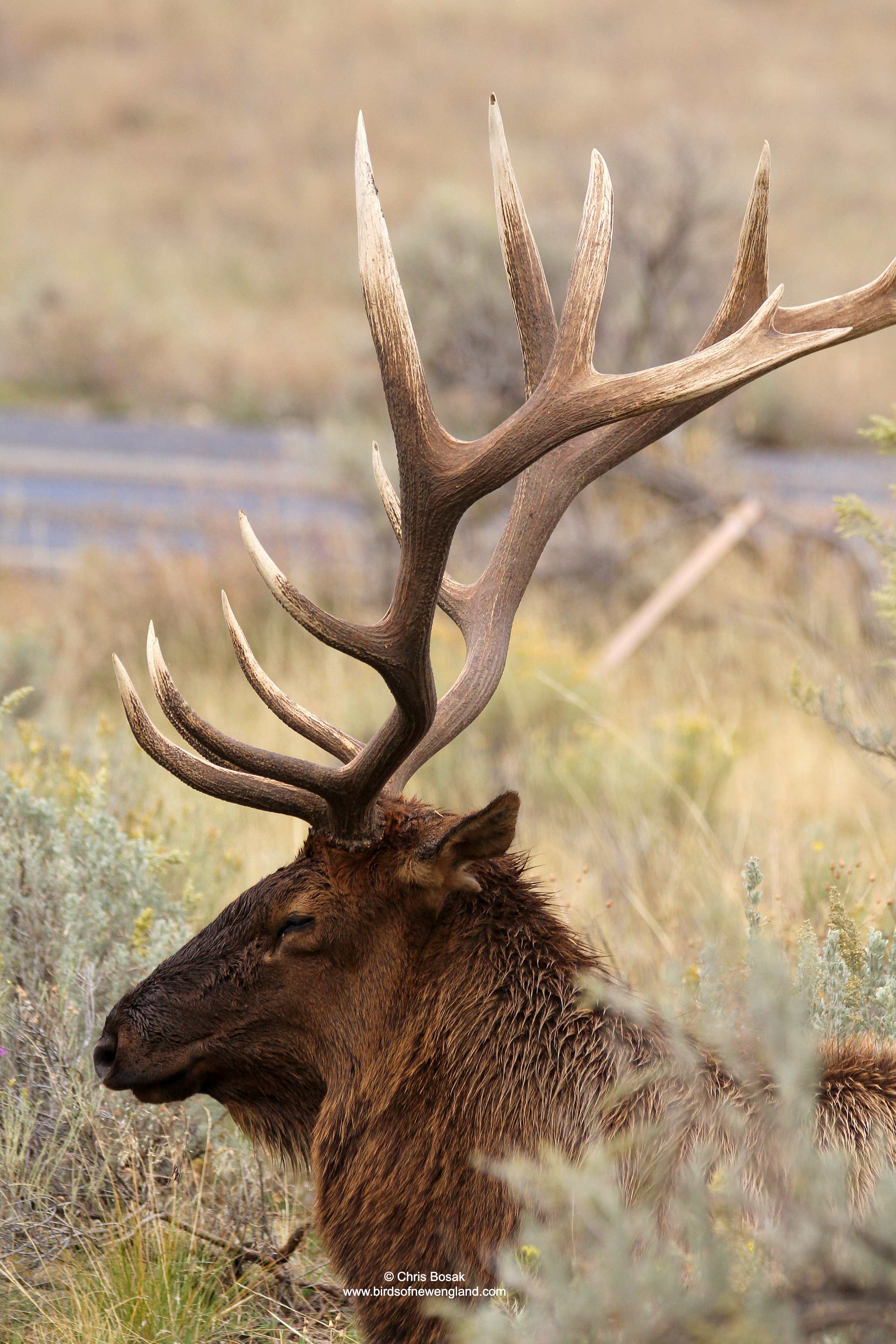
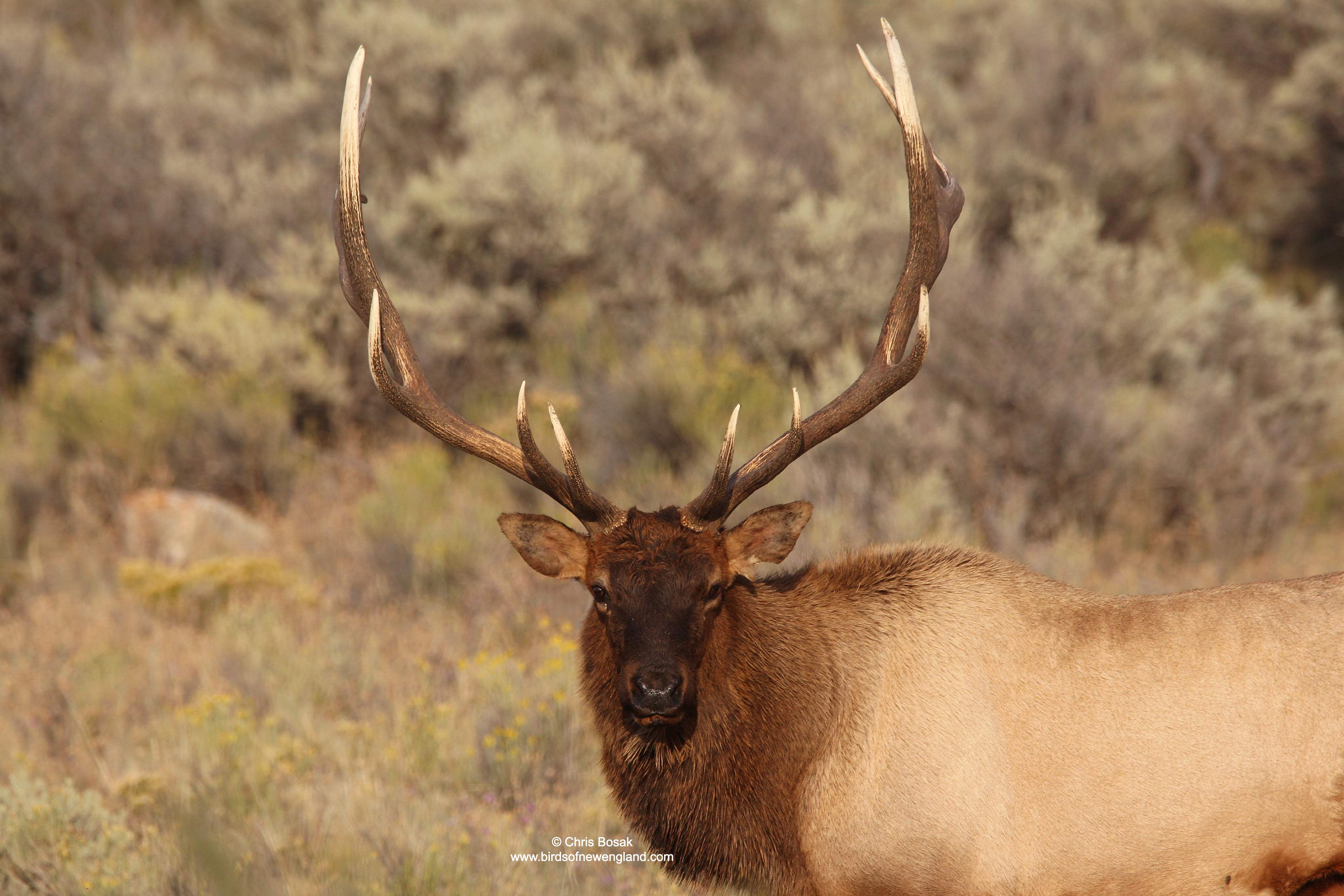
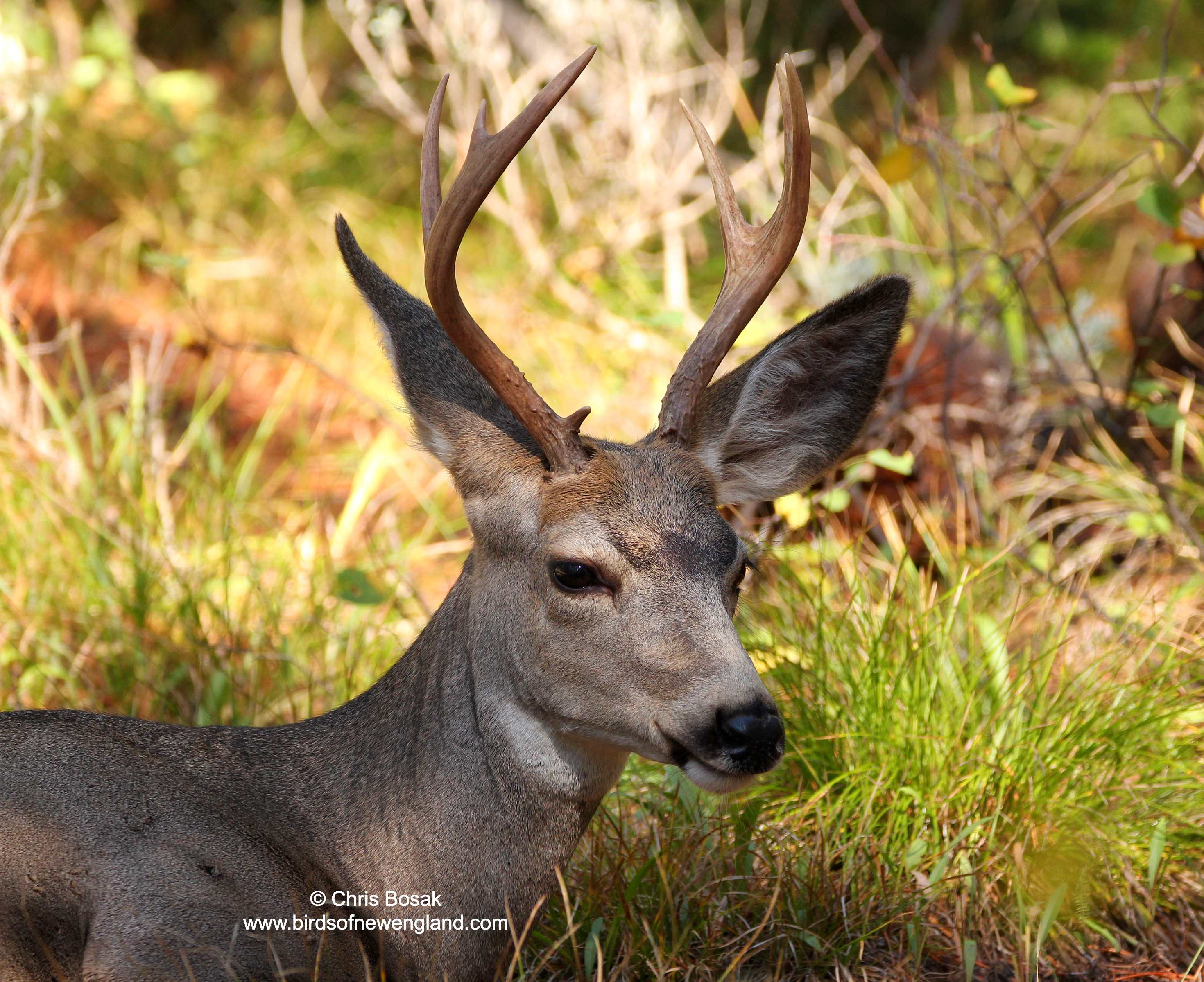
Here’s a compilation of the deer family (moose, elk, mule deer) photos I got during my recent trip out west (Montana, Grand Teton, Yellowstone). It was late September, so the antlers were fully grown and velvet-free. It’s interesting to see the difference between the species–and antlers are always a source of fascination.

At the end of this post, there are two animals with horns, not antlers. Mammals with horns keep their horns permanently. Mammals with antlers shed them every year (late fall or winter) and regrow them each year.

MOOSE

Photo by Chris Bosak
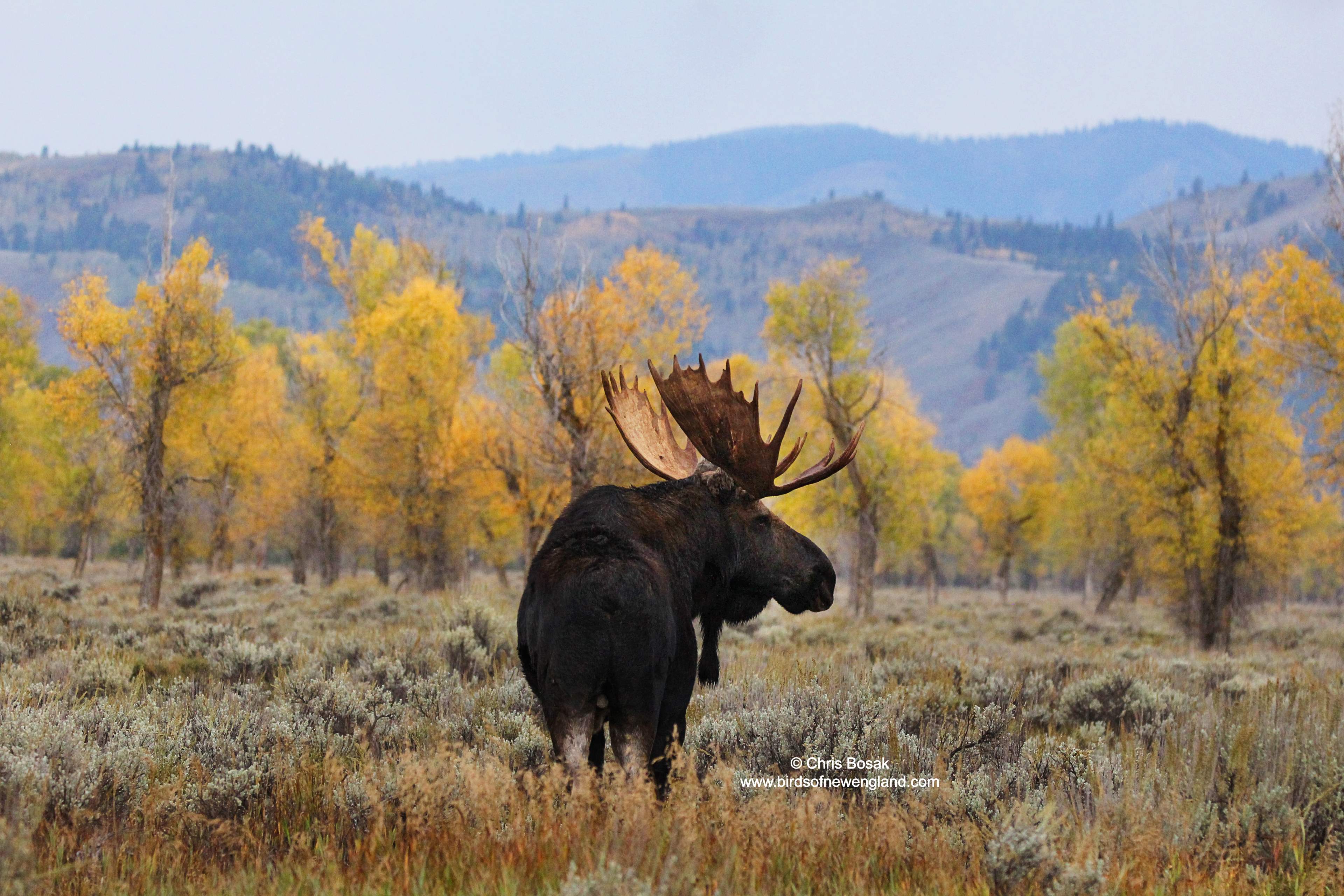
Bull moose in Grand Teton National Park, fall 2026.
Photo by Chris Bosak
Bull moose in Grand Teton National Park, fall 2026.

ELK

Photo by Chris Bosak
Bull elk in Yellowstone National Park, fall 2026.
Photo by Chris Bosak
Bull elk in Yellowstone National Park, fall 2026.

MULE DEER

Mule deer, Grand Teton National Park, fall 2026.

PRONGHORN (horns, not antlers)

Photo by Chris Bosak
Pronghorn in Idaho, fall 2026.

BISON (horns, not antlers)

Photo by Chris Bosak
Bison in Yellowstone National Park, fall 2026.

A ton more moose photos from Grand Teton

Photo by Chris Bosak
Bull moose in Grand Teton National Park, fall 2026.

Today, I’ll share a bunch more moose photos from Grand Teton National Park. Tomorrow (or sometime this week), I’ll share a slew of elk photos from Yellowstone National Park. Finally, I’ll post many, many other photos of the other animals (including birds) I saw on my recent trip out west.

Photo by Chris Bosak
Bull moose in Grand Teton National Park, fall 2026.
Photo by Chris Bosak
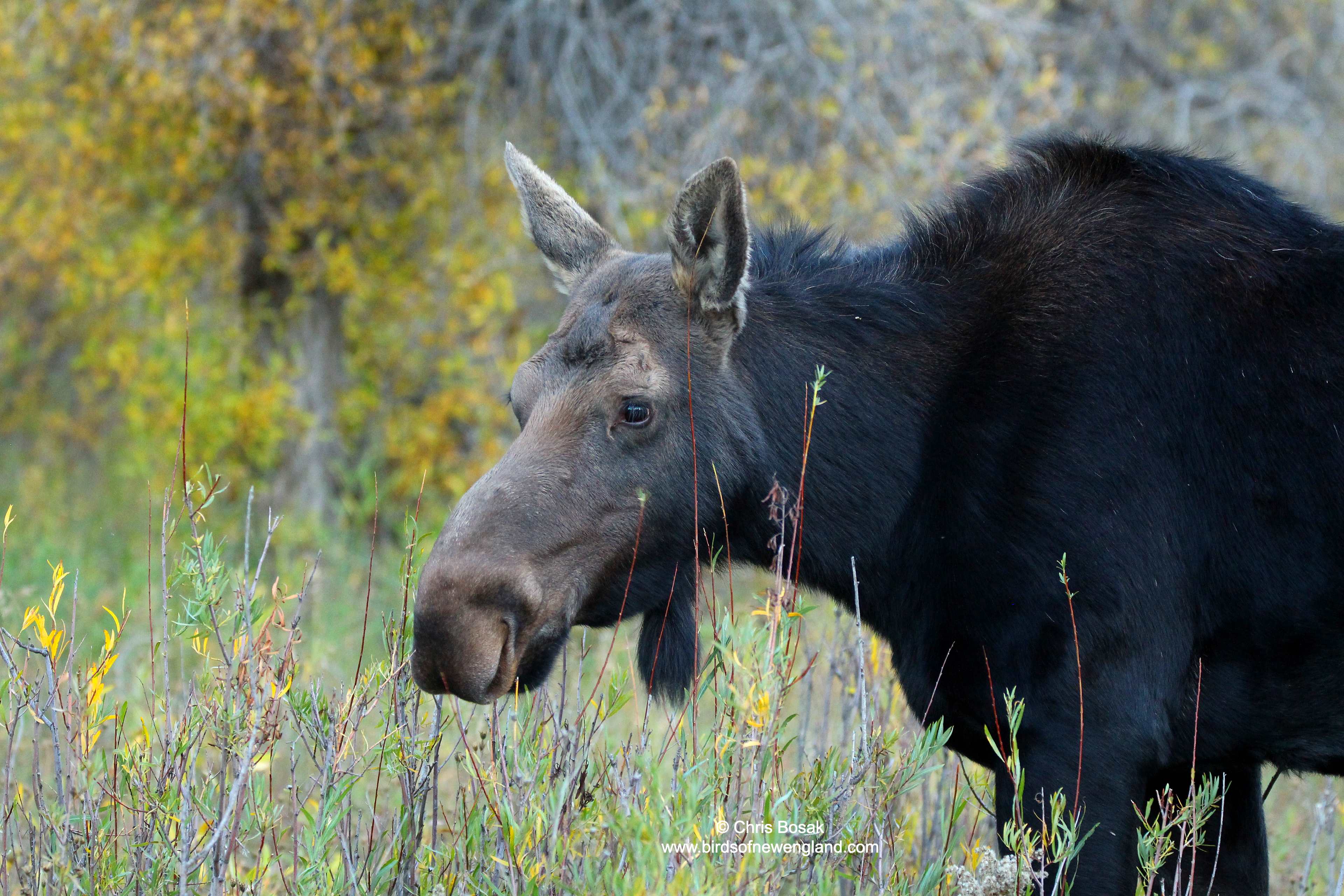
Cow moose in Grand Teton National Park, fall 2026.
Continue reading →