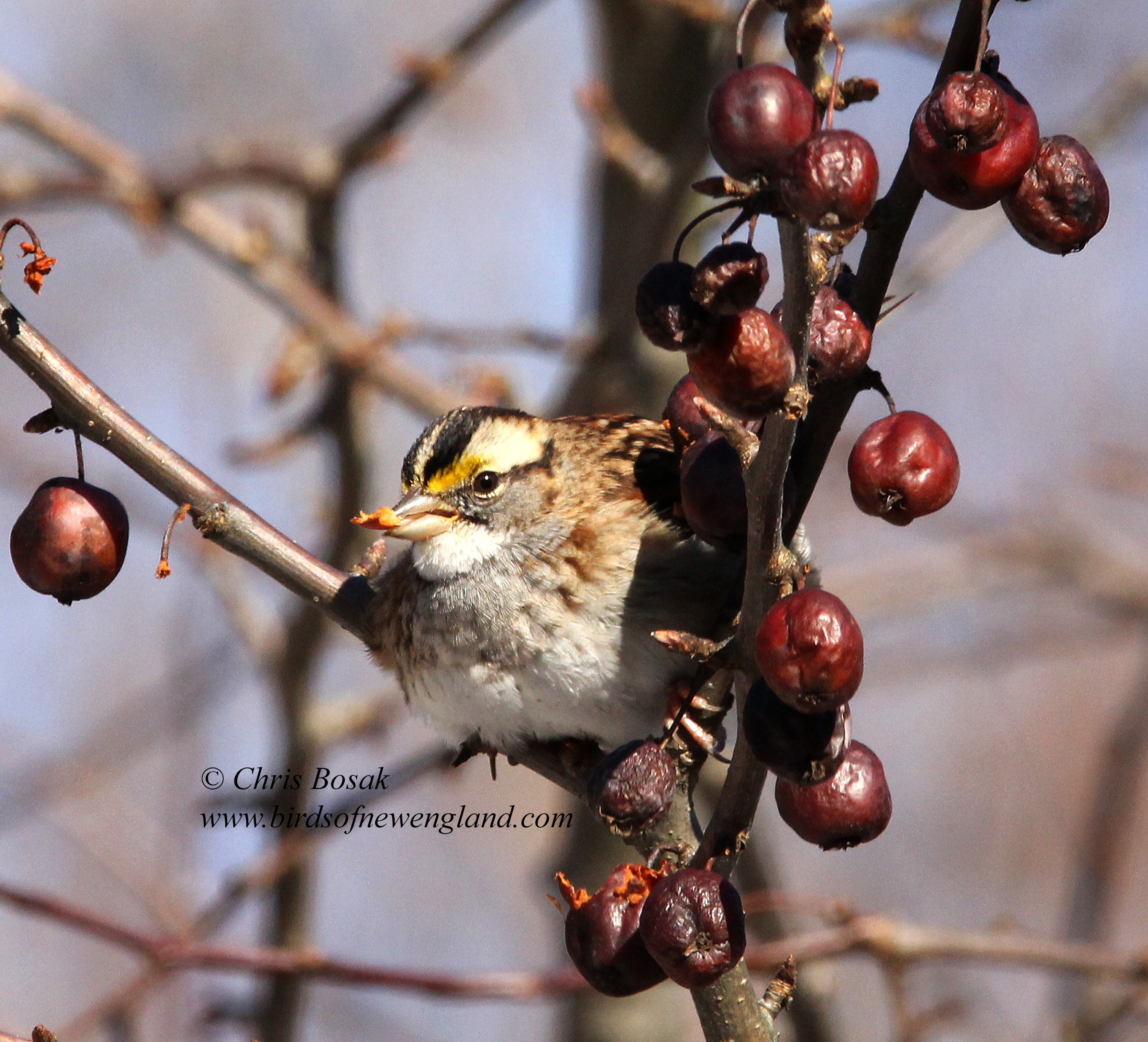
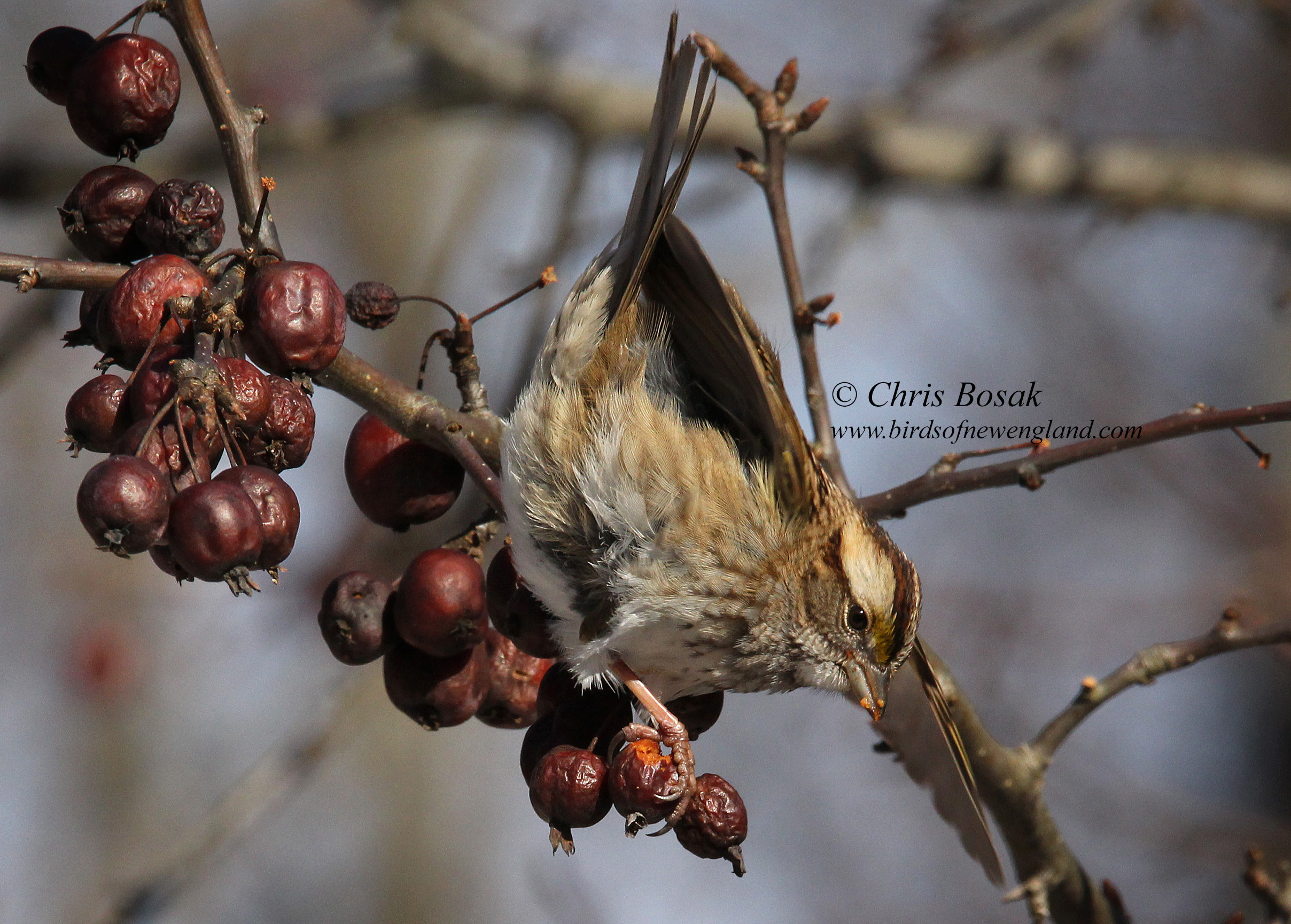
Here are a few more shots of the white-throated sparrow eating crabapples from last month. Here is the original column with the full story.
Continue reading

Here are a few more shots of the white-throated sparrow eating crabapples from last month. Here is the original column with the full story.
Continue reading
Perhaps against my better judgment, I am going to move forward with an early signs of spring column.
Even as nearly a foot of snow fell in my area a few short days ago, signs of spring are out there. They may not abound yet, but they are out there.
It started a little over a week ago with one of the typical first signs of spring: snowdrops poking out of the ground and flashing their little white flowers. A day or two later, a flock of turkeys walked past my window at work. It was a good-sized flock of about 15 to 20 birds, and, of course, I had to leave my work area temporarily to check out the action.
As I stepped out of a door a fair distance away from the turkeys so as to not disturb their day, I noticed that several of the males were displaying. No matter how many times you’ve seen it before, it is always an impressive sight to see turkeys displaying. They are large birds to begin with, so when their feathers are displayed to intimidate or impress, the birds appear to be that much larger.
Continue reading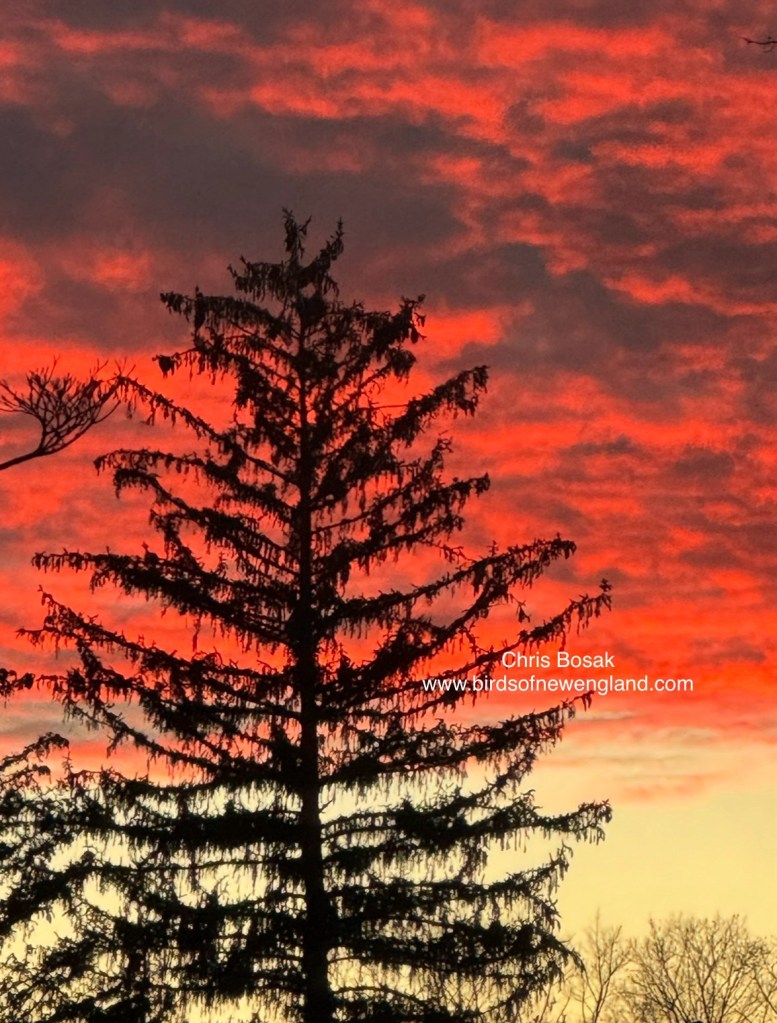
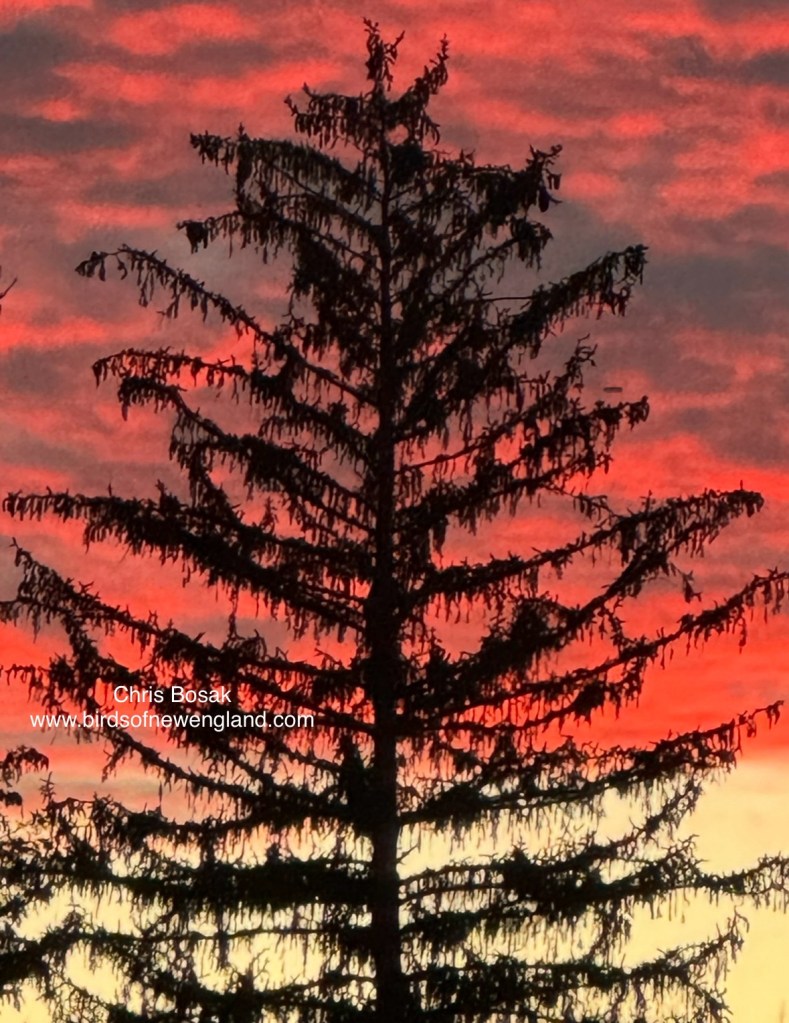
This post doesn’t have anything to do with birds, but I figured I’d share the dusk sky from the other night. It’s amazing how quickly the scene changes at dusk. A matter of minutes is all it takes to miss shots like this.

When I was just starting out in the hobby of birdwatching and bird photography, I saw a photo of a bird (I don’t recall the species) eating a berry. It became my mission to get a photo of a bird eating berries. But how would I ever get such a shot, I thought to myself at the time.
In the years that followed, I have had plenty of opportunities to get that coveted shot that once seemed so elusive. I’ve been lucky enough to photograph birds such as yellow-rumped warblers, blackburnian warblers, cedar waxwings, robins, catbirds, hermit thrushes, purple finches, house finches and song sparrows eating berries.
Continue reading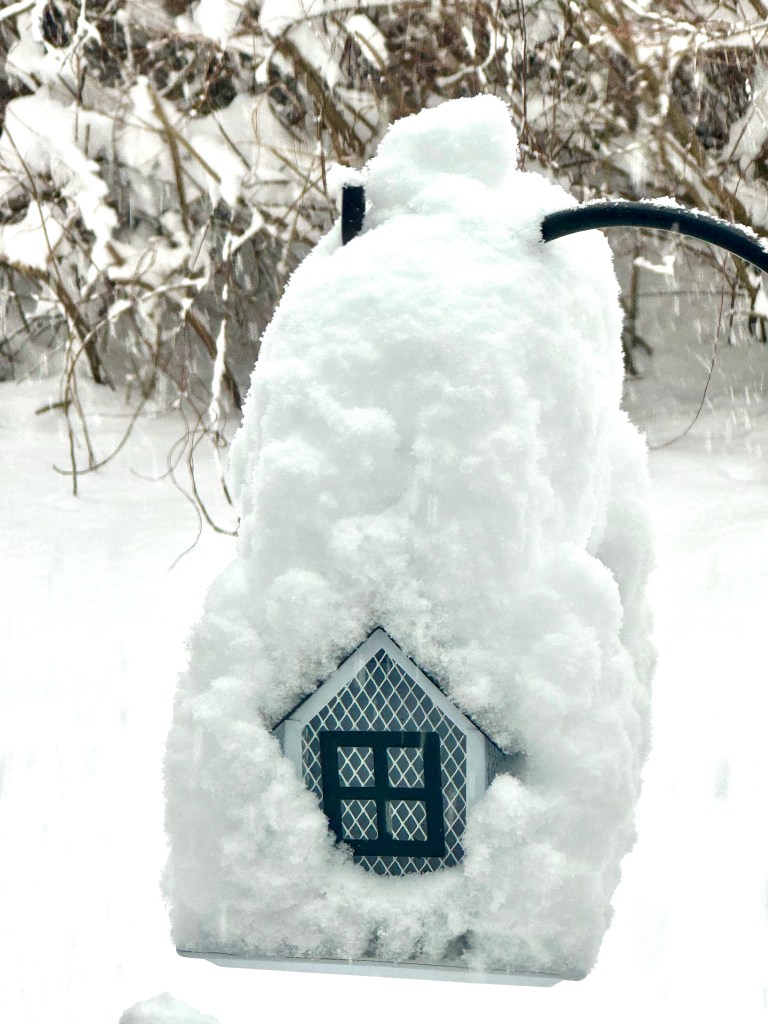
Note to the neighborhood birds: Due to weather conditions, this feeder is temporarily closed. Please visit the adjacent feeder with a cover over it. Thank you for your understanding.

For the past two weeks, I’ve written about surprise winter bird sightings such as the catbirds, hermit thrushes, yellow-bellied sapsuckers and purple finches I’ve seen on my recent walks.
It could be shaping up to be an interesting Great Backyard Bird Count this year with all these birds that typically migrate out of New England still hanging around. Who knows what other surprises will show up on the checklists of birders throughout the region, and the world for that matter?
The 27th annual Great Backyard Bird Count takes place from Friday, Feb. 16 through Monday, Feb. 19. Birders of all skill levels may participate in the Count. Simply count birds – alone or with a group – for at least 15 minutes and enter the birds able to be identified and the location at the GBBC website www.birdcount.org. While the results must be submitted online, the birding itself can take place anywhere: a park, backyard, conservation area.
Continue reading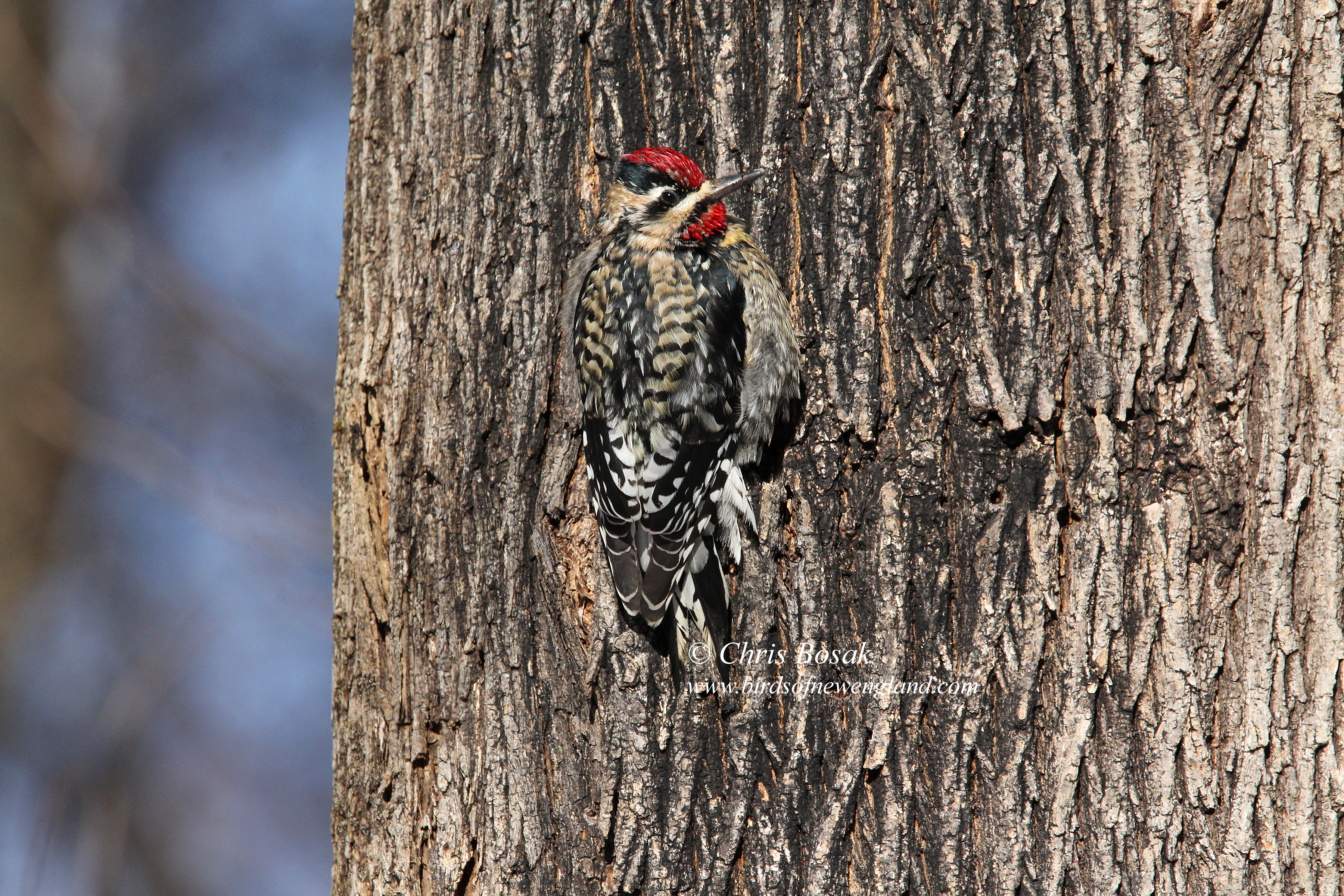
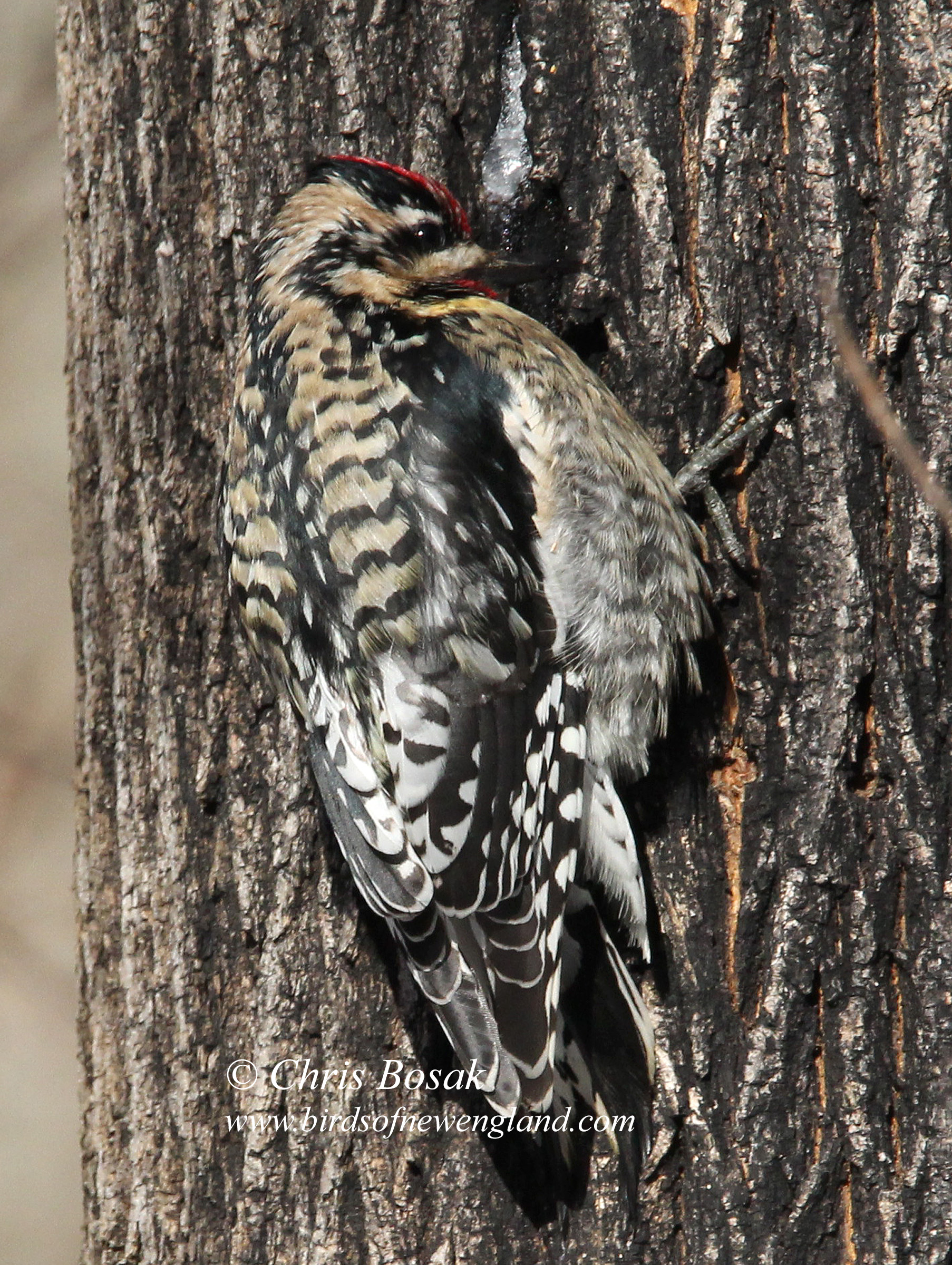
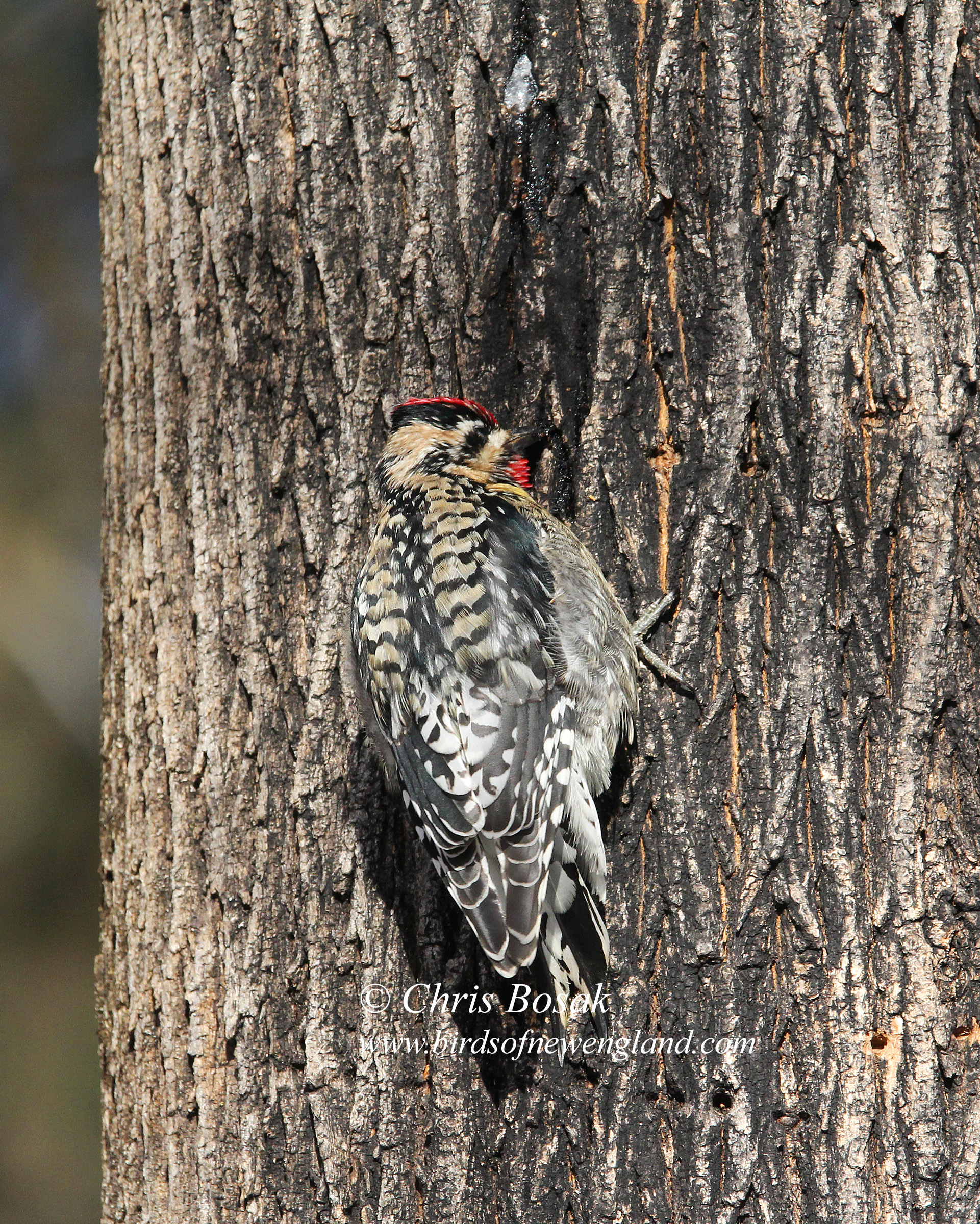
Here are a few more shots of the yellow-bellied sapsucker I saw the other day tapping on a tree. Note the aligned holes in the tree shown in some of the photos. Here is the post with the full column.

Before this recent string of sunny days, it seemed like it had been weeks since the sun had shown itself. It was gray day after gray day with some of the days made even more gloomy with cold rain. On a walk during one of those gray days, I spotted a flock of bluebirds darting from tree to tree and from tall grass to tall grass in an adjacent field. While most of the flock kept their distance, this drab adult bluebird didin’t mind my presence and let me grab a few portraits.


The woods seem to be full of surprises this winter.
Last week I wrote about the gray catbird I have been seeing on my walks this winter. On a walk last week, which was done when it was about 15 degrees outside, I had four species that were marked as “unusual” by eBird, a maassive database of bird sightings. That doesn’t necessarily mean that the birds are rare, but rather they are not commonly seen in New England during the winter. The species were: catbird, hermit thrush, purple finch and yellow-bellied sapsucker.
The catbird, thrush and finch were all species I had seen on previous walks this winter. In fact, it seems as though I typically find a hermit thrush or two each winter in New England. Like the catbird, hermit thrushes typically migrate south of New England before winter, but some remain in our region, opting to tolerate the cold weather rather than take on the risks of migration.
Continue reading
Some things just don’t seem to go together. Peanut butter and tuna fish. Flip-flops on a treadmill. And hearing a catbird when it is 25 degrees and snowing during a New England winter.
I mentioned in last week’s column that I had seen a gray catbird during a recent bird walk. I returned to the same spot several days later. This time, snow was falling all around, painting the beautiful landscape in a covering of pristine white.
Continue reading Birds of New England.com