Unknown's avatar

About Chris Bosak

Bird columnist and nature photographer based in New England.

For the Birds: 12 Days of Christmas – Birds of New England style

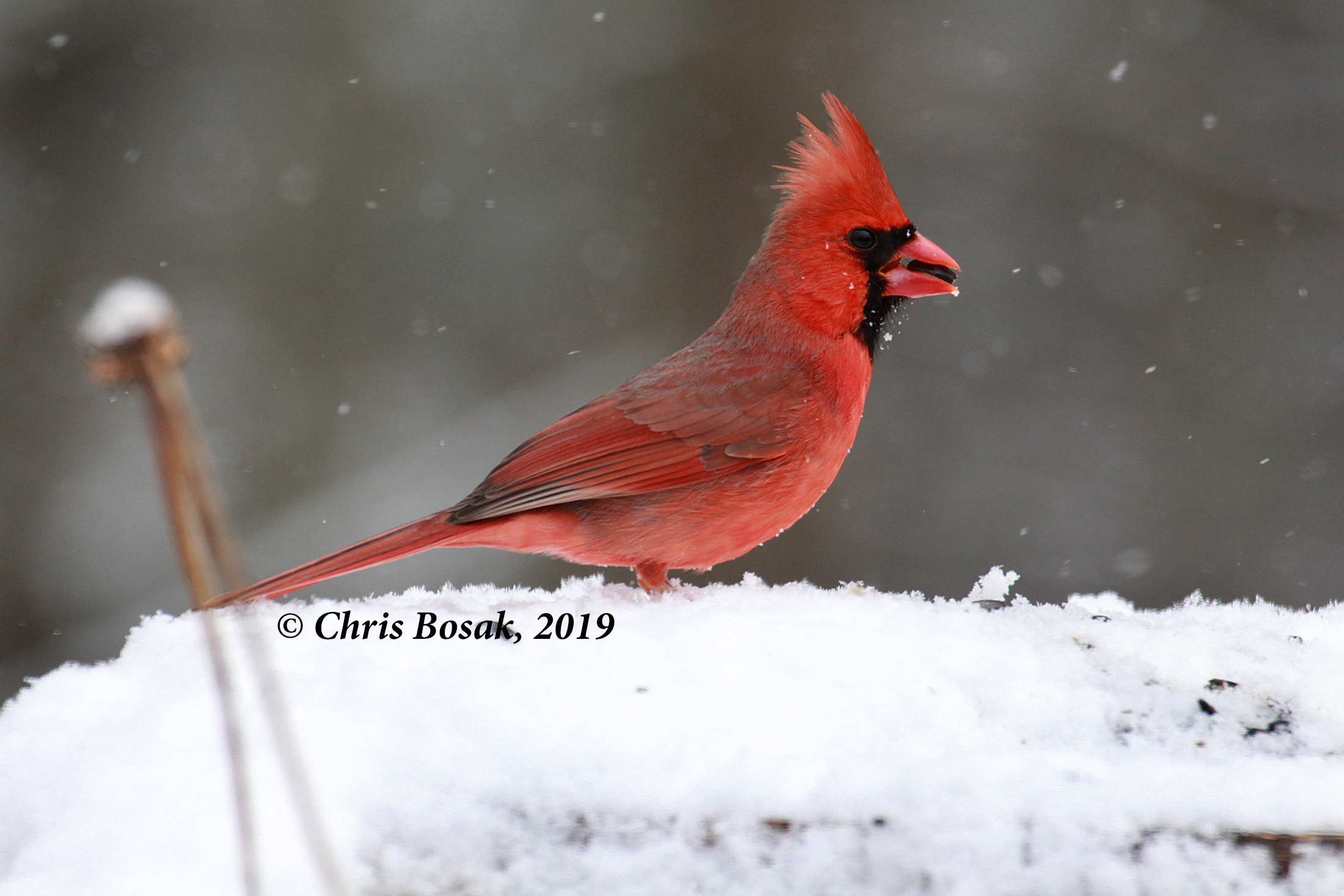
Photo by Chris Bosak A northern cardinal grabs a seed from a feeder in Danbury, CT.

I wanted to do something a little different for my annual Christmas column this year.

I typically do a gift guide column, but I will keep that part of the article brief, only to say that giving someone a membership to a conservation organization, particularly a local one, is always a great gift for your birder. Material gift ideas, such as binoculars or spotting scopes, are readily available online.

For this year, I want to do something that is perhaps a bit corny, but fun anyway. I am going to break down the classic carol The Twelve Days of Christmas and relate each of the days to birdwatching in New England.

Here we go … 

12 drummers drumming. My first thought was to use the ruffed grouse as it makes a drumming sound by  flapping and rotating its wings in the woods to claim territory. I am, however, going to save the grouse for later. So the 12th day will be the drumming of New England woodpeckers. Hopefully the image you have of drumming is a woodpecker drumming on a tree in the woods rather than drumming on the side of your house.

Continue reading

No ‘gift’ needed to find these vultures

Photo by Chris Bosak – black vultures in a tree on the side of a road in New England.

Birders are trained to find things that look out of place. It is a self-training that happens naturally over the course of many years of looking for birds.

A slight movement in the bushes likely means a bird or small mammal. That bump on a fence railing or post is probably a small perching bird taking a rest. If you are canoeing and the expanse of calm water ahead of you is broken by barely distinguishable ripples, a diving duck may soon reappear on the surface.

This gift that birders have, I think, is most often on display while driving. Most people will drive by a hawk perched on a branch along the road and not even notice it. Birders, on the other hand, see the blob in the tree from a mile away. A positive identification of the blob is made as you zoom past at 65 miles an hour. Just the other day, I noticed a bald eagle perched along a river. From the road, however, it was largely hidden by branches, but something just didn’t look quite right.

This gift is most evident when driving or walking along a familiar route. If you’ve walked a trail through the woods a thousand times, you get to know where every rock, root and upturned tree is. Anything that looks out of the ordinary is immediately noted and inspected to see if it’s a bird or animal.

Continue reading

For the Birds: Color variation is a birding curveball

Photo by Chris Bosak – A house finch with yellow/orange coloration.

Every once in a while, birding throws a curveball.

To keep the baseball analogy going, curveballs aren’t necessarily a bad thing. Once some batters learn how to recognize a curveball, they prefer them to fastballs. It’s just a matter of seeing enough curveballs and getting enough experience with them. You could say it’s a learning curve.

In the birding world, curveballs come in all shapes, colors and sizes. That’s why they are called curveballs. I would define a curveball in this regard as any bird that looks different from what a field guide says it looks like.

Leucism is a common curveball the birding world likes to throw. Leucism is similar to albinism in that the bird appears white, mostly white, or patchy white. Robins, juncos and red-tailed hawks are birds often seen with leucism. That is not to say these birds have a high percentage of individuals with leucism, but rather if a bird with leucism is spotted in New England, it’s often one of those birds.

Continue reading

For the Birds: Osprey comeback a great conservation story

Photo by Chrisi Bosak An Osprey flies over Veterans Park in Norwalk, Conn., April 29, 2015.

New England’s ospreys left the region weeks ago for warmer temperatures in the south. That doesn’t mean, however, that they are forgotten.

The return of the osprey from dangerously low numbers is another hugely successful conservation story. Last week, in honor of Thanksgiving, I talked about the turkey reintroduction and how wild turkey numbers went from zero to goodness knows how many in New Hampshire over just the last 50 years or so. Ospreys have a similar successful conservation story.

Ospreys were at critically low numbers in the 70s and slowly started making a comeback due to conservation efforts on many fronts. The osprey population is now to the point where it is safe to say it is wildly successful.

I recall working for a newspaper in southern Connecticut in the early 2000s, and a pair of ospreys building a nest on a light tower at a local beach was literally front-page news. Ospreys hadn’t nested in that city in several decades. Now that town, Norwalk, has several dozen osprey pairs nesting in it. A similar story can be told about osprey up and down the Connecticut coast along Long Island sound. Inland osprey numbers are thriving as well.

Continue reading

A few more bald eagle photos

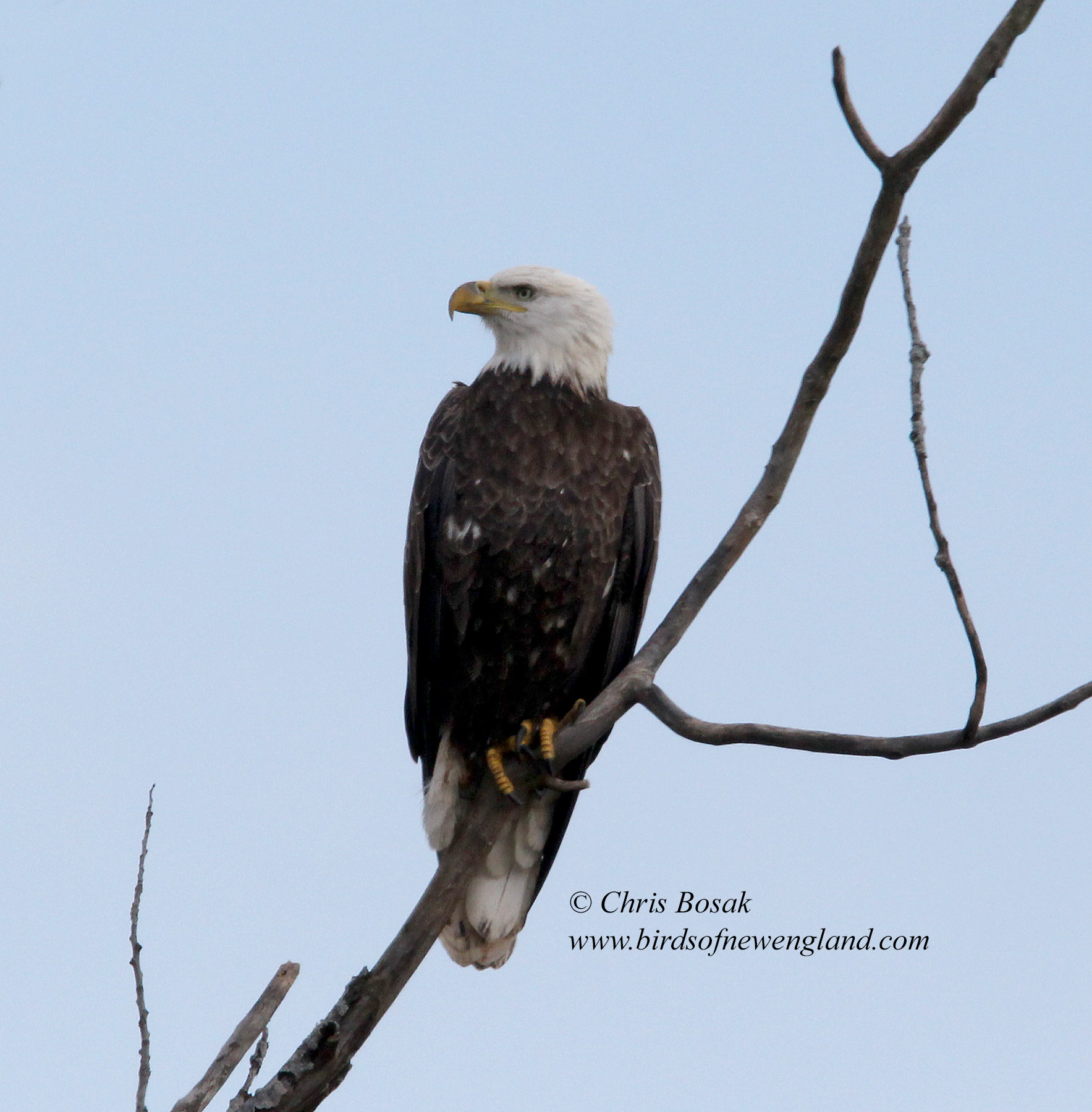
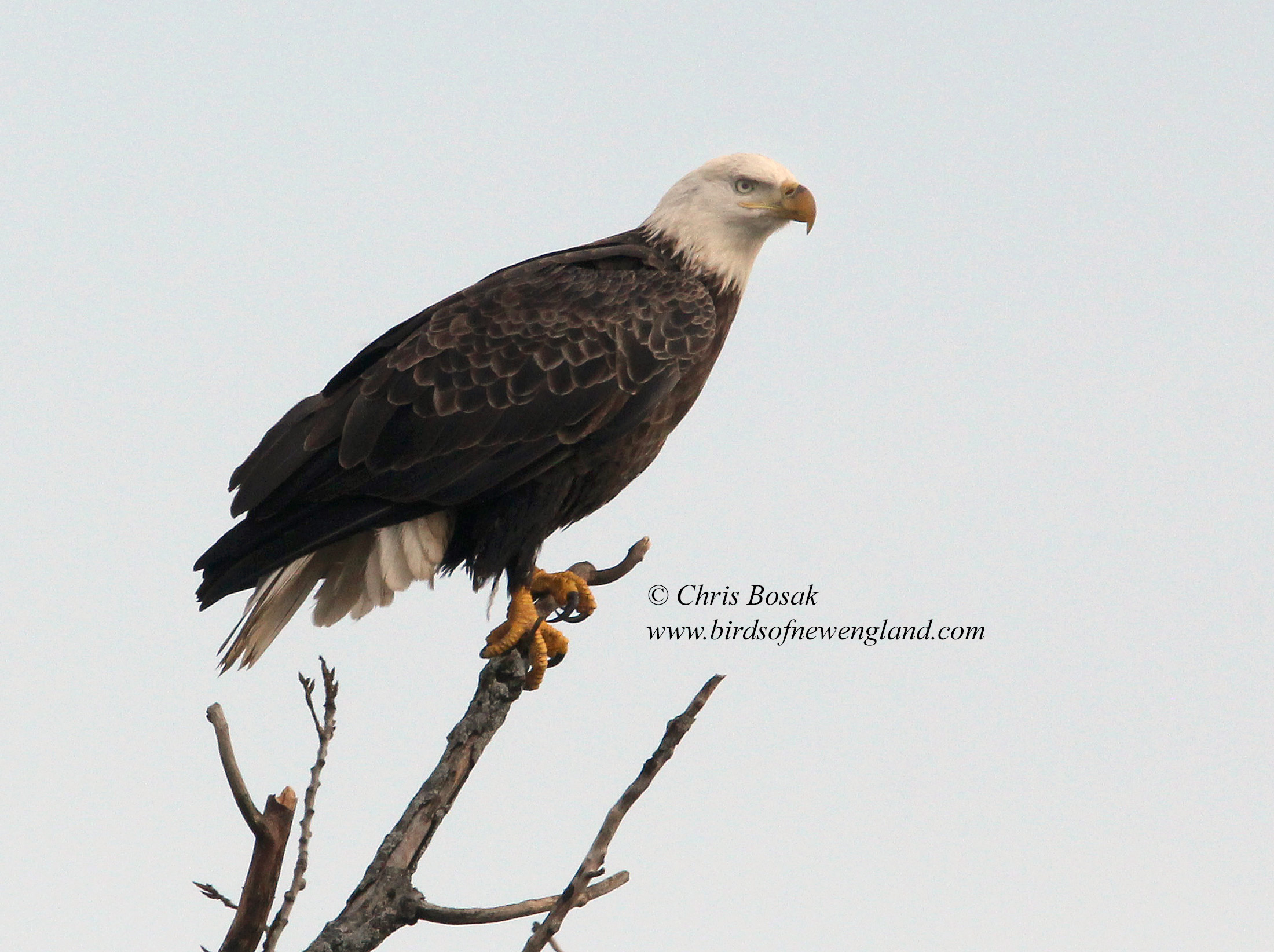
Here are a few more photos of the bald eagle I spotted at a rather unusual place a few weeks ago. Here’s the full story.

For the Birds: Annual Turkey Day column

Photo by Chris Bosak
A wild turkey struts in a cemetery in New England.

I have two routes to get to work each day. According to my GPS, each way takes the same exact amount of time to reach my destination.

The route I end up taking is usually a spur-of-the-moment decision right before I either go straight or take a left. Neither route is particularly conducive to seeing wildlife, unfortunately. However, one route does take me by a cemetery where I often see a large flock of wild turkeys. Sometimes that alone is enough to sway my spur-of-the-moment decision to take that route.

Continue reading

For the Birds: Look at flocks of birds carefully

Photo by Chris Bosak – A ring-necked duck swims in a pond in Patterson Park in Baltimore, fall 2023.

A flock of birds is not always as it appears to be.

No, I am not talking about the silly “birds aren’t real” conspiracy theory. I am talking about rare, or at least less common, birds often mixing in with a flock of common birds.

A common example of this is when a snow goose is found within a huge flock of Canada geese. At first glance, it may look like a run-of-the-mill flock of ultra-common Canada geese, but closer inspection sometimes yields a less common bird, such as a snow goose, among them. Snow geese, of course, are very common in their own right, but not necessarily in New England. Therefore, when one of these bright white geese shows up among a flock of Canada geese, it makes for a good birdwatching experience.

Continue reading

For the Birds: Fall transitioning into winter in the birding world

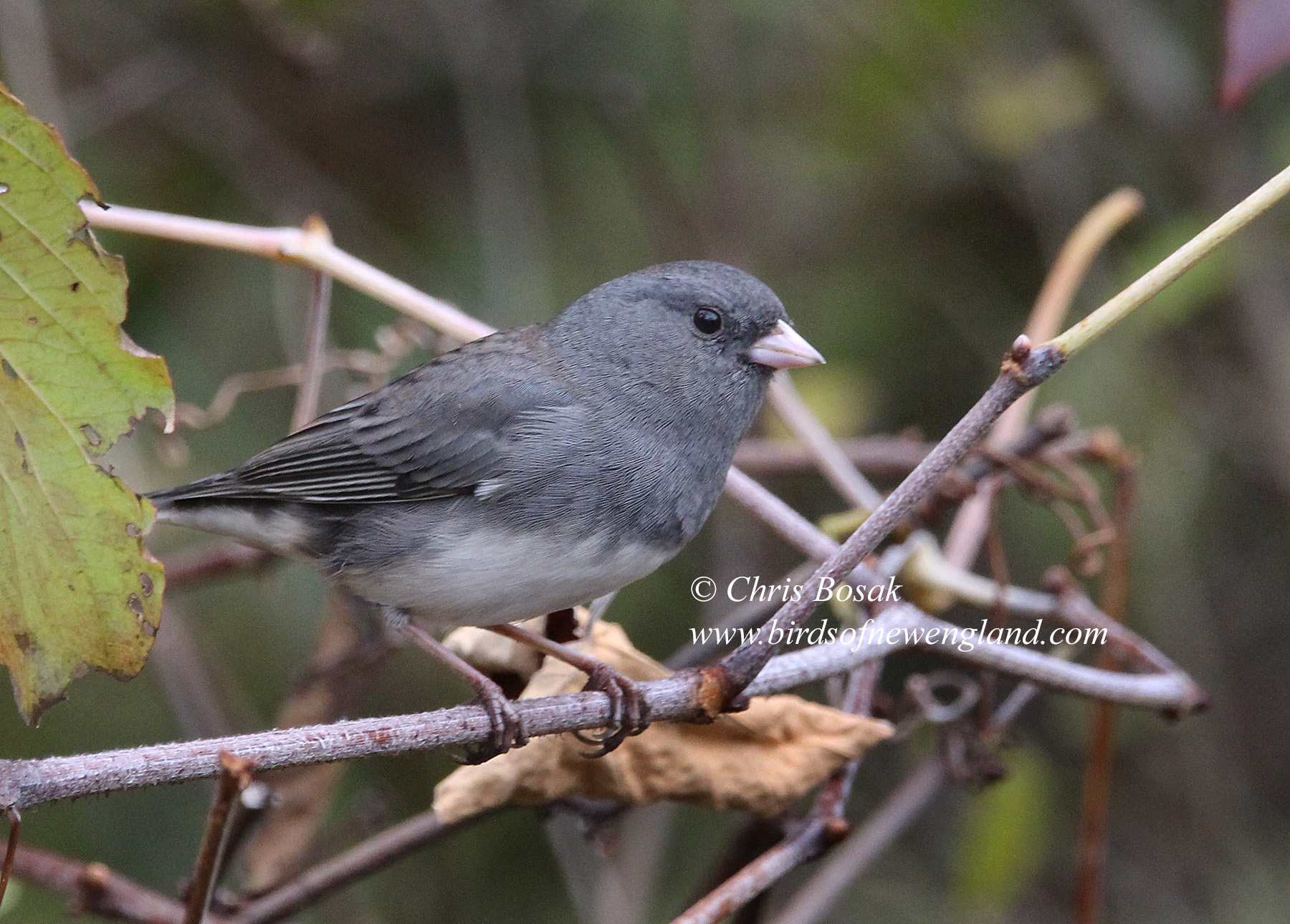
Photo by Chris Bosak – A junco tries to hide in the brush earlier this fall.

It is a time of transition for birdwatchers as we move from fall to winter. This being New England, it is safe to say that the winter birdwatching season starts in November despite the calendar saying winter doesn’t start until December 21.

It is not quite fully the winter birdwatching season as there are a few lingering fall migrants passing through and the typical winter birds have just started to arrive. As I pull Into my driveway these days, I am greeted by several dozen juncos flushing in every direction. I hadn’t seen them in these numbers since the transition from winter to spring earlier this year. 

Continue reading

For the Birds: Eagles abound and it’s awesome

I drove my son to the auto repair shop so he could check on the status of his car. I dropped him off at the garage bay and continued toward a parking spot facing the road.

As I approached the spot, I noticed a large bird perched in a leafless tree overlooking the road and the small swamp on the other side. Assuming it was a hawk, I narrowed down the options to red-tailed hawk and red-shouldered hawk. I would have immediately jumped to red-tailed hawk, but red-shouldered hawks seem to be thriving throughout much of New England. In the brief glance I got of the bird up to this point, I noticed it was rather large, which further confirmed my suspicion that it was a red-tailed hawk.

When I finally parked, I discovered it was neither. It was much larger than even a red-tailed hawk. It was a bald eagle, right there along the road by the auto repair shop.

Continue reading

For the Birds: The early birder sees the birds

Photo by Chris Bosak
A blue-headed vireo perches on a branch in New England this fall.

I realize it’s Birding 101 to say that the best time to look for birds is early in the morning, but I took a walk the other day that really drove home the point.

I was driving past a park about half an hour before sunrise and decided that my destination was just going to have to wait. I was stopping for a quick walk first. Two and a half hours later … 

The walk started when the sun was still lower than the distant hills to the east. It was light enough to see where I was going, however, and the birds were up and at ’em too. Boy were they ever.

Continue reading