Unknown's avatar

About Chris Bosak

Bird columnist and nature photographer based in New England.

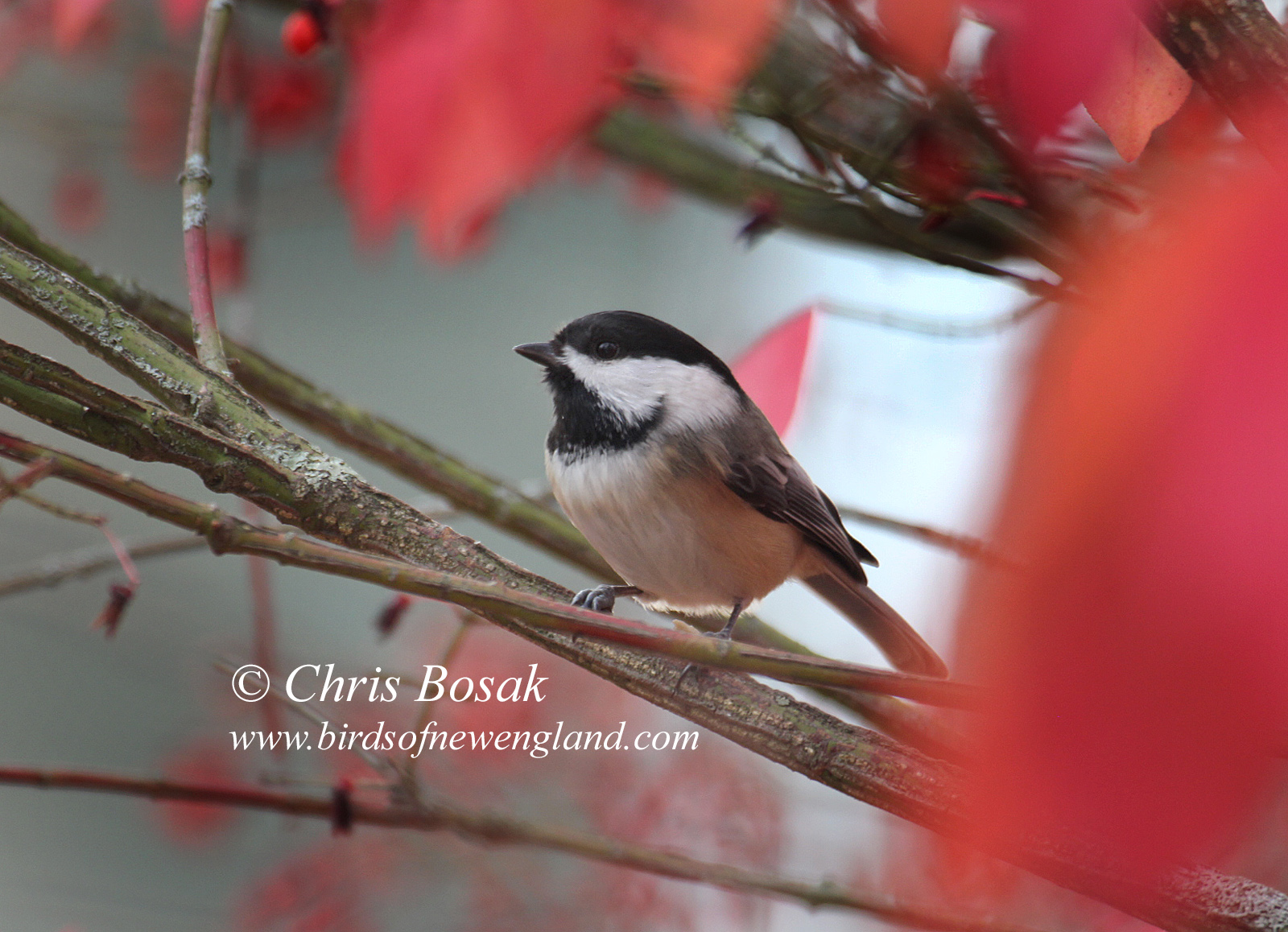
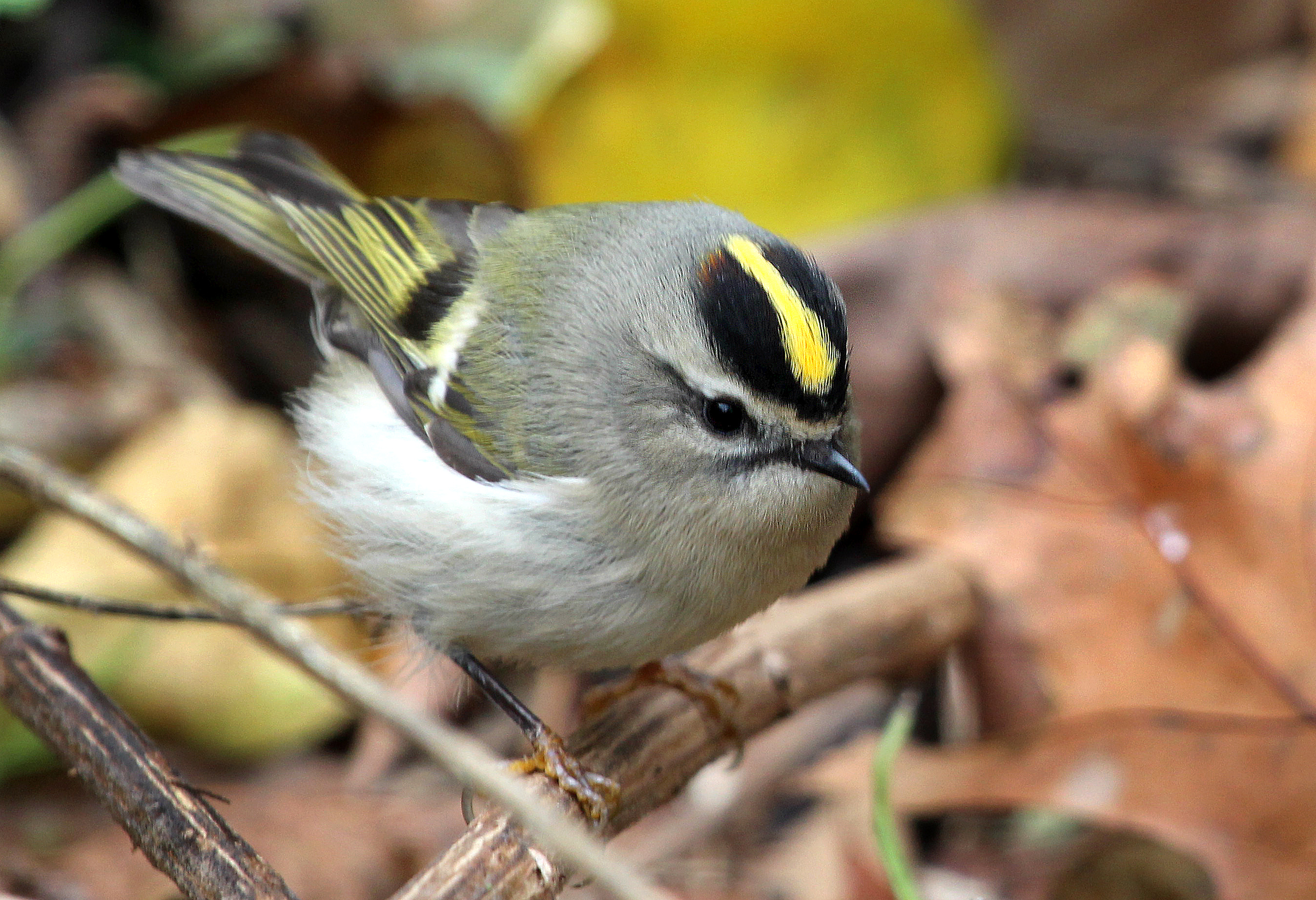
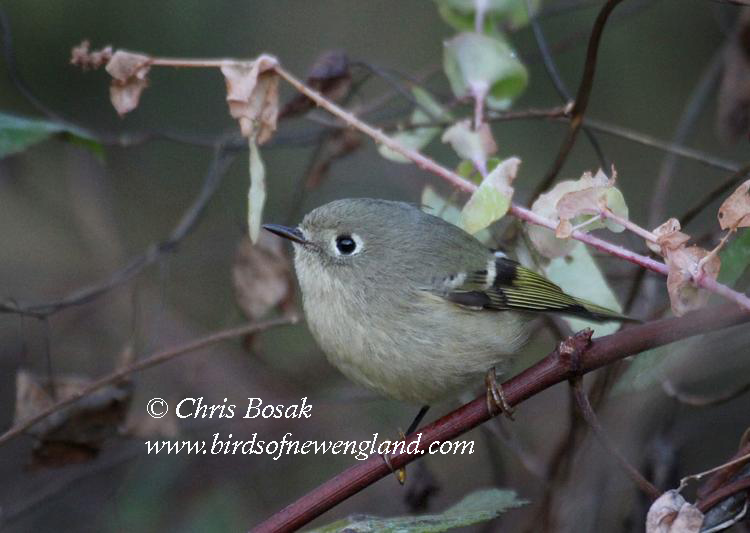
For the Birds: The small, but mighty kinglet

People like large birds. Eagles, hawks, owls, even herons and waterfowl, get birders and non-birders alike excited.

Smaller birds? Sure, birders get excited about smaller birds too, but for non-birders, these birds have to bring something appealing to the table.

Everyone likes cardinals. They’re bright red. Everyone likes chickadees. They’re cute, tame and active. Non-birders are split on blue jays. Some like them because they are blue (and fairly large), and some dislike them because they heard jays are bully birds and they can’t let it go.

In fact, many smaller birds go completely unnoticed by non-birders, even when the birds make their presence rather obvious. A flock of white-throated sparrows or dark-eyed juncos can dart in every direction right in front of a non-birder and it will be as if nothing ever happened. A birder, however, will stop dead in his or her tracks, reach for the binoculars and try to find the little birds in the brush just to confirm an ID.

Continue reading

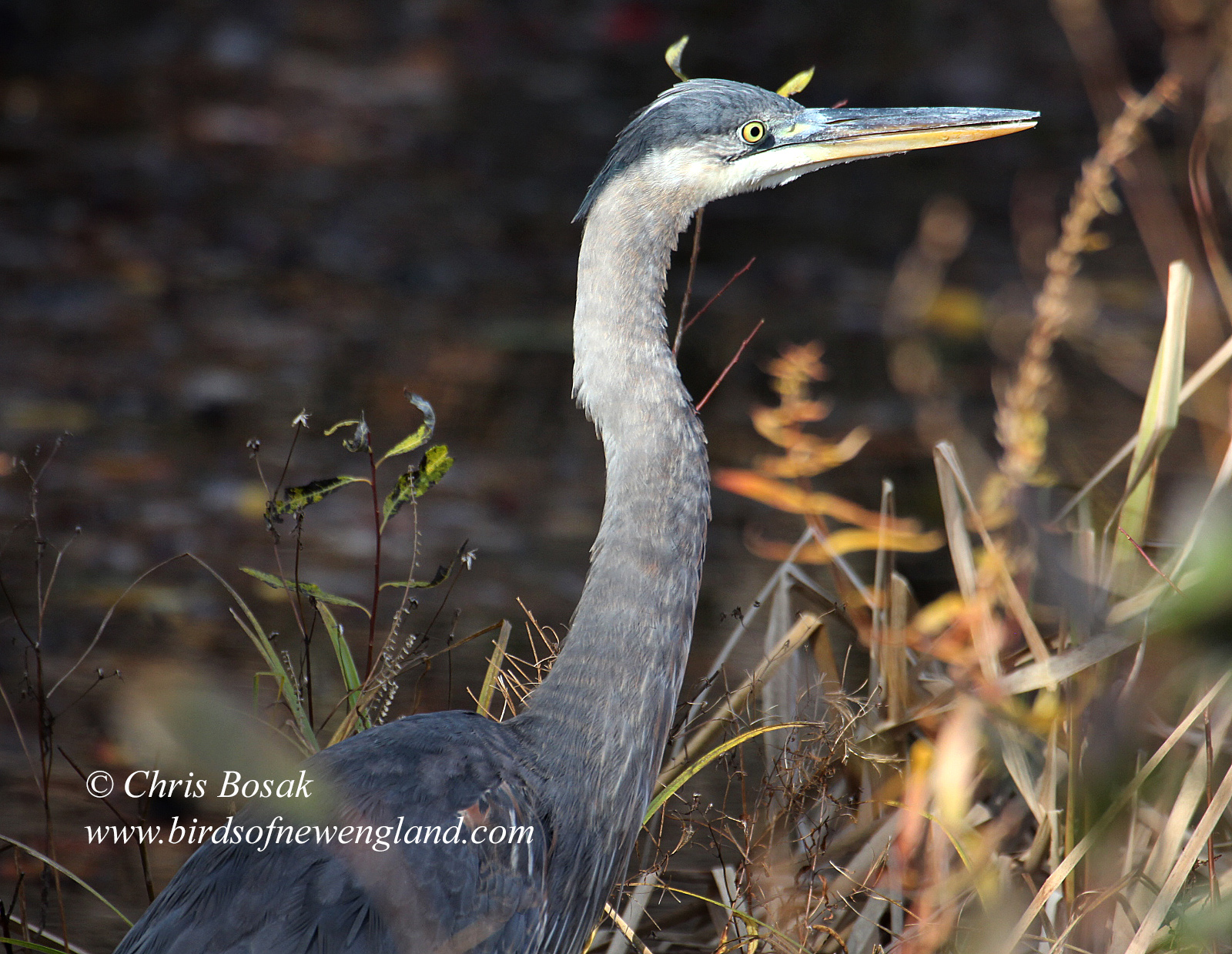
Great blue heron photo shoot

Photo by Chris Bosak A great blue heron at a pond in New England, November 2021.

I saw this great blue heron on the edge of a small pond. It obliged as I took a few photos and continued on my way.

For the Birds: Readers take over

Photo by Chris Bosak A red-bellied woodpecker perches on a log.

You’ve heard from me; now find out what others are seeing out there.

Red-bellied woodpeckers continue to proliferate in southern New Hampshire. It wasn’t too many years ago that these large, handsome and sometimes aggressive birds were extremely rare sightings in the Granite State. Their northern expansion has been impressive and now they are seen with much greater frequency throughout the southern part of the state.

I wouldn’t say they are common sightings here yet, but they are getting there. They are now very common in Connecticut, Massachusetts and Rhode Island, so it stands to reason New Hampshire and Vermont are next.

In the last few weeks, I have heard from Monadnock Region residents Cindy and Richard who have each hosted red-bellied woodpeckers at their feeders recently. Cindy from Keene wrote that her bird visits every day. She wrote that the bird’s red head is “almost neon” when the sun hits it just right.

Continue reading

And the answer is …

Photo by Chris Bosak A yellow-crowned heron walks through a marsh in New England, summer 2021.

Thanks to those who participated in the latest bird quiz. No one got it right, but everyone who guessed was on the right track in saying it was a young or juvenile bird. The bird in question is a young yellow-crowned night heron. I saw it stalking in a marsh in Milford, Connecticut, earlier this fall. Thanks again for playing along.

Bird quiz: What do we have here?

It’s been a while since I’ve posted a bird quiz — years perhaps. I’ll ease back in with a relatively easy one. So here you go, what is this bird? I’ll post the answer in a day or two. Thanks for playing along.

For the Birds: A tree full of birds

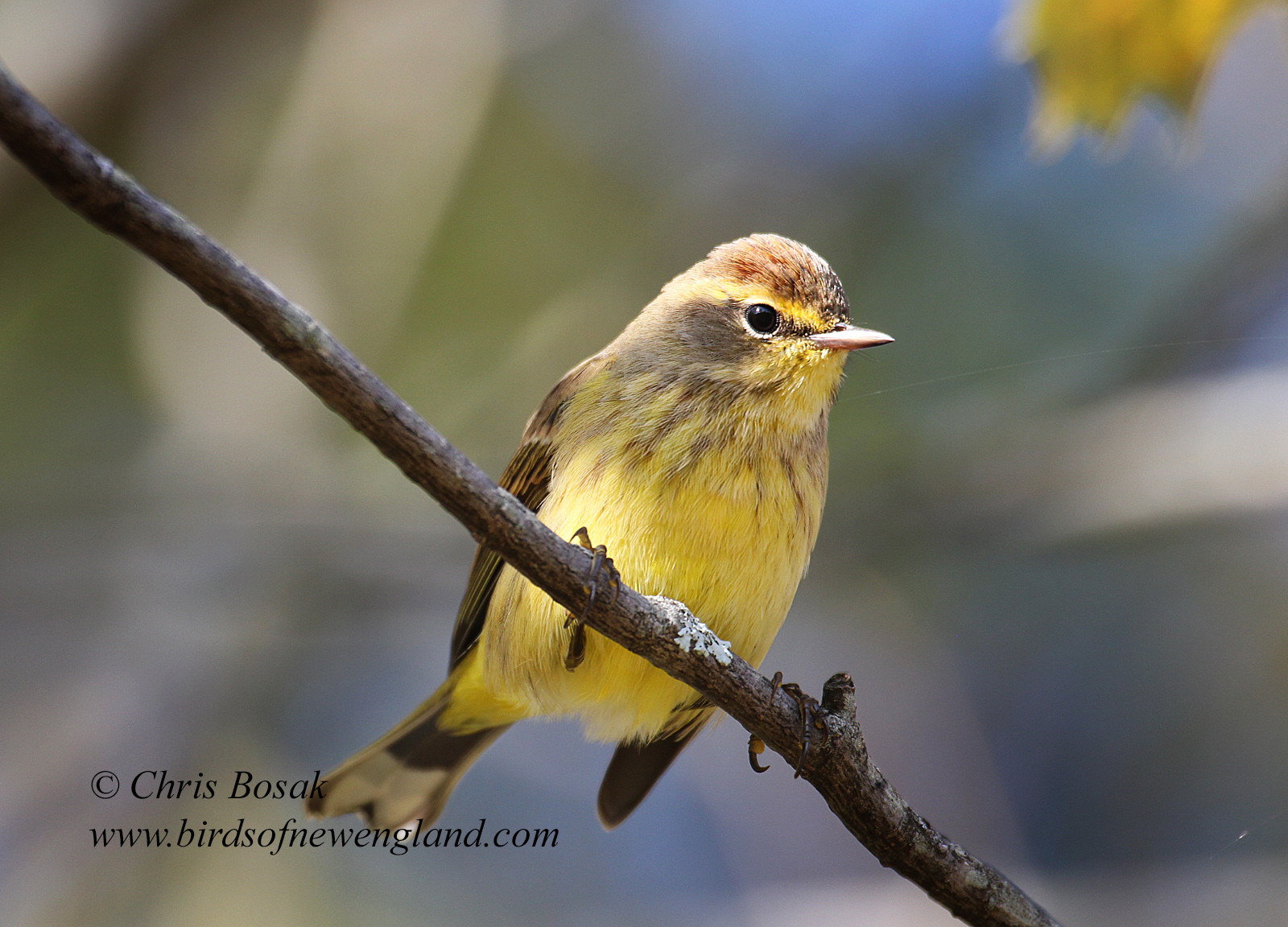
Photo by Chris Bosak A palm warbler perches in New England, October 2021.

A pair of ruby-crowned kinglets flitted among the brush, and a crow or two flew overhead. That was all the bird action on the early part of the walk.

Then I heard a commotion coming from a nearby tree. It was a huge, dead maple tree with no leaves on its branches, but various types of vines climbed up its trunk and spread out among the limbs. The vines still had their leaves, making the tree look like nature had splattered various shades of red, yellow, orange and green on the venerable old guard.

Something must have been lurking among the brush because the birds were on high alert. I’ve never seen a more varied collection of bird species in one tree before. I could hardly believe it as I counted out the species in my head.

Continue reading

A few more yellow-rumped warbler photos

Photo by Chris Bosak A yellow-rumped warbler eats poison ivy berries in New England, fall 2021.

A few weeks ago, I wrote about finding a flock of yellow-rumped warblers eating poison ivy berries. Here are a few more shots. Click here for the original story.

Photo by Chris Bosak A yellow-rumped warbler eats poison ivy berries in New England, fall 2021.

For the Birds: Halloween in nature

Photo by Chris Bosak Praying mantis at Highstead in Redding, CT, summer 2019.

A little late for Halloween, but whatever …

I’ve always liked Halloween. It’s kind of a silly holiday if you think about it, but maybe that’s why I like it so much.

As a kid, trick-or-treating was the highlight of Halloween, of course. It was fun to find a costume and dress up, but it was mostly about the candy back then. As I got in my late teens and 20s, Halloween parties become the highlight of the season. I’ll don’t think I’ll expand on that one. We’ve all been there.

Even as an adult I still like Halloween. I don’t trick-or-treat, and I don’t party as much, but I still like the imagery and aura associated with the holiday. “It feels like Halloween tonight,” I find myself saying on many walks in the fall. Something about those chilly nights with clouds and a bright moon remind me of being a kid trick-or-treating or taking my boys around the neighborhood when they were younger.

Continue reading

Red squirrel in fall

Photo by Chris Bosak A red squirrel in a walnut tree in New England, fall 2021.

I know some people don’t care for red squirrels — particularly homeowners who have the rodents in their houses — but I’ve always liked them and enjoyed their antics.

Squirrels: Don’t fight them, feed them

The following article and photos provided by Cole’s Wild Bird Products

Countless backyards are battlegrounds between die-hard homeowners and squirrels fighting over bird feed. Squirrels need not be an inevitable element of bird feeding; even though keeping squirrels out of bird feeders is an age-old problem, there are ways to thwart these thieves.

One common tactic is stocking feeders with seed squirrels dislike, such as safflower, nyjer, white proso millet and seed infused with capsaicin, a compound derived from hot peppers that makes mammals’ tongues smart. An option like Cole’s Hot Meats features nutritious sunflower meats infused with fiery habanero chili peppers. They’re a no waste, no mess feed, birds enjoy but squirrels’ dislike.

Continue reading