Unknown's avatar

About Chris Bosak

Bird columnist and nature photographer based in New England.

For the Birds: Another hot summer’s day walk

Photo by Chris Bosak Eastern tiger swallowtail, Brookfield, CT, summer 2019.

Birds were scarce on the walks, as they usually are on hot summer afternoons. In what has become somewhat of an annual event for me, I picked a blisteringly hot and soakingly humid summer afternoon and went to a New England meadow to see what critters were flying, jumping and crawling about.

Butterflies were the main attraction, as they usually are, followed closely by dragonflies. Monarchs were the dominant butterfly species, but eastern tiger swallowtails were in abundance as well. There were also high numbers of black swallowtails, skippers, buckeyes, sulfurs and other delicate winged beauties.

It was nice to see so many monarchs, of course, as this iconic species is in serious decline and in recent memory was thought to perhaps be going extinct. From what I have read, the 2019 population is well above the previous year, which is terrific news. It is not time to let down our guard, however. Populations of animal species can vary widely from year to year and we want to make sure we keep doing all we can to help monarchs survive.

The meadow in which I walked is teeming with milkweed. That, of course, is the main food source for monarch caterpillars, but also a favorite nectar stop for adult monarchs and other butterfly species. I would say at least 80 percent of the butterflies I saw feeding during my walks were sipping from milkweed flowers.

Yes, the butterfly season is definitely in full swing. It will remain that way for the next several weeks before tapering off as we head into fall. I will return frequently to this and other meadows to see the butterflies and other critters getting ready for the colder months.

As I mentioned, the bird activity on these walks was rather slow, but not nonexistent. I did notice a rather large flock of bobolinks, a mixed flock of males, females and youngsters, flying around, which was nice to see.

I also saw a few immature bluebirds with their dull plumage and spotted chests. Goldfinches were a frequent sighting, and without a doubt, the most numerous bird I saw. Besides that, a song sparrow or two and the odd hawk flyover were about it for bird activity.

These sweltering strolls into the meadows each summer have become one of my favorite annual traditions. I’m certainly not saying butterfly photography is easy, but they are certainly more cooperative than most birds. Plus, the colors you get on the photos from the butterflies and flowers are always inspiring.

Many more photos of the walk are available on the website www.birdsofnewengland.com. Feel free to check it out and also remember to send me your most recent sightings, be it birds, butterflies, or whatever else you have seen in the natural world.

Butterfly Weekend: Bonus eastern tiger swallowtail photos

Photo by Chris Bosak
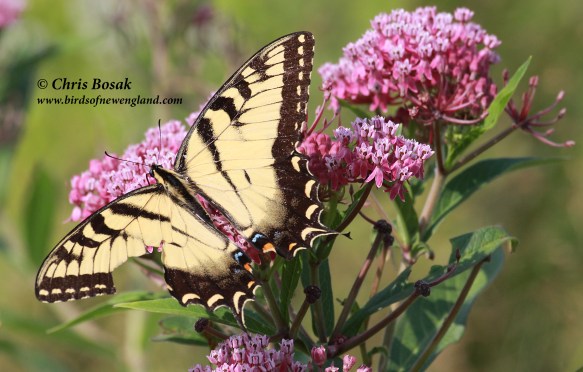
Eastern tiger swallowtail, Brookfield, CT, summer 2019.

I’ll wrap up Birds of New England’s first unofficial Butterfly Weekend with some bonus shots of eastern tiger swallowtails. Monarchs may have been more numerous on my recent walks, but swallowtails proved to be more cooperative.

I hope you enjoyed Butterfly Weekend. Thanks for supporting Birds of New England.

Photo by Chris Bosak
Eastern tiger swallowtail, Brookfield, CT, summer 2019.

Butterfly Weekend: Black swallowtail

Photo by Chris Bosak
Black swallowtail on milkweed, Brookfield, CT, summer 2019.

I see far more eastern tiger swallowtails than black swallowtails so it’s always a treat to see these handsome fliers around.

Butterfly Weekend: Silver-spotted skipper

Photo by Chris Bosak
Silver-spotted Skipper, Brookfield, CT, summer 2019.

Skippers are commonly seen and often cooperative for photographers.

Butterfly Weekend: Common Buckeye

Photo by Chris Bosak
Common Buckeye, Brookfield, CT, summer 2019.

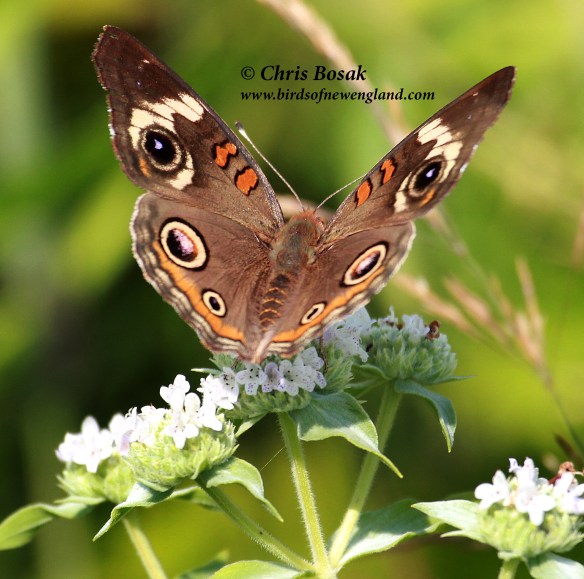
Here’s a looker of a butterfly: the common buckeye. Note the ‘fake eyes’ on the wings to make the delicate creature look fierce.

Butterfly Weekend: Monarch

Photo by Chris Bosak
Monarch on milkweed, Brookfield, CT, summer 2019.

It’s been a great year for monarchs, at least in the meadows I’ve been walking in. That is particularly good news because of the dire predictions about the monarch population that surfaced a few years ago. From what I’ve read, monarchs are more plentiful this year on both their summer and winter grounds. Let’s hope that trend continues for this iconic species.

Here’s a monarch all covered in pollen.

Photo by Chris Bosak
Monarch covered in pollen, Brookfield, CT, summer 2019.

Kicking off ‘Butterfly Weekend’ with this beauty

Photo by Chris Bosak Eastern tiger swallowtail, Brookfield, CT, summer 2019.

Here’s the first of many butterfly photos I took this week during walks at Happy Landings in Brookfield, Connecticut. The vast meadows are home to a great number and variety of butterflies.

I’m kicking off the Birds of New England unofficial Butterfly Weekend with this shot because the butterfly’s wings are still perfectly intact. Many butterflies have wings that are damaged due to predators, weather or any other number of factors. These wings are as yet unscathed.

For the Birds: Sandpiper in the puddle

Here’s the latest For the Birds column …

Photo by Chris Bosak
A least sandpiper seen in New England.

This moment existed only because of the heavy rains we experienced last week. The body of water was small, shallow, algae-ridden and not at all something to behold.

OK, it was a puddle. No more, no less … your typical run-of-the-mill puddle.

Until a least sandpiper showed up and transformed the puddle into an exotic waterscape. The small shorebird was migrating south earlier this week and saw the puddle as the perfect place to rest and perhaps find an easy meal.

It had flown in from somewhere up north and was on its way to points south. But for a few hours anyway, home was a puddle in New England.

The bird paid little attention to me as I watched and photographed it for several minutes. Migrating birds can be like that. They are intensely focused on fueling and resting for their long journey.

The funny thing about the sighting was the location of the puddle. It exists on and off — depending on the weather — at a dirt parking area that Continue reading

Stranger things: Treehopper

Here’s a shot from the close-up meadow series I did for the Darien Land Trust five years ago. I came across many strange things during my time in the meadows that summer. It’s amazing what you find when you tune out everything except your immediate surroundings.

Treehoppers, not to be confused with planthoppers, are often called “thorn bugs” because of their appearance.

Here is a link to more information about treehoppers.

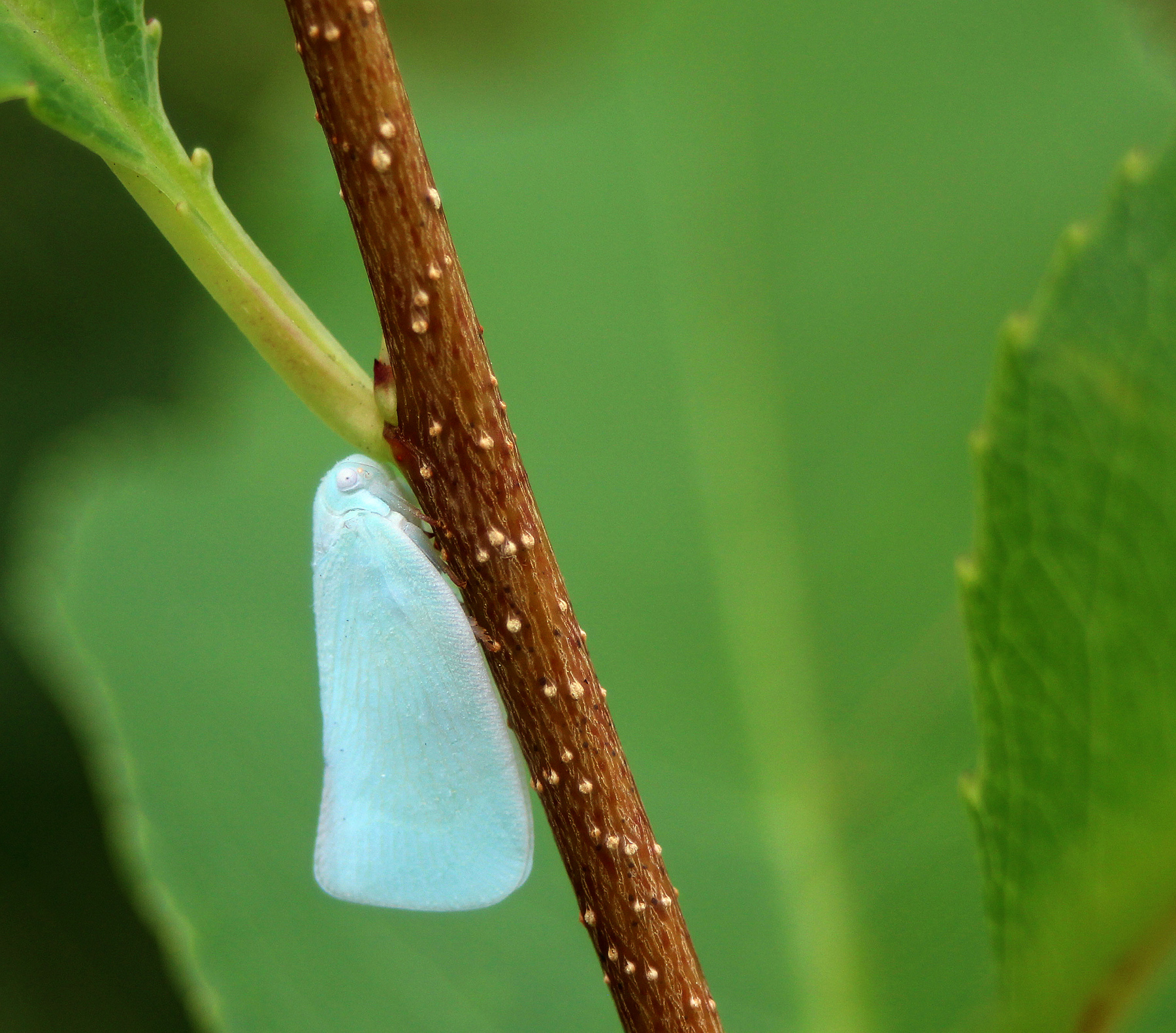
In case you’re interested, here’s what a planthopper, not to be confused with treehopper, looks like.

Another of my favorite woodpeckers

I posted last week about seeing a family of pileated woodpeckers looking for insects in my backyard. Also last week, I had a chance encounter with another one of my favorite woodpecker species: the northern flicker.

I was drawn to the backyard as I heard a flicker noisily issuing its alarm call over and over. It turns out, a cat was walking through the yard and several birds were scolding the feline. The flicker, however, was by far the loudest and most agitated. There were most likely young flickers around but I didn’t see them.

Flickers are handsome birds with an interesting assortment of colors and decorations. Note the bib under the neck and spots on the chest and belly. The bird shown in the photographs is a female. Males have a black “mustache.”

The northern flicker is made up of two subspecies: yellow-shafted flicker and red-shafted flicker, which were once considered two separate species. Here in New England, we have the yellow-shafted variety. The name comes from the yellow feathers on the underside of the tail and wings.