Unknown's avatar

About Chris Bosak

Bird columnist and nature photographer based in New England.

For the Birds: The tricky nesting season

Here is the latest For the Birds column, which runs in several New England newspapers.

Yellow-bellied sapsucker cleans out its nest.

Yellow-bellied sapsucker cleans out its nest.

The nesting season can be tricky for birdwatchers.

Just when you are sure certain birds are nesting on your property, something happens that makes you question whether it’s true.

You would think a bird going in and out of a birdhouse would leave no doubt that the bird is, indeed, nesting there. But that’s not always the case. In fact, it’s often not the case.

I have four birdhouses strategically placed throughout my property and not a single one is occupied. I’ve seen black-capped chickadees go in and out of two of them on different occasions this spring. Yet, as I continue to monitor those houses, I see no activity.

I likely caught the birds checking out the houses and, apparently, they didn’t like something. Whether it was the location in the yard, the dimensions of the house, or they just didn’t like the vibe, they moved on and hopefully found a suitable place elsewhere.

At least the chickadees checked out the houses and moved on. Wrens will continue to tease homeowners into thinking they are nesting in the house. Of course, teasing the homeowner is Continue reading

For the Birds: Persistence pays off in birdwatching

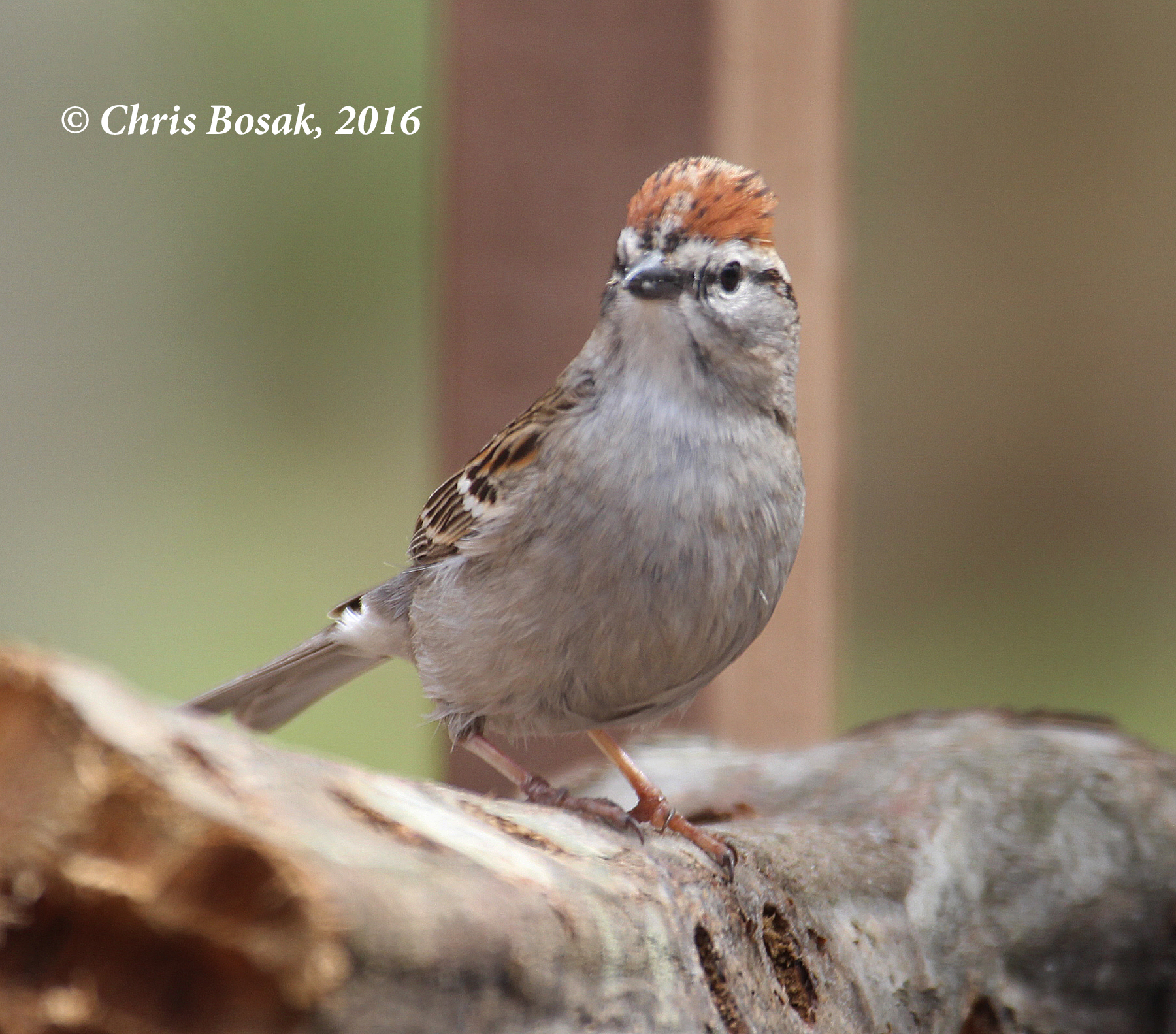
Photo by Chris Bosak A Chipping Sparrow raises its crest while standing on a log in Danbury, Conn., summer2016.

Photo by Chris Bosak
A Chipping Sparrow raises its crest while standing on a log in Danbury, Conn., summer2016.

I wasn’t about to let this one slip away.

I’ve said that to myself plenty of times over the years and most of the time it does, indeed, slip away. But not this time.

Persistence is often necessary when trying to nail down a bird’s identity. The problem is this: The bird doesn’t know this and often (usually?) flies away before you can study it long enough to get that ID.

This latest bird was driving me crazy. It sang loud and clear from the depths of the woods. The song appeared to be an endless series of robin-like phrases sung over and over. Despite the constant notes, I couldn’t find the bird in the treetops.

My first thoughts were that the bird was either a Baltimore oriole, rose-breasted grosbeak or scarlet tanager. I was thinking big in terms of color apparently. I looked in the tree tops, but saw nothing.

Eventually, I eliminated those birds from consideration because the song was too constant. The aforementioned birds take at least a little break between repeating their respective songs.

My next thought was a gray catbird as the song had a bit of a squeakiness to it. It wasn’t the right habitat for catbirds, however, as the scene was heavily wooded.

I recorded the song in case the bird decided to fly away, leaving me frustrated without a positive ID. I’ve tried that before, however, and it rarely seems to work. Just like birds Continue reading

For the Birds: How to find the rarities

Here is the latest For the Birds column, which runs in several New England newspapers.

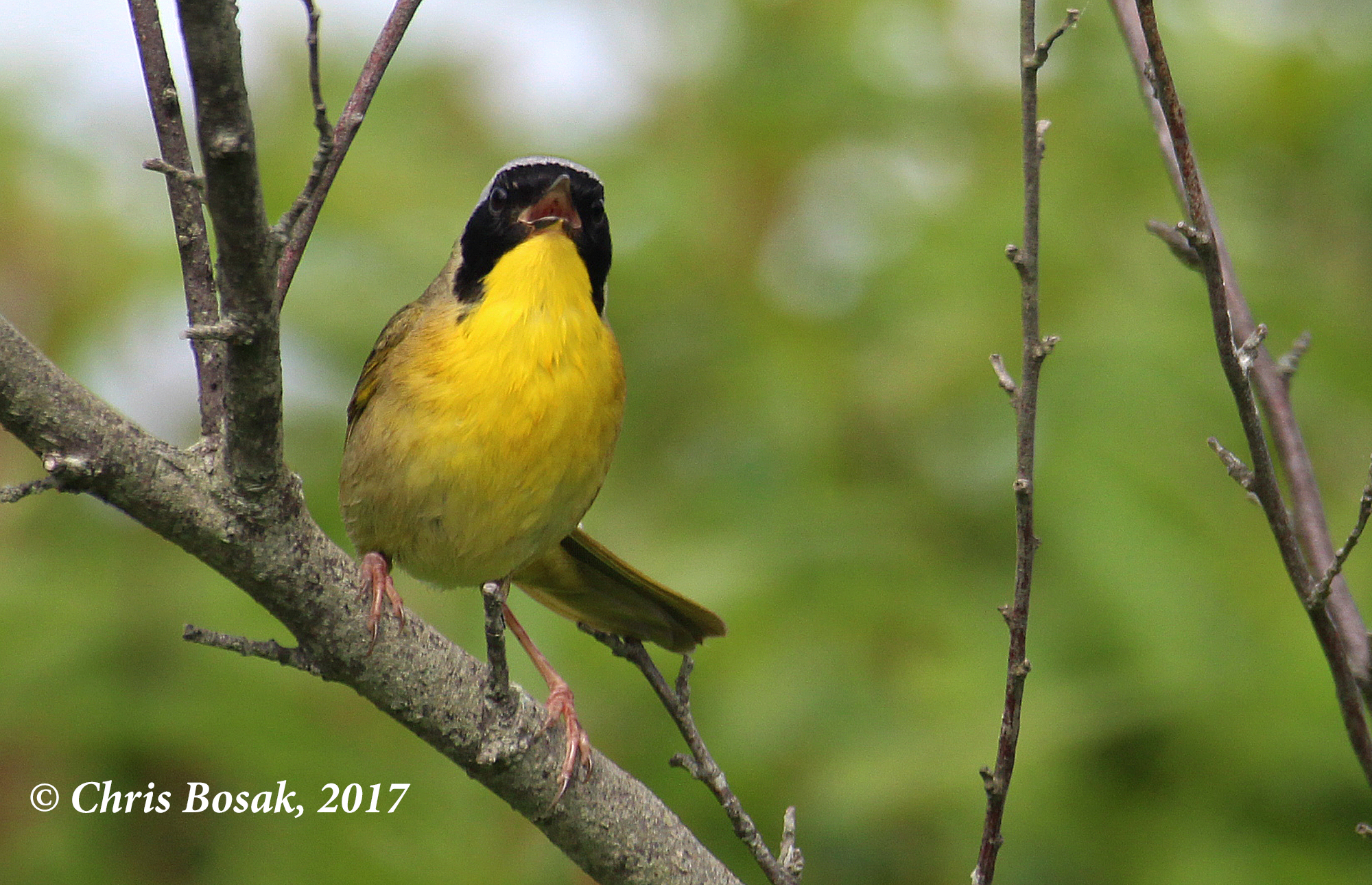
Photo by Chris Bosak A common yellowthroat sings from a perch in Brookfield, Conn., during spring 2017.

Photo by Chris Bosak
Rare bird alerts are a good way to find out when spring migrants, like this yellowthroat, are arriving.

What do we do now with spring migration winding down and birds busy with the task of continuing their species?

We still look for birds, of course, but where to find them? Resident birds make themselves scarce as they hide away in holes and on nests. We don’t want to disturb the birds at this time of year anyway.

It’s a good time to check out the rare-bird alerts to see what others are finding throughout the region. I’ve never been a big “chaser,” but it’s always fun to see what birds are around. You never know, maybe one of the rarities is in your town or in a neighboring town.

The best place to look is birding.aba.org, which is run by the American Birding Association. It is a combination of birding news and rare-bird alerts. Not all of the sightings listed are rare, but may be unusual for location or time of year. Sometimes, contributors just have a bird question for the community.

The “landing page” of the website gives users the option to click on any state. It’s fun to click on random states to see what’s showing where. If you’re traveling, you can always check to see if any unusual birds are hanging around your destination.

Some of the recent sightings in New Hampshire include nighthawks, chukar, king eider, mourning warbler and snowy owl. Yes, you read that last one correct. A snowy owl is still around the New Hampshire coast.

New Hampshire Audubon also maintains a great rare-bird alert system. Visit www.nhaudubon.organd click on “Get Outside,” then “birding.” It is updated frequently and lists rare and unusual sightings from around the state. There is also eBird, which is revolutionizing birding and bird tracking, but I’ll save that one for another day as it warrants its own story.

The lists will not let you know how the common species are doing, or where they are being seen. Cardinal and chickadee sightings are not appropriate for the rare-bird alert lists, but you can always send them to me if you feel the impulse to share. I’m always interested in knowing what people are seeing — rare and common species welcomed.

The ABA site is also good fodder for bird discussions. Many birders use the site to have questions about birds answered. A birder posted last week about a bird song she had heard and wondered if anyone could figure out what it was.

While I’ve never been a lister or chaser, it’s always good to check in occasionally with the rare-bird alerts. You’d hate to find out too late that a once-in-a-lifetime bird was right under your nose.
Continue reading

For the Birds: Readers take over again

Photo by Chris Bosak A scarlet tanager perches in an oak tree in Danbury, Conn., spring 2018.

Photo by Chris Bosak
A scarlet tanager perches in an oak tree in Danbury, Conn., spring 2018.

Here is the latest For the Birds column, which runs in several New England newspapers.

The colors just keep on coming this spring.

I’ve been lucky enough to see two indigo buntings, three rose-breasted grosbeaks (although two were males fighting each other), a scarlet tanager, at least three Baltimore orioles, a pair of ruby-throated hummingbirds and a handful of warblers in my yard so far this spring. It’s been a welcomed color bonanza after a long winter.

Now that Memorial Day has passed and we are unofficially in summer, let’s look at what some readers have seen.

Carol from the Monadnock Region sent a photo of an oddly colored hairy woodpecker. Instead of the traditional white and black, this one was black and yellowish brown. A reader from Connecticut sent me a similar photo a few years ago.

My guess is that it is a normal hairy woodpecker with a pigment abnormality. Pigment abnormalities show up in birds every so often, such as orange house finches or white robins. Leucism and albinoism are extreme forms of pigment abnormalities, but more subtle color variations occur.

Don watched as an eagle eyed a pair of common mergansers on Granite Lake. He wondered if the eagle would try to take one of the ducks, but a loud noise distracted the eagle and it flew off. Eagles, which often scavenge for food, can take birds as big as common mergansers.

Norma from Spofford had an indigo bunting visit her feeders this spring. She has been in Spofford for nearly 40 years and has seen buntings only a handful of times.

It’s also been a colorful spring for Lenny of Greenfield, who has seen orioles, rose-breasted grosbeaks and cardinals. A special treat was seeing the oriole and grosbeak at the feeder at the same time.

Dean in Marlborough reported visits from pileated woodpeckers, indigo buntings, cardinals and eastern bluebirds. Another colorful yard in the Monadnock Region.

Lida from Harrisville had a male and female oriole come to her table to feast on oranges. Another reader suggested using grape jelly to attract orioles.

I tried to attract orioles with both oranges and grape jelly this spring, to no avail.

Eric in Surry noticed the usual changing of the guard for ground-feeders as the juncos left and chipping sparrows arrived, with about a two-week overlap. He has also noticed a few warbler species, including a pine warbler carrying nesting material. The material was hair he leaves out for the birds after brushing his dog. He has also seen chickadees, phoebes and nuthatches grab some of the hair.

He had another interesting bird sighting this spring; shortly after filling in small holes in his yard, a Cooper’s hawk swooped in to grab a chipmunk. Eric has also seen a blue-gray gnatcatcher and heard an eastern whip-poor-will. It’s been years since I’ve heard a whip-poor-will so I’m glad someone is still hearing them.

Spring migration is winding down, but not over. Soon, it will give way to nesting season. Let me know what you are seeing out there in this exciting time of the year for birdwatching.

You don’t see this every day

Photo by Chris Bosak  A luna moth clings to a screen in Danbury, Conn., during spring 2018.

Photo by Chris Bosak
A luna moth clings to a screen in Danbury, Conn., during spring 2018.

I went to fill the feeders the other morning when something caught my eye on the outside of the bathroom window screen. It was a luna moth, a first for my house in Danbury and only about the second sighting overall for me. The first came at a gas station, of all places. I may have found a dead one at some point, too, but I can’t remember for sure.

There was no denying this handsome moth, though. There it was in all its awesomeness, just clinging to the screen. It hung around all day and evening, but was gone by the next morning.

Two interesting facts I learned about luna moths since this sighting: The adult form, which this is, of course, lives for only a week. Secondly, the adult form doesn’t have mouthparts and doesn’t eat. Its sole purpose is to mate.

Photo by Chris Bosak
A luna moth clings to a screen in Danbury, Conn., during spring 2018.

Photo by Chris Bosak
A luna moth clings to a screen in Danbury, Conn., during spring 2018.


Another scarlet tanager shot

Photo by Chris Bosak A scarlet tanager sings from an oak tree in Danbury, Conn., spring 2018.

Photo by Chris Bosak
A scarlet tanager sings from an oak tree in Danbury, Conn., spring 2018.

Another scarlet tanager shot .. just because.

Scarlet tanager joins the group

Photo by Chris Bosak  A scarlet tanager perches in an oak tree in Danbury, Conn., spring 2018.

Photo by Chris Bosak
A scarlet tanager perches in an oak tree in Danbury, Conn., spring 2018.

First the rose-breasted grosbeak and the indigo bunting, now this … a brilliant male scarlet tanager visits the yard this spring. Sure, it didn’t visit the feeder, but it was in the oak trees above the house. Good enough for me. Happy birding everyone.

Another indigo bunting shot

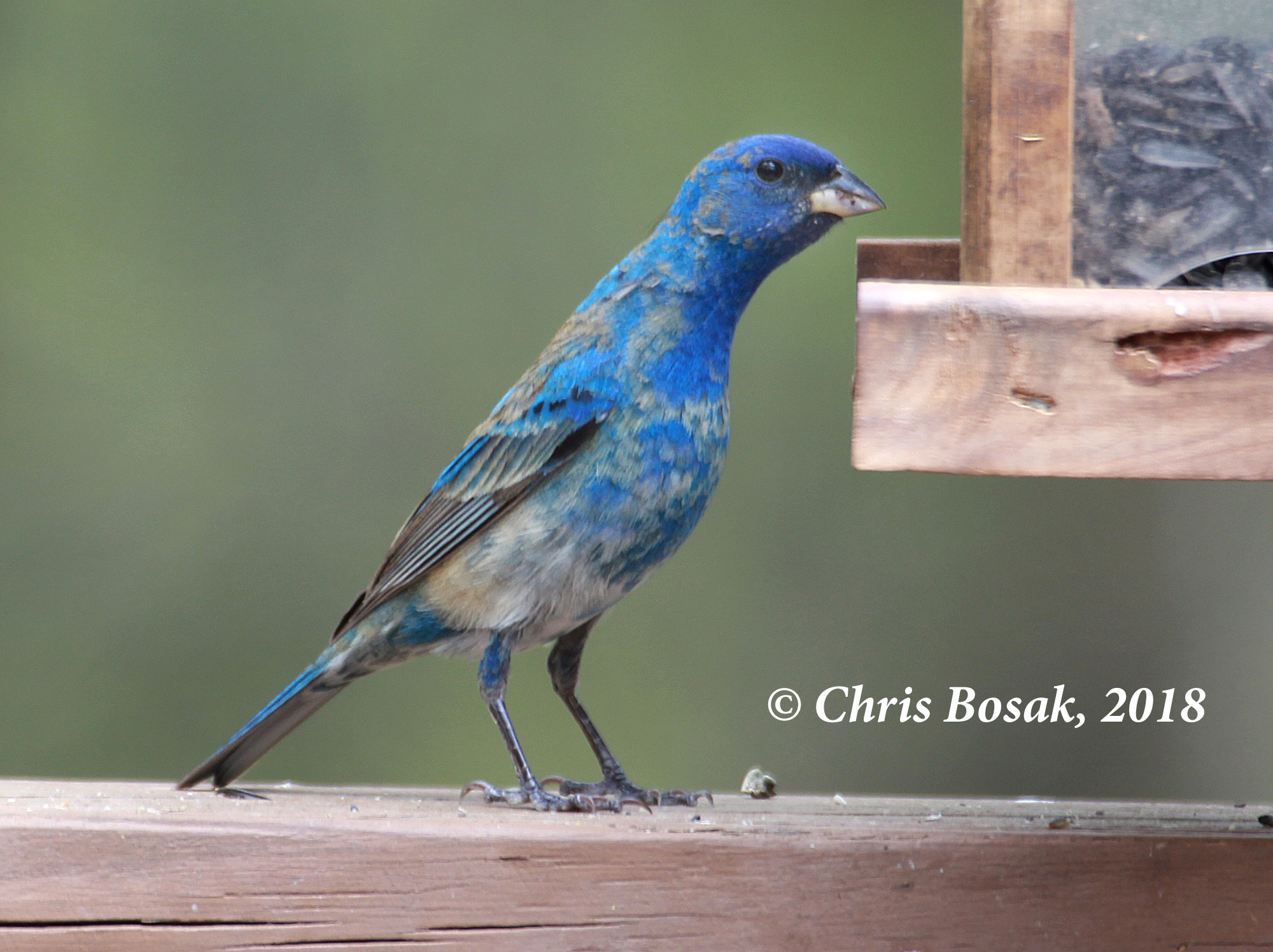
Photo by Chris Bosak  A male indigo bunting eats seeds from a platform feeder in Danbury, Conn., in May 2018.

Photo by Chris Bosak
A male indigo bunting eats seeds from a platform feeder in Danbury, Conn., in May 2018.in

Here’s another shot of that male indigo bunting, just because …

The next day this came …

Photo by Chris Bosak  A male indigo bunting eats seeds from a platform feeder in Danbury, Conn., in May 2018.

Photo by Chris Bosak
A male indigo bunting eats seeds from a platform feeder in Danbury, Conn., in May 2018.

I posted my latest For the Birds column yesterday. The day after writing that column — in which I write about seeing my first indigo bunting at a feeder — this guy showed up. Yes, another indigo bunting, but this one a mature male in his awesome breeding plumage. If you recall, the first indigo bunting was a first-year male and sported blotchy plumage (not that I was complaining.) But this new guy really stood out at my feeding station.

Latest For the Birds column: Another backyard first

Here is the latest For the Birds column, which runs in several New England newspapers.

Photo by Chris Bosak An indigo bunting visits a feeder in New England, spring 2018.

Photo by Chris Bosak
An indigo bunting visits a feeder in New England, spring 2018.

No matter how long you’ve been at it, birdwatching always presents firsts.

Wait, I used that sentence to start my column a few weeks ago. Oh well, another birding first happened this week, so I’m going with it again.

This time, it was a new bird to my feeding station. I’ve been feeding birds for a long time, and I’ve seen some great birds eating seeds or suet in my backyard.

Every year I’m thrilled when the rose-breasted grosbeaks show up. This year, a male and female have paid periodic visits for the last couple days.

It took years for me to attract hummingbirds, but now — knock on wood — it seems they are annual visitors.

A few Octobers ago, a small group of pine warblers discovered my suet feeder and stuck around the yard for about three days.

The other day, a new arrival. Settling into my lounge chair on the deck, I noticed a bright blue blotch among the leaves on the branch used by “my” Continue reading