Merganser Lake: More on those Pine Warblers

Photo by Chris Bosak A Pine Warbler sits on a deck railing in New England this fall.

Photo by Chris Bosak
A Pine Warbler sits on a deck railing in New England this fall.

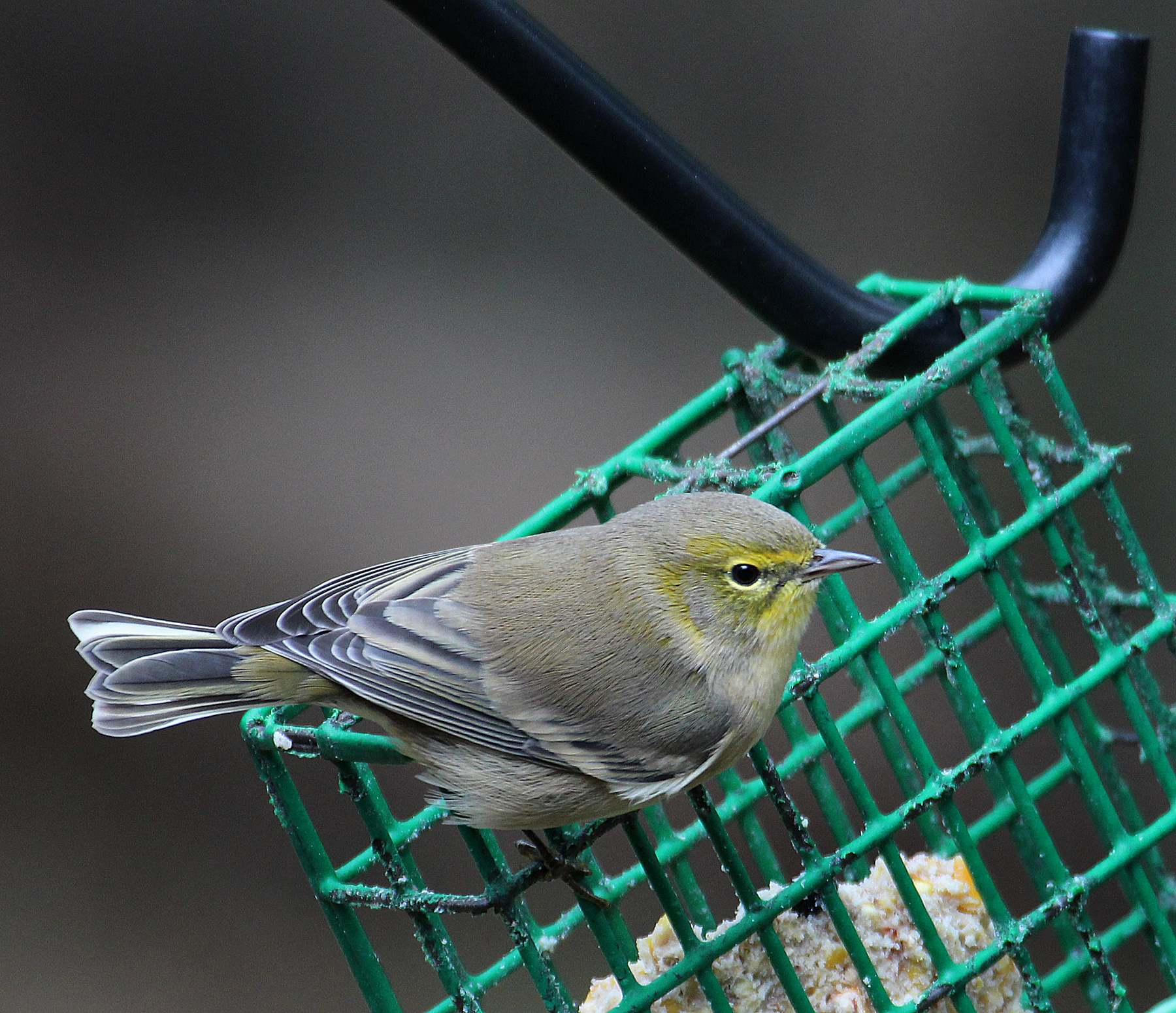
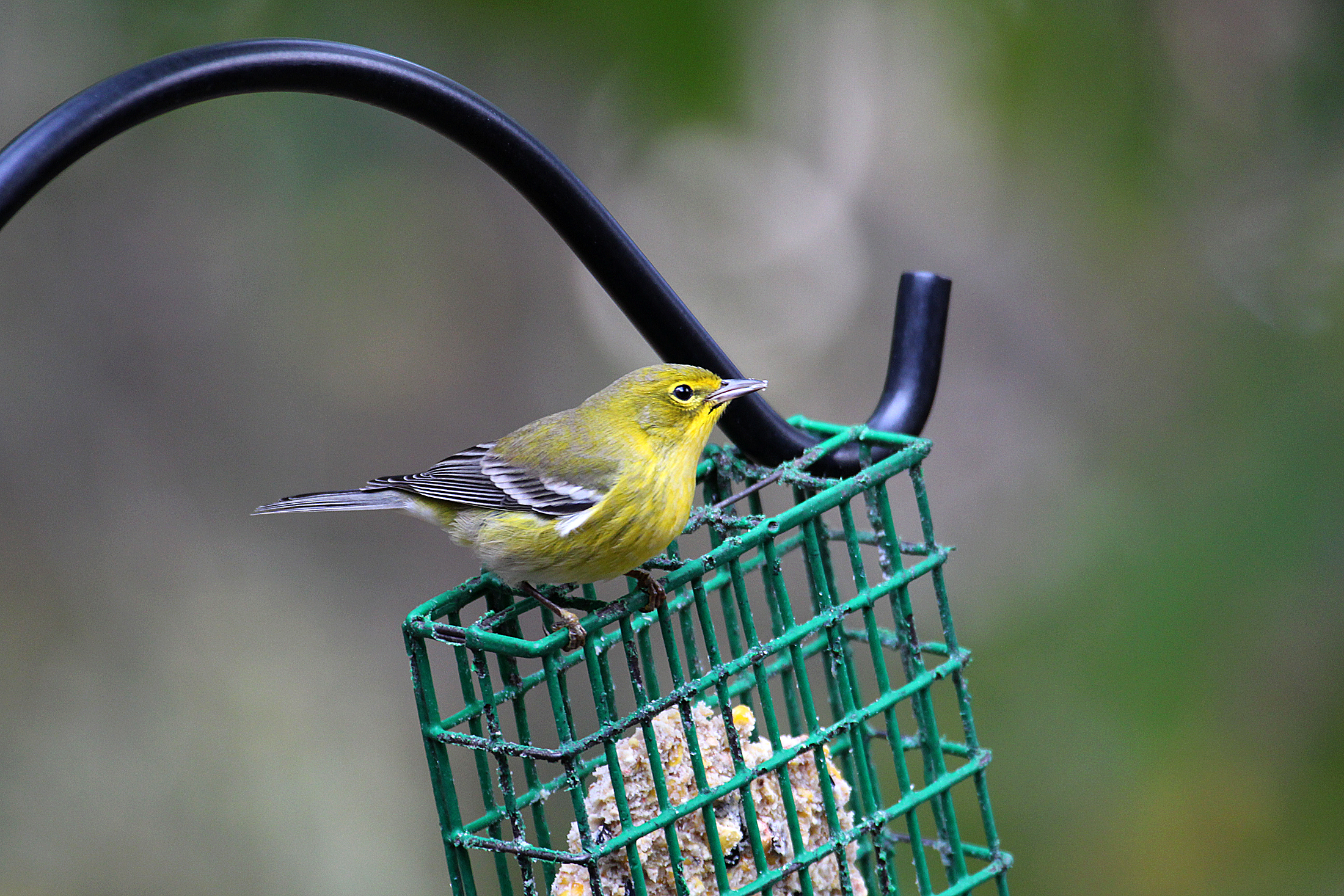
I posted some photos last week of Pine Warblers that visited my feeders. It was a nice sighting because warblers typically do not visit feeders. If you do get lucky enough to have warblers visit your feeding station, it’s usually Pine Warblers in the fall. I was fortunate enough to have three visit this fall. To complement those photos, here are some more … Continue reading

Merganser Lake: Warblers at the feeder

Photo by Chris Bosak A Pine Warbler visits a feeder in New England in fall 2015.

Photo by Chris Bosak
A Pine Warbler visits a feeder in New England in fall 2015.

Photo by Chris Bosak A Pine Warbler visits a feeder in New England, fall 2015.

Photo by Chris Bosak
A Pine Warbler visits a feeder in New England, fall 2015.

Never at any of my former homes where I’ve maintained birdfeeders had I seen a warbler at the feeder. A few weeks at Merganser Lake and today alone I had three.

Continue reading

Merganser Lake: A bird in the hand – well, on the hand at least


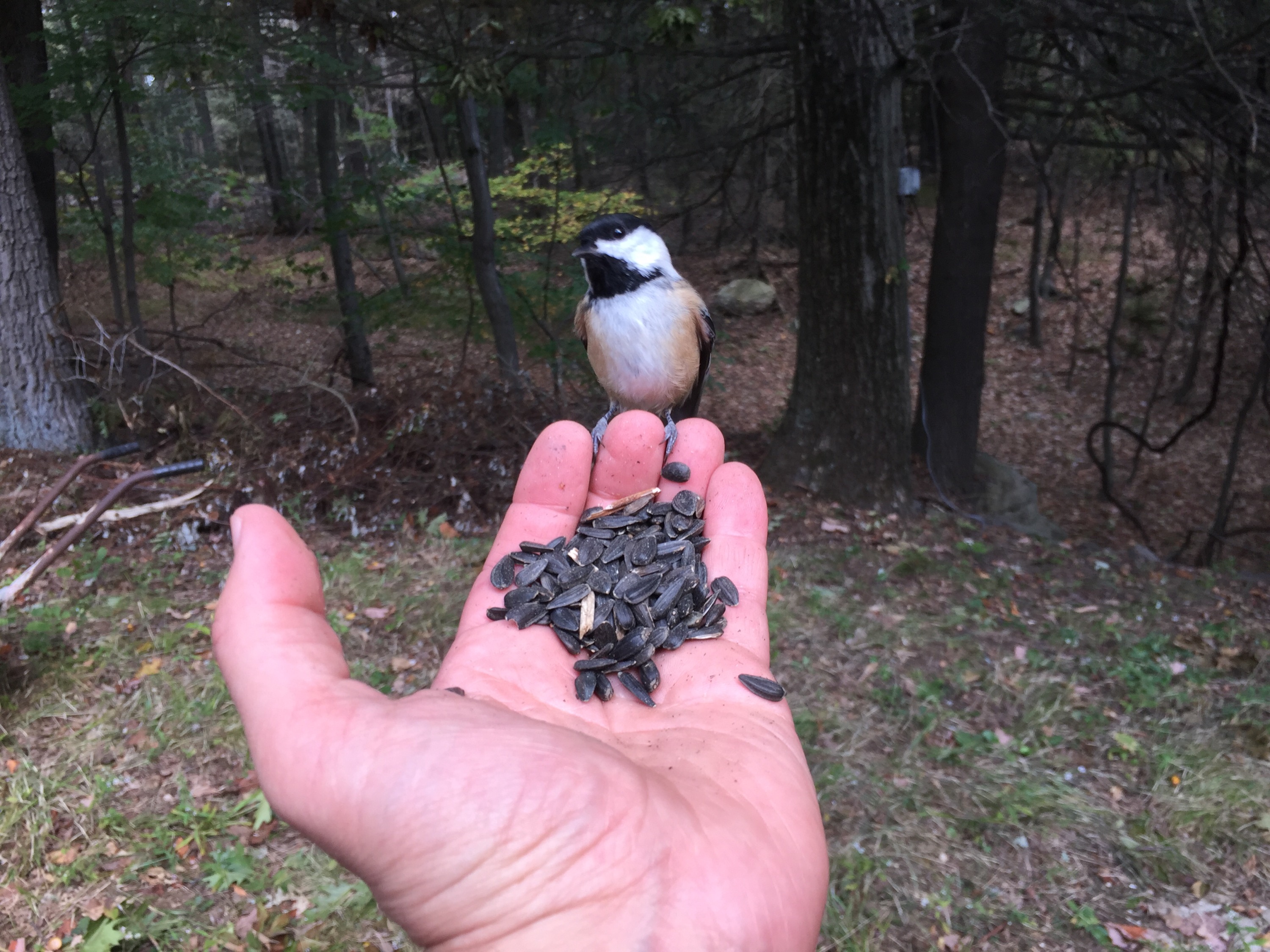
I went to fill my feeders this afternoon and noticed the chickadees being especially brave. They are brave to begin with, but they seemed particularly audacious on this day.

I wonder if one will land on the feeder if I stand this close, I thought to myself as I stood two or three feet away with my iPhone at the ready.

Question answered:


Well, I thought next, I wonder if I took the feeder down for a minute or two and held out some seeds if a chickadee would land on my hand. It took a bit longer but, once again, question answered.


Two or three chickadees took the risk while the rest chirped from nearby perches. The nuthatches and titmice wanted nothing to do with the hand-feeding method. I didn’t expect them to. Maybe next time, though. I’ll try again soon.

Birding starting to “heat” up

Photo by Chris Bosak A Black-and-white Warbler clings to a tree in Hoosick Falls, N.Y., in summer 2015.

Photo by Chris Bosak
A Black-and-white Warbler clings to a tree in Hoosick Falls, N.Y., in summer 2015.

It may be hot as ever as we head toward the second half of August, but the birding action is heating up as well. After a few months of relatively slow birdwatching as our feathered friends kept a low profile to raise families, the birds are starting to show themselves again.

I visited my brother Gregg’s house in upstate N.Y. near the Vermont border and the birds were out in full force. In one day I saw a Scarlet Tanager, Rose-breasted Grosbeak, Black-and-white Warbler, Pileated Woodpecker, Wood Thrush, and Ruby-throated Hummingbird. More common birds seen that day included chickadees, titmice, catbirds, Chipping Sparrows, American Goldfinches, robins and Blue Jays.

The summer is not over yet and the birdwatching is finally heating up, too.

Let me know what you see out there.

When is nesting season over?

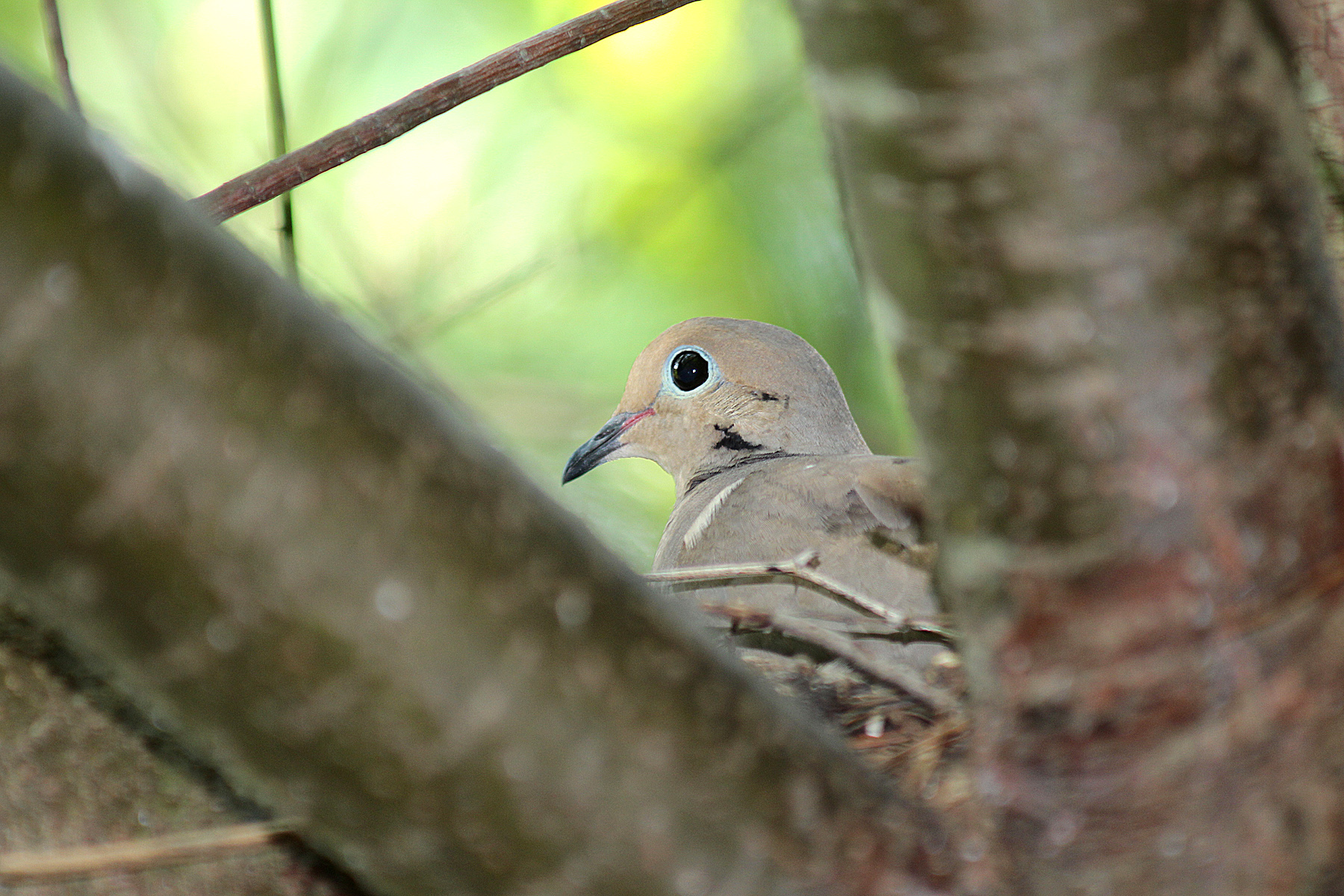
Photo by Chris Bosak A Mourning Dove sits on a nest in early July at Sellecks/Dunlap Woods in Darien.

Photo by Chris Bosak
A Mourning Dove sits on a nest in early July at Sellecks/Dunlap Woods in Darien.

Procrastinators rejoice. I’m going to give you an excuse to put off a few chores for another month or so.

Do you have trees on your property that need to come down? Bushes that need to be pruned? Perhaps a field or meadow that needs to be mowed?

Well, I’m not only giving you permission (not that you need that anyway) to hold off for a while, but urging you to do so.

An interesting email came my way this week from a New Hampshire couple. They had purchased property about 25 years ago that at the time was an abandoned Christmas tree lot. Most of the trees are now dead or dying and need to come down. The couple, to their credit, wants to make sure the nesting season is over before they go forward with any of the work.

So, just when is it safe to take down trees or cut fields that may house nesting birds?

There’s no exact date, of course. In general, though,

Click here for the rest of the article …

How do birds know when a new feeder is out?

Here’s my latest For the Birds Column, which runs weekly in The Hour (Norwalk, Conn.) and The Keene (N.H.) Sentinel:

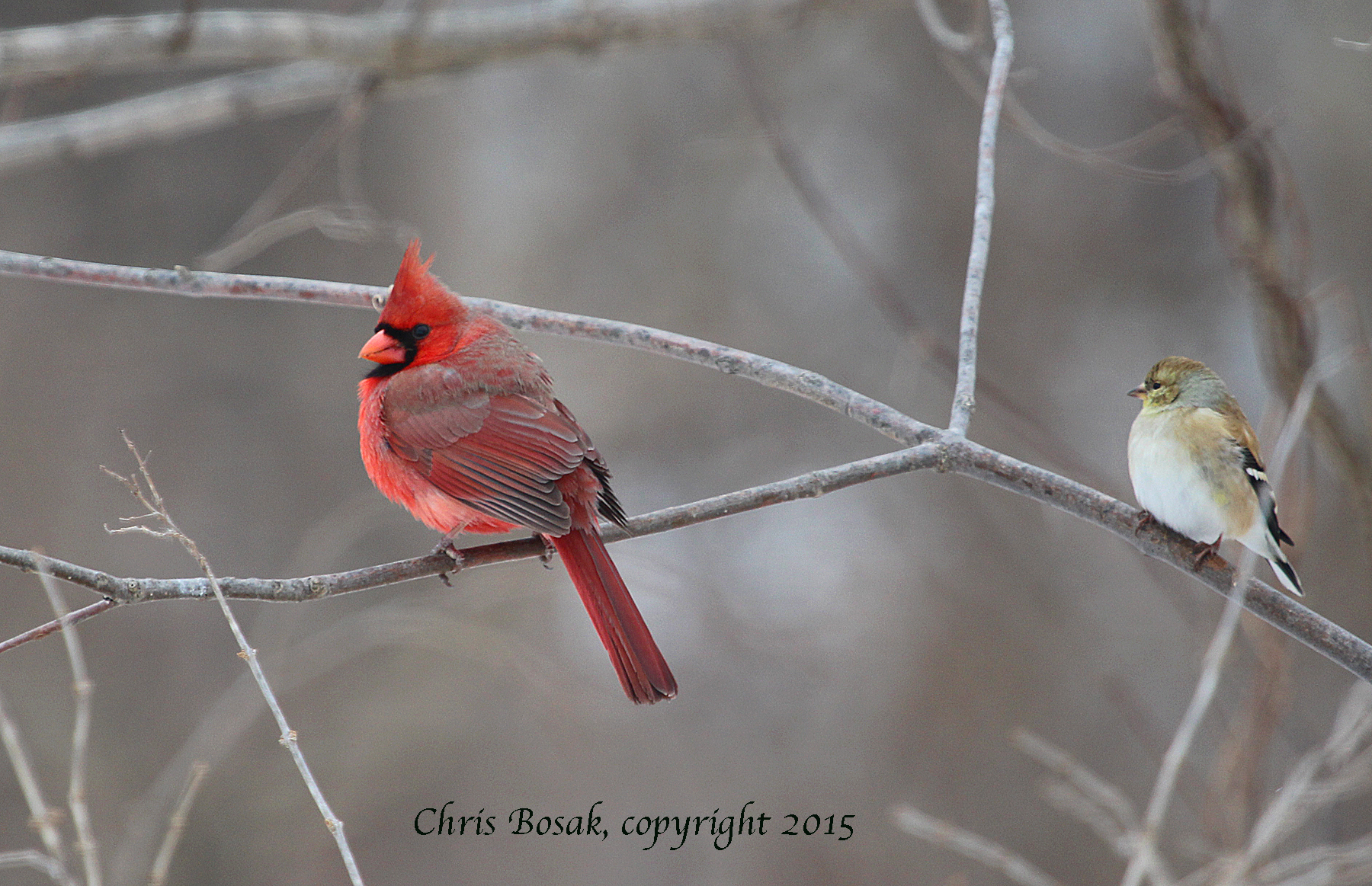
Photo by Chris Bosak A Northern Cardinal, left, and an American Goldfinch perch in a tree near a feeding station at Cove Island Wildlife Sanctuary in Stamford, Conn., in March 2015.

Photo by Chris Bosak
A Northern Cardinal, left, and an American Goldfinch perch in a tree near a feeding station at Cove Island Wildlife Sanctuary in Stamford, Conn., in March 2015.


An interesting question came my way via email the other day. It came from a long-time Norwalk resident who wondered how the goldfinches in her yard knew that she suddenly switched to Nyjer seed. She had never seen goldfinches before at her feeders, but when she put up a sock feeder filled with the small, black seeds, the goldfinches came within one day.

“How did they know? Are they sock experts? Do they have X-Ray eyes that could penetrate the sock and see the thistle? Does thistle smell so they could sniff a trail? Do they have scouts always watching every yard?”

Great question. As a quick aside, what is commonly referred to as thistle seed is really either niger or the trademarked name Nyjer seed.

Whatever you call it, how do the birds know it’s there? Common sense may dictate that they smell it. How else could they know? But most birds, including our favorite backyard birds, have a poor sense of smell. Also, the seeds are largely odorless so even if the birds did have a strong sense of smell, it’s unlikely they’d be able to pick up the scent anyway. It’s not like a neighbor barbecuing chicken on a breezy day. The most likely scenario is that the birds saw the new feeder and recognized it — probably from past experience — as a food source. American Goldfinches are very nomadic  …

Read the rest of the column here.

Looking back at a Barn Swallow nest

Photo by CHRIS BOSAK Young Barn Swallows look for food from their mother, which is returning to the nest with food.

Photo by CHRIS BOSAK
Young Barn Swallows look for food from their mother, which is returning to the nest with food.

Here’s a group of photos I took at a Barn Swallow nest, which was built on a light fixture in the covered portion of the parking lot where I work. The parents dive-bombed and swooped at all the people who parked nearby. They had only one brood before moving on. It’s a credit to the building owner that they let the nest remain throughout the entire process. This was a few summers ago, but I’ve never published all of these photos.

More photos below. Continue reading

An ‘ordinary’ colorful bird

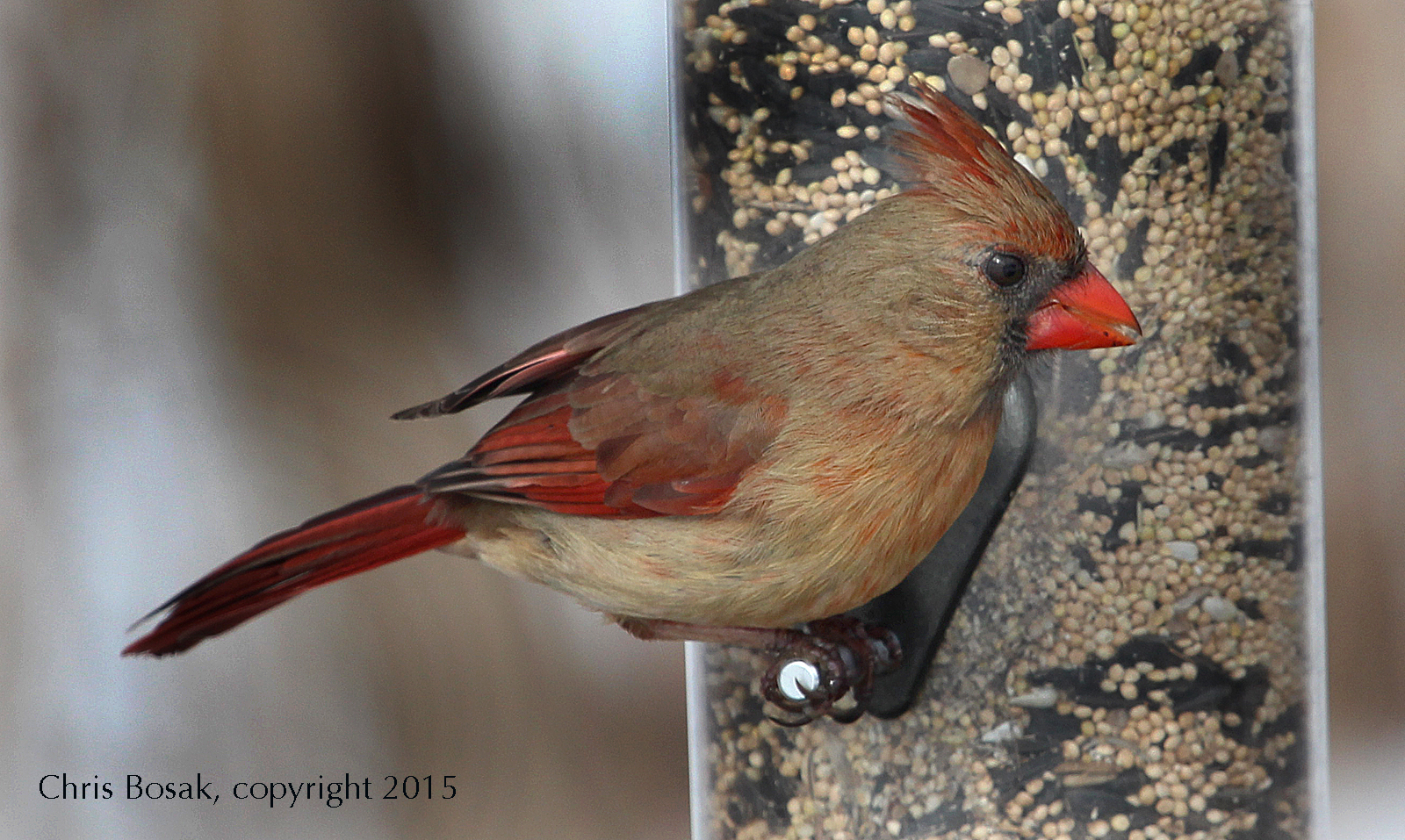
Photo by Chris Bosak A female Northern Cardinal eats from a feeder in Stamford, Conn., this spring.

Photo by Chris Bosak
A female Northern Cardinal eats from a feeder in Stamford, Conn., this spring.

With the all the color in the bird world passing through these days in the form of warblers, orioles, tanagers, grosbeaks and buntings, it can be easy to forget about our ‘ordinary’ colorful birds, such as cardinals.

Yes, even the female Northern Cardinal is beautifully colorful — just not as striking as the brilliant red male. So here’s a shot of one of these pretty ladies — really nothing ordinary about her.

House Finches and eye disease

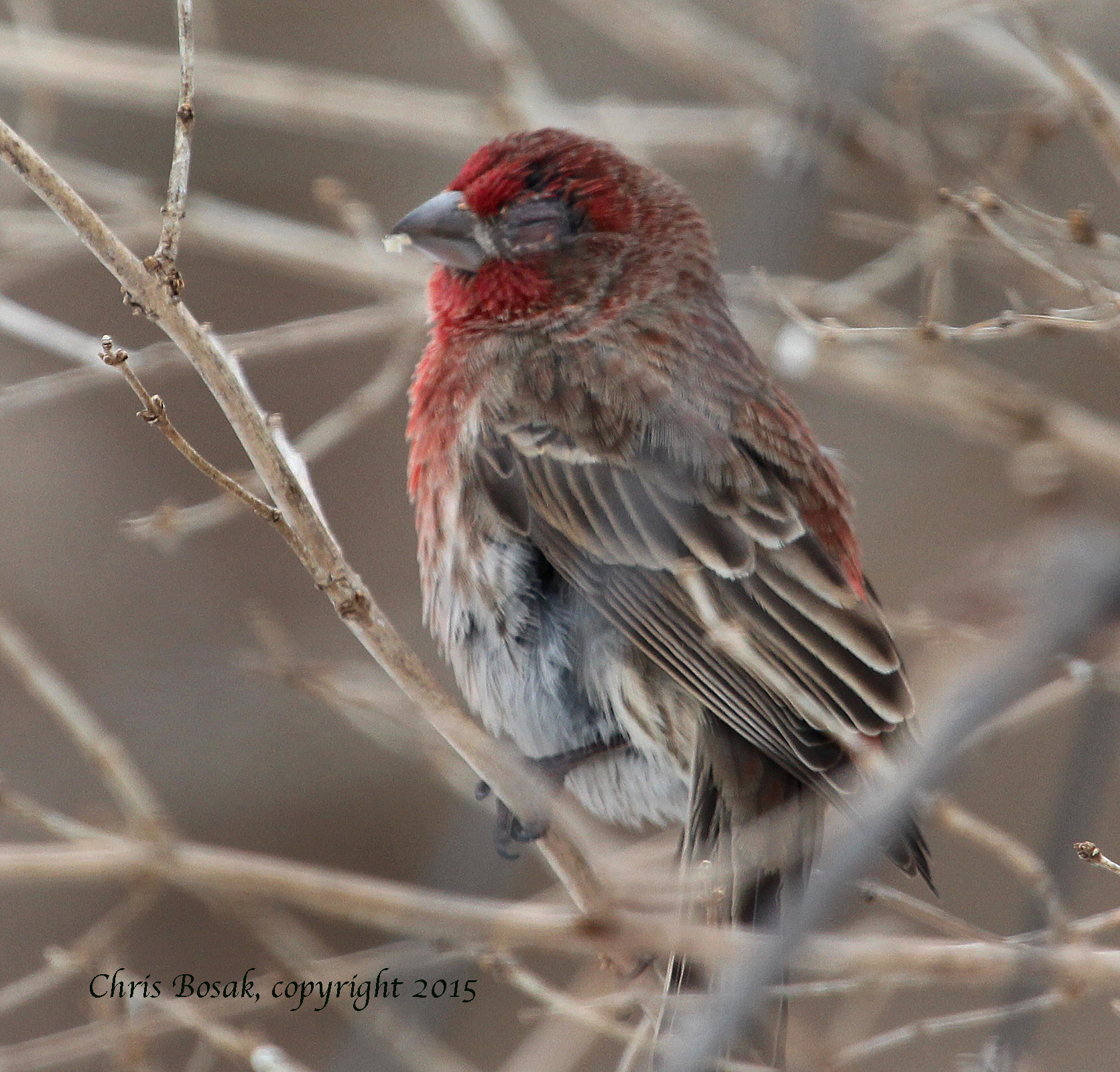
Photo by Chris Bosak A House Finch with an eye disease visits a feeder station in Stamford, Conn., March 2015

Photo by Chris Bosak
A House Finch with an eye disease visits a feeder station in Stamford, Conn., March 2015

It had been a while since I saw a House Finch with Mycoplasma gallisepticum, an eye disease that inflicts many House Finches in the eastern U.S.

The other day, however, I was watching a feeder station in Stamford, Conn., when a lone male House Finches showed up. With my new-found appreciation for House Finches (click here for more on that) I was happy to see the bird. Then the bird adjusted itself on a branch near the feeder and I noticed it had the disease. Poor thing.

Based on Project FeederWatch observations that alerted ornithologists to the problem, the Cornell Lab of Ornithology started the House Finch Disease Survey in 1994. Much was discovered about the disease, but obviously it has not gone away. The project has since been defunded, but Project FeederWatch participants can still report House Finches with this disease. It’s may seem like a small way to help, but it’s something. Every little bit helps when it comes to bird study.

For a lot more information on House Finches and the eye disease, click here.

Photo by Chris Bosak A House Finch with an eye disease visits a feeder station in Stamford, Conn., March 2015

Photo by Chris Bosak
A House Finch with an eye disease visits a feeder station in Stamford, Conn., March 2015

Junco season winding down

Photo by Chris Bosak A Dark-eyed Junco perches in a tree in New England in March 2015.

Photo by Chris Bosak
A Dark-eyed Junco perches in a tree in New England in March 2015.

We love to see our first Dark-eyed Juncos of the late fall. They remind us that our winter birds have arrived and will be with us for the next several months.

Well, those months are passing by quickly and soon the junco sightings will become scarce again. So here’s a shot I took of a junco the other day. Will it be one of the last— at least until next fall?

Did you know …

• Juncos are members of the sparrow family

• There are several types of juncos in the U.S., including Slate-colored; Oregon; Pink-sided; White-winged; Gray-headed; and Red-backed. Only the Slate-colored is found in New England.