Photo by Chris Bosak
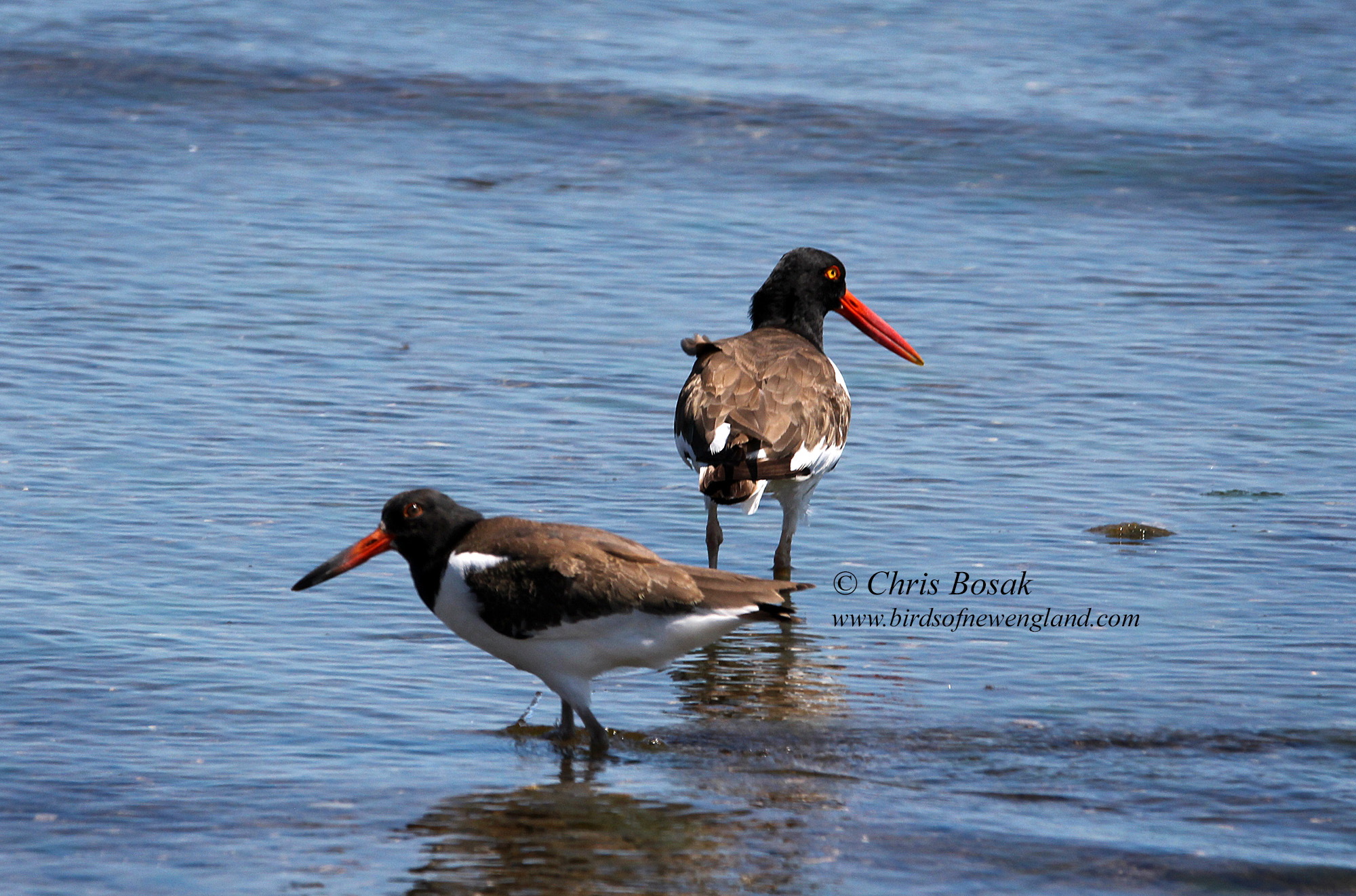
American oystercatcher along the shore of Long Island Sound, summer 2023.
Last week I wrote about the joys of birding in the sweltering August heat. A few days after writing the column, I took my own advice and visited a beach on Long Island Sound in southern Connecticut.
It turns out that I actually know what I am talking about every so often as I had a great time looking at the birds along the shore. The action started before I walked out of the parking lot as three ospreys soared overhead. Their “ki-ki-ki” call drew my attention and subconsciously turned my eyes upward to the sky.
As I walked along the shrubby area to get to the beach, a catbird and a few song sparrows provided a warm-up for the birding action that lay just ahead.
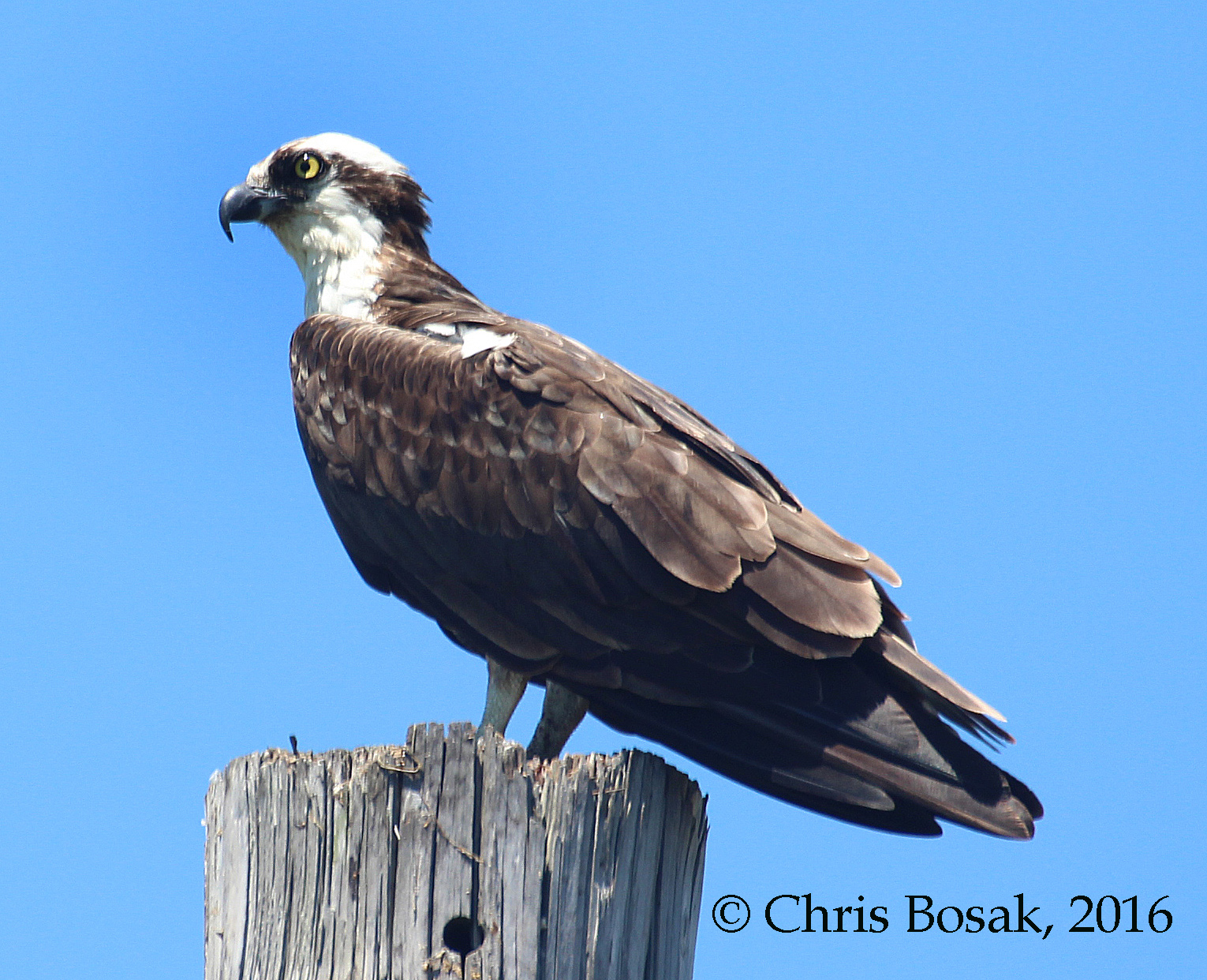
Photo by Chris Bosak An Osprey perches on the top of a pole at Veterans Park in Norwalk, Conn.
When thinking of the most exciting months for birdwatching in New England, August typically does not come to mind. April and May maybe. Perhaps September and October. But August?
On the surface, August may be one of the least exciting months for birding. Spring migration is well behind us. Fall migration still lies ahead. Nesting season, for the most part, is over. On top of all that, it’s hot, humid and sticky out.
Scratching beneath the surface unearths a different story about August. It is indeed a migration month, there are a lot of birds to see on or around water, goldfinches are plentiful, hummingbirds pay frequent visits and it’s a great month to expand beyond birding to look for butterflies, dragonflies and other similar critters.
Photo by Chris Bosak
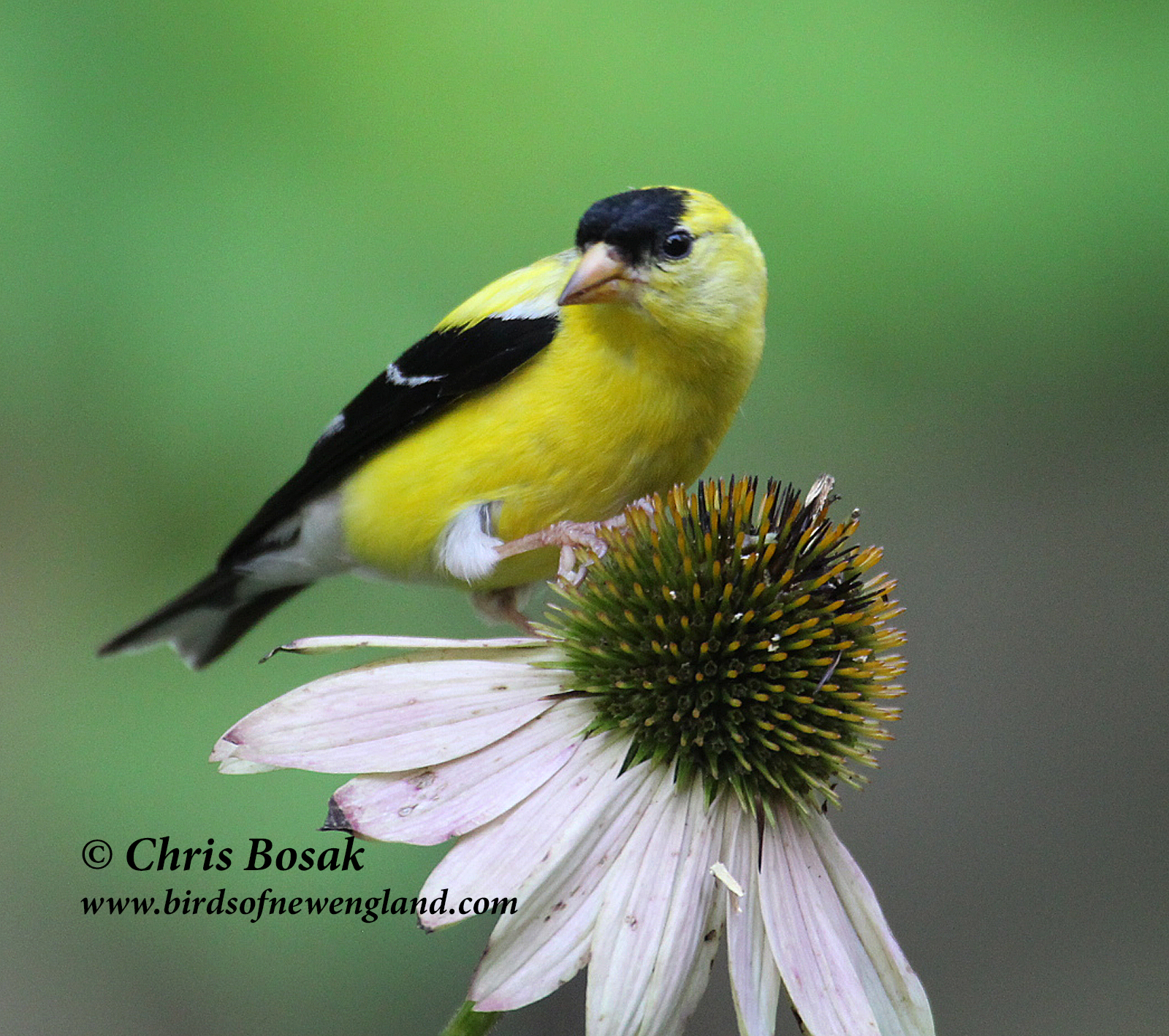
An American goldfinch looks for seeds atop a coneflower in New England, summer 2020.
The challenge lately, it seems, is to find a field or meadow without goldfinches in it.
Mid to late summer is the time for goldfinches to shine and take the spotlight in the birding world. While most birds have completed or are winding down their nesting seasons, American goldfinches are just getting started.
There are several theories on why goldfinches nest so late compared to other birds, but it is abundantly clear that their nesting season coincides with the availability of seeds and certain nesting materials in nature.
Seeds are more plentiful in July and August than they are in April or May, and goldfinches use the fluff from thistle and other plants to line their nests. Goldfinches are almost exclusively seed eaters and rarely supplement their diet with insects. That goes for the babies as well, as they are fed regurgitated seeds. Nearly all other songbirds feed their young a mix of insects and seeds, or just insects, which are higher in protein.
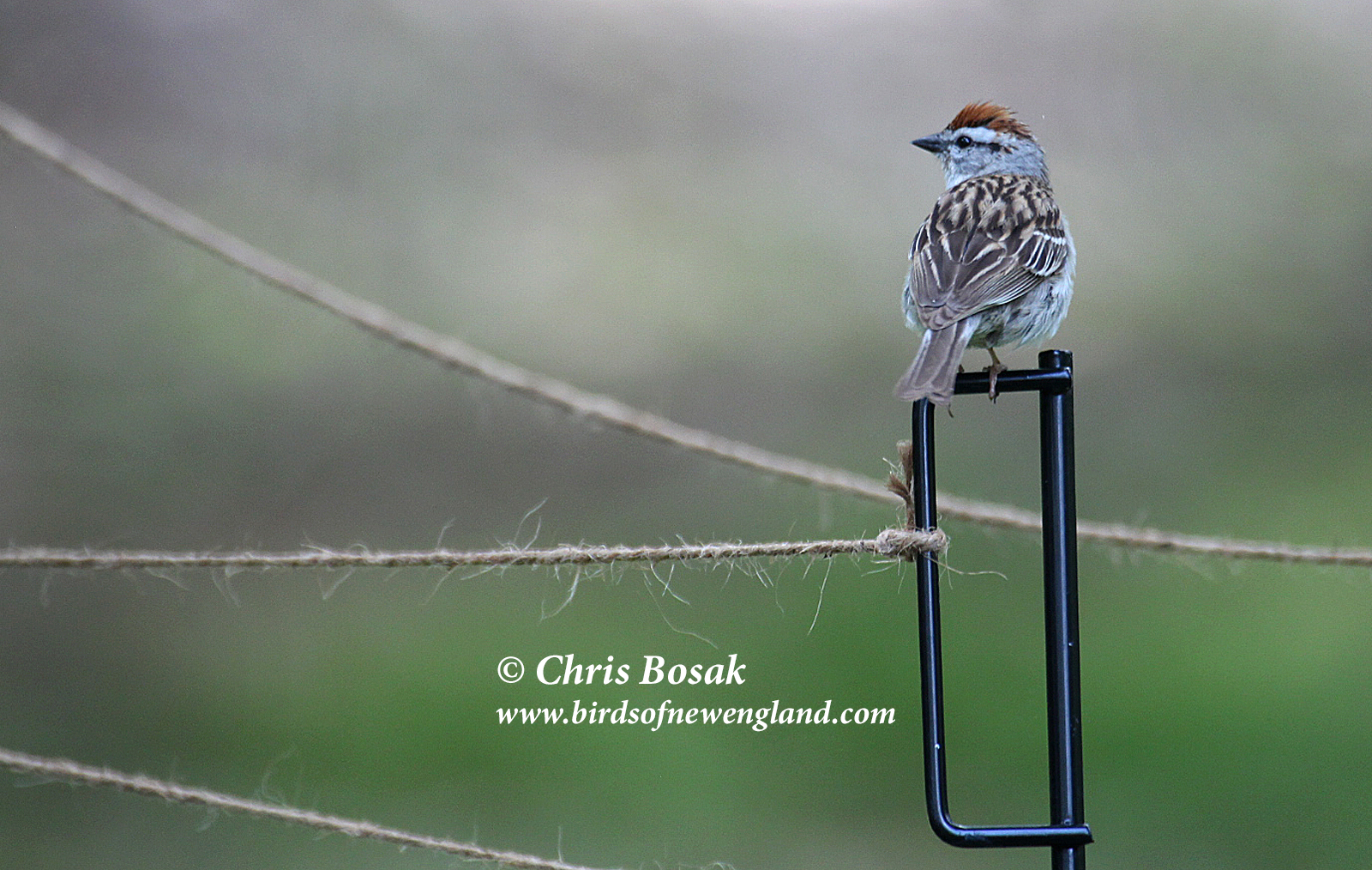
Photo by Chris Bosak A chipping sparrow perches on a garden stake in New England.
I have written about the Winter of Bluebirds, Winter of Barred Owls, Winter of Snowy Owls and the Winter of a few other species. They are just fun columns about a species that seems especially prevalent during a certain winter.
I have yet to write about a bird that dominates any other season. Until now. I present to you the Summer of the Chipping Sparrow. I have seen more chipping sparrows this summer than I can remember in any past summer. They are not only plentiful but ubiquitous. They are at my home and work. I visited my brother in Erie, Pennsylvania, and chipping sparrows were everywhere. I visited friends in Pittsburgh and, you guessed it, chipping sparrows aplenty.
It’s not that chipping sparrows are rare in other summers, but in my very unscientific observances, they are particularly plentiful this summer. That’s a good thing, of course. Chipping sparrows are a native species, and they can brighten up a day with their trilling song.
The best thing about seeing them at this point in the summer is that the sightings include several first-year birds and that bodes well for the future of the species. While many bird species are struggling to survive and seeing noted decreases in their population, chipping sparrows appear to be doing fine.
Photo by Chris Bosak
A ruby-throated hummingbird takes a bath in the leaf of a canna lily in New England.
Summer heatwaves are nothing new to New England. It seems as if every year we go through two or three stretches of enduring hot and humid weather. Summer heatwaves are as much a New England thing as bitter cold stretches in the winter.
It seems as if the winter weather is what most people associate with New England, however. Skiing, shoveling and sitting around the fireplace are the images often depicted when describing New England. I’m guilty of that myself as every winter it seems I write a column about how birds survive bitter cold stretches.
In this column, I’ll look at how birds survive the other temperature extreme. Birds can’t exactly turn on air conditioners or take a dip in the pool or lake (not in the way that humans do anyway). They do have several mechanisms for dealing with the heat and have survived these heatwaves for centuries.
Some of the coping mechanisms are similar to those employed by humans. Birds will seek shade and water when the sun is burning down. I was walking down a road the other morning and it was already unbearably hot and humid. As I walked under the canopy of an oak tree, I felt instant relief. There was even a slight comfortable breeze that I hadn’t noticed when I was in the sun. Trees provide relief from the direct heat of the sun and allow birds to regulate their body temperature.
Birds will also seek out water sources such as streams, lakes and birdbaths when the temperature soars. They may not plunge themselves into the water like a human would do, but they splash around or take sips of water to keep cool. It’s important to keep your birdbaths clean and filled with fresh water during the summer. During extremely hot and dry weather, birdbaths should be cleaned every few days. This is when the birds really need that water.
Shorebirds in particular utilize water during hot days as shade is rare or nonexistent on beaches. They will wade in with both feet or even dip down to soak their feathers. If they have nestlings, shorebirds will return to the nest and shake off their wet feathers to cool off the youngsters.
Water also helps keep birds clean, which is another important factor in keeping cool. Bathing and preening remove dirt and excess oil from their feathers. This enables better air circulation and insulation. Bathing also helps in reducing parasites and keeping feathers in good shape.
Birds are typically more active during the morning and evening, but this is particularly true during hot summer days. This is a commonsense example of simply avoiding the sun when it is at its hottest. For nature watchers who are willing to brave the extreme conditions, that means focusing your efforts on other critters such as butterflies, dragonflies, snakes, frogs or anything else active during the day.
Finally, and perhaps most importantly, birds have an efficient thermoregulation system, which allows them to survive extremely hot or cold conditions by adjusting their metabolic rate and circulatory system to fit the current need. Panting increases airflow over their respiratory system and releases heat from their bodies. Panting, of course, is a cooling mechanism used by dogs and other mammals too.
Just like the cold New England winters, our hot summers can be challenging for birds too. Luckily, they know just what to do.
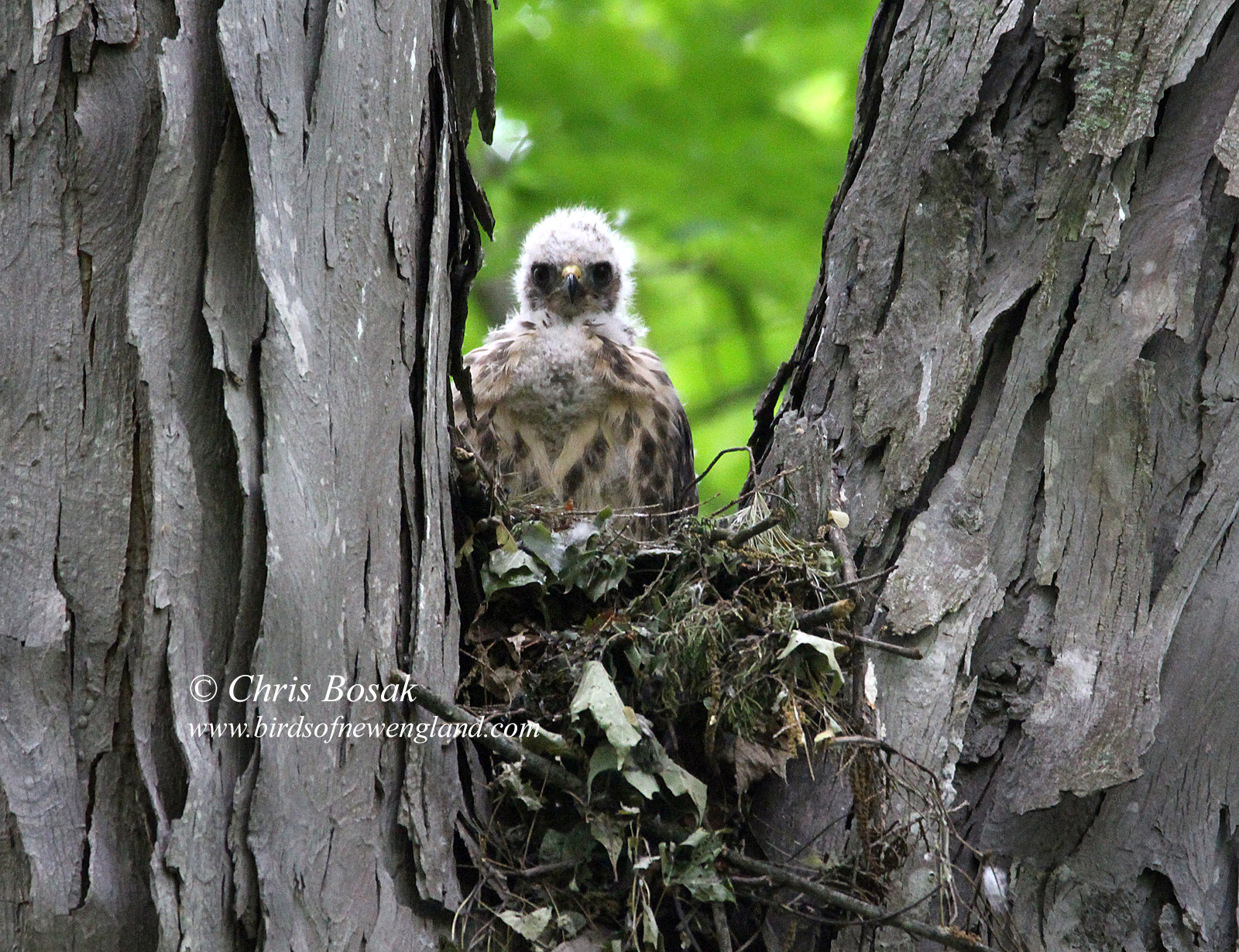
Photo by Chris Bosak – A young red-shouldered hawk looks out from its nest in New England, June 2023.
A few weeks ago, I wrote about a short walk that I often take at work. It is on my employer’s property and, despite being a small piece of land that takes only five minutes to walk, it has a mix of habitat that includes a meadow, stream, pond and woods.
A few days after I had written that column, I took a walk there and discovered something new. I had noticed on previous walks a Y in a large tree and thought maybe there were some sticks or leaves in the crotch. It was too small for a squirrel’s nest, and it didn’t seem significant enough to be any other type of nest, so I kept on walking. I figured it was just the collection of a few sticks and leaves that had fallen throughout the year.
One day, however, I noticed movement in the area. Upon inspection, it turned out to be the nest of a red-shouldered hawk family. Two young birds were eating a squirrel, chipmunk or some other small mammal. No adults were present.
The next day, I took another walk, and an adult bird was tearing apart a meal. I didn’t notice the young birds right away, but when the adult sat upright after picking off a morsel, I saw the young ones to either side behind the adult.
Photo by Chris Bosak
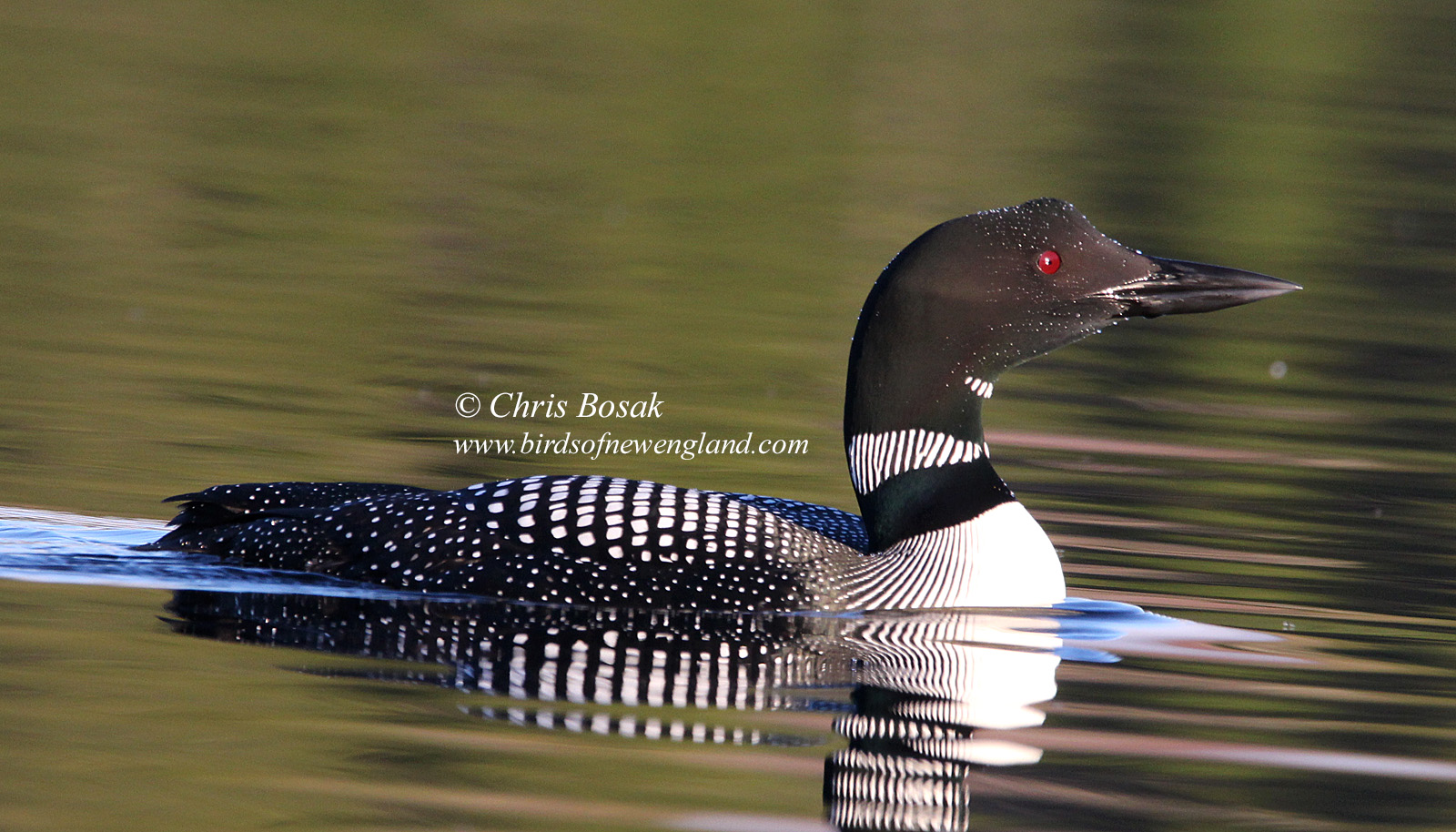
A common loon swims at Grout Pond in Vermont, spring 2023.
The loons were the wildlife highlight of the trip, but the short camping trip had meaning beyond the birds and mammals that were seen.
It was the first trip my oldest son Andrew and I had taken in a few years. Andrew, now 20, is a reluctant birdwatcher as it is not a hobby of his, and he pushes back on my requests to take walks specifically to see birds, but he can identify several birds by sight and sound. (Wonder where that talent came from.) He does, however, like the outdoors and is always up for a camping trip. In fact, he initiated this outing and had been asking for several weeks to go camping.
We like to go camping when there are no crowds. That means either during the week or during the off season. In this case, it was both. We each took a Monday and Tuesday off work and left for Grout Pond in southern Vermont on a Sunday afternoon in early May.
We underestimated the time it would take to get to the site and it was already dark by the time we had arrived. We improvised by pumping up the air mattress and sleeping under the stars in the cab of the pickup. Thankfully, it was a dry night. It was, however, a cold night, it being early May in Vermont. The lows were in the mid-30s, but it was actually quite refreshing to sleep outdoors again.
Not surprisingly, I awoke before Andrew and took a walk down one of the trails near where we had parked the previous night. A broad-winged hawk immediately flew overhead and swooped in for a landing in a nearby dead tree. It was the start of a good wildlife watching day.
Andrew eventually woke up and, from the pond’s launch site, we eyed a spot along the pond to set up camp for a few days. I was to canoe to the spot with the majority of our equipment and Andrew was to haul the backpack to the site using the trail that runs along the pond. The plan worked well, and I was pleased that the canoe held up with me and our stuff in it. The 14-foot Radisson aluminum canoe had been hit by a fallen tree over the winter and sustained a good-sized dent at one of the ends. A little water seeped in, but overall, it was fine.
The few people who were there in the morning had packed up and left by the afternoon. Andrew and I now had the place to ourselves.
Photo by Chris Bosak – A blue-winged warbler sings from a perch in New England, spring 2023.
Another warbler season is in the books.
Sure, there are still the late-migrant stragglers that will be seen into mid-June and, of course, the ones that will nest and stay with us all summer, but the peak of the warbler season has, sadly, passed.
For me personally, I did not see a huge variety of warblers, but I did see plenty of the more common warbler species over the last few weeks.
The warbler sightings, for me, started in late April with a walk that yielded dozens of yellow-rumped warblers. Over the last few weeks, it has been largely blue-winged warblers, common yellowthroats and American redstarts. In the last week or so, yellow warblers have been showing up more and more on my walks and are becoming the dominant warbler species.
Those are also the main warblers that will nest in my area of New England. Each part of New England has its common nesting warblers and, thankfully, we will get to see them throughout the summer. If we are lucky, we’ll see their youngsters too.
It has been fun over the last couple of years getting to know the American redstart and blue-winged warbler better. I found a few places where redstarts nest, and I visit there frequently in late spring into early summer. Redstarts are, in my opinion anyway, one of the more interesting-looking birds and remind me of Halloween every time I see one. The black and orange coloring is unique in the warbler world. At least among the ones we see in New England.
Blue-winged warblers are largely yellow, like many warblers that nest or pass through New England, but their unique, black eye straight gives them a different type of look – almost like a little bandit. Blue-winged warblers are also unique and fairly easy to find from their insect-like call. It appears to be a rather subtle call, but it can be heard from far away, especially during an early morning walk when the world is still quiet and calm.
Yellow warblers and common yellowthroats will nest throughout New England. In both cases, the birds are usually heard before they are seen. That is if they are seen at all, as they like to hang out in brushy areas and remain hidden if possible. Yellowthroats often like to stay low to the ground in their skulking.
I’ve focused on warblers in this column, but I also had some good luck finding other colorful songbirds such as rose-breasted grosbeak, indigo bunting and scarlet tanager. I watched a female rose-breasted grosbeak collect nesting material a few weeks ago. It’s good to know they will be sticking around and raising young here.
With spring migration mostly behind us, what’s next for birders? Birds won’t be as noisy or active as they have been over the last several weeks, and the variety won’t be as great, but watching them raise young is always a highlight of late spring and early summer. Of course, many birds have had their first broods already, but the nesting and rearing will last for the next few months.
Every season has something to offer birdwatchers. There’s always something interesting to observe so be sure to get out there as much as possible.
Photo by Chris Bosak
A chipmunk looks up after grabbing sunflower seeds from a feeder in Danbury, Conn., during the summer of 2018.
So, what is up with the chipmunk population this spring?
It’s well past the time when they should be lurking and scampering around our backyards and woodlands. The last few years the little imps have been ubiquitous and, depending on your perspective, entertaining or annoying us nonstop.
This year? I’ve seen only a handful, and others have expressed similar observations. I’ll share what others have written based on my request in last week’s column. At the end, I’ll share what my favorite wildlife expert has to say on the topic.
First, the people like me who have noticed a lack of chipmunks this spring:
“I finally saw a chipmunk at our house yesterday,” wrote Susan of Nelson. “Just one so far. We have plenty of gray and red squirrels, and it has been weird not to see chipmunks.”
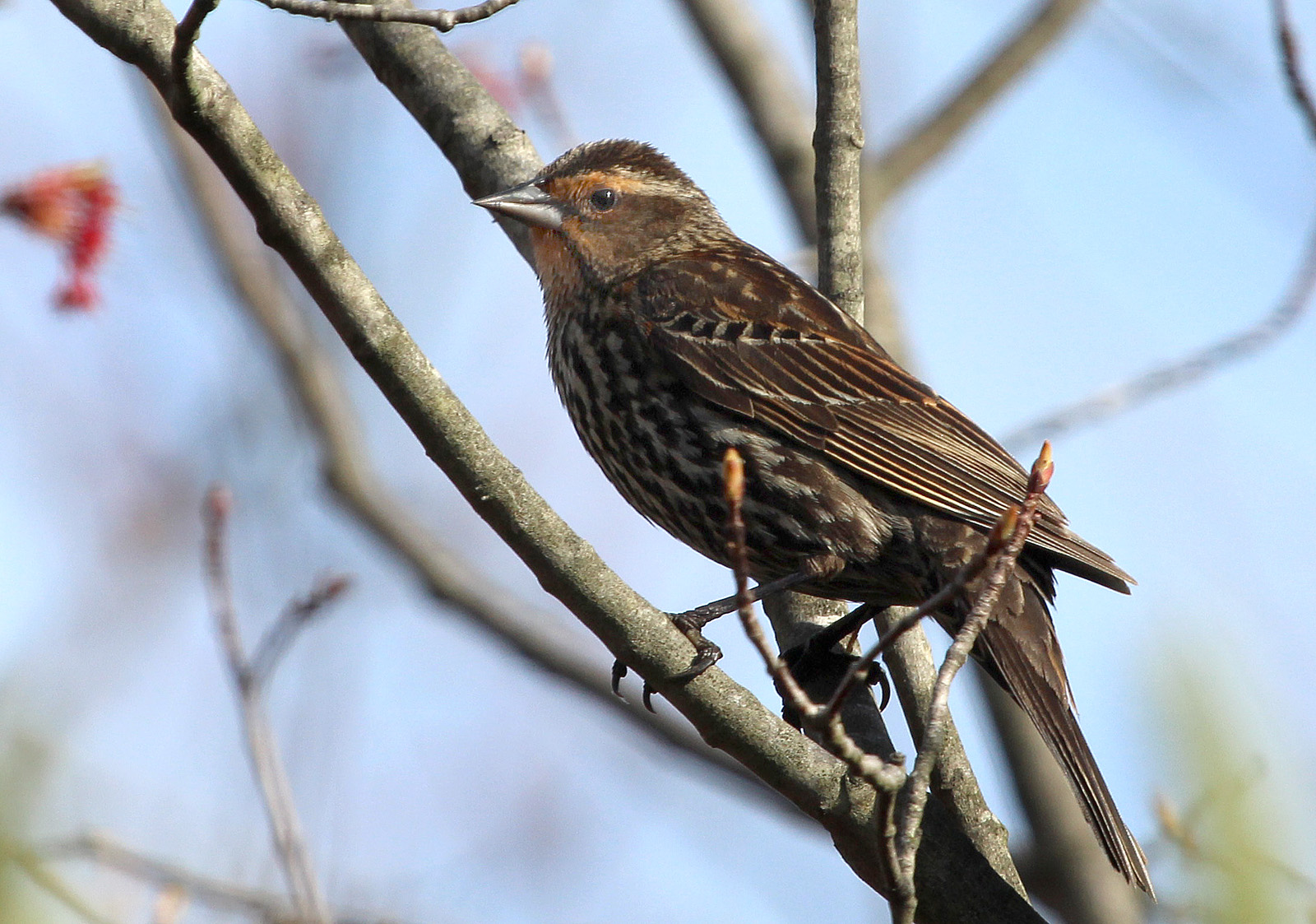
Photo by Chris Bosak A female Red-winged Blackbird perches on a tree in New England.
I often preach about enjoying what nature hands you regardless of the season, but I have to admit that my thoughts drifted toward spring a few times this week.
It wasn’t the general mildness of this winter that got me thinking about spring. In fact, I’m still holding out hope for more snow, although that may be an unpopular thought.
But three separate incidences steered my mind toward spring recently. First I noticed buds on the trees that line my street and the crocuses are in full bloom in the garden. Then I visited the neighborhood pond and heard the wonderful chorus of red-winged blackbirds. Finally, I dug deep into my video archive and came across “Spring and Summer Songbirds of the Backyard,” a short documentary narrated by George Harrison (no, not the former Beatle).
With so much mild weather, I wasn’t caught off guard by seeing the buds on the trees or the crocuses in bloom.