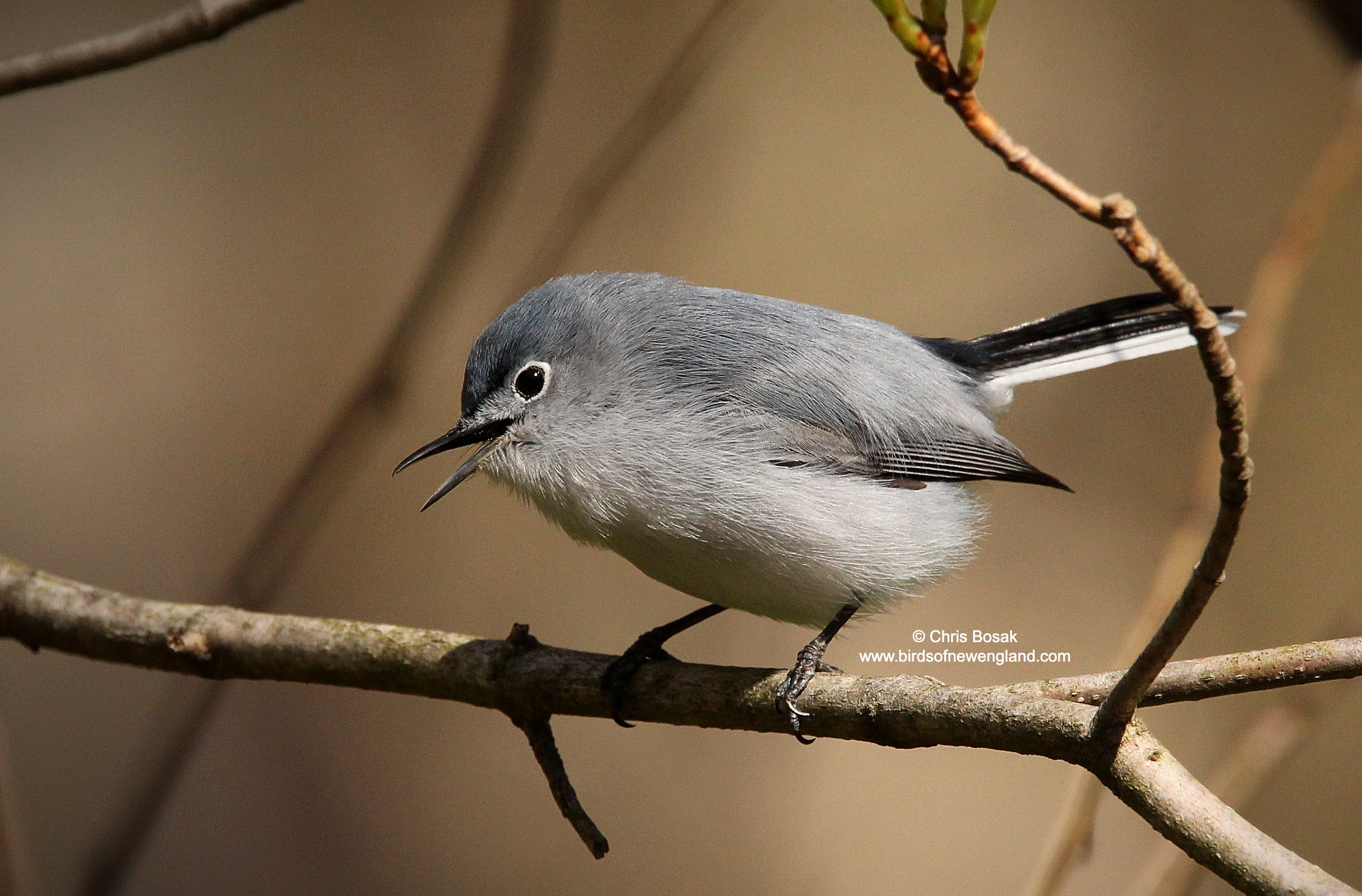
Blue-gray gnatcatcher at Huntington State Park, Redding, Conn., April 24, 2026.
For many birdwatchers, this is the best time of year. Breeding season has begun in earnest, and the spring migration is in full swing.
Every walk in late April and early to mid-May has the potential to yield something that wasn’t there the day before. The other day, I took a quick walk and spotted my year’s first wood thrush, blue-gray gnatcatcher, blue-winged warbler and black-and-white warbler.
It’s also a busy time for my email inbox, as spring’s increased activity brings many exciting bird observations and raises some questions too.
Nancy from Keene shared that a pileated woodpecker made holes from top to bottom on a snag (dead tree) in her yard. She mentioned that she hears the large woodpeckers every year, but this was the first time she was able to get a video with her phone. Now, the moment has documentation that she can enjoy at any time.
To me, the best part of the story is that Nancy said she had a tree removal service doing some necessary tree work about 15 years ago, and she asked them to leave some snags standing. A decade and a half later, that request paid off big time. I’ve written from time to time over the years about the importance of leaving some dead trees standing as long as they don’t pose a threat to self or property. Snags are a vital resource for woodpeckers and other animals for shelter and food.
Lenny from Greenfield also shared that a pileated woodpecker visited a snag on his farm as well. Lenny also reported that evening grosbeaks visited his yard, and he was surprised one day to find a crow perched on his birdfeeder pole.
Norma from Spofford had a few interesting and somewhat rare sightings at her feeder. She saw an American robin on her deck and figured she would throw a few mealworms out. The robin ate the offerings and visited her feeder to get more mealworms for the next several days. Later, she spotted a northern flicker on her suet feeder. Robins and flickers may not be rare sightings, but they are not commonly seen at feeders.
Lew from Keene had an interesting robin experience of his own when he saw a leucistic robin along the side of a road. Leucism is a loss of pigmentation in feathers or fur, making the animal appear white. It differs from albinism in that albinism is a complete lack of melanin that even affects the eyes. Leucism often makes birds appear patchy, which was the case with Lew’s bird. In my experience anyway, robins and juncos are two of the New England birds most impacted by leucism.
Patti from Westmoreland and Andy from Spofford each wrote in to say they had to stop feeding birds for the spring and summer as bears are now a threat. Andy, however, said he was a day late, as he walked out of his house one morning to find the seed and suet feeders gone and one of the poles bent into a C shape. Andy, who teaches first-graders, used the experience as a teaching moment and brought the pole into school to show how strong bears are. He said some of his students tried to bend the pole back into shape, but none succeeded.
Patti said she lost what had been her best feeder to a bear last year. She wondered if the remaining birdseed from this year will last until winter when she can resume feeding birds. If properly sealed and stored in a cool, dark place, some birdseed can last about a year. Nyjer, or thistle, seed will spoil faster.
In another coincidence, Eric from Surry and Linda from Middletown each wrote in to say they had wood ducks under their bird feeders. Eric thought it was a strange sighting as there aren’t any ponds in his area, but there are a few swampy areas. Linda also sent a photo of a bobcat in her backyard. She has been seeing a bobcat pair in her yard for the past eight years. Now that would be cool.
This is also the time when some birds, such as white-throated sparrows and dark-eyed juncos, that have kept us entertained throughout the long winter become scarce. Amy from Harrisville was recently treated to more than 30 juncos in her yard.
Thanks to those who sent in their sightings. Let me know what you see this spring.


Carlisle ma ________________________________
LikeLike