
A full column is forthcoming on this walk, but it was a good one. Here are a bunch of photos from the walk on the morning of May 18, 2023. Good variety and color. Gotta love mid-May.


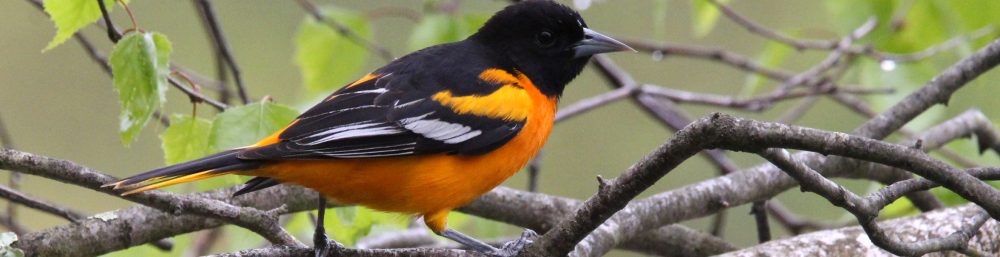
A full column is forthcoming on this walk, but it was a good one. Here are a bunch of photos from the walk on the morning of May 18, 2023. Good variety and color. Gotta love mid-May.

I heard him singing his warbling song and then saw him perched on a branch right over my head. What a sight he was.
The rosy-red, upside-down triangle on his chest stood out like a sore thumb among the budding green foliage all around. He continued his seemingly never-ending, all-over-the-place song as I stood there gawking at him.
It is possible that it was his first day back on his breeding grounds as I hadn’t seen him on my walk just a day earlier. The male rose-breasted grosbeak’s warbling song, of course, was meant to tell other birds of his kind that this was his territory. It was also to tell any females within earshot that he was ready for the 2023 spring breeding season.
Continue reading
Here are a few shots of the rose-breasted grosbeak from the other day.


It’s usually about this time that I write a column about a recent bird walk that yielded a few warblers and how it’s a sign of a great warbler season ahead. Lately, that has turned out not to be the case as the last few warbler seasons have been rather ho-hum, for me anyway.
Well, maybe my fortunes will change this year. I have taken three bird walks over the last week that have yielded very few warblers. A flock of yellow-rumped warblers and a lone palm warbler have been my only sightings. Granted, it’s a little early in the season, but usually by the last week of April, the birds we have looked forward to seeing for so long have returned. At least some of them. Not this year, though, at least not for me.
Continue reading
Spring has all but kicked winter to the curb for this year, but it is always interesting when winter hangs on as long as possible.
Based on my observations, and many recent emails I have received, winter is making its last gasp. The air is filled with the sounds of spring. I can’t go anywhere without hearing chipping sparrows and cardinals singing their hearts out. That is a good thing, of course. The most telling signs that spring is here are the nests being built and even the baby birds that have hatched already.
My last few walks, however, have also included juncos and white-throated sparrows, birds we usually associate with winter. I went for a bird walk the other day and, because I was planning to submit the results to eBird, I kept track of the number of species I saw and heard. I ended up with 32 species, and it was a fantastic mix of spring birds, winter birds and year-round birds.
Continue readingHere are a few photos from a morning walk on a foggy, drizzly, gray spring morning. First rose-breasted grosbeaks of the year!


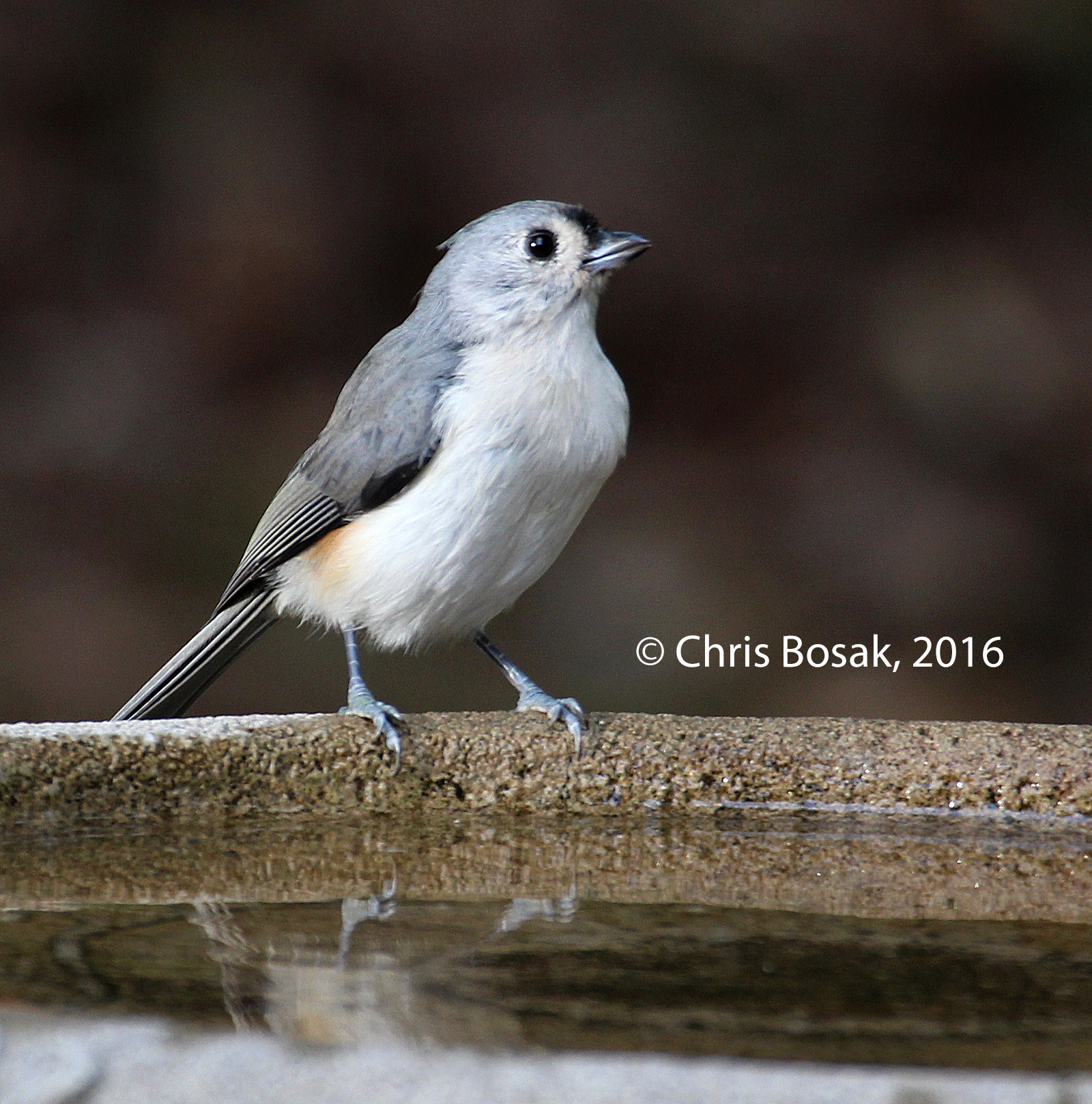
When it comes to birdwatching, there are very few simple answers.
What does a cardinal look like? It seems like a question that would have a simple answer. It’s a medium-sized songbird with a crest, thick and colorful bill, and beautiful red plumage. But, of course, that’s only half — or even less than half — of the answer. Female cardinals do not fit that description and neither do immature cardinals.
So, there is a simple answer to that question, but it is not the complete answer. The full answer is longer and more complicated.
Now, if someone asked what a cardinal sounds like, then it becomes even more complicated. Like many birds, cardinals have a call and a song. In fact, cardinals have many songs. You could simply say the cardinal’s call is a short, high-pitched chip and that their song is a loud whistle. But to fully describe what a cardinal sounds like requires a much more lengthy answer.
Continue reading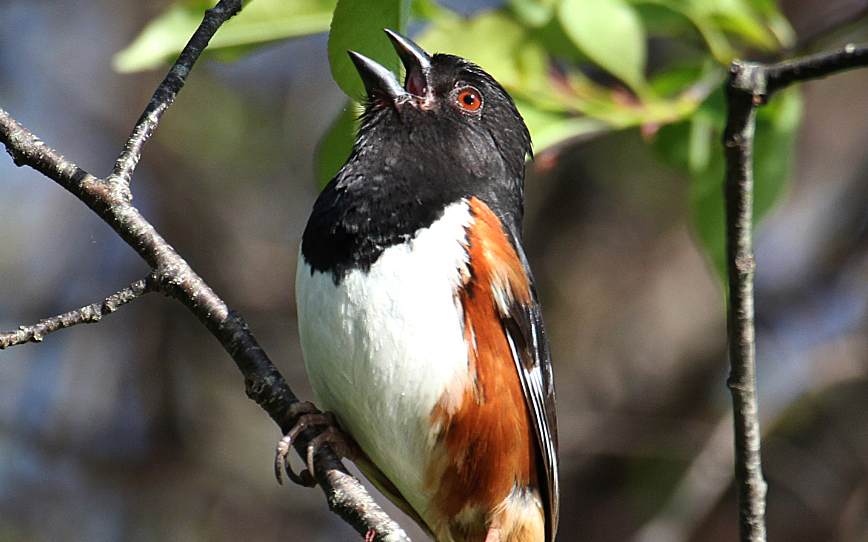
I walked outside to the truck to start my day, and among the myriad other bird sounds, I heard a high-pitched trill.
I was certain it was a dark-eyed junco, but chipping sparrows have a similar song. I had seen somewhere that chipping sparrows are returning to their breeding grounds in New England, so just to be sure of the ID, I decided to test the app on my smartphone that recognizes birds by their songs and calls.
Sure enough, it came up dark-eyed junco. But to my surprise, the phone kept lighting up with more and more species being identified by the app. I was so focused on the trill that I didn’t realize so many other birds were singing as well.
I was skeptical about these apps for a long time, but I was more than impressed with it on this morning.
Continue reading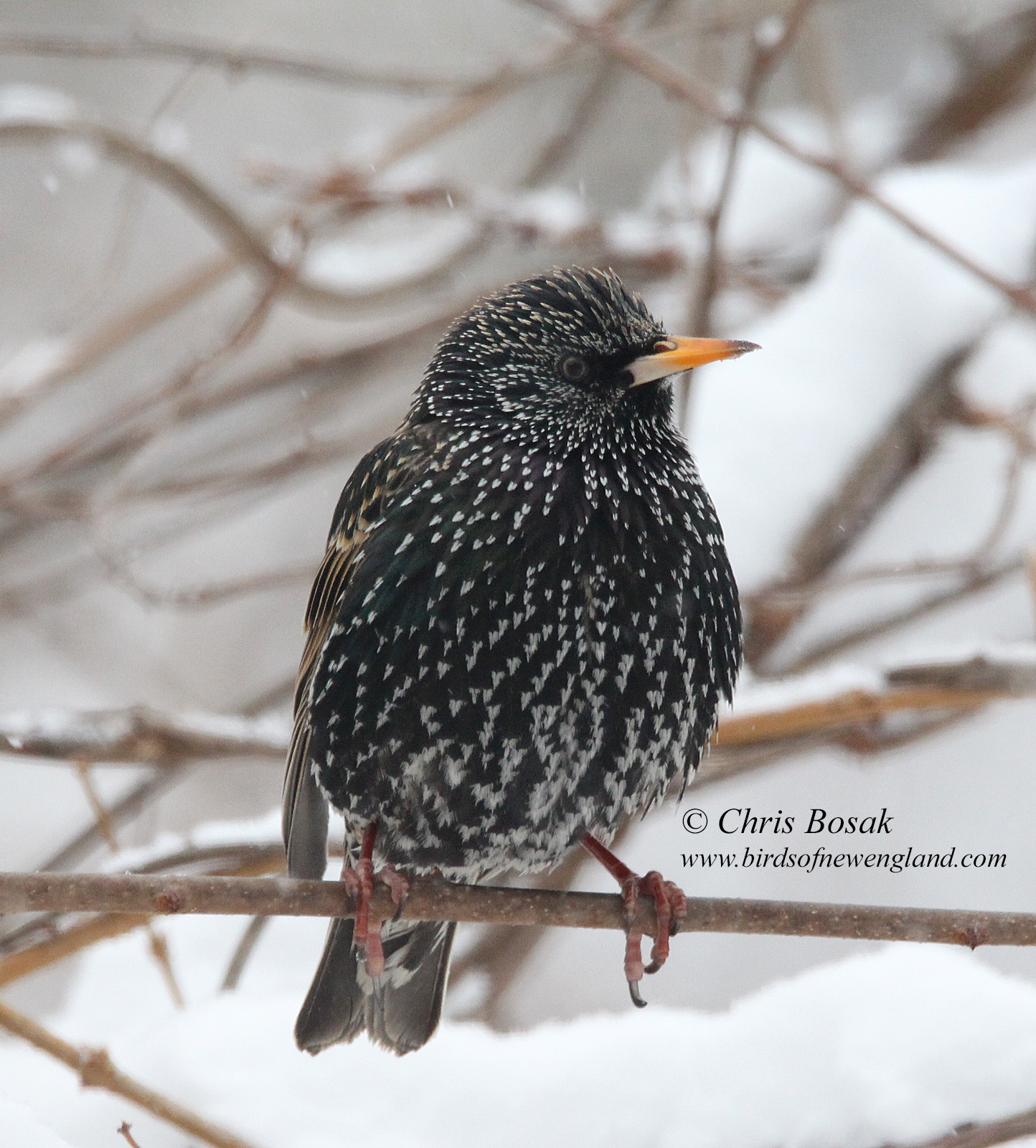
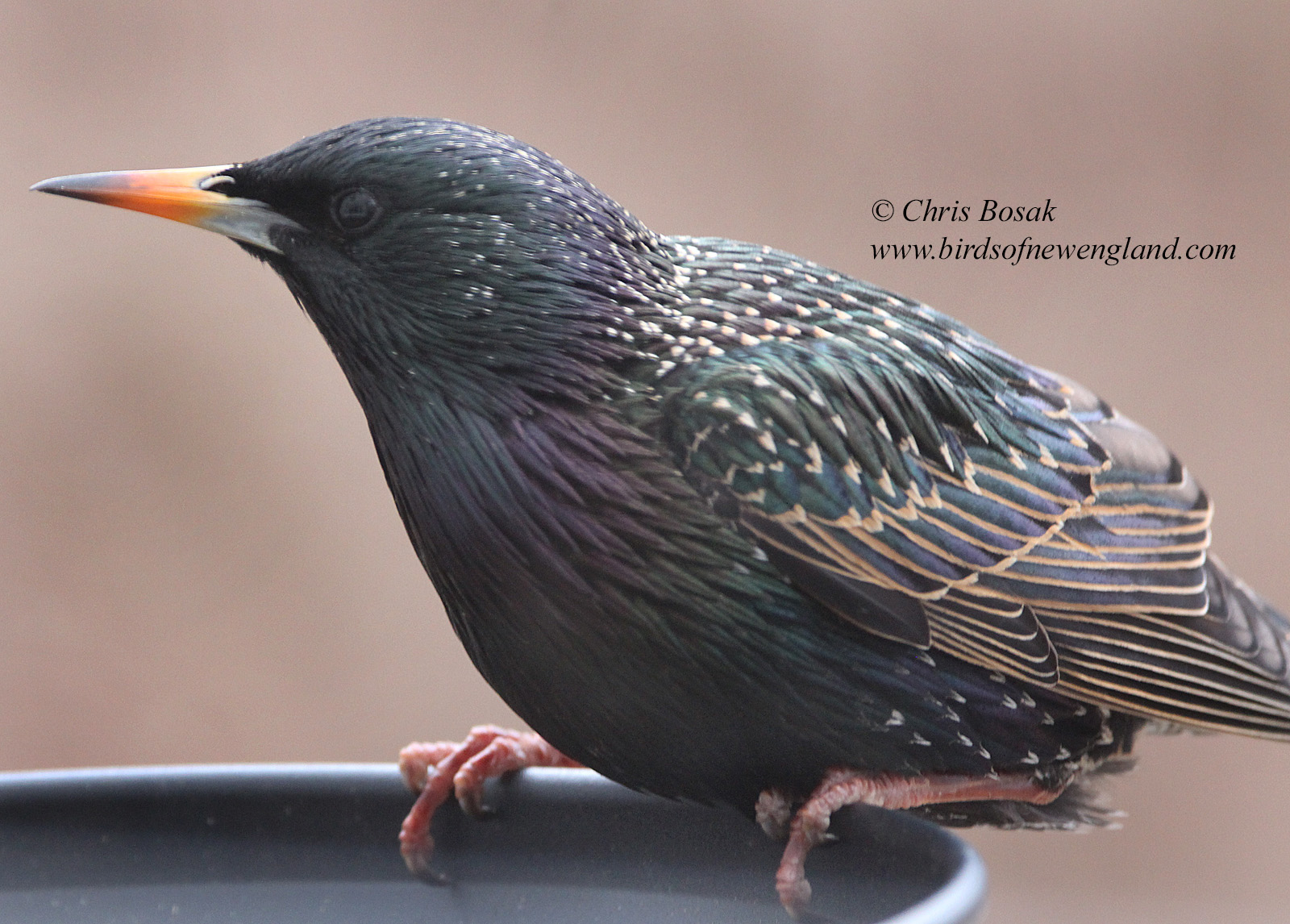
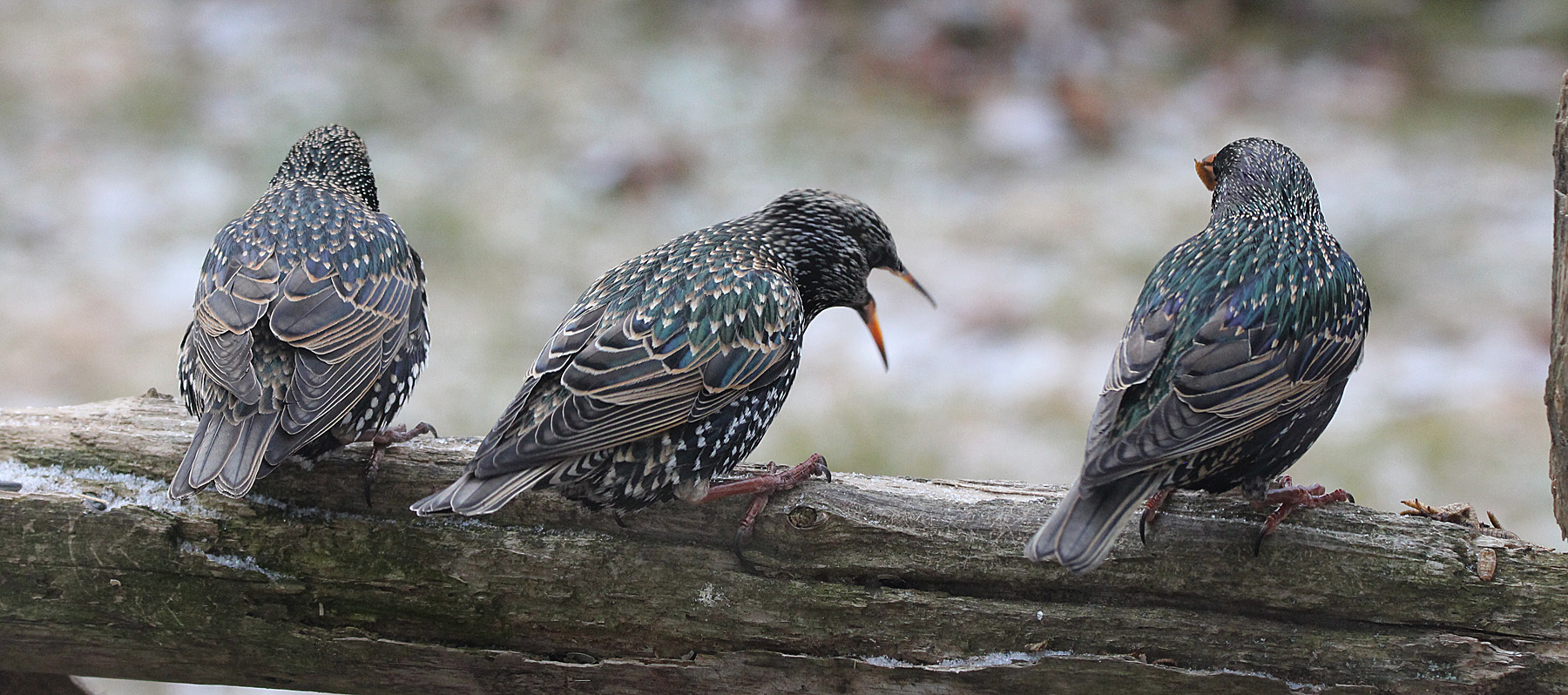
Say what you will about European starlings – and I’ve said some not-so-nice things myself – their plumage is pretty cool. The closer you look, the cooler it is.
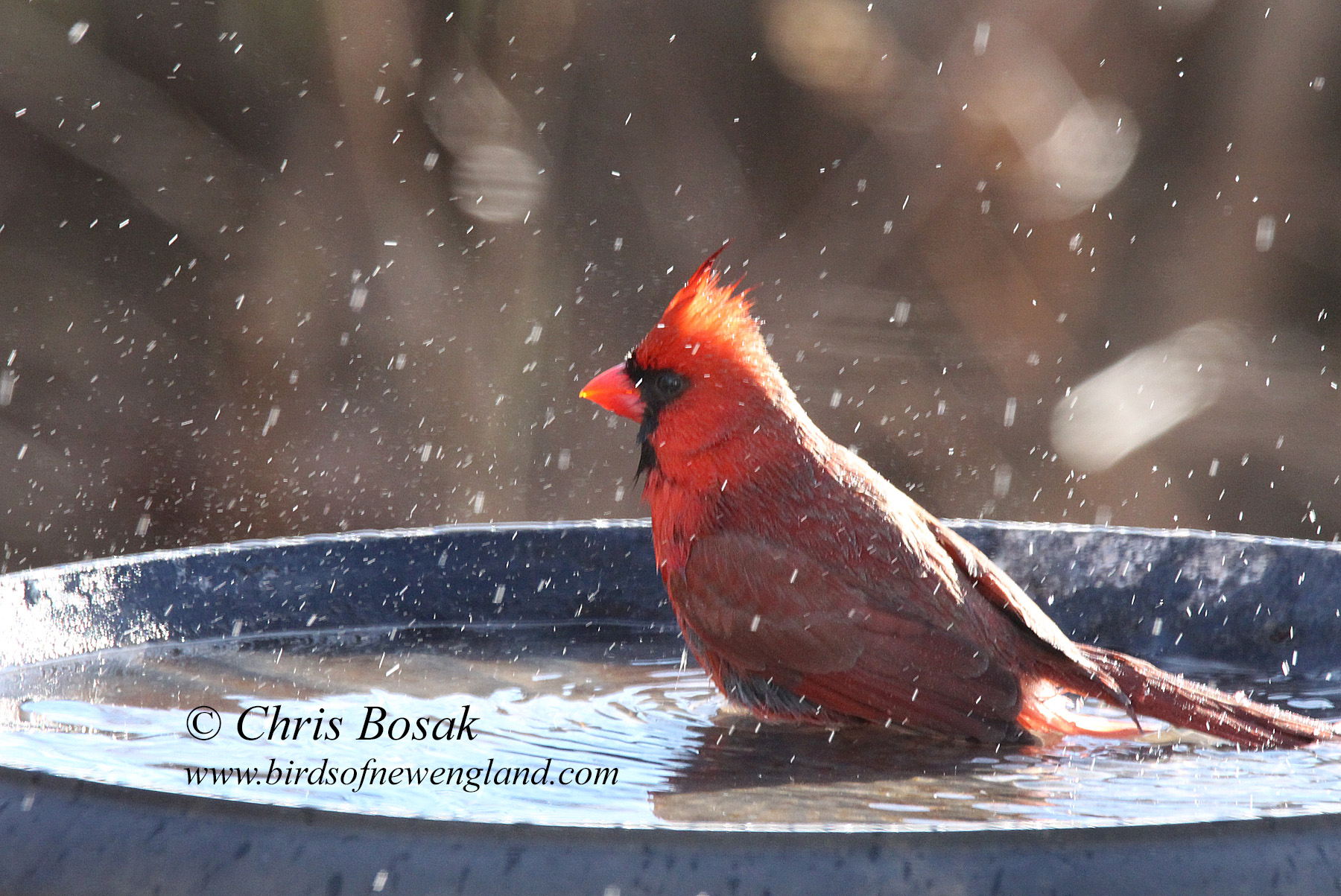
Here’s a follow-up to a recent post with more photos. The post, which may be found here, was about attracting birds with a birdbath, especially in the winter.


 Birds of New England.com