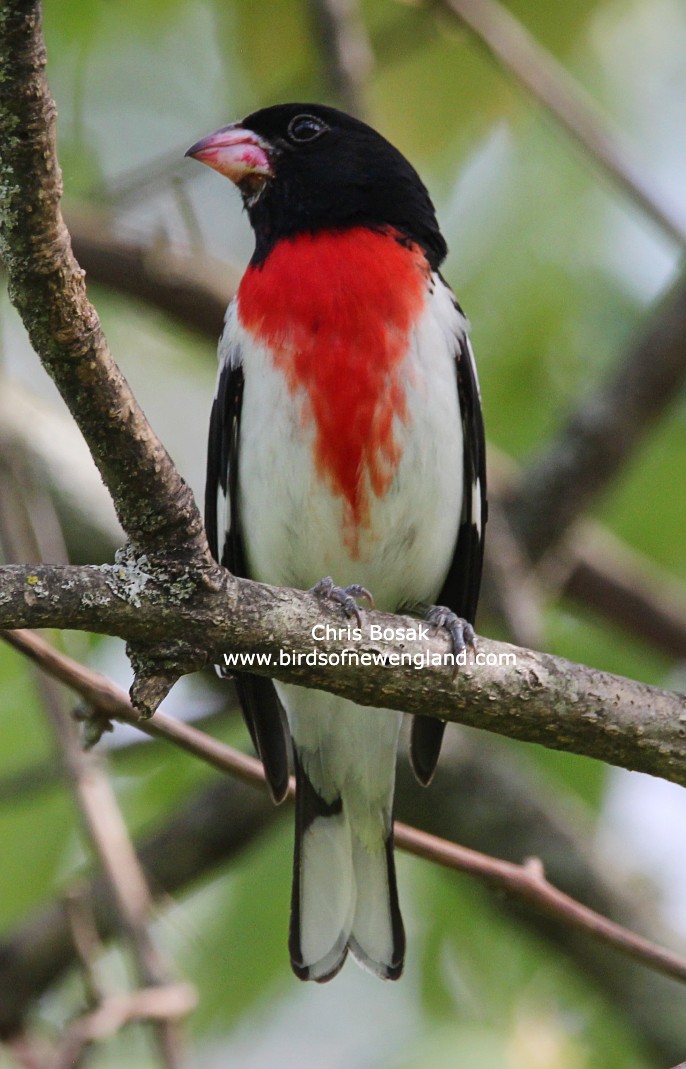
This male rose-breasted grosbeak must have just finished eating berries. It must be hard to eat and not make a mess with a bill like that.

This male rose-breasted grosbeak must have just finished eating berries. It must be hard to eat and not make a mess with a bill like that.

Here are a few more shots of the veery I encountered on a recent walk in New England. Here is the original For the Birds post.


Catbirds always brighten up a spring, summer or fall walk. Here’s a brave one I came across singing his heart out a few weeks ago.


Birds aren’t the only animals you encounter during walks in the woods in New England. Squirrels, including red and gray, are a common “incidental” sightings.

Photo by Chris Bosak – A squirrel finds a meal in New England, May 2024.
Note: This article was originally published in early May and the story is based on a walk taken on April 29.
It was one of those “quick walks” that ended up being a three-hour birding journey.
I hit the trail shortly after sunrise and was immediately greeted by the awesome cacophony of bird sounds that can only happen during spring migration. The loud voices of cardinals, robins, and Carolina wrens were the dominant sounds. American crows cawed in the distance and red-winged blackbirds belted out their “conk-a-ree” songs from a nearby field. That was all good stuff, of course, but the real auditory treats came from birds with less conspicuous songs.
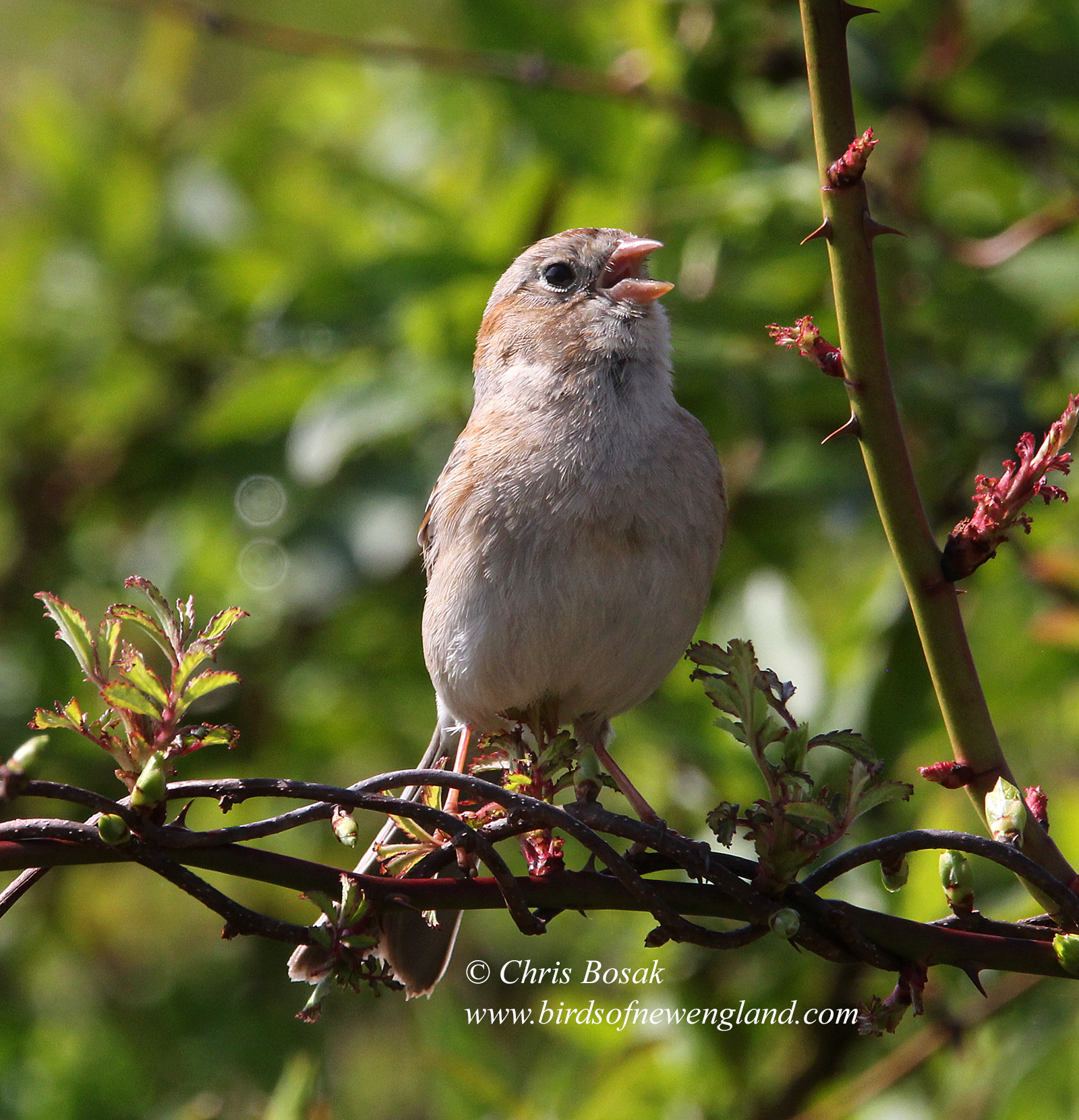
The softer calls of field sparrows and savannah sparrows emanated from the field, and a high-pitched, nearly inaudible, song came from the top of a maple tree near the parking lot.
It was a warbler, but which one? Since it was the beginning of spring migration and my warbler song identification skills are rusty, it took me a few seconds to realize it was a prairie warbler singing up there.
Continue reading
Well, it’s April and that means we are awaiting the arrival of warblers. It also means taking lots of photos of eastern towhees while we wait. Here are a few of this year’s shots. Their large size and awesome coloration belie the fact that towhees are members of the sparrow family.


Just a few random shots of birds I saw last month. Spring migration is upon us and gaining speed every day. Be sure to be out there to enjoy the show.

It may not be the most technically sound bird photo (none of mine are really), but I kind of like the composition. Song sparrow.

What started out as a bird walk eventually morphed into a different type of nature walk.
I figured I would head to the nearby park a week before the official start of spring to see if any early spring birds had arrived. My main target, as always in mid-March, was American woodcock. As always, I came up empty in that department.
Other birds were scarce as well. The winter ducks had presumably left the ponds for points north. No other spring birds had arrived yet, at least not that I saw that day. I know that eastern phoebes are around right now, and the other day through my window at work I saw a yellow-rumped warbler. But there was no such luck on this walk.
Continue reading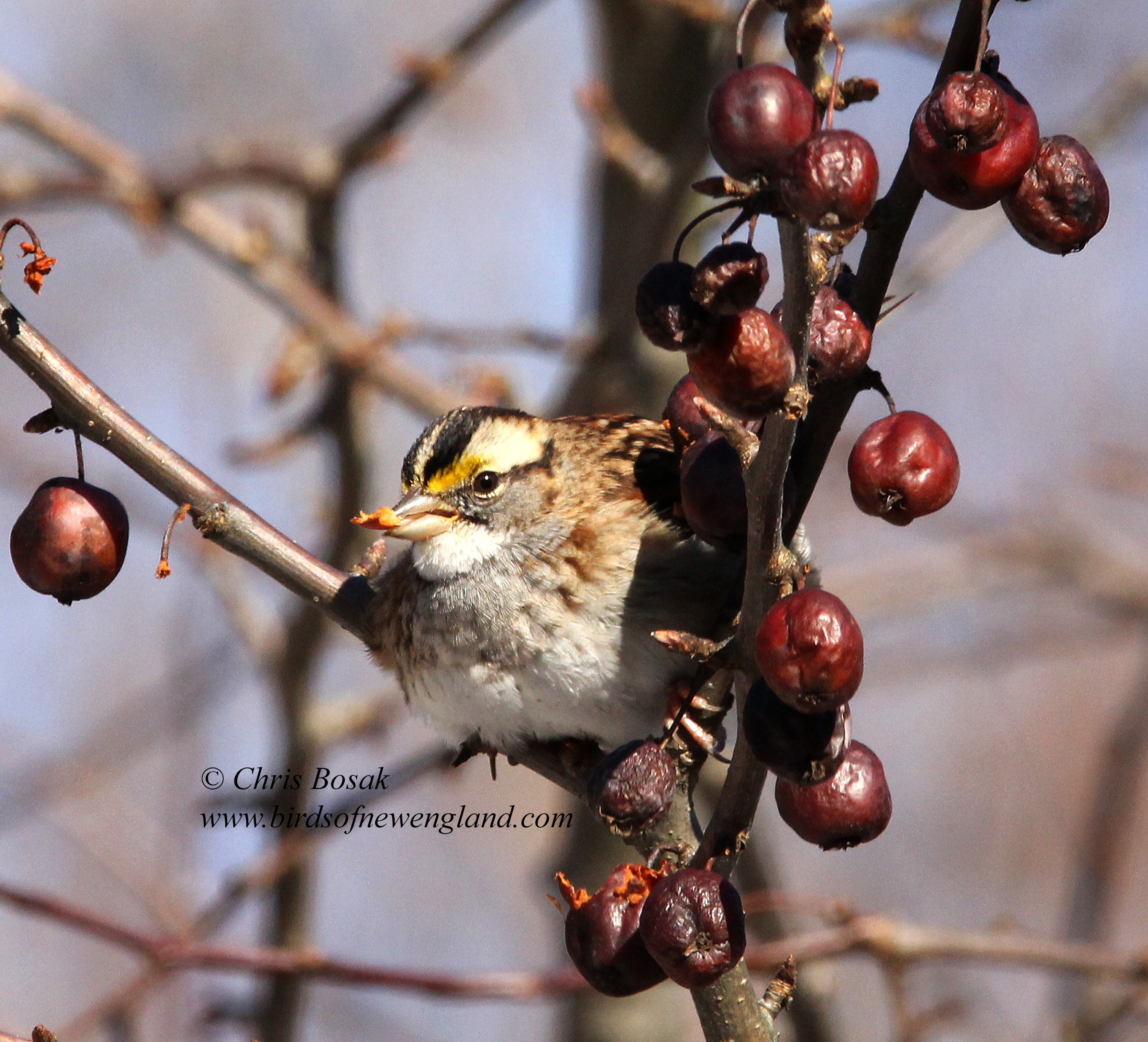
Here are a few more shots of the white-throated sparrow eating crabapples from last month. Here is the original column with the full story.
Continue reading Birds of New England.com