For the Birds: The early birder sees the birds

Photo by Chris Bosak
A blue-headed vireo perches on a branch in New England this fall.

I realize it’s Birding 101 to say that the best time to look for birds is early in the morning, but I took a walk the other day that really drove home the point.

I was driving past a park about half an hour before sunrise and decided that my destination was just going to have to wait. I was stopping for a quick walk first. Two and a half hours later … 

The walk started when the sun was still lower than the distant hills to the east. It was light enough to see where I was going, however, and the birds were up and at ’em too. Boy were they ever.

Continue reading

For the Birds: Memorable fall walk

A dozen or more eastern bluebirds, just as many yellow rumped-warblers and a few palm warblers highlighted the walk.

The fall migration does not get the attention and building excitement that the spring migration gets, but if you hit it on the right day, it can be a day worth remembering. This walk started out extremely slowly, in terms of seeing birds anyway. For the first hour, I heard a few cardinals, catbirds and eastern towhees in the brush and a few crows and blue jays “cawing” and “jaying” overhead. That was about it.

Even the pond was void of any birds. I don’t think I’ve ever been there and not seen geese and mallards. Often, there is a great blue heron or two and some American black ducks. Not this time.

Continue reading

For the Birds: Leaving no stone unturned

Photo by Chris Bosak A ring-necked snake found under a rock, fall 2023.

In the New England bird world, there is the ring-necked pheasant and the ring-necked duck. The ring-necked duck should probably be called the ring-billed duck, but that’s a story for another day. Then there is the ring-billed gull, but that’s also not relevant to this column.

The other day, my son Andrew and I came across a ring-necked animal of another sort. It was a ring-necked snake, and it is very aptly named.

Continue reading

Never know what you’ll find out there

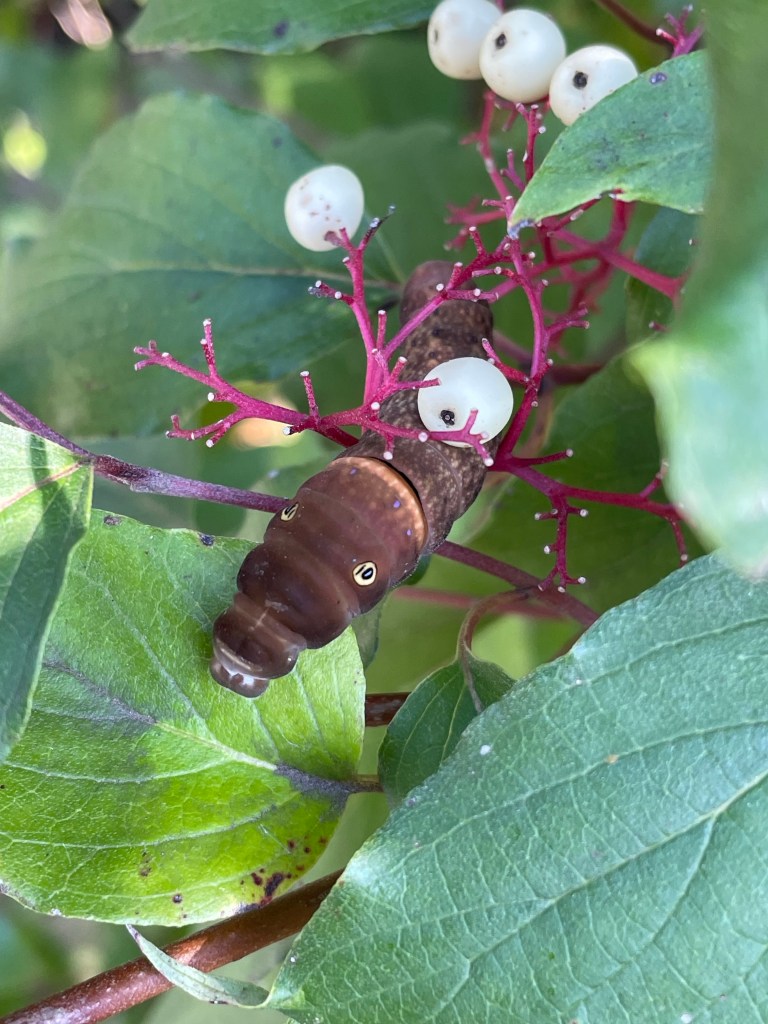
Photo by Chris Bosak- eastern tiger swallowtail caterpillar, fall 2023.

While walking to the cafe at work the other day, I found this critter in a tree by the sidewalk. It’s the caterpillar of an eastern tiger swallowtail. (Below is a photo of the butterfly that was taken earlier this fall.)

The caterpillars of eastern tiger swallowtails are typically green but go through a brown phase before turning green. The “eyes” on the caterpillar are not really eyes, obviously, but markings to make it look intimidating.

Photo by Chris Bosak – eastern tiger swallowtail.
Photo by Chris Bosak- eastern tiger swallowtail caterpillar.

For the Birds: The varying levels of birdwatching

Photo by Chris Bosak – Semi-palmated sandpiper.

Birdwatching is extremely easy. Birdwatching is extremely difficult.

Both of those sentences are true. Everything in between is true as well. I’ve written this before, but one of the many great things about birdwatching is that it is as easy or difficult as you want to make it.

If you are happy identifying a few backyard birds that visit the feeder, fine. If you want to learn a few of the common birds you see on your walks through the woods, fine. And so on it goes until you get to those people who have reached expert status. You know, the people who pick out a first-year Iceland gull among a flock of 200 herring and ring-billed gulls.

Even though I’ve written a birdwatching column for more years than I can count on my fingers and toes, I’m not that expert. I’m not picking out a rare gull because I noticed the trailing edge of its wing is slightly different from the bird next to it. But I still love birdwatching and strive to get a little better each year.

Continue reading

For the Birds: Predators lurk in the natural world

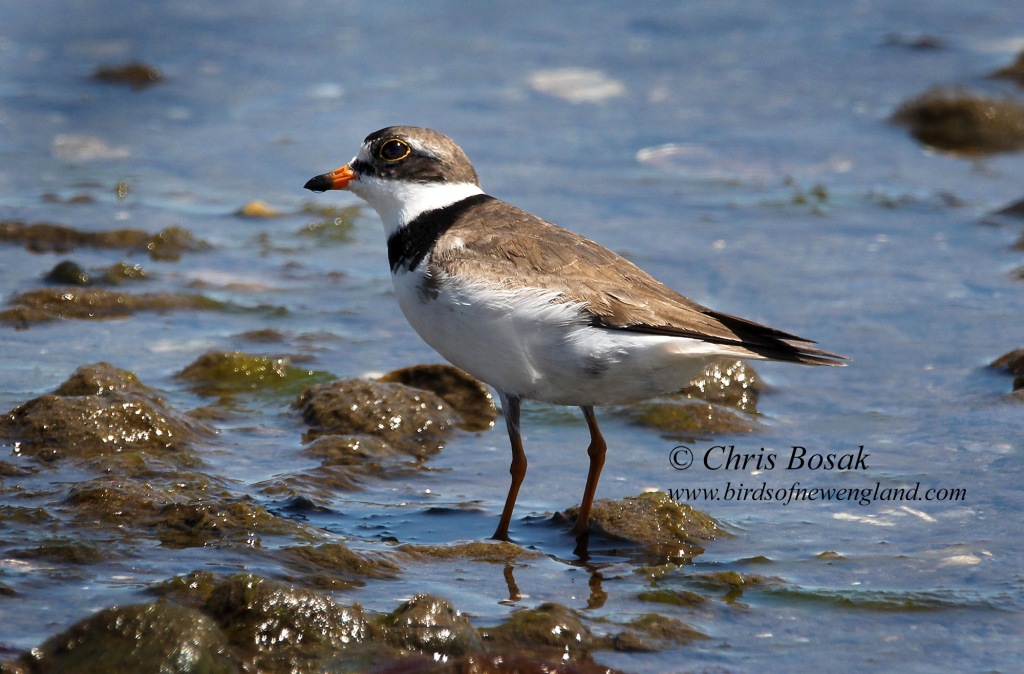
Photo by Chris Bosak – A piping plover employs the broken-wing trick to fool a nearby predator.

Young birds are extremely vulnerable to predation and an abundance of other hazards. Thankfully, nature evens the playing field to a degree by giving some parents clever defense mechanisms to protect their young.

Among the most interesting of these tricks are performed by waterfowl.

While walking in the woods the other day, I heard a frantic splashing in a nearby beaver pond. Upon further inspection, I saw a female mallard flopping around and generally causing a racket.

The duck appeared to be injured as it held out a wing as if it were broken. It looked as if the duck was trying to fly out of the water, but just couldn’t.

The mallard was perfectly healthy. It felt threatened by something and went into defense mode. I don’t know if it was me on the trail that threatened it or something else lurking along the pond’s edge. The chicks remained hidden in the vegetation while the adult flew to an open space and caused the scene.

Continue reading

For the Birds: Oystercatcher paradise

Ask me what my favorite bird is and I’ll likely give you a different answer every time. Truth is, I have lots of favorite birds. Now I just say “that’s one of my favorite birds” when I see one of the dozen or so species that fit the category.

The American oystercatcher is one species that has long fit into that category – probably from the first time I saw one. While many shorebirds blend in with the sand or rocky habitat and look nearly identical to each other, the American oystercatcher stands out with its larger size, contrasting plumage and, of course, its large orange-red bill.

Aside from its cool appearance, oystercatchers have a high-pitched call that may be heard from a great distance. I have often visited the shore and thought I struck out in my quest to find an oystercatcher only to hear that call on a nearby sandbar. The call is often made in flight so it’s easy to find them and track them to their landing spot.

Continue reading

More perfectly imperfect butterflies

Photo by Chris Bosak – Tiger swallowtail with both wing “tails” missing.

As a follow-up to my recent column on butterflies, here are a few more photos showing butterflies with wing damage. Here’s the column in case you missed it.

Continue reading

For the Birds: Butterflies: always beautiful; not always perfect

Photo by Chris Bosak – A tiger swallowtail with one its “tails” missing.

Our wrinkles, scars and other blemishes make us who we are. They are our story.

The same is true for butterflies. Not all butterflies look like the perfectly drawn or photographed models in field guides. In fact, most of them don’t.

Continue reading

Black swallowtail on clover

I found this gem during a walk through a field today (Monday, Sept. 4, 2023) in southwestern New England. This black swallowtail clearly favored red clover as it bypassed all the other flowers in the field and landed on every clover it could find.