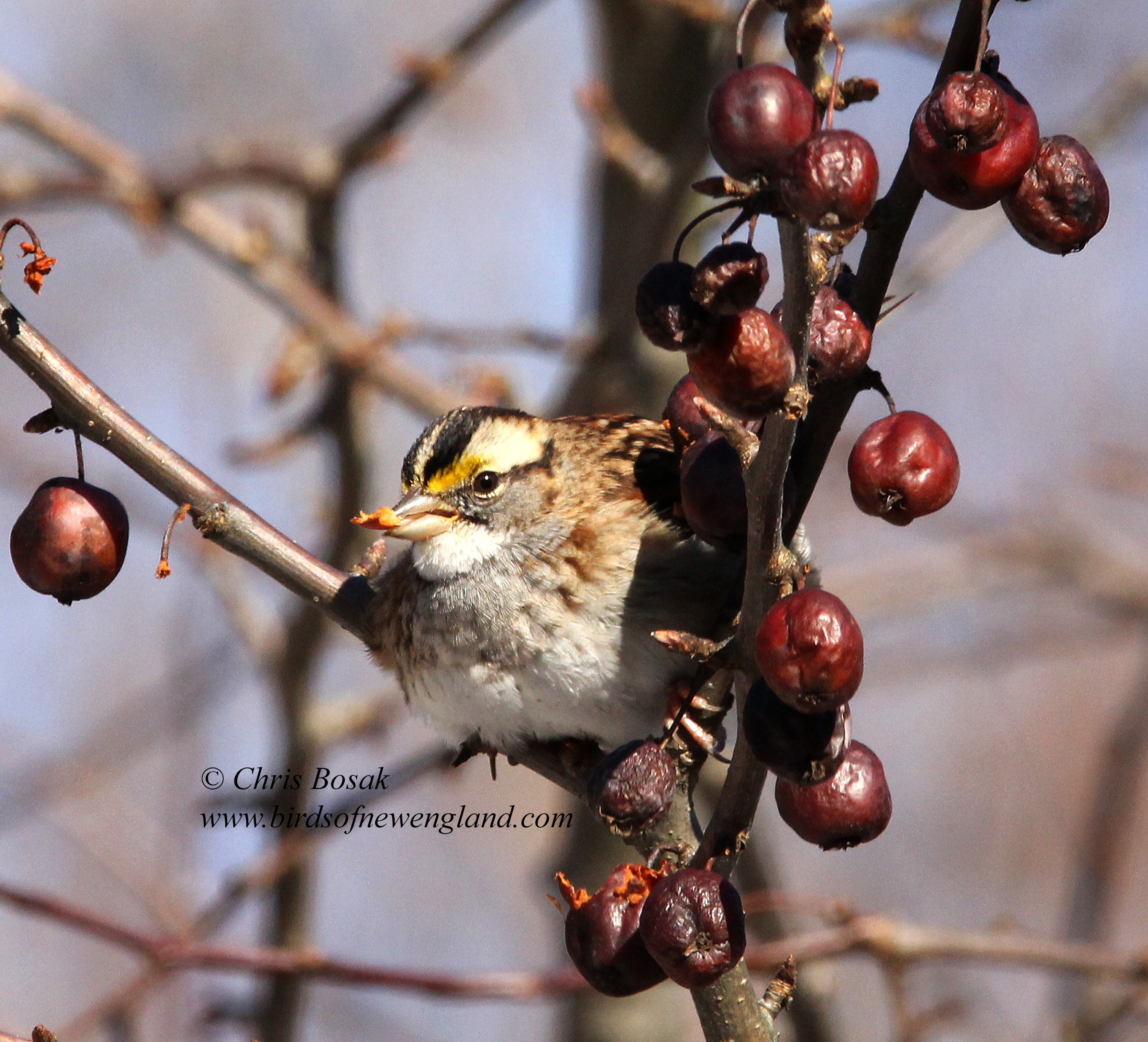
Here are a few more shots of the white-throated sparrow eating crabapples from last month. Here is the original column with the full story.
Continue reading
Here are a few more shots of the white-throated sparrow eating crabapples from last month. Here is the original column with the full story.
Continue reading
Perhaps against my better judgment, I am going to move forward with an early signs of spring column.
Even as nearly a foot of snow fell in my area a few short days ago, signs of spring are out there. They may not abound yet, but they are out there.
It started a little over a week ago with one of the typical first signs of spring: snowdrops poking out of the ground and flashing their little white flowers. A day or two later, a flock of turkeys walked past my window at work. It was a good-sized flock of about 15 to 20 birds, and, of course, I had to leave my work area temporarily to check out the action.
As I stepped out of a door a fair distance away from the turkeys so as to not disturb their day, I noticed that several of the males were displaying. No matter how many times you’ve seen it before, it is always an impressive sight to see turkeys displaying. They are large birds to begin with, so when their feathers are displayed to intimidate or impress, the birds appear to be that much larger.
Continue reading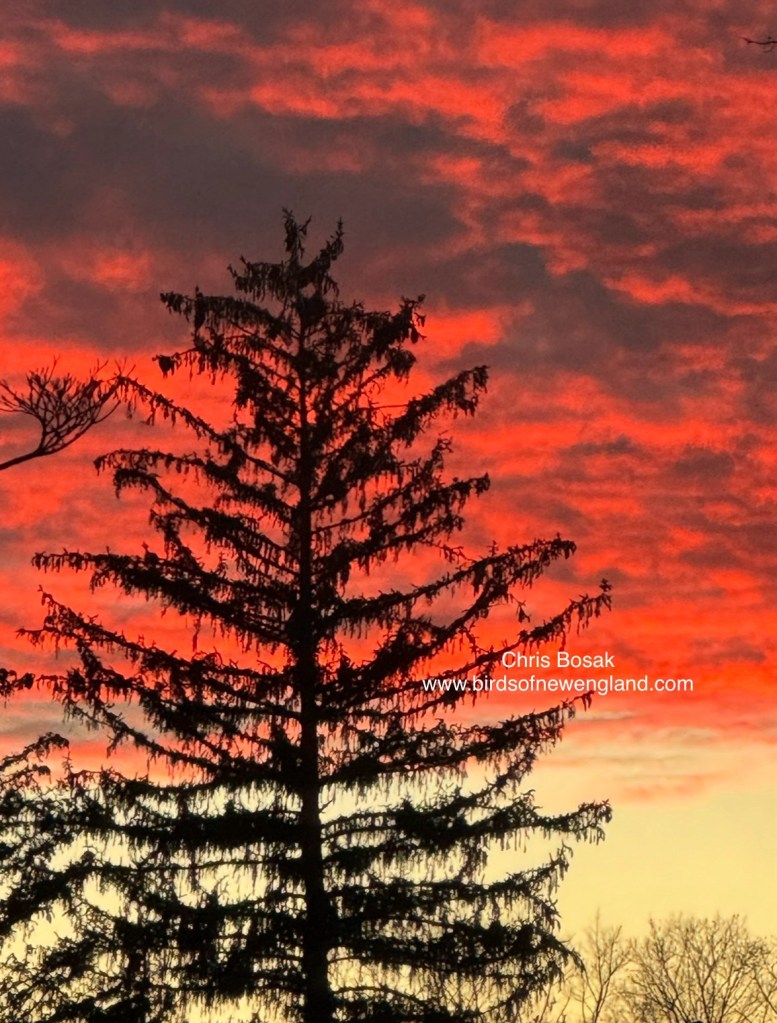
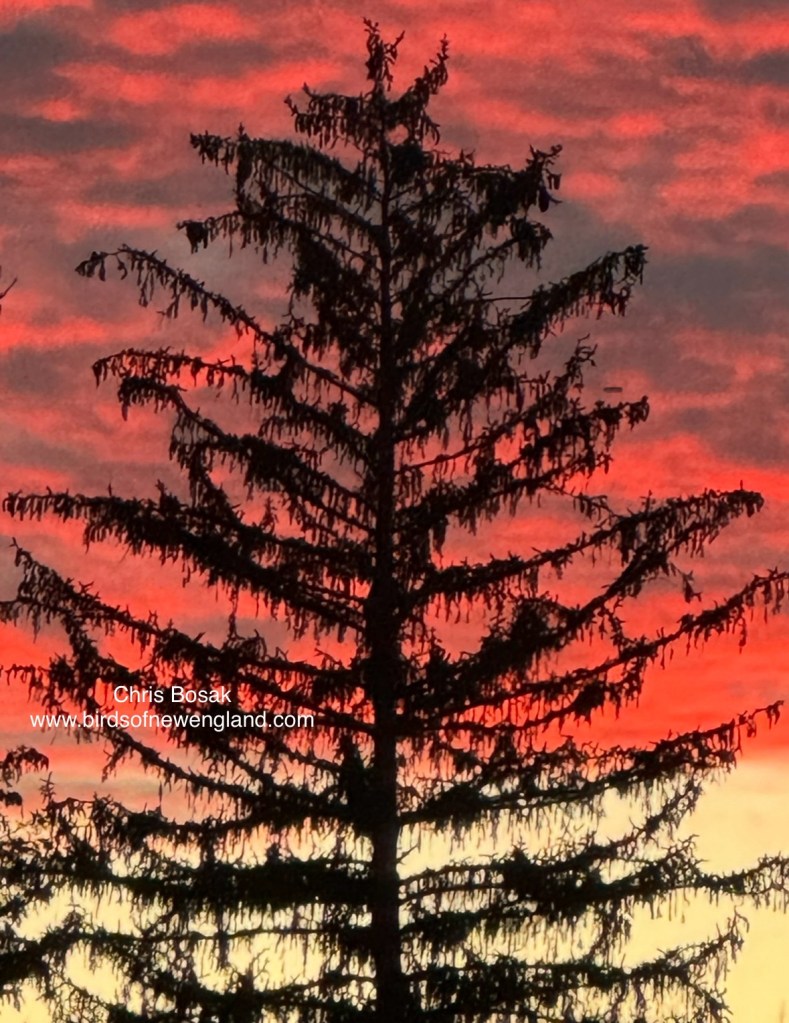
This post doesn’t have anything to do with birds, but I figured I’d share the dusk sky from the other night. It’s amazing how quickly the scene changes at dusk. A matter of minutes is all it takes to miss shots like this.

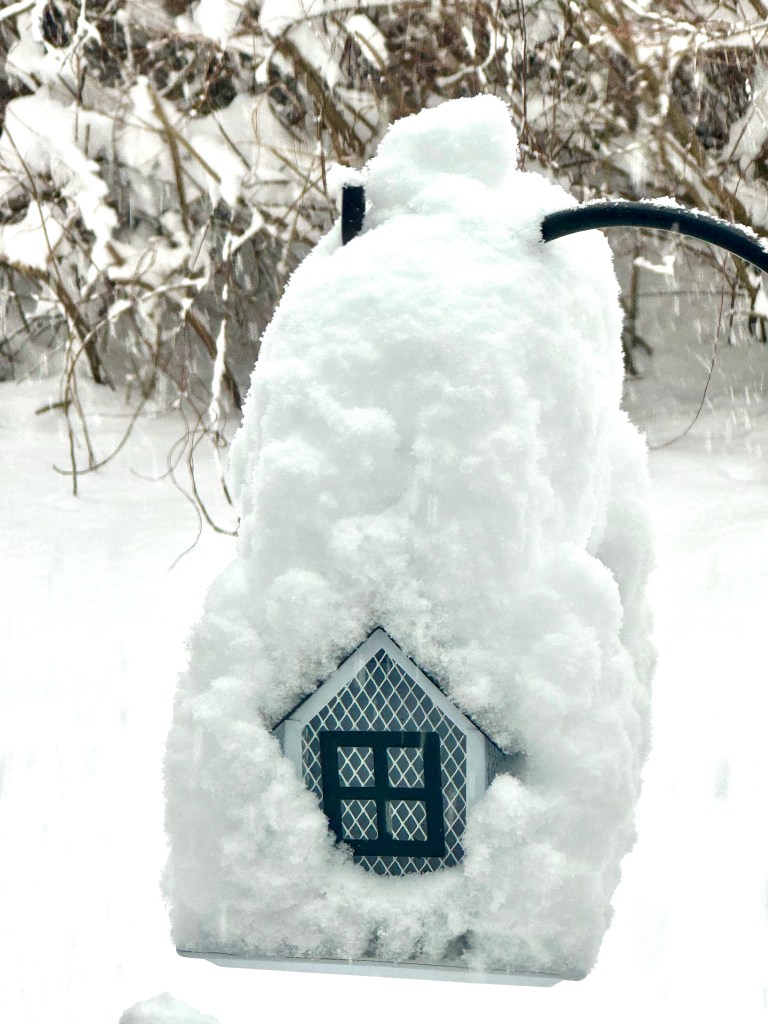
Note to the neighborhood birds: Due to weather conditions, this feeder is temporarily closed. Please visit the adjacent feeder with a cover over it. Thank you for your understanding.
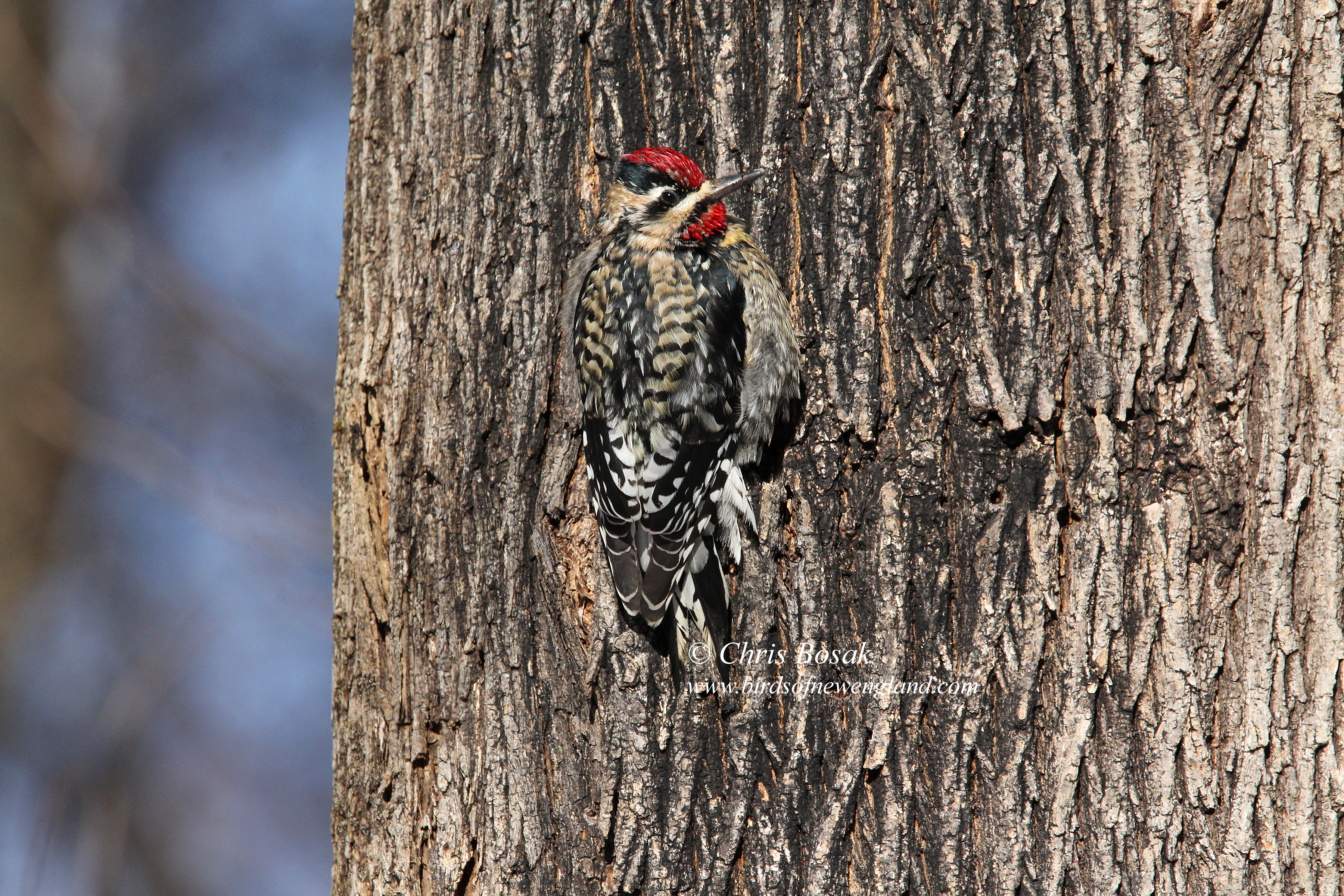
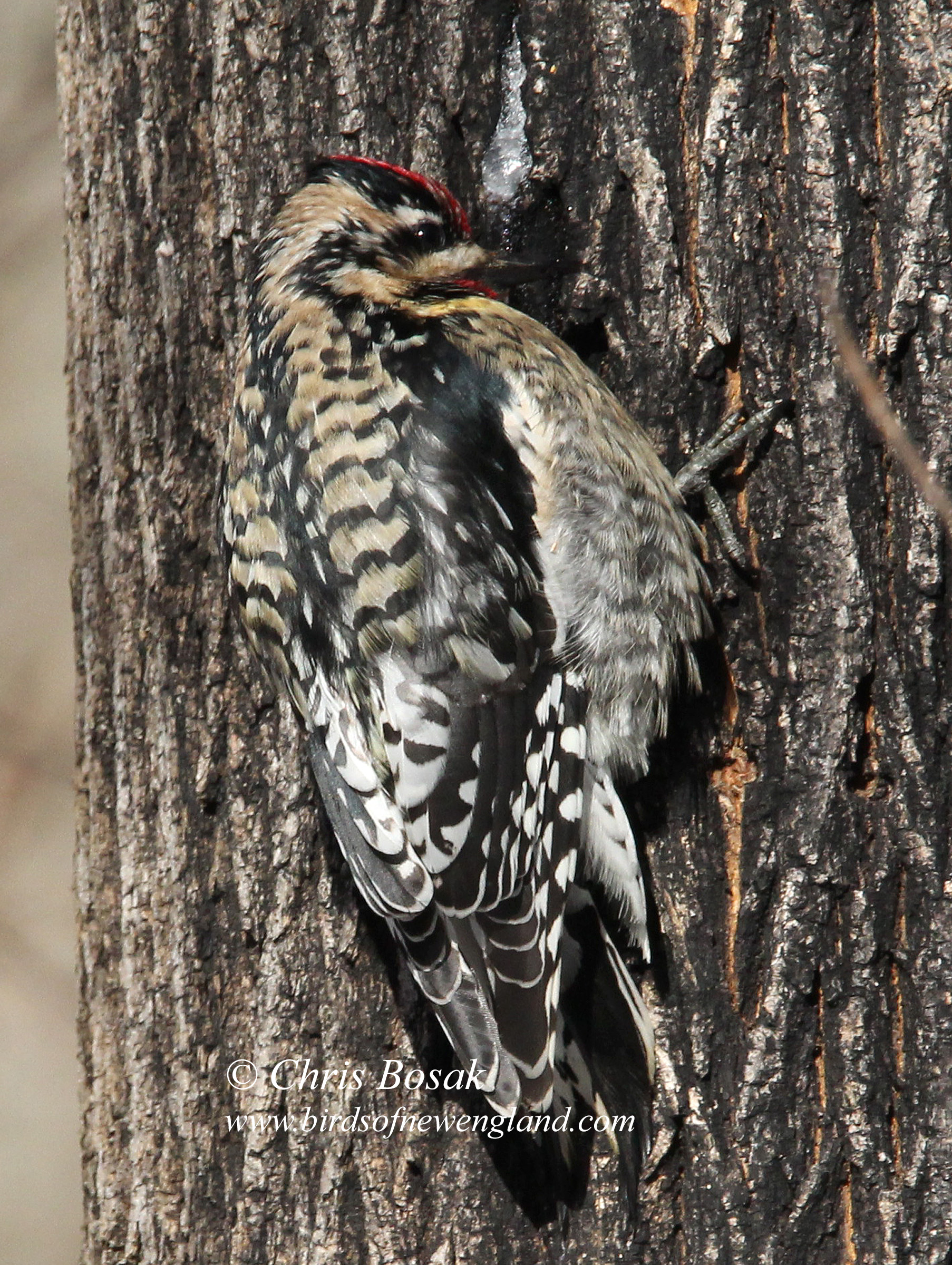
Here are a few more shots of the yellow-bellied sapsucker I saw the other day tapping on a tree. Note the aligned holes in the tree shown in some of the photos. Here is the post with the full column.
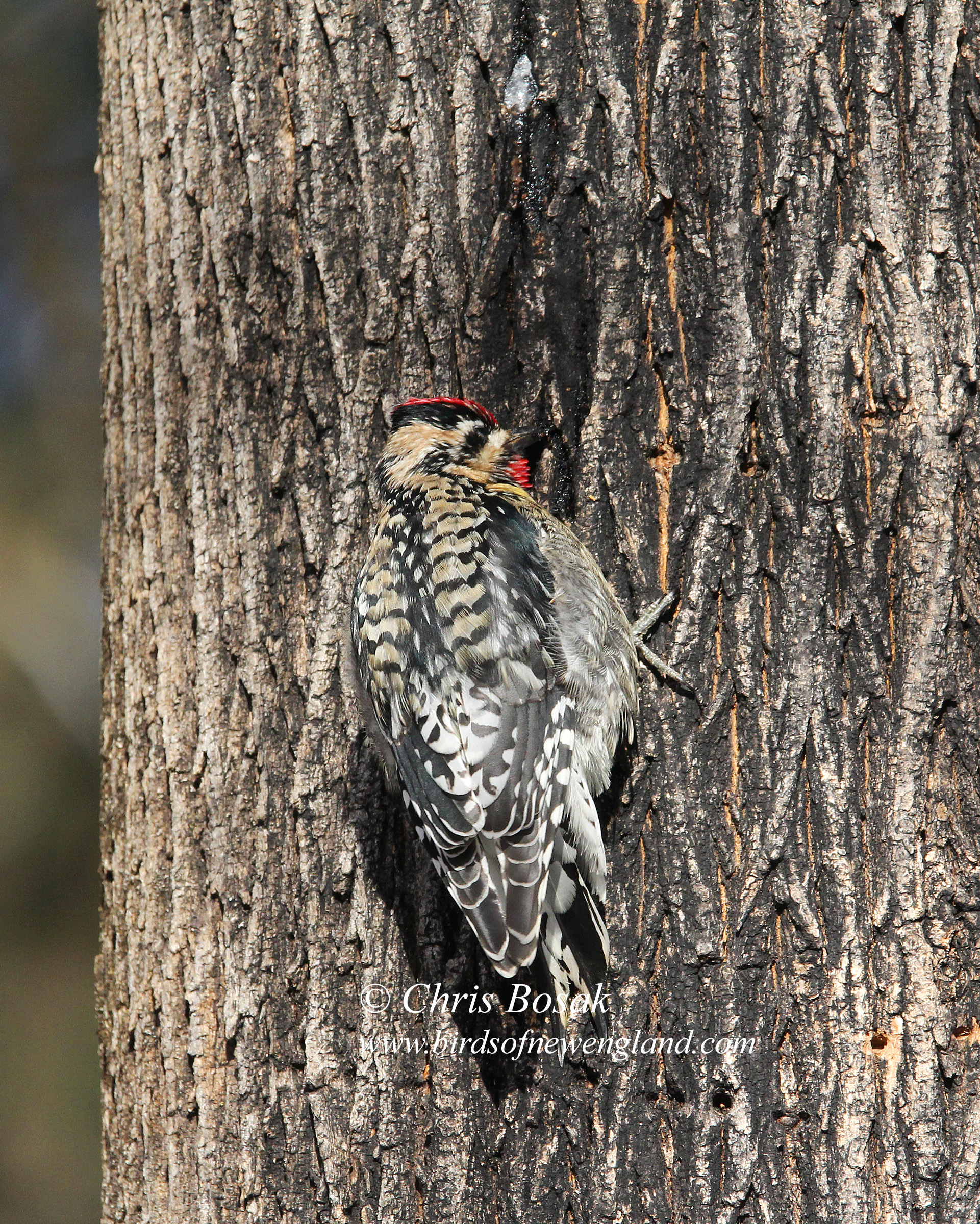

The woods seem to be full of surprises this winter.
Last week I wrote about the gray catbird I have been seeing on my walks this winter. On a walk last week, which was done when it was about 15 degrees outside, I had four species that were marked as “unusual” by eBird, a maassive database of bird sightings. That doesn’t necessarily mean that the birds are rare, but rather they are not commonly seen in New England during the winter. The species were: catbird, hermit thrush, purple finch and yellow-bellied sapsucker.
The catbird, thrush and finch were all species I had seen on previous walks this winter. In fact, it seems as though I typically find a hermit thrush or two each winter in New England. Like the catbird, hermit thrushes typically migrate south of New England before winter, but some remain in our region, opting to tolerate the cold weather rather than take on the risks of migration.
Continue reading
Came across this beauty during a recent walk in southern New England.

My morning stroll at work one day last week was cut short because the field I usually walk through had completely disappeared. Well, it didn’t disappear, of course, but it was under several feet of water. There was no grass to be seen, only a huge pool of water reflecting the gloomy sky above.
The adjacent river, which is really just a trickling creek most of the time, was now a raging, angry force that had spilled over its banks and flooded the land on either side. Heavy rains the previous night, combined with the few inches of snow that had been on the ground, turned a usually serene setting into a foreboding, aquatic landscape.
What struck me most was how different everything looked. Flooding obviously can drastically change a landscape in a matter of moments, but it can be quite jarring when you are used to seeing something every day and suddenly it looks like a different world.
Continue reading
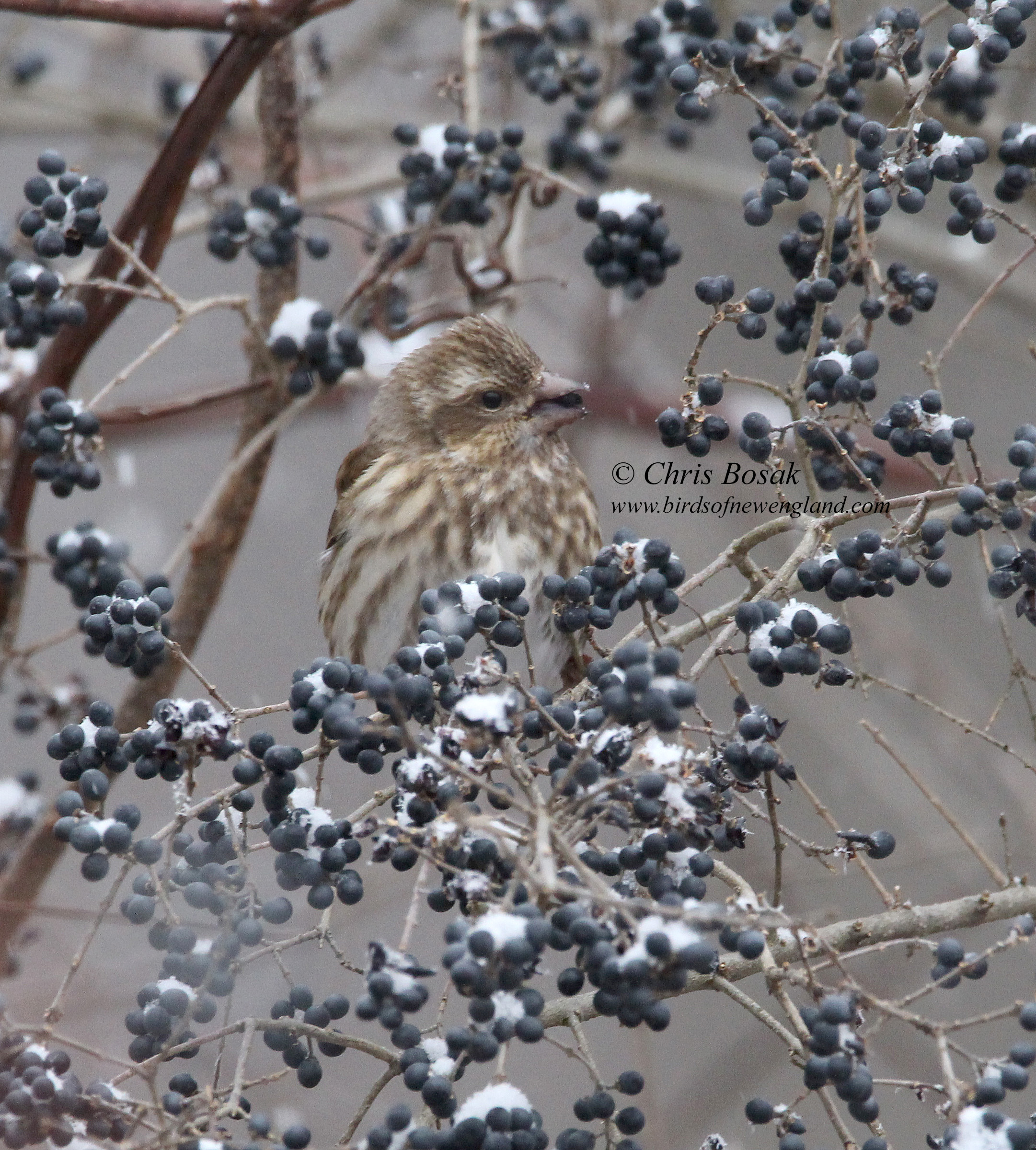
As promised, here are a few photos of the female purple finch, as seen and photographed in Connecticut during Tuesday’s snowfall. She is eating berries from a silky dogwood, I believe. Females lack the bright colors of the male but are spectacularly designed. They are slightly larger and more decorated than female house finches.
If you missed yesterday’s male purple finch, click here.
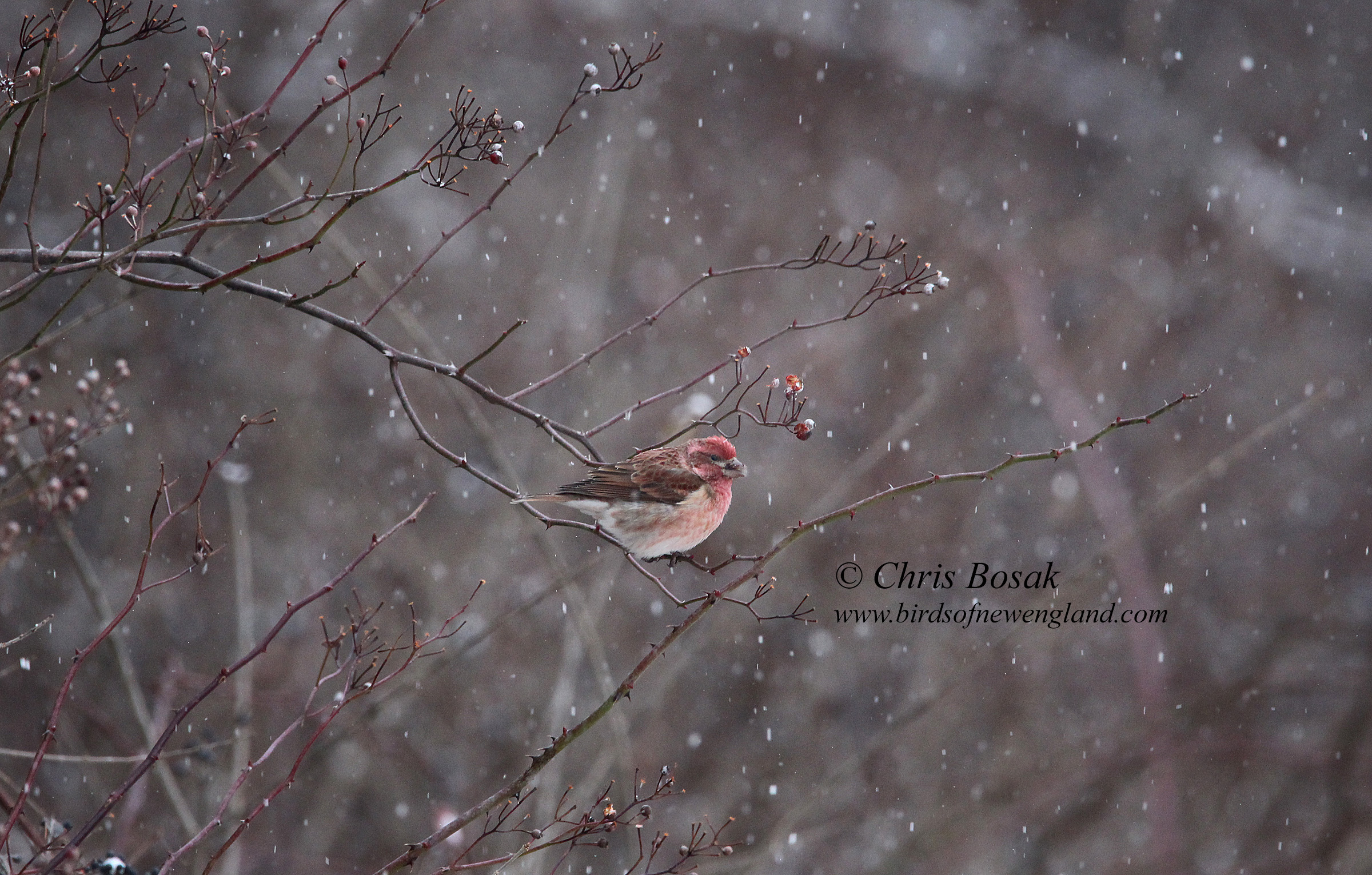
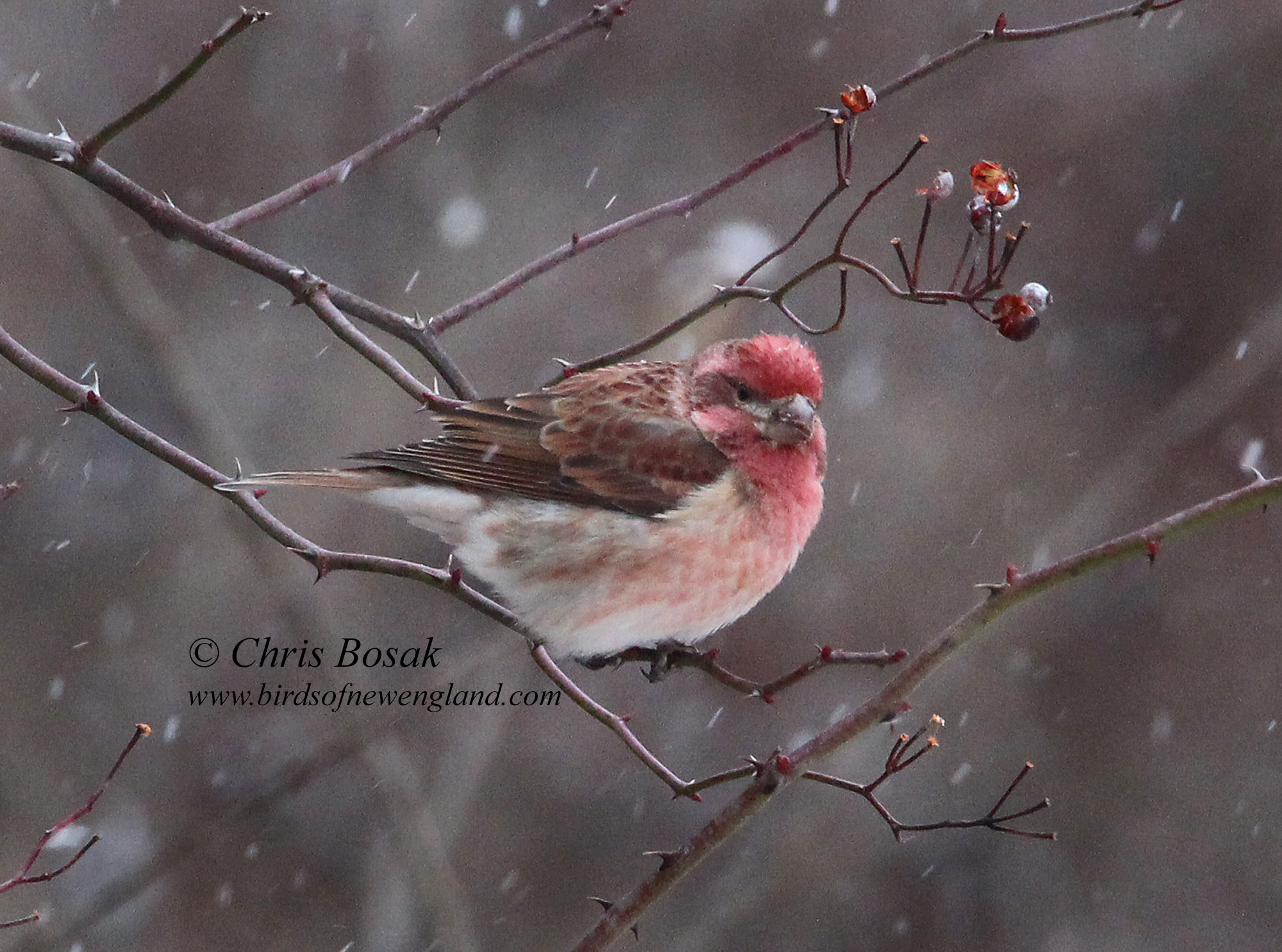
Here are a few shots of a purple finch I found on this morning’s walk through the snow. Male purple finches are more rosy in color and overall more colorful (and slightly larger) than the more common house finch. Plus, purple finches are way cooler.
Tomorrow, the female purple finch.