For the Birds: Answering the call of the woods

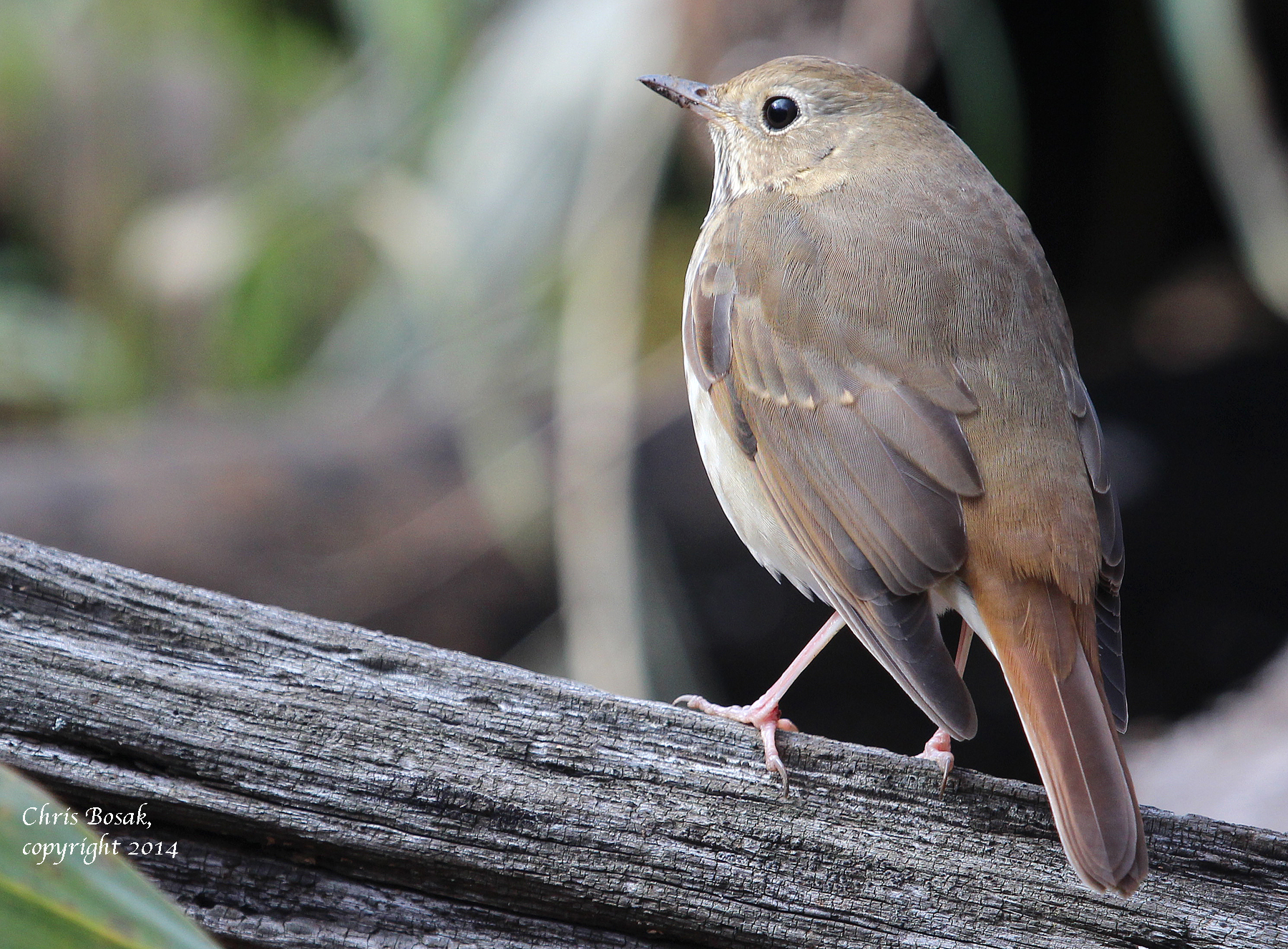
Photo by Chris Bosak A Hermit Thrush rests on a log at Selleck's/Dunlap Woods this fall.

Photo by Chris Bosak
A Hermit Thrush rests on a log at Selleck’s/Dunlap Woods this fall.

Here is the latest For the Birds column, which runs in several New England newspapers.

With so many other temptations, sometimes it’s easy to forget about the most fundamental outdoor escape — a simple walk in the woods.

The Atlantic coast beckons with promises of egrets, shorebirds, terns and perhaps — if you’re lucky — an oystercatcher or black skimmer.

Local freshwater bodies of water woo nature watchers with wood ducks, red-winged blackbirds, herons and maybe a bittern. Fields attract butterflies by the score, as well as bobolinks, meadowlarks, and a rainbow of wildflowers. It’s hard for nature-watchers to resist sometimes.

Of course there’s always the backyard, too. There’s no need to get in the car or invest any amount of time. Look out the kitchen window or sit on the patio and enjoy cardinals, blue jays, catbirds, chickadees and other backyard favorites.

And there is the woods — waiting patiently for us to return.

I returned a few days ago and was reminded over and over why outdoors enthusiasts have a natural instinct that draws them back.

I left the parking lot and began walking. I had no route planned, no idea where I would end up. When I came to a fork in the trail, I took the one that seemed to lead deeper into the woods.

The first bird I saw once I lost myself among the trees was an ovenbird, a small, ground-dwelling warbler noted for its “teacher-teacher” song. As far as warblers go, ovenbirds are rather nondescript. Named for the shape of their nests, they look like a small thrush with orange on its crown. Ovenbirds are fairly common and easy to find during spring migration, but occasionally you’ll run into one in the summer.

Then the common birds of the woods began coming. I heard the “yank yank” of a nuthatch in the distance and soon spotted a different nuthatch near the trail. Chickadees were in abundance, keeping me company as I meandered about the woods.

I stopped to watch a robin that was puffing out its orange breast from an obvious perch, but my attention was soon diverted by a flurry of woodpecker activity.

First, I heard and soon found a red-bellied woodpecker. As I followed its flight from one tree to the next, my eyes crossed paths with a downy woodpecker. As I studied the downy, a hairy woodpecker flew in and landed on an adjacent tree. I was looking at three species of woodpeckers in one field of view. All I needed was a pileated woodpecker to join the party. That didn’t happen on this day.

I kept an eye out for the larger creatures of the woods such as deer, wild turkey and hawks, but did not have any luck.

I did hear a scratching noise toward the end of my walk that I recognized immediately. I looked down and, with very little effort, found an eastern towhee shuffling around the ground litter looking for insects.

As my haphazard route finally led me back toward the parking lot, I thought about what a great walk it had been. I had seen a lot of different types of birds and felt as if I had nearly satiated my natural instinct, once again, to enjoy the woods.

Something was missing, though. I didn’t know what it was until I heard it: The song of the wood thrush. To me, nothing says the woods quite like the wood thrush, especially its flute-like song.

It completed my outing. I had satisfied that recurring urge to lose myself in nature’s most basic habitat.

The woods will draw me back — they always do.
Continue reading

Bonus Song Sparrow photos

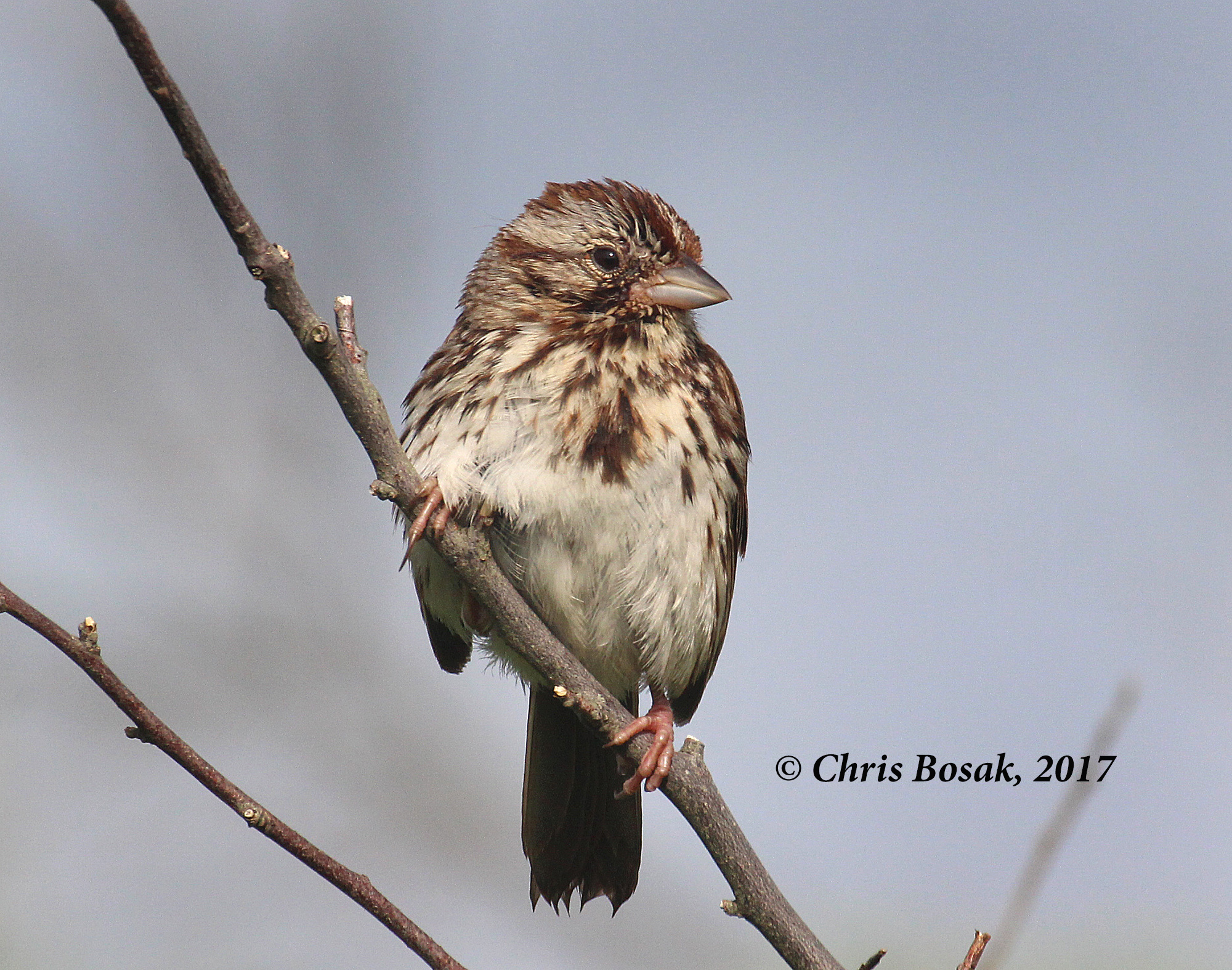
Photo by Chris Bosak A song sparrow perches on a branch at Happy Landings in Brookfield, CT, spring 2017.

Photo by Chris Bosak
A song sparrow perches on a branch at Happy Landings in Brookfield, CT, spring 2017.

As you might suspect from my last post, I have plenty of song sparrow photos. Here are a couple bonus ones: a new one on the top and one I took several years ago below.

Photo by Chris Bosak
A Song Sparrow seen in Selleck’s/Dunlap Woods in Darien, Conn., March 2014.

Song sparrow: Always a willing subject

Photo by Chris Bosak A song sparrow perches on a branch at Happy Landings in Brookfield, CT, spring 2017.

Photo by Chris Bosak
A song sparrow perches on a branch at Happy Landings in Brookfield, CT, spring 2017.

Just like waders (herons and egrets) are good subjects for beginning nature photographers because of their size, abundance and relative approachability, the song sparrow is a good subject for photographers taking that next step into this highly addictive hobby.

Obviously they don’t have the size of waders, presenting more of a challenge to the photographer, but they are abundant and typically make their presence known when they are around. They are quite vocal and curious, often taking a perch near you when you walk through their habitat, which is typically shrubby areas near woods.

They aren’t the most colorful birds out there, but they are handsomely decorated with a variety muted tones.

To identify the song sparrow, look for the spot on the chest. (Not to be confused with the smaller chest spot on the tree sparrow.)


And the answer is …

Female bobolink

Many of you got this one right. I knew you could do it!!

Yes, it is a female bobolink. I had posted a photo of the male a few days ago, so I figured a lot of you would be on to me for this quiz.

Thanks again for supporting http://www.BirdsofNewEngland.com

As a refresher, here’s the male again.

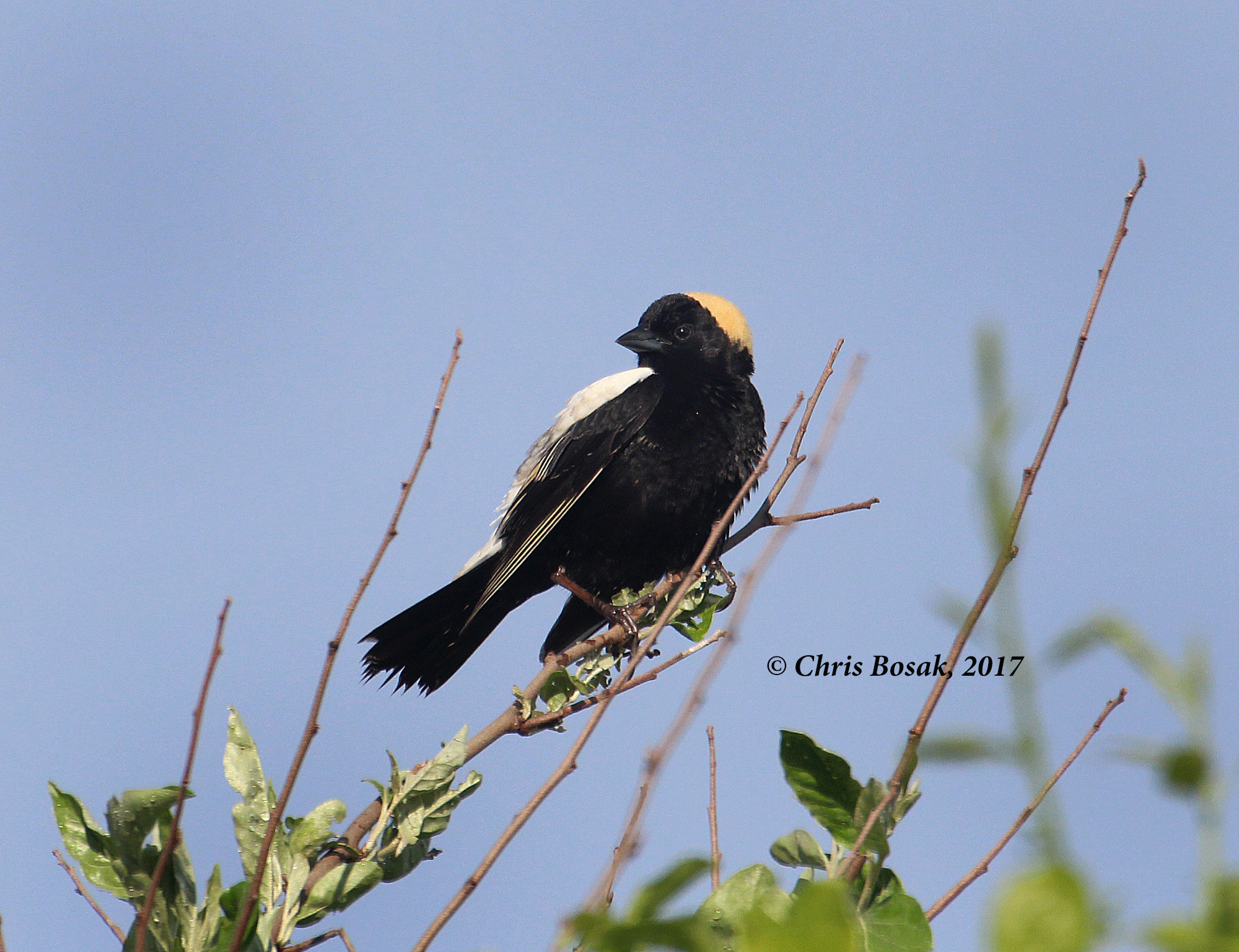
Photo by Chris Bosak A male bobolink perches in a small tree and overlooks the fields at Happy Landings in Brookfield, CT.

Photo by Chris Bosak
A male bobolink perches in a small tree and overlooks the fields at Happy Landings in Brookfield, CT.

Another birding quiz — this one much easier

Name the bird

Here’s another birding quiz for you. This time I’ll take it easy on you considering the difficulty of the last one. So … what bird is this? For a clue, check out my last several posts on this site.

Thanks for playing along and supporting http://www.BirdsofNewEngland.com

And the answer is …

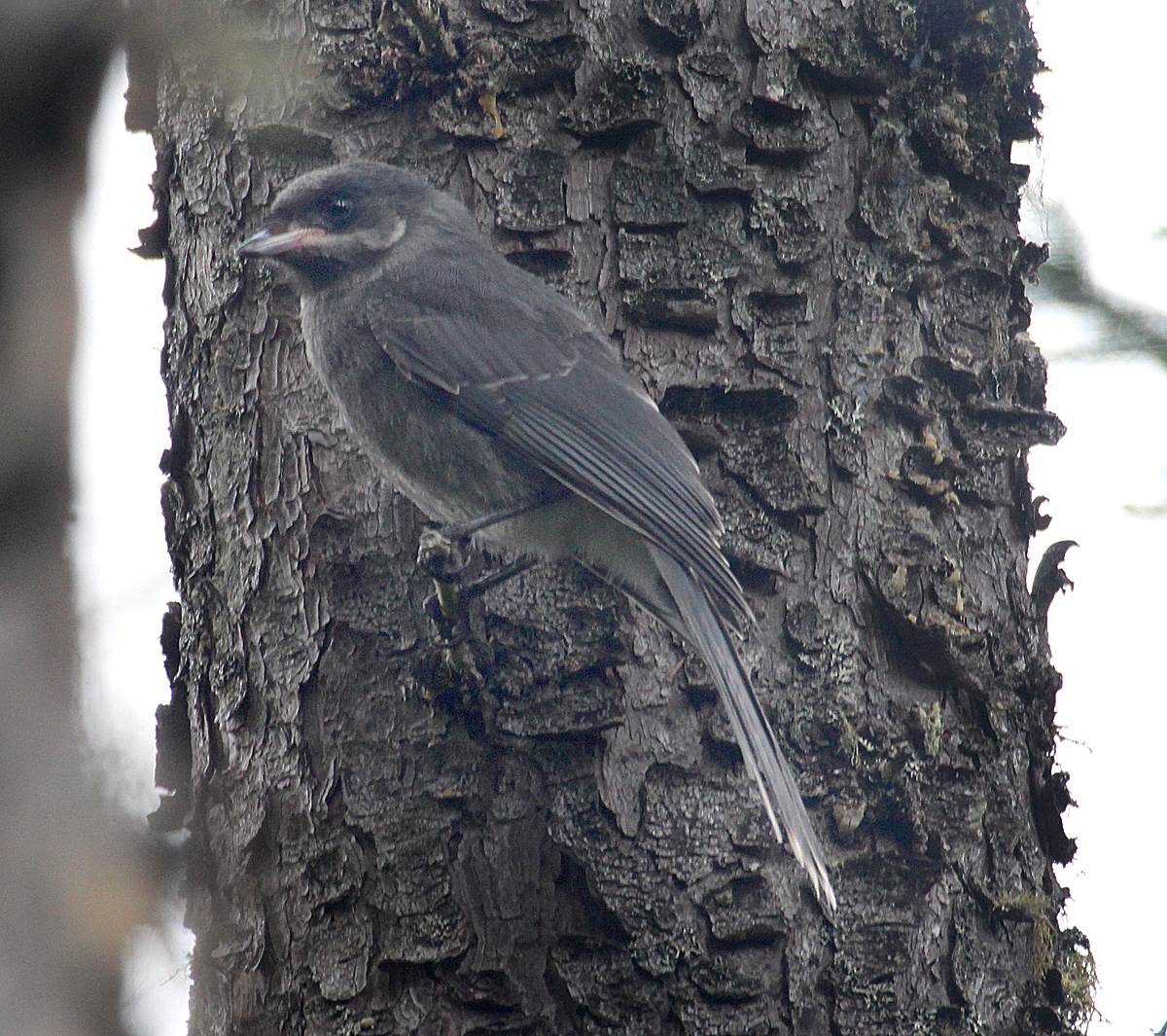
Photo by Chris Bosak

I said it was a tough one, but I couldn’t stump http://www.BirdsofNewEngland.com followers as there were a few correct answers.

The bird in question is an immature Gray Jay. I watched as the parents foraged and this noisy youngster kept asking for more food. Sounds like some human teenagers I know.

A few more hints to the birding quiz

Photo by Chris Bosak

Here are a few more hints for the birding quiz I posted yesterday. I received some great guesses yesterday and some were very close and on the right track (think immature bird). See there’s one hint already.

Another hint: I recently took a quick camping trip to Pittsburg, N.H., up at the northern tip of the state, a few miles from Canada. That’s where I saw the bird.

Also, remember the size of the bird — about the size of a robin, it not a bit bigger. (The adults are indeed bigger than robins, but not greatly so.)

Thanks again for playing along. Answer coming later today.

New birding quiz … this is a tough one

Photo by Chris Bosak

My birding quizzes are sometimes easy, sometimes hard and sometimes in the middle. I would rank this one as a tough one. If I weren’t at the scene I doubt I would have come up with the answer. Oh well, there’s no cost to play, no prizes for winners and no penalty for wrong guesses.

Email, tweet, Facebook or comment here with your guess. Thanks for playing along.

Quick hint: Yes, it is a bird found in New England. Also, to be fair since there is no real size perspective, it is about the size of a robin. I’ll drop more hints today and tomorrow.

Latest For the Birds column: Cedar Waxwings on the scene

Photo by Chris Bosak A cedar waxwing perches on a branch in Brookfield, Conn., spring 2017.

Photo by Chris Bosak
A cedar waxwing perches on a branch in Brookfield, Conn., spring 2017.

Here is the latest For the Birds column, which runs in several newspapers in New England.

There I was, minding my own business photographing a song sparrow in the glowing morning light when out of nowhere a small flock of cedar waxwings appeared on the scene.

Cedar waxwings, in my opinion anyway, are one of the most attractive songbirds we have in New England. They have a nice blend of light browns, tans and grays to go along with their trademark red-tipped wings and yellow-tipped tails. Their thin black eye masks make them look a bit mischievous.

Cedar waxwings are not uncommon, and they can be fairly tame, but quality opportunities to photograph them over the years have been somewhat scarce for me. I see regularly the classic photos of cedar waxwings eating berries. The only time I got a good, close look at waxwings eating berries was years ago on a dark, gloomy day. The photos I took were even more dark and gloomy.

Continue reading

Bobolinks — again at last

Photo by Chris Bosak A male bobolink perches in a small tree and overlooks the fields at Happy Landings in Brookfield, CT.

Photo by Chris Bosak
A male bobolink perches in a small tree and overlooks the fields at Happy Landings in Brookfield, CT.

It’s been a while since I’ve taken some decent Bobolink photos. That is partly because Bobolinks, like many birds and especially birds that need large fields or meadows to nest, are in decline. It’s also because I hadn’t visited any of those habitats recently.

But Happy Landings in Brookfield, thankfully. offers acres of field habitat and Bobolinks and other birds love it. So does this birdwatcher.

More on Bobolinks coming up.