For the Birds: Bobolinks never fail to provide a thrill

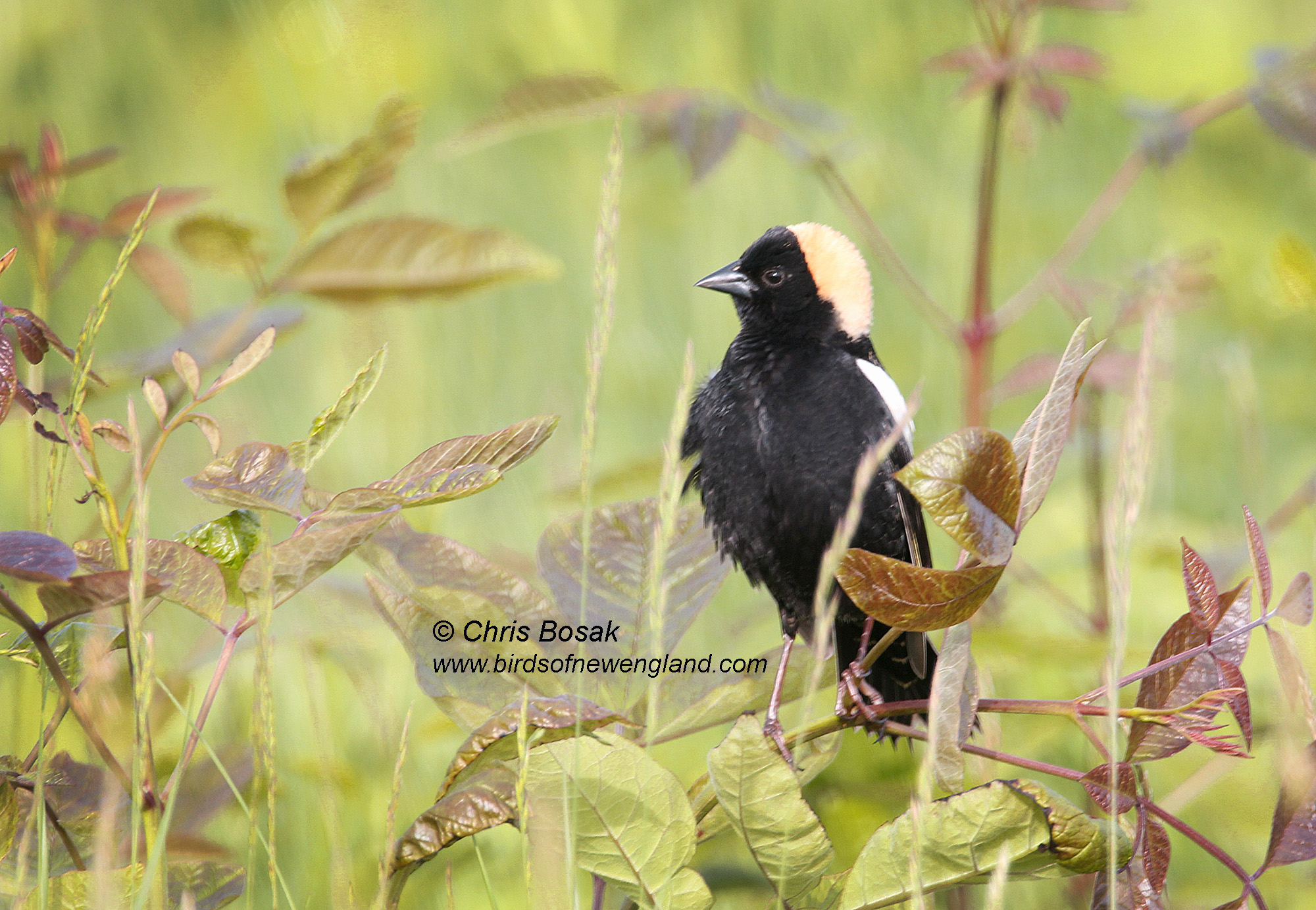
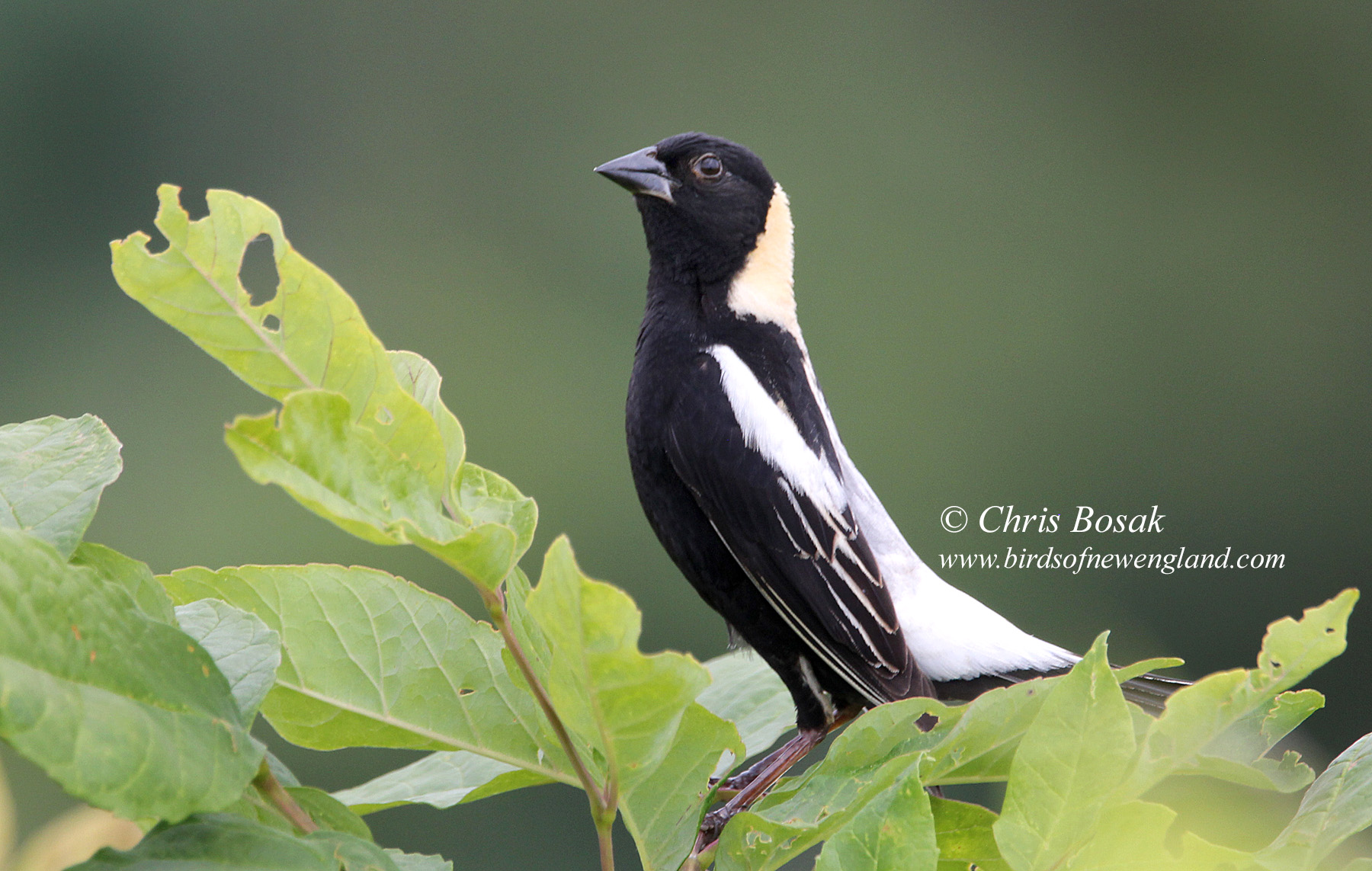
Photo by Chris Bosak – A male bobolink at Happy Landings in Brookfield, CT, spring 2023.

I went to my usual bobolink hot spot in southern Connecticut for my annual photo shoot with the enchanting birds and, as usual, it was an enriching experience.

Bobolinks grace our fields and meadows during the spring and summer months and are as interesting to listen to as they are to look at. I can usually spot one almost right away keeping watch on a tall blade of wild grass. Shortly after that, I hear a few males singing their bubbly, tinkling song as they fly in circles above the meadow. To me, their song sounds like a video game from the 1980s.

Bobolinks are members of the blackbird family. They require field or meadow habitat to breed. Unfortunately, that habitat is disappearing and the habitat that does remain is often tricky to maintain for bobolinks because of agricultural purposes. Bobolinks build a cup-shaped nest within the tall grasses. It is recommended that farmers do not mow fields with nesting bobolinks until after the young birds have fledged. Mid-July or even early August is usually a safe time.

According to the Cornell Lab of Ornithology, the bobolink population has declined cumulatively since 1966 by about 56 percent. They rank 14 out of 20 on the Continental Concern Score. That puts them on the Yellow Watch list, which means they are at risk of extinction without conservation actions.

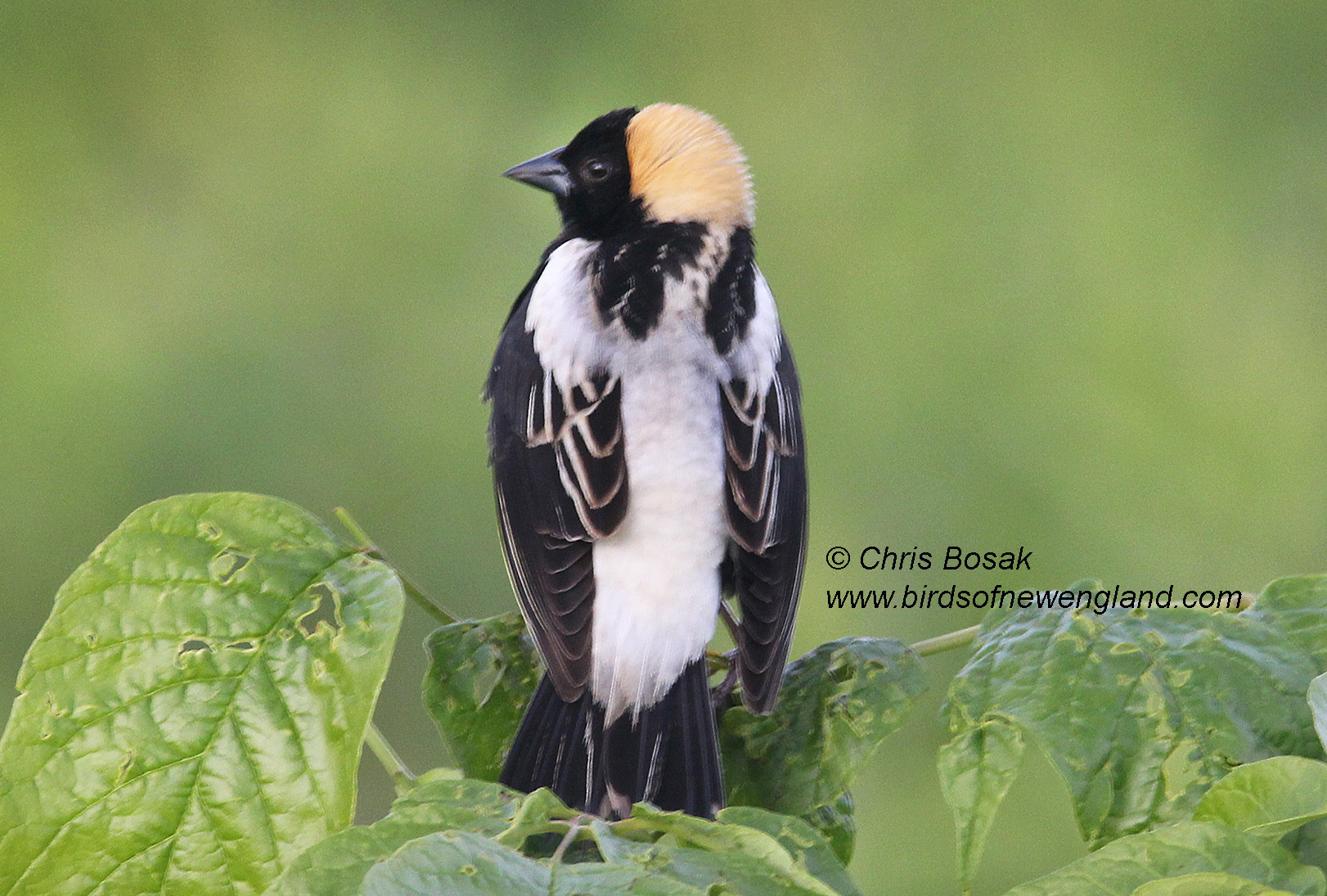
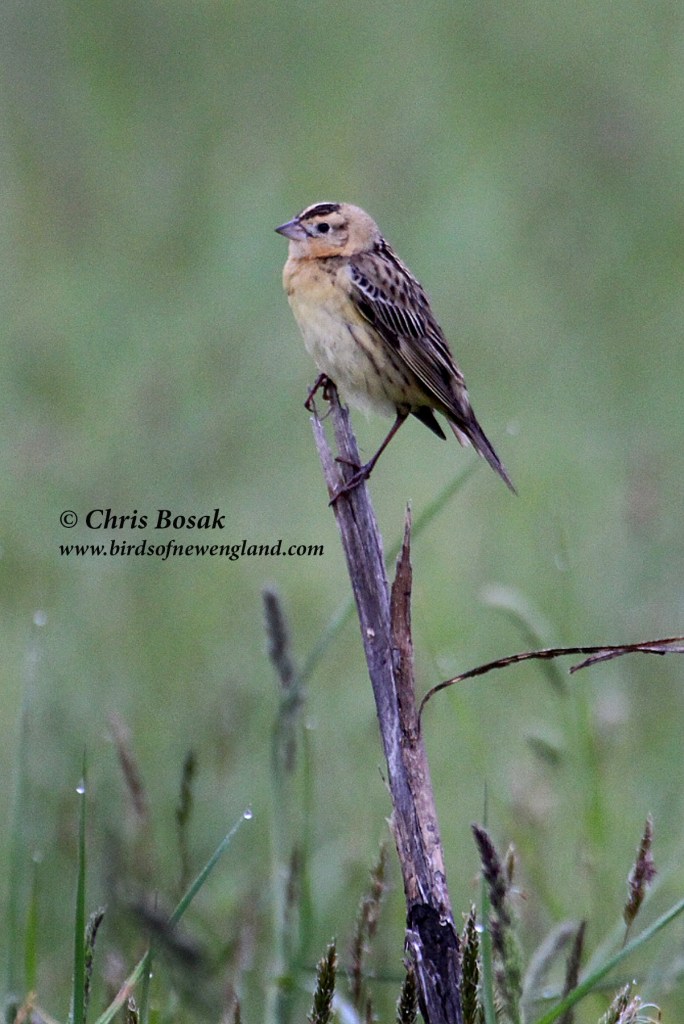
It would be a shame to lose bobolinks, even years and years from now, as they are handsome and charismatic birds. Males are mostly black with white backs, rumps and upper wing feathers. The back of their head and neck are dull yellow. Like many species, females are dull in color to protect them and their nests. Females are still lookers with yellowish heads, buffy brown plumage underneath and streaked backs.

Continue reading
For the Birds: Bobolinks never fail to entertain

I went to my usual bobolink hot spot in southern Connecticut for my annual photo shoot with the enchanting birds and, as usual, it was an enriching experience.

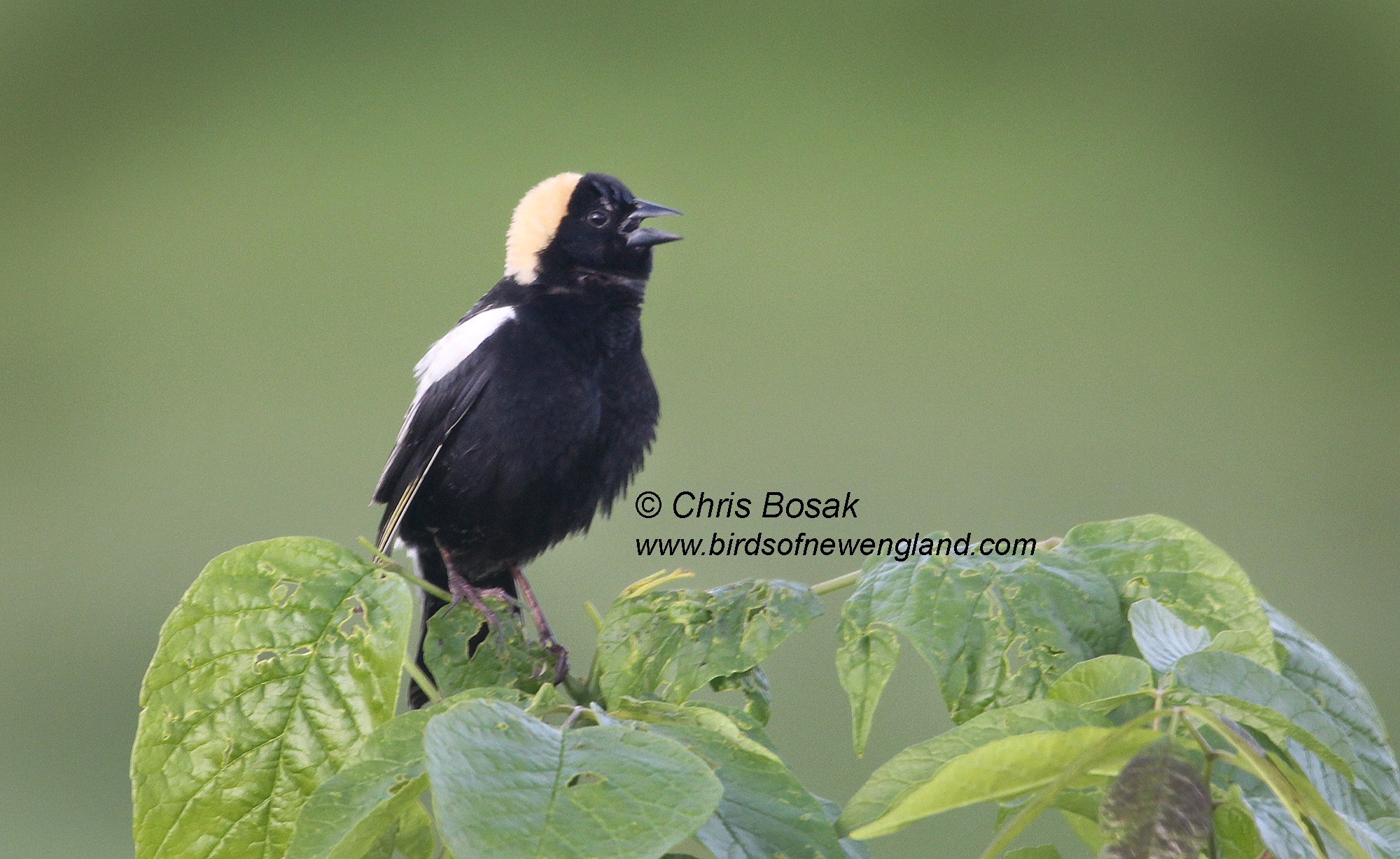
Bobolinks grace our fields and meadows during the spring and summer months and are as interesting to listen to as they are to look at. I can usually spot one almost right away keeping watch on a tall blade of wild grass. Shortly after that, I hear a few males singing their bubbly, tinkling song as they fly in circles above the meadow. To me, their song sounds like a video game from the 1980s.

Continue reading

For the Birds: Wrens, bobolinks and cranes (yes, cranes)

Photo by Chris Bosak – Bobolink in New England field.

House wrens and American goldfinches have been my main source of avian entertainment this past week.

Both of these birds nest, on average, later than most other songbirds. While birds such as phoebes and robins get started in March or April, house wrens and goldfinches start in late spring/early summer. I hear the disjointed, but still rather cheerful, song of the house wren every time I walk out my door. The goldfinches are more quiet, but highly visible in their bright yellow plumage going back and forth to the nest site.

Goldfinches feed their babies a vegetarian/seed diet so the early insect hatch that prompts so many other songbirds to nest is of no practical to goldfinches. Rather, they must wait until flowers to bloom and go to seed before raising their young. Their primary diet consists of milkweed, thistle and other “weeds.”

Continue reading

One more bobolink photo

Here’s one more bobolink photo as a follow-up to my last post.

A walk among bobolinks

Photo by Chris Bosak — Bobolink in New England, May 2022.

One of the highlights of the post-spring migration rush in New England is to visit a field in New England where bobolinks nest. Luckily, I have one fairly close to where I live — Happy Landings in Brookfield, Connecticut. The bobolinks’ bubbly song (which reminds me of R2-D2) fills the air as red-winged blackbirds and yellow warblers provide an apt auditory background. Here are a few shots of a recent walk in the field.

Photo by Chris Bosak — Bobolink in New England, May 2022.

Photo by Chris Bosak — Bobolink in New England, May 2022.

Photo by Chris Bosak — Bobolink in New England, May 2022.

More dimorphism, this time with bobolinks

Photo by Chris Bosak
A female bobolink perches on a stalk in New England, May 2020.

A Day on Merganser Lake

Yesterday, I showed a male and female American redstart as an example of sexual dimorphism (male and female look different.) Today, here’s the bobolink, a beloved bird of our fields. Another good example of dimorphism. Click here for yesterday’s post.

Here’s the male …

Photo by Chris Bosak
A male bobolink perches on a branch in Brookfield, CT, May 2019.
Photo by Chris Bosak A male bobolink perches in a small tree and overlooks the fields at Happy Landings in Brookfield, CT.