For the Birds: Inside the hawkwatch

Photo by Chris Bosak
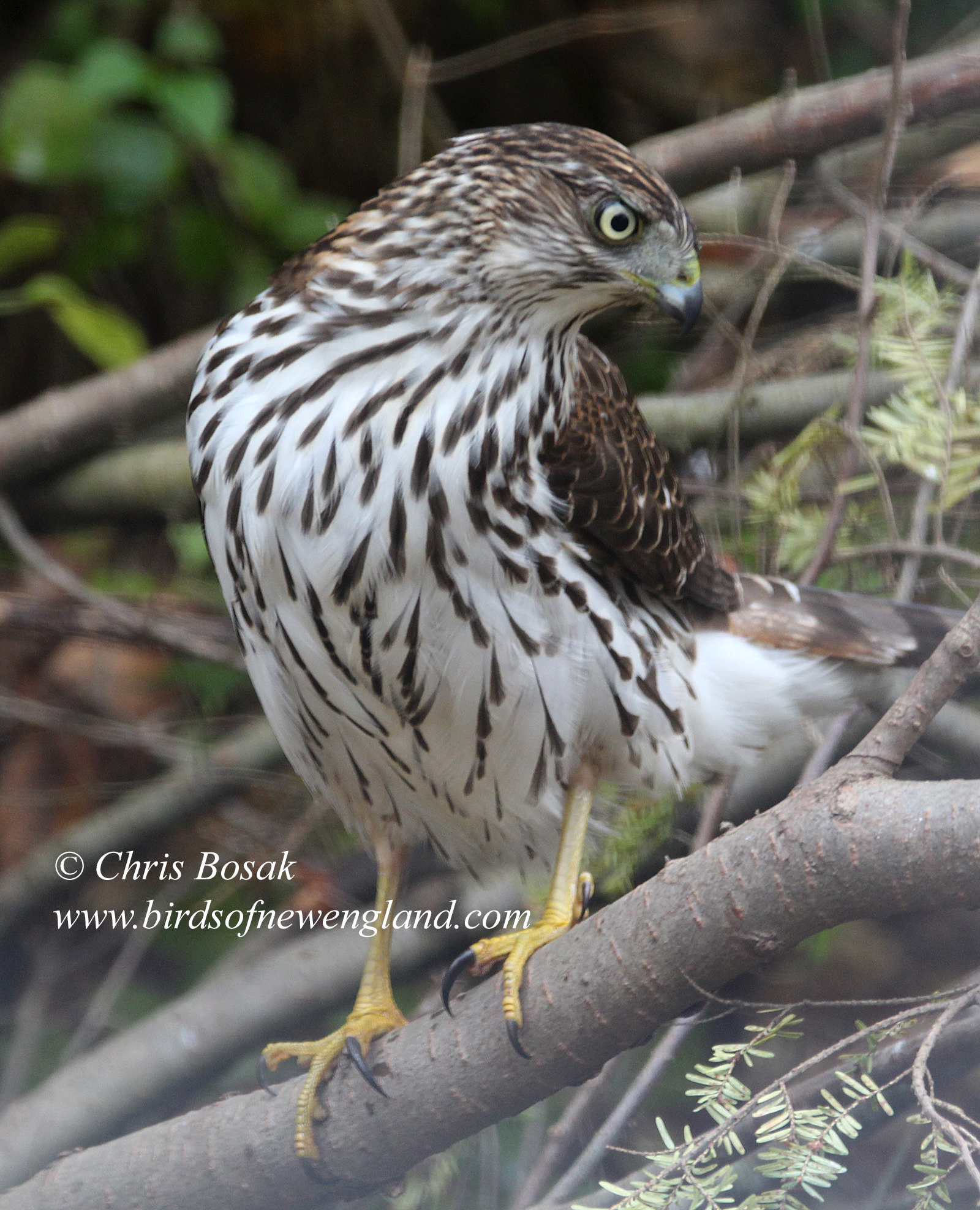
Young Cooper’s hawk in New England.

Last week’s For the Birds column highlighted the results of this year’s fall hawkwatches with a particular focus on Pack Monadnock in Peterborough. The column was heavily focused on data and the number of birds counted.

A number of questions came up in my head as I looked at the results and compiled the data. Not one to let questions go unanswered in my head, I turned to the experts for some explanations.

Specifically, I had an enjoyable chat with Phil and Julie Brown of Hancock, N.H. Phil is the Bird Conservation Director and Land Specialist at the Harris Center for Conservation Education. His wife, Julie, is the Raptor Migration and Program Director of the Hawk Migration Association.

The sheer number of broad-winged hawks was the main thing that jumped out at me as I looked at the data last week. Nearly 6,000 of the 8,500 hawks counted during the 2025 fall migration at Pack Monadnock were broad-winged hawks. To me, it was a bit surprising, as I see red-tailed hawks and red-shouldered hawks all the time, but I rarely see broad-winged hawks.

As a quick reminder, “hawkwatch” in this sense includes eagles, ospreys, falcons and vultures as well.

Julie and Phil explained that broad-winged hawks tend to be more elusive during the breeding season and that they more readily form flocks for migration than other raptors. While most hawks pass over the mountain as one or two birds at a time, broad-winged hawks pass over in huge numbers on certain days.

“They are responsible for a lot of the magic of hawkwatches,” Julie said. “Many people say broad-winged hawks are what got them hooked on hawkwatches.”

While the broad-winged hawk migration is truly a spectacle, with as many as 3,000 or more seen on a single day, it is very time specific. September 14-20 is the sweet spot when nearly all of the broad-wingeds pass through. Phil said many people take the entire week off from work to not miss the right day.

Mark your calendars for the middle of next September and keep your eyes out for a forecast that calls for light or variable winds from the north (or northeast or northwest), particularly following a cold front.

As remarkable as 3,000 birds in a single day is, Julie pointed out that critical hawkwatching sites such as Veracruz, Mexico, can get hundreds of thousands of broad-winged hawks in a single day.

I had a similar question about sharp-shinned and Cooper’s hawks, smallish but fierce hawks that often terrorize birdfeeders. While we tend to see more Cooper’s hawks in our daily lives, sharp-shinned hawks far outnumber Cooper’s hawks on counts. Cooper’s hawks have adapted much better to suburban and urban areas, and many overwinter in New England.

Differentiating between these accipiters often leads to debate, as the species are very similar in appearance. Cooper’s hawks are generally larger, but size is not a reliable determining factor. Even experts debate which bird they are looking at.

Seeing one of these hawks from a distance during a hawkwatch makes for an easier identification, Phil said, as their wing-flapping cadence and other behaviors are reliable differentiators.

Despite the seemingly high numbers of sharp-shinned hawks that are counted on hawkwatches, the Browns said the species is in decline. Phil said sharp-shinned hawks, goshawks, American kestrels and northern harriers do not get the attention they deserve for their decline.

Julie said rodenticides are a major factor in the decline of many hawks, and wildlife rehabilitators are often overwhelmed by the number of poisoned hawks that are brought in. Many people who use rodenticides do not realize the consequences, she said, and education is important in reversing the trend.

“It’s so preventable,” she said.

To end on a positive note (it is the holiday season, after all), the Browns actually met during a hawkwatch on Pack Monadnock in 2006. Julie was a seasonal hawk counter for New Hampshire Audubon, and Phil worked for New Hampshire Audubon at the time. They met on the mountain and got to talking about their love of nature and the boreal forest. Their main goal that day was to see a golden eagle, and sure enough, one of the magnificent birds flew over.

Their wedding bands are adorned with etchings of a golden eagle and the profile of Pack Monadnock.

For the Birds: Hawkwatching season in New England

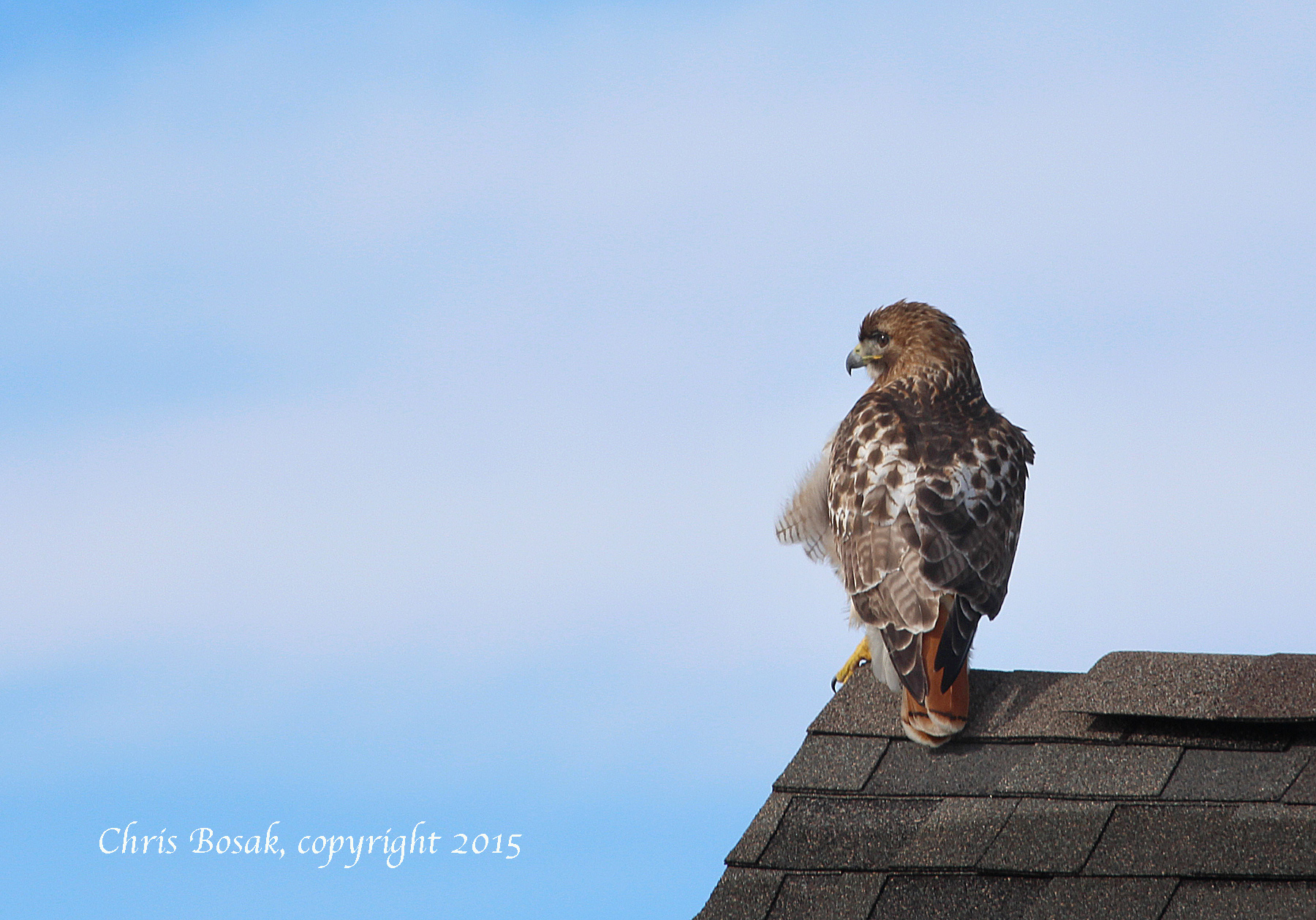
Photo by Chris Bosak A Red-tailed hawk at Weed Beach in Darien, Conn., January 2015.

Photo by Chris Bosak
A Red-tailed hawk at Weed Beach in Darien, Conn., January 2015.

Here’s the latest For the Birds column, which runs in several New England newspapers.

The seasons are changing, and there’s a lot going on in the birding world.

Warblers and other songbirds are migrating south. Shorebirds — many species of which have long migrated already — continue to move through New England. Other small winged creatures — monarch butterflies — are also seen more often now as they prepare for their generational migration.

On the ponds, the waterfowl migration hasn’t started with verve yet, but wood ducks, which spend much of the summer hiding out, are more often seen and heard in the fall. At the same time, herons and egrets are still with us in large numbers, and feeder birds continue to keep us company in our backyards. 

Yes, a lot is going on in early fall as we birdwatchers start to shift from a summer frame of mind to a winter one.

With all that’s going on, one type of bird still manages to take center stage in September and October: hawks.

Hawkwatches are the primary destination for birdwatchers this time of year as birds of prey by the thousands ride the wind south. Pick the right day with the ideal weather conditions, and a birdwatcher may see hundreds of hawks, falcons, eagles and vultures soaring overhead.

Continue reading