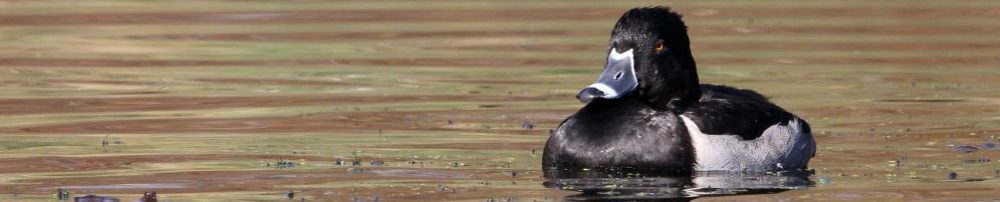

Photo by Chris Bosak
A Horned Grebe swims in Long Island Sound off the coast of Darien, Conn., Jan. 2015.
I mentioned in my last post about seeing a Horned Grebe on my quick trip to the beach the other day. Here’s a photo of the grebe I saw the other day in Long Island Sound from Weed Beach in Darien, Conn. Zoom in and check out its really cool red eye.
There are seven types of grebes in the U.S. and four are regularly seen in New England, although mostly only in the winter in their nonbreeding plumage _ so don’t expect to see a red neck on the Red-necked Grebe. The Pied-billed Grebe is the one most commonly seen in New England, while the Red-necked, Horned and Eared Grebes make occasional visits. The others _ Least, Western and Clark’s _ are not likely to be found in New England, but that doesn’t mean they never show up here.
The grebes we see here in the winter are in their much duller nonbreeding plumage, which can make identification tricky. Loons are another water bird that look much more dull in the winter. Loons are larger and stockier than grebes _ at least the grebes we see in New England.
I like talking about grebes because I get to say the word “grebe” over and over. It’s just one of those words that’s fun say out loud. Anyway, happy birding out there.
 Birds of New England.com