For the Birds: What’s in a (bird) name?

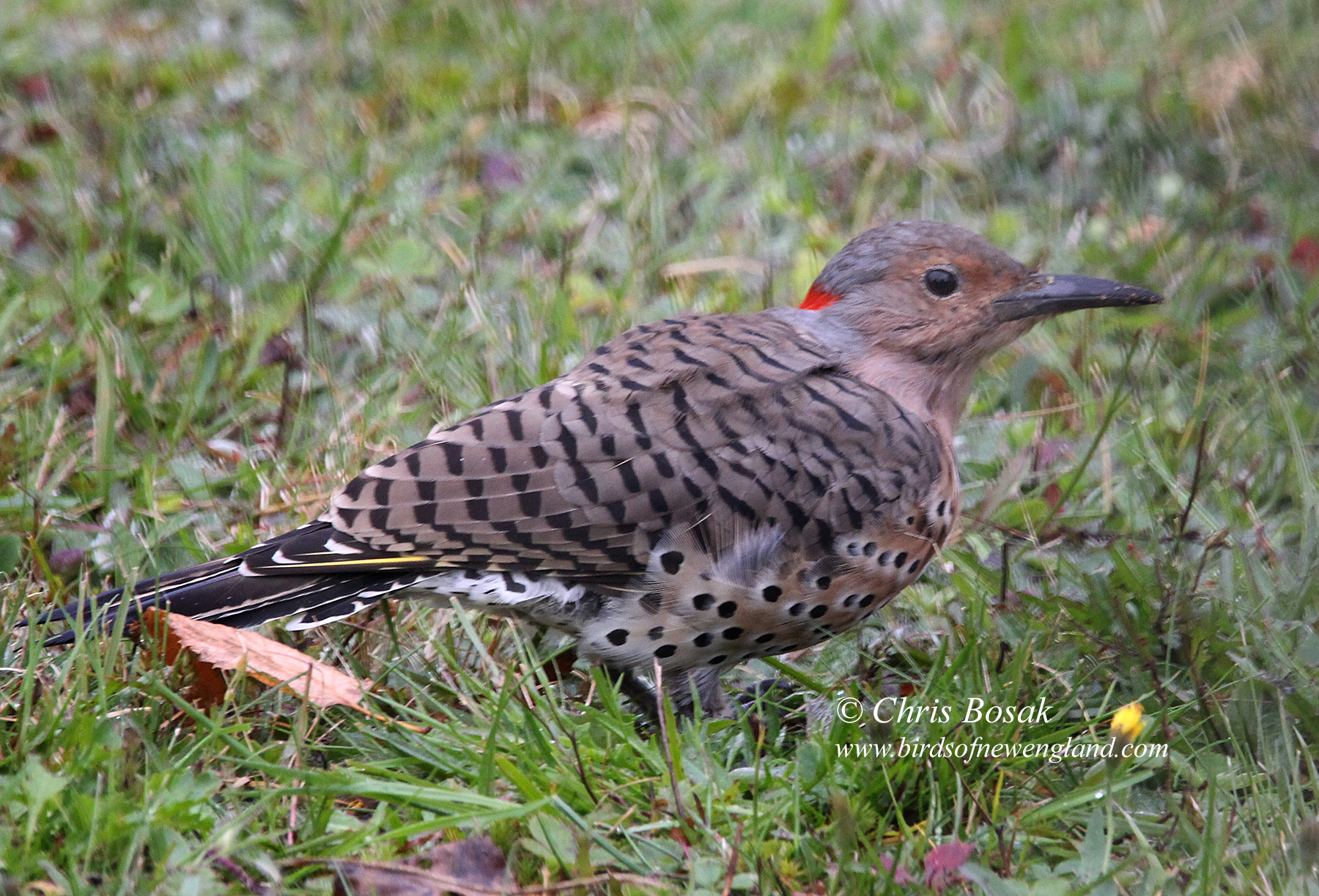
Photo by Chris Bosak – A northern flicker (yellow-shafted flicker) preens in New England.

Some bird names are spot on. Yellow-rumped warblers have yellow rumps as an obvious field mark. Mourning doves have a mournful-sounding call. Bluebirds are, well, blue birds.

Some bird names do not seem to make sense. A red belly is hardly a red-bellied woodpecker’s most distinctive field mark. Yes, their bellies are red and yes, the name red-headed woodpecker is already taken by a more deserving species, but still. American robins are actually thrushes, and most warblers do not warble.

Then there are bird names that make sense only after looking up the meaning of a few words. Semipalmated plovers and semipalmated sandpipers are so named because there is partial webbing between their toes. The zoological definition of palmated, according to dictionary.com, is “web-footed.” I was several years into my birding hobby before I learned this. I don’t think I gave it a second thought before I heard it for the first time. I just accepted that as the name and moved on.

Continue reading
Other birds from my Maryland walk

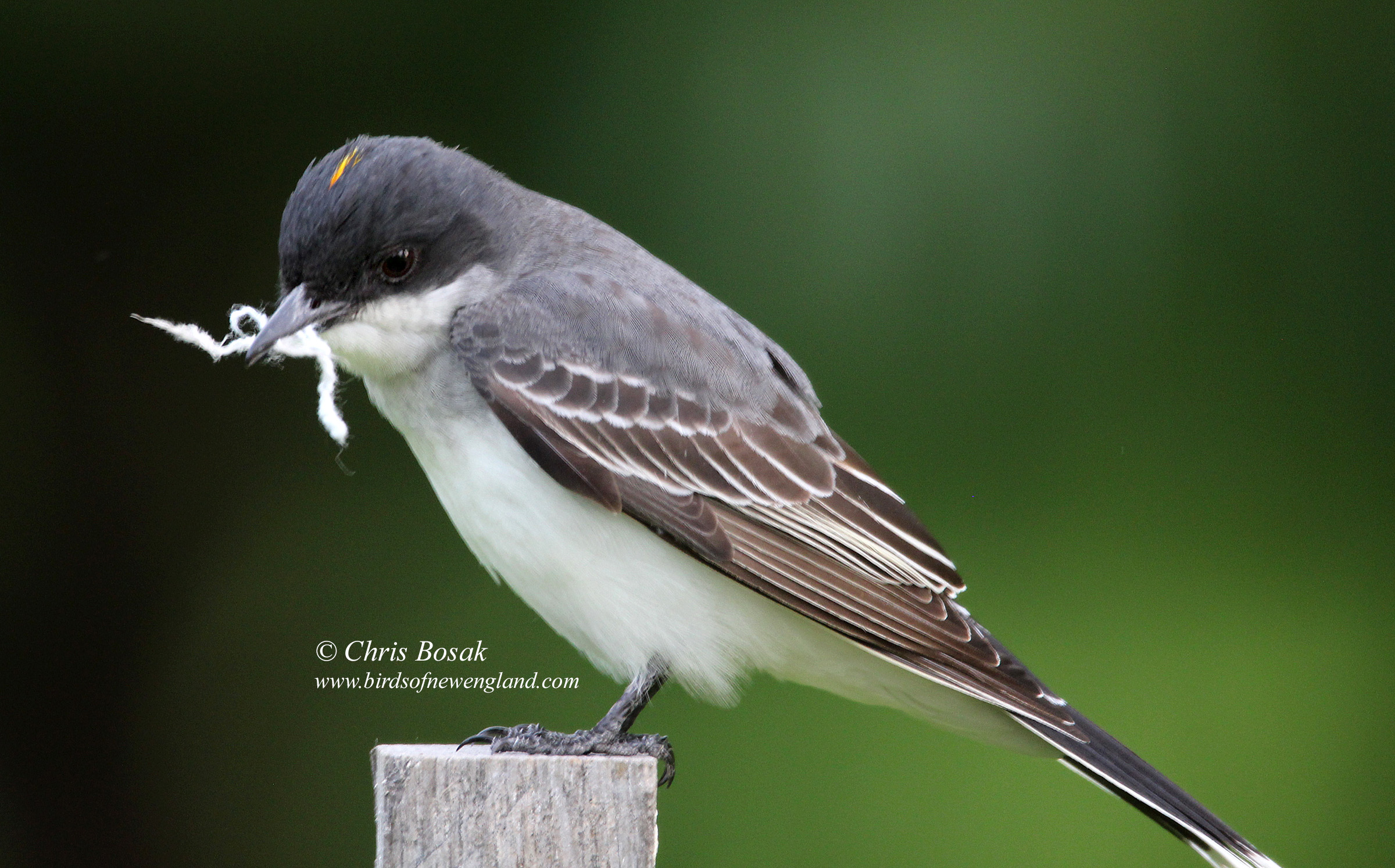
Photo by Chris Bosak An eastern kingbird gathers nesting material in Patterson Park in Baltimore in spring 2023.

The other day, I posted a few photos of a green heron I saw at Patterson Park in Baltimore while I was visiting my son in school. Here are a few of the other birds I saw during the walk. Here’s the link to the green heron if you missed it.

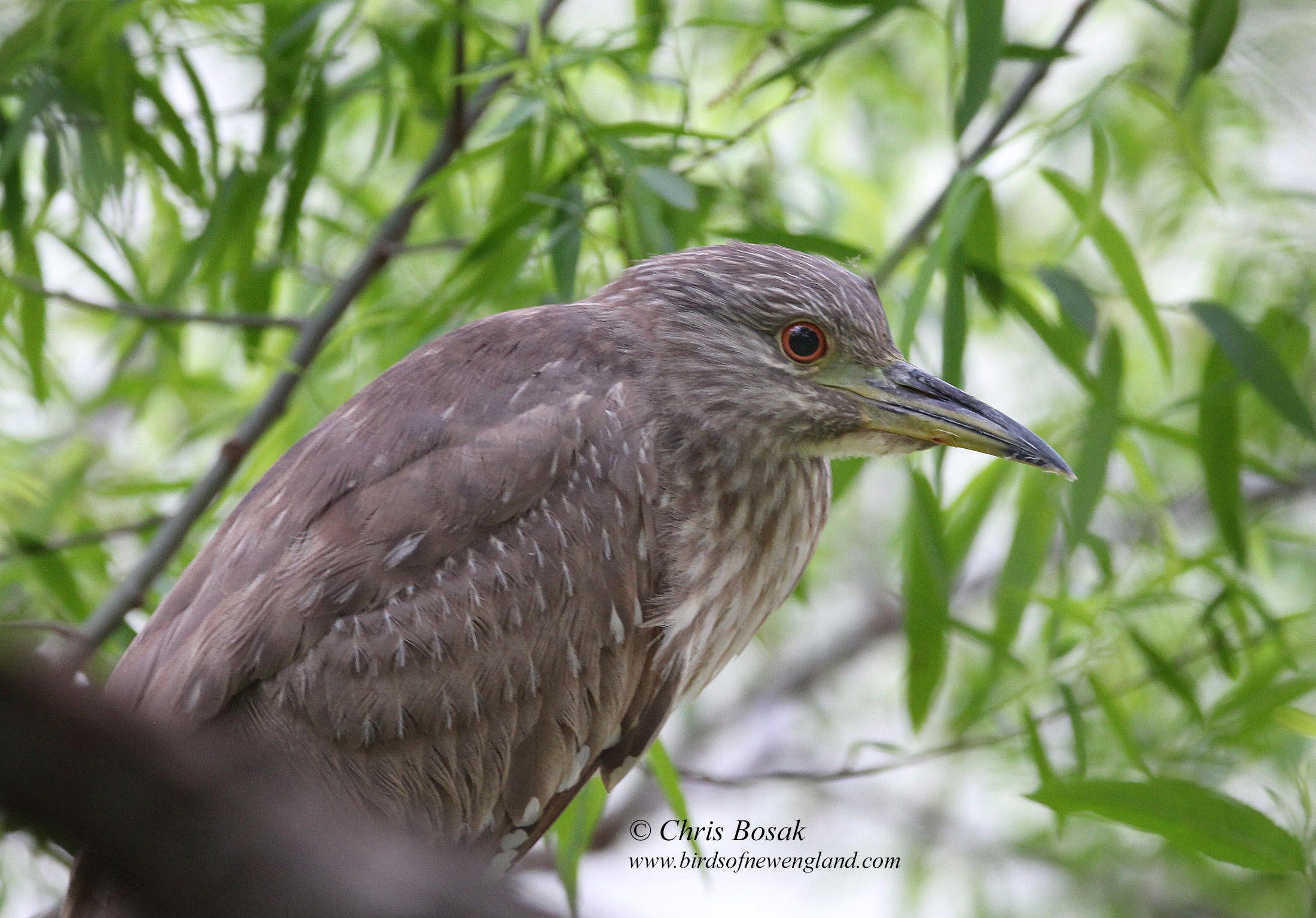
Photo by Chris Bosak An immature black-crowned night heron at Patterson Park in Baltimore, spring 2023.
Photo by Chris Bosak A northern flicker forages for ants on the ground at Patterson Park in Baltimore, spring 2023.
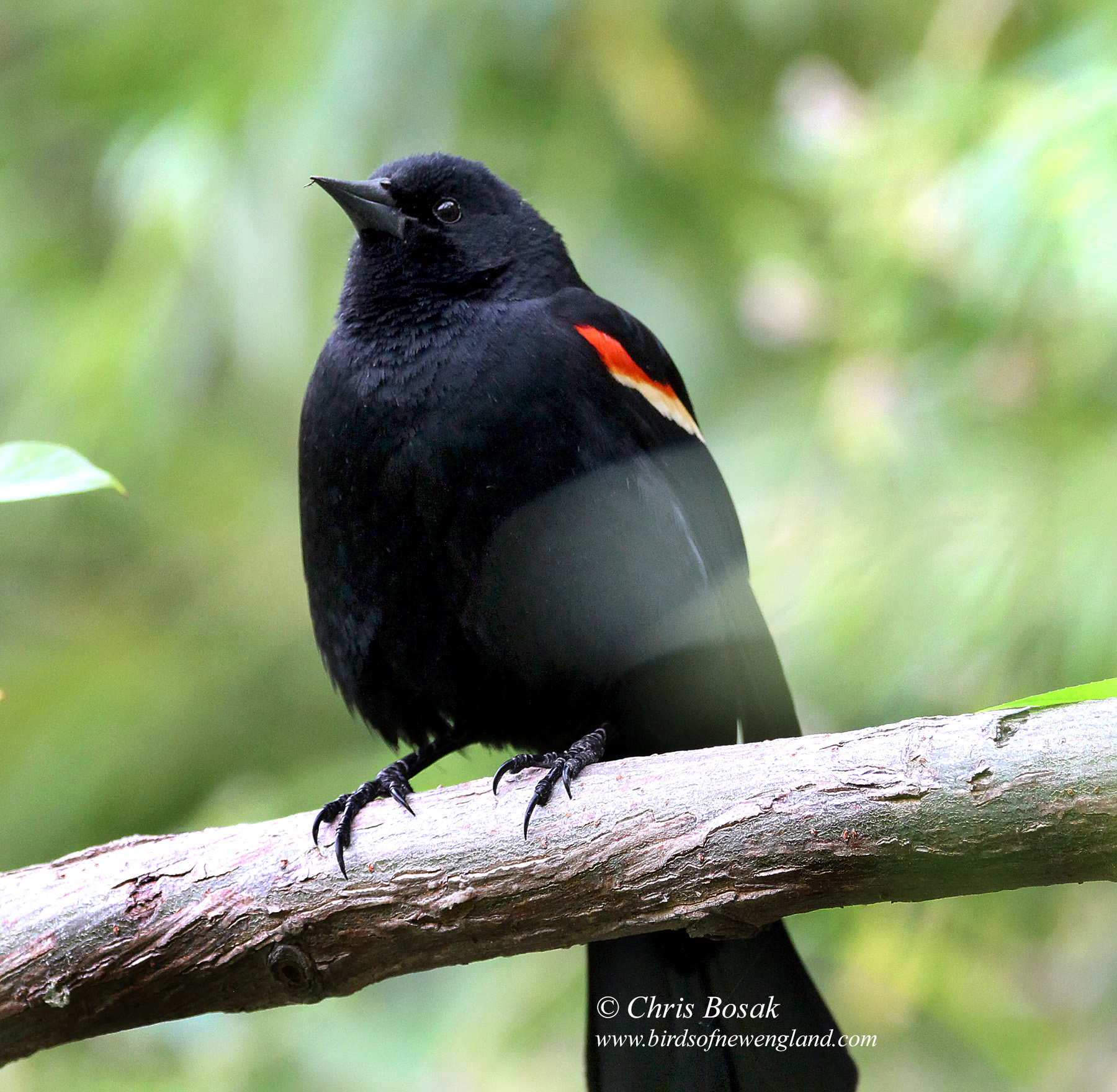
Photo by Chris Bosak – Red-winged blackbird.

For the Birds: Flickers everywhere up north

My destination was the northern part of Maine. I’m talking way north. Get to Baxter State Park and keep going for several more hours.

I drove pretty much through the night to get there. I took a few half-hour breaks to sleep and then continued on my way. I have been to northern New Hampshire dozens of times, and I have been to the middle of Maine many times. I’ve always wanted to see what Aroostook County was all about so I took the opportunity to head up there and finally see for myself.

I settled at the border town of Fort Kent where only the St. John River separates the U.S. from Canada. 

Wildlife, of course, was the driving force behind the decision to drive up there. The boreal forest, to me anyway, is a magical place filled with so many interesting creatures. Moose are my favorite creatures, but things like lynx, loons, eagles, grouse, boreal chickadees, Canada jays, and other specialty species unique through the habitat are also a draw.

Continue reading

Another of my favorite woodpeckers

I posted last week about seeing a family of pileated woodpeckers looking for insects in my backyard. Also last week, I had a chance encounter with another one of my favorite woodpecker species: the northern flicker.

I was drawn to the backyard as I heard a flicker noisily issuing its alarm call over and over. It turns out, a cat was walking through the yard and several birds were scolding the feline. The flicker, however, was by far the loudest and most agitated. There were most likely young flickers around but I didn’t see them.

Flickers are handsome birds with an interesting assortment of colors and decorations. Note the bib under the neck and spots on the chest and belly. The bird shown in the photographs is a female. Males have a black “mustache.”

The northern flicker is made up of two subspecies: yellow-shafted flicker and red-shafted flicker, which were once considered two separate species. Here in New England, we have the yellow-shafted variety. The name comes from the yellow feathers on the underside of the tail and wings.