For the Birds: Winter birding surprises

Photo by Chris Bosak
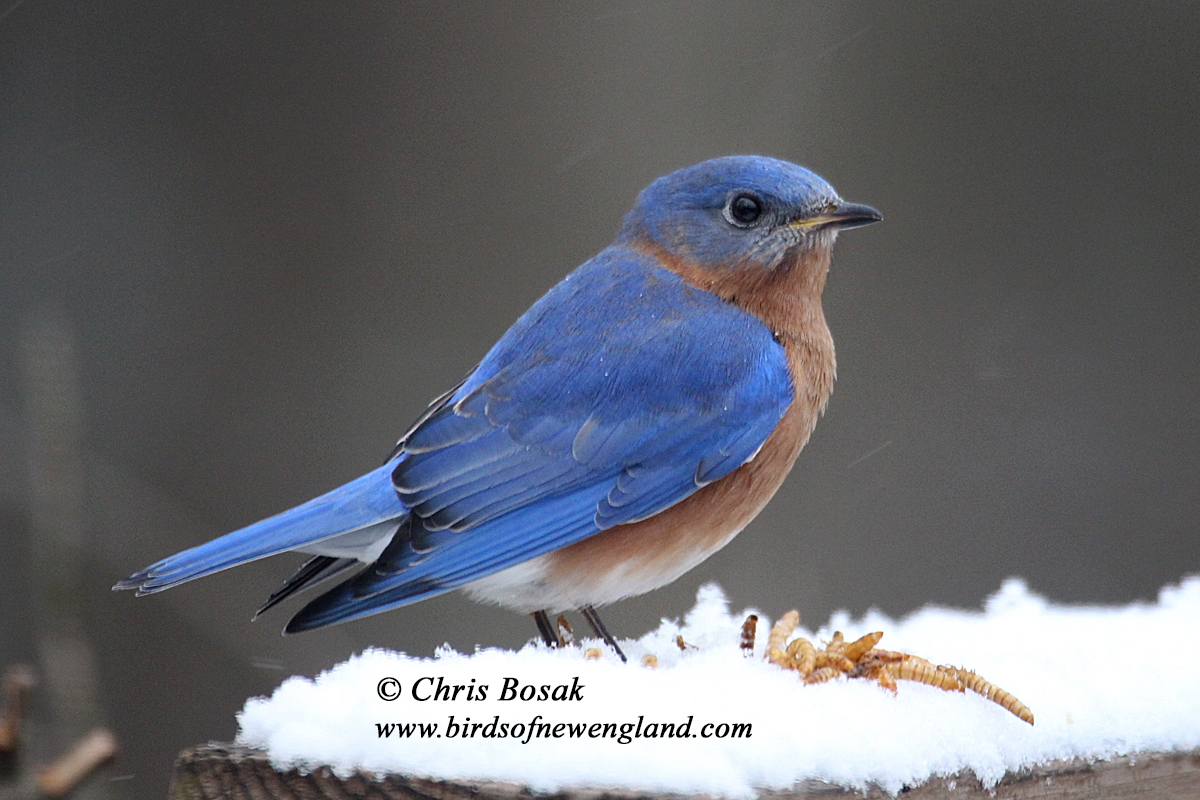
An eastern bluebird braves a New England winter and visit a backyard for mealworms, winter 2020.

The calendar may not show it yet, but in the New England bird world, we’ve officially entered what could be called winter birding season. The vast majority of southbound migrants have left, and the birds we get to enjoy for the next couple of months are either trusty year-round residents or northern visitors who have traveled as far south as they intend to go.

Winter is, of course, the prime time when juncos and white-throated sparrows are found in high numbers. My personal favorite part of winter birdwatching is tracking down different species of ducks. That is, if you can find some open water.

Beyond the usual suspects, like chickadees, cardinals, titmice and nuthatches, there are some other fascinating aspects of winter birdwatching. One is the possibility of a finch irruption. I wrote in a previous column about the winter finch forecast and how it could be a strong year for birds like pine siskins and redpolls to be on the move.

An irruption is when species that aren’t typically seen here, or only a few of them, suddenly appear in certain areas in higher-than-usual numbers. Lately, I’ve been seeing social media posts and hearing other reports about evening grosbeak sightings, so be sure to keep an eye out for those striking yellow birds.

Winter birding also means seeing birds that may be unexpected in the cold months. American robins are known as harbingers of spring, but many stay with us all winter in New England. They may not be the same robins that nested with us in spring and summer, but rather ones that nested farther north and have come here for a “warm” winter. Robins tend to be seen in large flocks during the winter, particularly when there are berries to be had.

Cedar waxwings are another bird species not always thought of when it comes to winter birding in New England, but it’s always a treat when you stumble across a flock. Keep an eye on any berry sources, as they give you your best shot at finding waxwings.

Similarly, eastern bluebirds are often found in winter, though many people don’t think of them as cold-weather birds. While some do migrate, others will remain with us all the way through spring.

For species like the bluebird, robin, and even some great blue herons and hawks, it comes down to the lesser of two risky choices. Stick out a New England winter, enduring tough conditions with the possibility of freezing or starving, or fly south and risk the innumerable dangers involved with migration.

I’m thankful for the ones that choose to stick around and keep us company throughout the long months here in New England. Maintaining feeders is one way to help birds make it through the winter. Cleaning out and leaving up birdhouses is another way to help out, as some birds, like chickadees, will huddle inside the shelter away from the wind and other elements. Keeping a heated birdbath is also an excellent way to help out and see birds during the winter.

Birding is rarely cut and dry. Do bluebirds migrate? Yes. Do they all migrate? No. There are many exceptions to a lot of long-held beliefs about birds. The hobby is full of surprises, even when the winter landscape looks so bleak and lifeless.

For the Birds: Winter’s wonderful flurries

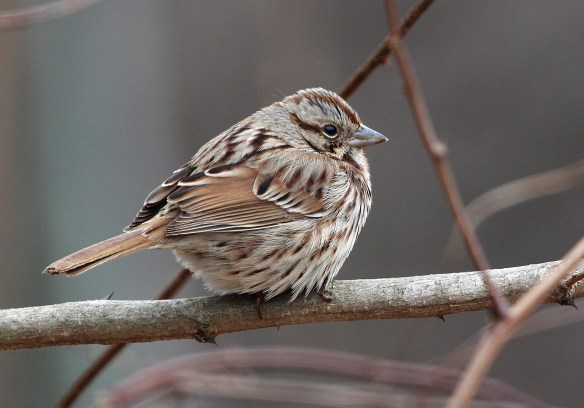
Photo by Chris Bosak A Song Sparrow seen in Selleck’s/Dunlap Woods in Darien, Conn., March 2014.

You always hope for a storm, but sometimes all you get is a flurry or two.

I’m not talking about a high school student who didn’t study for a test and is praying for a snow day. I’m talking about birding, of course.

The other day I visited a preserve in southern New England for the first time. I was struck immediately by the vast fields and several small wooded areas that looked to me like islands among the grassy expanse. My first thought was that this place is probably hopping with bobolinks, bluebirds and all sorts of other birds in the spring and summer.

But this wasn’t spring or summer. It was a dreary, raw winter day and the grass was short and brownish-yellow. Lifeless. The wooded islands were void of leaves and you could see the gray sky through the tangle of trunks and branches.

My plan was to walk along the edge of the wooded areas and see what was lurking in there. The anticipation of the new walk at a new place faded over time as close to an hour had passed and a few crows cawing in the distance was the only sign of birdlife I had noticed. I wanted to zero in on the crows to see if they were mobbing a hawk, owl or some other intruder. I couldn’t even find the crows in the sky, let alone zero in on them.

The anticipation may have faded, but my appreciation of the walk remained high. I spent much of 2019 battling off-again, on-again tendinitis in my right foot and hobbling around by putting pressure on the part of my foot that hurt the least. Walks on uneven terrain were out of the question. To be able to walk pain-free is something I’ll never take for granted again.

So I was enjoying the walk, birds or not. I made plans in my mind where Continue reading