For the Birds: More winter bird sightings

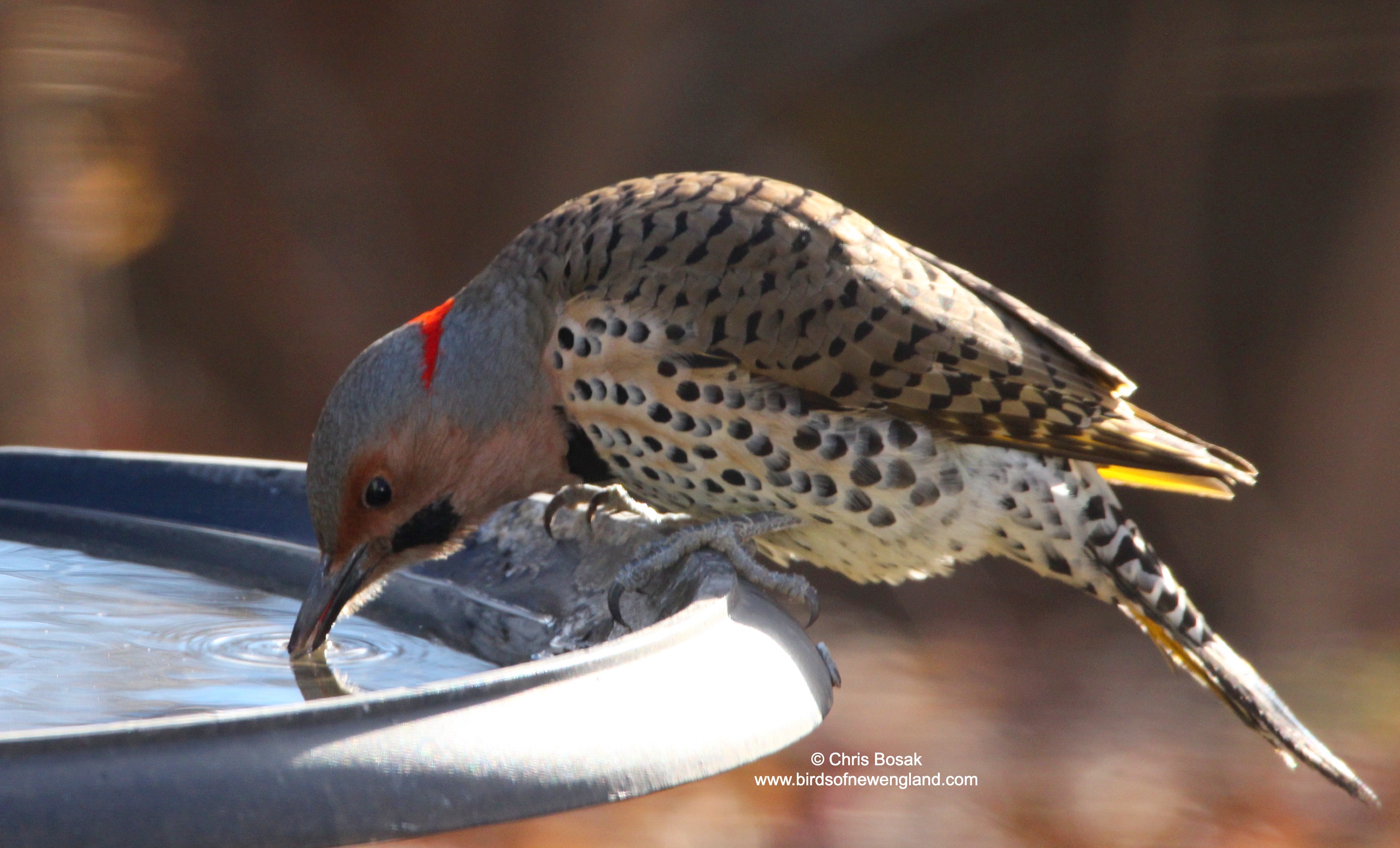
Photo by Chris Bosak
A northern flicker drinks from a birdbath in New England, December 2025.

Last week, I wrote about the evening grosbeak and the various sightings that have occurred throughout New England.

This week, I want to turn the attention to some of the other sightings and questions that have reached my inbox recently. I appreciate hearing from others and what they are seeing at their feeders and in the wild.

Norma from Spofford reported an unusual sighting of a northern flicker sitting on her deck railing. She didn’t see the woodpecker eat from her feeder offerings of sunflower seeds, suet nuggets or mealworms, but it hung around the feeders as if pondering a free meal. Norma, like many of us, is used to seeing flickers on the ground in summer and fall, but this winter flicker was content on her deck railing.

I’ve seen flickers at my suet feeder on occasion, but it is not a common feeder bird like downy or red-bellied woodpeckers. I did have a flicker sipping from my birdbath a few weeks ago. The water in the bath had been frozen solid, so I put some warm water in to offer a temporary watering hole for the birds. The flicker was one of my first customers before the water froze over again.

Nancy from Surry noticed eastern bluebirds in her wooded backyard and wondered what to offer them so that they might stick around. Mealworms are far and away the best treats to have on hand to attract and retain bluebirds. I’ve seen bluebirds on my suet cage a few times, but mealworms are the clear choice when it comes to keeping bluebirds happy.

Pat from Sandwich had an otter, fox and barred owl visit her yard one morning. She then spotted a red-bellied woodpecker, likely the same one she has seen on her property for the last year. As I’ve mentioned in previous columns, the red-bellied woodpecker is slowly expanding its range northward. I have received reports of red-bellied woodpeckers in southern New Hampshire for many years; now the reports are coming in from the middle of the state.

Robin checked in from Rhode Island to express a concern about her pending move. She has fed the birds at her current property for many years, including hummingbirds from spring to fall, and she wondered if her feathered friends would be OK when she moved if the new property owners did not continue feeding them.

I assured her that the birds would be just fine, including the hummingbirds. If the new owners do not continue offering food, the birds will find a neighbor who does. Besides, only a small portion of a bird’s diet comes from birdfeeders, even for the birds that are seemingly always present at the feeders. It is admirable of Robin to be concerned, but the birds will carry on when she leaves the property.

Finally, one more evening grosbeak report came in. Marci from Troy, N.H., checked in with about 20 grosbeaks visiting daily to eat black oil sunflower seeds.

For me, the red-breasted nuthatch continues to visit my feeder. I was surprised to see it the other day, as I had neglected my feeders for several days due to work commitments. Shortly after I filled them, however, the little nuthatch made an appearance.

There was no such luck with the fox sparrow that had been visiting. It must have given up on me and moved on. I can’t say I blame it. It had been about four days since I had filled the feeders. Work before feeders. I’m looking forward to the day when I can say the reverse.

The winter is young. Let me know what you are seeing at your feeders or in the woods.