
The Cooper’s hawk I wrote about last week was a bit of an anomaly for me.
It’s not that I don’t see Cooper’s hawks often, but I typically see immature Cooper’s hawks. The one featured last week was an adult. Looking back through my photo collection, the vast majority of Cooper’s hawks I have photographed were immature birds.
With many birds, differentiating young birds from adults can be tricky as the time period between immature plumage and adult plumage is relatively short. With Cooper’s hawks, it’s easier as they retain their immature plumage into their second year. Bald eagles, similarly, do not obtain their classic white heads and tails until they are four or five years old.
As immature birds, Cooper’s hawks (as well as closely related sharp-shinned hawks) are brown with tan-streaked white chests and bellies. As adults, they are blue-gray with reddish-streaked white chests and bellies. Immature Cooper’s hawks have yellow eyes, and adults have red eyes. Interestingly, ospreys are the opposite with adults having yellow eyes and immatures having orange-red eyes.
I’m not sure why I see immature Cooper’s hawks so much more often than adults. Perhaps the young ones are still learning how to hunt and survive and therefore stay in open areas longer. Perhaps the mortality rate is such that many immature birds do not survive into adulthood.
For clarification, immature is a broad term that includes any bird that has not obtained adult plumage. Juvenile birds, however, are strictly those in their first plumage. Many birds have plumage stages between first and adult stages, called sub-adult plumages. Those birds are immature, but not juvenile. So, a juvenile bird may also be called immature, but an immature bird is not necessarily a juvenile.
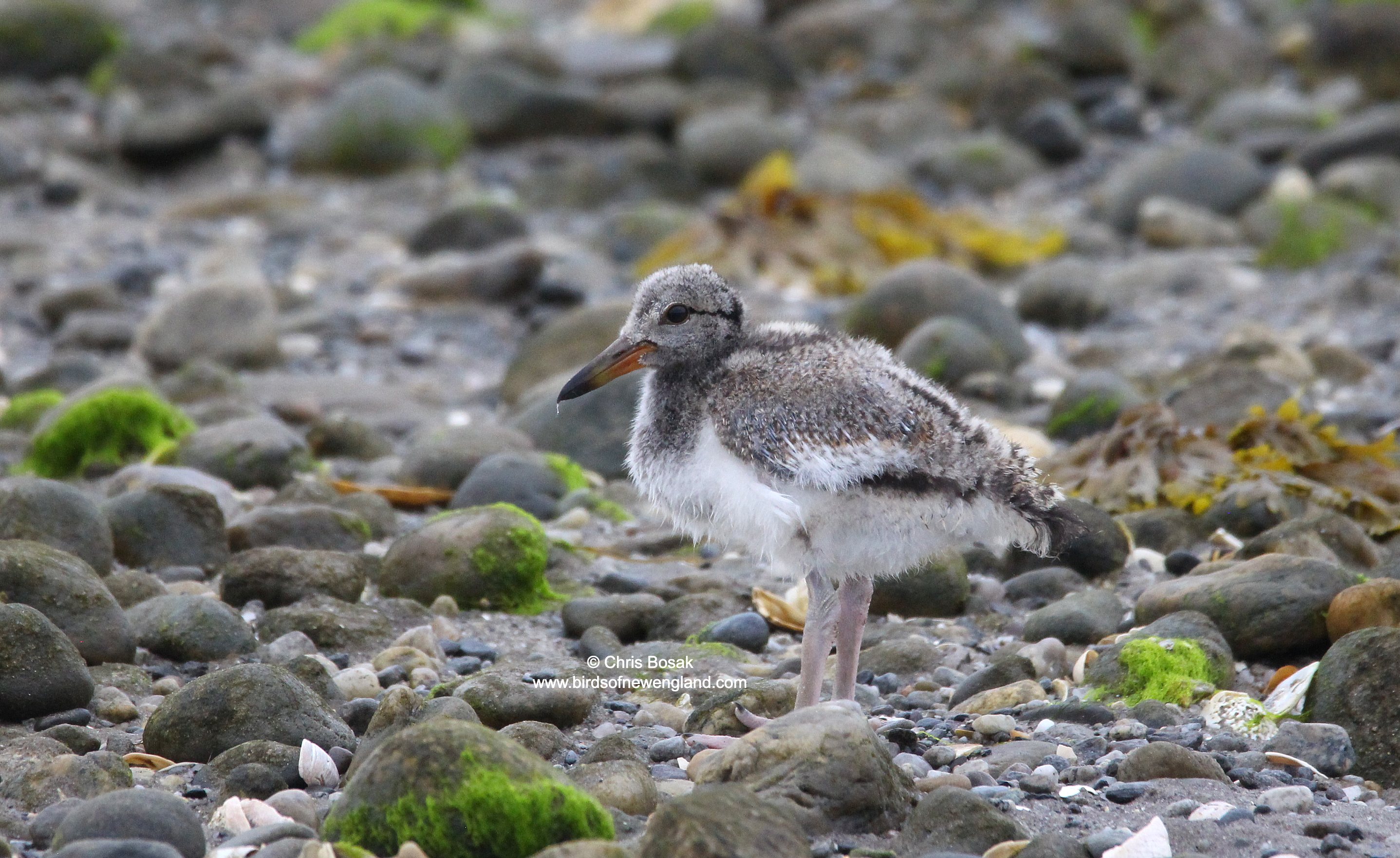
Young birds, which are often seen this time of year, can pose identification challenges. If a bird is very young and does not yet resemble a fully grown bird, identification can be extremely tricky. Thankfully, at that stage, most birds are not yet independent and a parent or two are usually close by making identification easier.
I came across this the other week when I visited the shore and saw young piping plovers and American oystercatchers. Seeing the youngsters on their own would have made for difficult identifications, but the nearby parents made it easy. In some cases, like the Cooper’s hawk or bald eagle, many immature birds are on their own, so learning the different plumages is necessary for identification.
This was even more difficult many years ago when not all field guides included immature plumages, only adult. If someone saw an immature Cooper’s hawk and thumbed through a field guide, they would be out of luck and left frustrated. Field guides have progressed, and most now include the various plumages of the birds. Of course, the majority of people use digital field guides on their phones these days, and most of those apps include all plumages.
Still, it’s difficult to include every plumage stage as growing birds change their appearance almost daily. I have been seeing a lot of photos on social media lately with baby loons. The young birds are tiny balls of black fluff. Over the next several weeks and months, those little loons will grow and go through several awkward stages. In fact, it will take a year or two to reach full breeding plumage.
Another plumage challenge this time of year is when molting adults resemble immature birds. Many birds molt during the summer after breeding season and lose their bright plumage. Again, many old field guides would not even include this plumage. Male scarlet tanagers are perhaps the most striking example of this. The brilliant red-and-black plumage is replaced with a much more modest yellowish green.
Late summer and fall present identification challenges for birdwatchers as young birds grow and adults molt. It’s also an exciting time of year as we get to witness the results of the hard work the parent birds did during the spring and early summer.
 Birds of New England.com
always sad to think of so many immature or adult birds of any species dying. I would say “that’s nature” except so often it isn’t. Its humankind demonstrating a less than kind and caring ways in regard to all of nature. I saw my 4th dead hawk in a week this very morning on the edge of a busy route in the Lakes Region. Struck down no doubt by a hurried motor vehicle operator who couldn’t glance around the sky area and slow down or otherwise try to avoid a sudden swoop for food from a predatory bird. So many times these kills can be avoided through alert attentive driving habits but one must get to the lakes, the pool, the store or other “must” destination.
LikeLike