
There is a thing in birding called a “spark bird.”
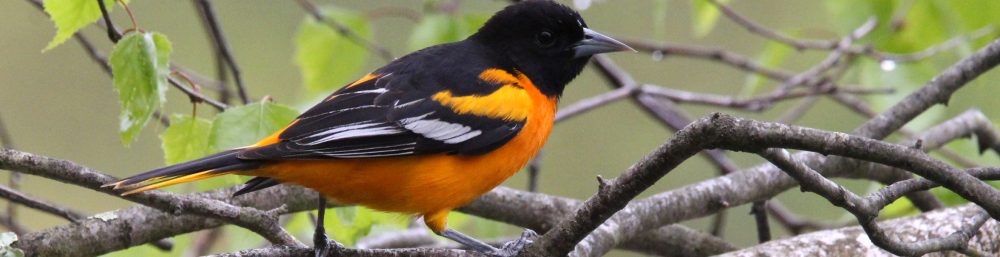
It is not a species of bird like a bluebird, mockingbird or blackbird, but rather the type of bird that piqued (or sparked) someone’s interest in birding and got them hooked. For many people, it is something big or colorful, like a loon or eagle or Baltimore oriole or great blue heron.
Because I have to be different, my spark bird is actually a moose. Yes, I know a moose is not a bird, but my quest to see a moose in the Vermont woods led me to my love of birdwatching.
There is also a thing in birding called a “nemesis bird.” Again, it is not a species of bird, but rather a bird that always seems to elude a birder. For instance, I see dozens of owl photos and read dozens of owl reports on Facebook and elsewhere on the internet, but I rarely see owls myself. I see the very occasional barred owl, but that’s about it.
I also have a nemesis feeder bird. It’s the evening grosbeak, a large yellow, white and black finch with a stocky bill. It’s not that the evening grosbeak is a common feeder bird in New England, but they do venture throughout New England enough, particularly in the winter, that in all my years of feeding birds, I figure I would have seen them at least once.
I have seen them a few times in the wild in northern New Hampshire, but never at my feeders. I’ve hosted siskins, purple finches, red-breasted nuthatches, indigo buntings, rose-breasted grosbeaks and a few warbler species, but never an evening grosbeak.
Evening grosbeaks are part of the Winter Finch Forecast, an annual prediction (based on food supply up north) of what birds may be heading south. Birds such as siskins, redpolls, crossbills, and grosbeaks visit New England sporadically in winter, and the people who run the Winter Finch Forecast try to predict each fall which birds to look out for in the winter.
This year’s forecast called for a strong irruption of several bird finch species. An irruption is when a species of bird visits New England and points south in higher than usual numbers in the winter. The evening grosbeak is one of those birds.
Although I haven’t seen any yet this year (of course), I have received several reports of people seeing evening grosbeaks at their feeders. Mike Quinn, an old friend I’ve known since the mid-1970s, sent me a text recently asking if I could identify a bird that was at his feeder. Naturally, it was a pair of evening grosbeaks. Mike lives in Ticonderoga, N.Y., near the Vermont border. His feeder cam photo accompanies this column.
Moira from western Maine also sent in a photo of an evening grosbeak pair at her feeder. Susan from Nelson, N.H., emailed to say she had six to eight evening grosbeaks visiting daily for about a week. She added that it’s been about 10 years since she last saw them. Her grosbeaks were eating sunflower seeds and nyjer.
But it doesn’t end there. Gene from Plymouth, N.H., had an evening grosbeak at his feeder and noted “the most striking thing was the brilliant yellow stripe above the eye.” Phil Brown, the compiler for the Keene Christmas Bird Count, noted that birders found two evening grosbeaks on count day, which was held on December 14.
Evening grosbeaks are out there this winter and perhaps heading your way. Watch those feeders for stocky yellow birds vaguely reminiscent of overgrown goldfinches. If they do arrive, drop me a line and let me know. Then send them my way.
 Birds of New England.com
Nemesis birds! Indeed I am all about nemesis birds, those astoundingly elusive (for me anyway) creatures of beauty + fascination…grosbeaks of any kind, cedar waxwings, indigo bunting, scarlet tanagers, orioles (saw 1 indigo bunting + 1 scarlet tanagers in summer last year at a neighbors home) and so many others that people speak of, photograph and share while my filled feeders treat the usual wonderful birds most of us have in winter, the goldfinch, cardinals, bluebirds, tufted titmice, chickadees, red-bellied, hairy + downey woodpeckers dark eyed juncos + of course squirrels, both gray + red…not complaining, well not really just wishful wanting to see the varied, unique birds so talked about…
LikeLiked by 1 person
Blue and yellow ??Sent from my iPhone
LikeLike