There is a pond 20 minutes from my house that I pass frequently. For 50 weeks of the year, the pond holds little interest for me other than being an aesthetically pleasing landmark to look at as I drive past.
In the summer, a few mallards and Canada geese are the only birds present. It being a small pond in New England, it is frozen for most of the winter, which is great for the skaters who have fun on the ice, but not so much for birdwatchers.
However, during one week in early spring and one week in late fall, the pond holds a surprisingly solid variety of migrating ducks.
The other day when I drove past, I noticed a bunch of white blobs in the water, and, even at 40 mph, I knew just what they were.
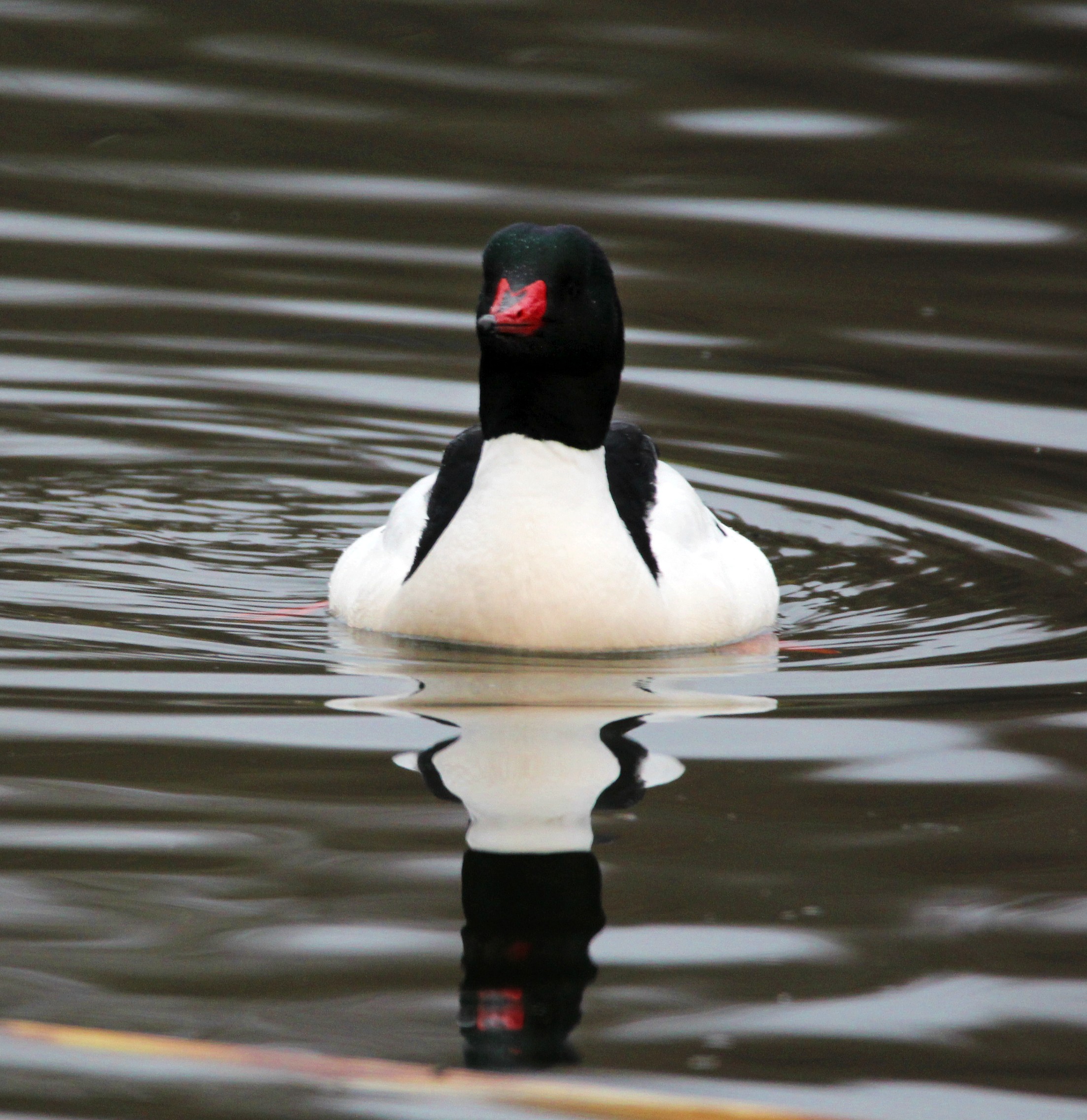
I pulled over at the closest spot where it was safe to do so and turned the car around. From a spot along the road about 30 yards from the pond’s edge, I was able to confirm that indeed they were common mergansers. For a small pond, it held quite a few of the large waterfowl. Common mergansers happen to be one of my favorite birds, so I lingered at that spot along the road for close to an hour watching them.
In previous years, I have seen hooded mergansers perform their courtship display on this pond. To my delight, the common mergansers were doing their courtship display on this day.
Also to my pleasant surprise, the mergansers were not the only duck species on the pond. As I was watching the mergansers dive and resurface, a small group of ring-necked ducks came over to join the party. They did not stay long among the common mergansers but rather silently floated to the other side of the pond. As I followed the ring-necked ducks’ path through my binoculars, I spotted a pair of gadwall on the opposite edge of the pond as well. A few mallards and Canada geese rounded out the fowl sightings.
It was a pleasant hour spent at the pond, especially considering a busy road runs adjacent to one long edge of the pond and the other edge is a residential area. My parking spot was along the residential road.
Yet another pleasing moment of this unexpected birding experience came in the form of a songbird. I had turned off my radio so as to not spook the mergansers away from the pond’s edge. Instead of listening to old songs I’ve heard hundreds of times before or some divisive news channel, I was treated to the sounds of a northern mockingbird showing off his repertoire from a nearby perch. At first, I thought it was an eastern phoebe, but that was just the first mimicked song I heard from the mocker.
I love the spring waterfowl migration. It serves as a link between the early songbird migrants, such as red-winged blackbirds and eastern phoebes, and the multitude of other birds that follow. While the spring waterfowl migration is somewhat predictable (look at just about any unfrozen body of water and you’ll see ducks of some sort), it is fleeting. Ducks and other fowl feel a sense of urgency to get to their northern breeding grounds, and they tend not to linger too long on their migratory stopover spots.
Depending on your location, the variety of waterfowl that pass through New England (and some stay, of course) is pretty impressive. Some of my favorites include common merganser, hooded merganser, northern pintail, northern shoveler, bufflehead and common goldeneye.
The trick is getting out there as often as possible during these few weeks when they are passing through. The other trick is to check all open water. Migrating ducks often end up in unexpected places such as swelled roadside ditches, fast-moving streams, and, of course, small ponds along busy roads.
 Birds of New England.com