Unknown's avatar

About Chris Bosak

Bird columnist and nature photographer based in New England.

For the Birds: House sitting is not such a bad gig after all

Photo by Chris Bosak An Eastern Bluebird rests on a birdhouse at Mather Meadows in Darien, Conn., April 2015.
Photo by Chris Bosak – Bluebirds were a common sighting during a house- and dog-sitting experience in New England.

I agreed to house- and dog-sit for a friend recently. I had never been to the house before so when I parked in the driveway, I did what I always do upon visiting a house for the first time: evaluate the birding potential of the yard.

When I visit a home in a city or busy part of a suburb, I don’t expect much but remain optimistic. Sometimes I’m disappointed and sometimes I’m pleasantly surprised. If the house is in a rural area, I assume the best and expect to spend many enjoyable hours on the porch or deck listening to and watching birds.

This particular house was in “the country” and lived up to all expectations.

Continue reading
For the Birds: Warbling vireo lives up to its name

Photo by Chris Bosak
A warbling vireo does what it does best: sing from a branch of a deciduous tree.

The U.S. Fish and Wildlife Service recently added a story on their website about the red-eyed vireo and mentioned, jokingly, that it is sometimes referred to as “the bird that doesn’t shut up.” The short post says the bird can sing more than 20,000 times per day and that their “incessant singing” makes up for their rather drab plumage.

I can’t dispute what the article says, as red-eyed vireos do indeed sing a lot, and I’ve heard them frequently throughout this spring and early summer. But this year, I’ve been more taken by the red-eyed vireo’s cousin, the warbling vireo.

Seemingly every walk I’ve taken this year from late April on has included a sighting of a warbling vireo. Well, maybe not always a sighting, but at least a hearing. It is usually the first bird I hear as I approach the woods. “Yup, another warbling vireo” has been a frequent refrain on my walks this year.

Continue reading

Happy Fourth of July from BirdsofNewEngland

Happy Fourth of July everyone. Thanks for your support of http://www.birdsofnewengland.com

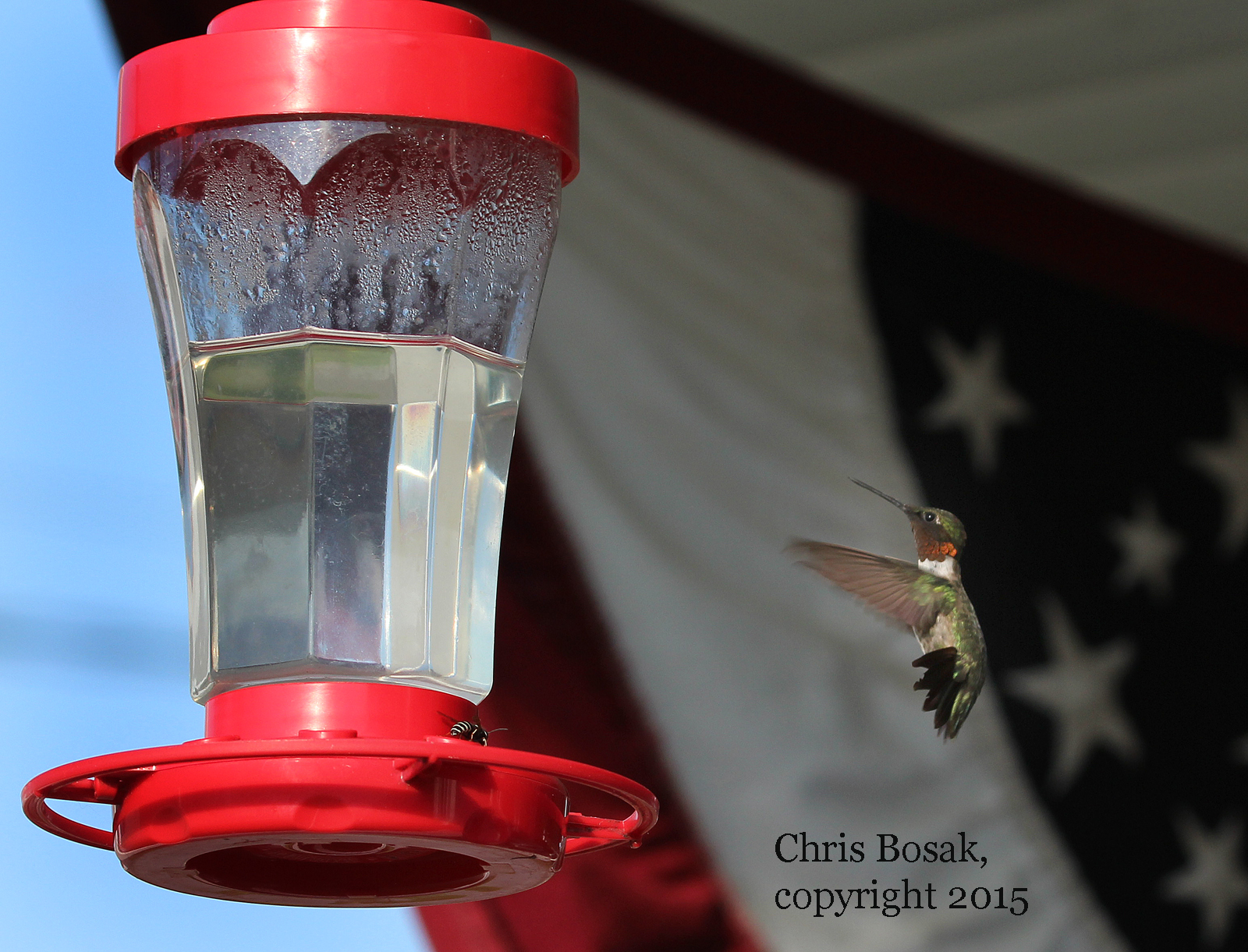
Ruby-throated Hummingbird at Errol Hotel in Errol, NH.
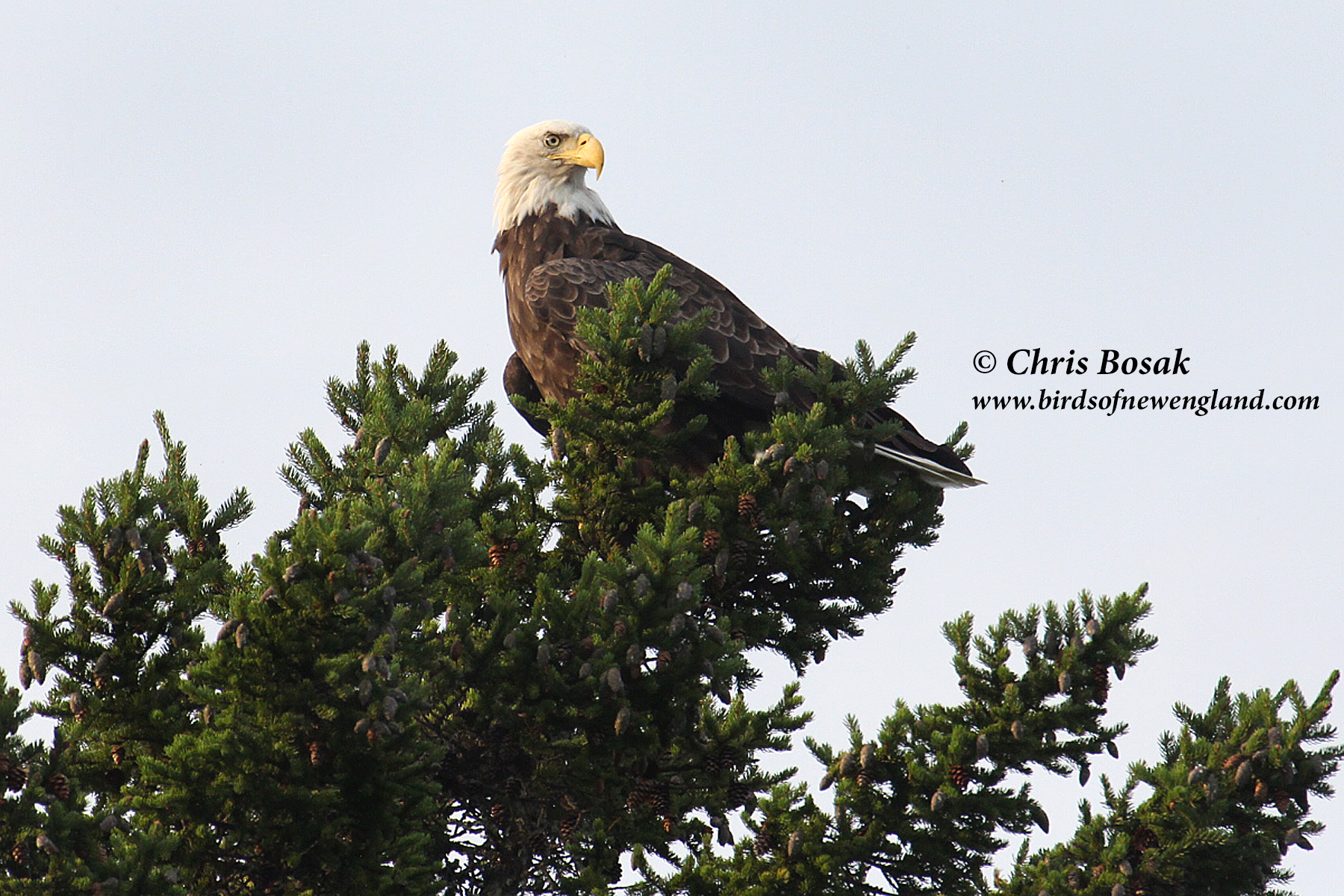
Photo by Chris Bosak A bald eagle looks over a lake in northern New Hampshire, July 2020.

Fritillary cooperates for photo

Photo by Chris Bosak

This meadow fritillary was nice enough to sit still for an iPhone photo during this evening’s walk, so I figured I may as well post it.

For the Birds: Blue jays need to eat too

Photo by Chris Bosak A blue jay perches on a branch in New England.

It’s no secret that Facebook is rife with links to a lot of really dumb articles. Many of the links are either clickbait or gateways to completely useless drivel. 

I learned a long time ago to not even bother clicking on the links because they inevitably lead to disappointment. But, I came across an article on Facebook the other day that I just had to click on. The headline for the post read, “Why You Should Avoid Inviting Blue Jays into Your Yard.”

I know some people have issues with blue jays, but I had never seen an article devoted to keeping blue jays out of people’s backyards. I’ve seen plenty of articles on how to keep squirrels, bears, house sparrows and grackles away from feeders, but never blue jays.

Blue Jays are strikingly beautiful birds and native to the U.S. Why would anyone want to keep blue jays away from feeders?

Continue reading

Rose-breasted grosbeak after meal

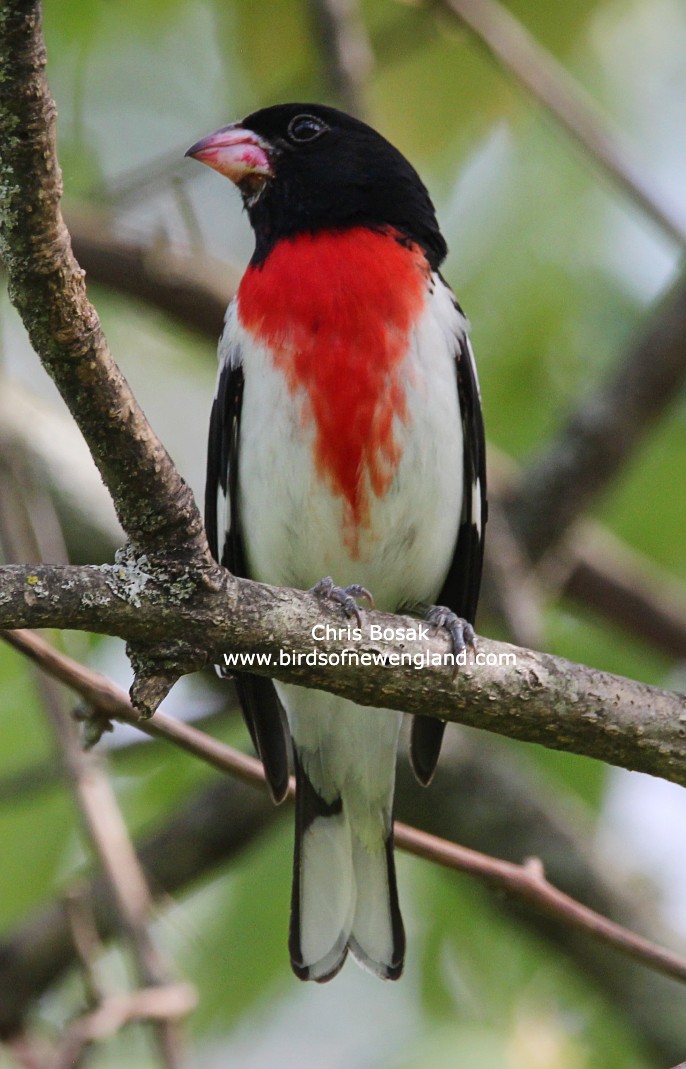
Photo by Chris Bosak – A rose-breasted grosbeak perches on a branch after eating berries, spring 2024 New England.

This male rose-breasted grosbeak must have just finished eating berries. It must be hard to eat and not make a mess with a bill like that.

For the Birds: Spring lives up to the hype

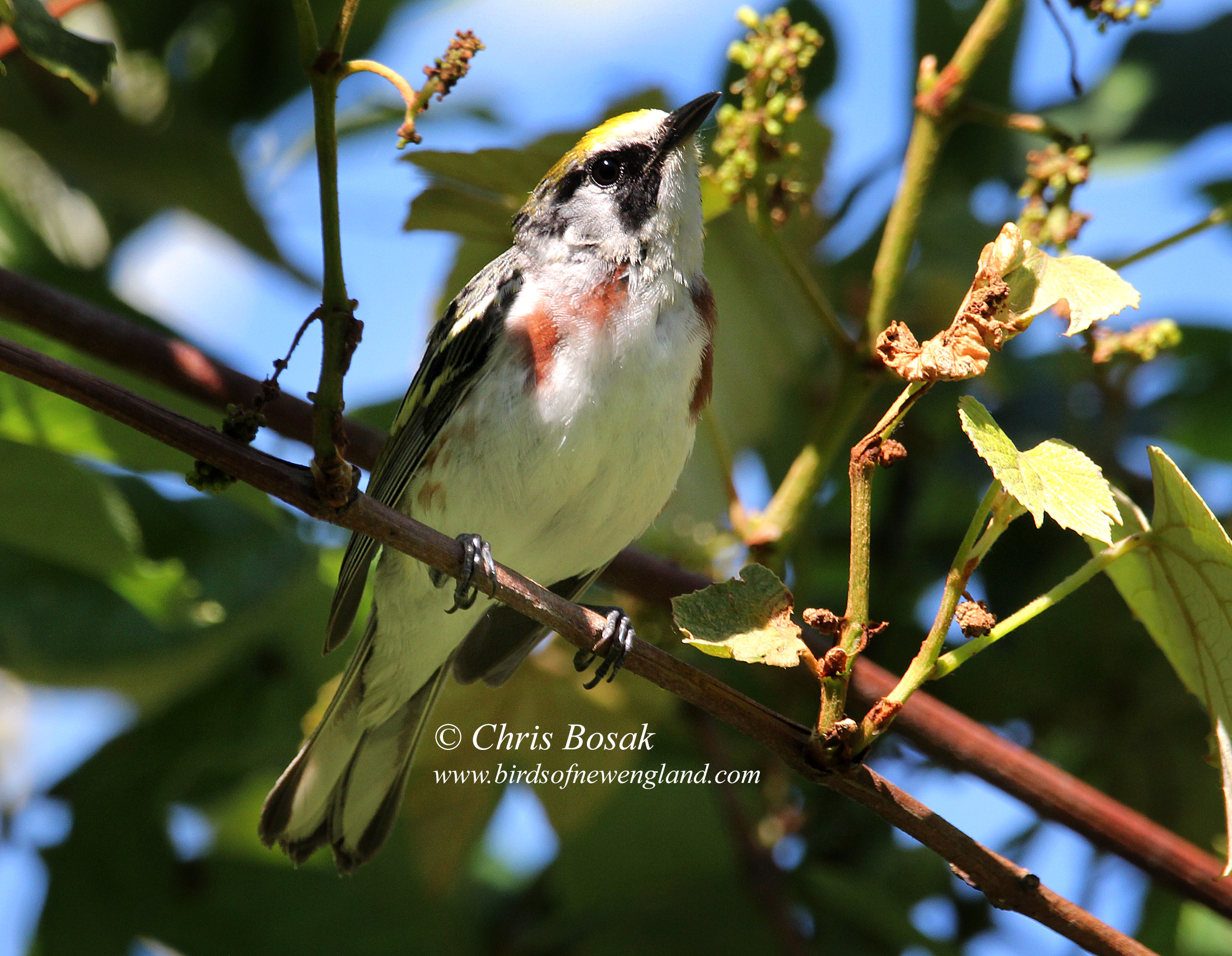
Photo by Chris Bosak – A chestnut-sided warbler perches in the brush in New England, spring 2024.

It was one of the better spring migrations I’ve had in a long time. I got out there more than in previous years and visited a greater variety of places.

The big week, of course, was the visit to Erie, Pennsylvania, during the peak of the migration season. I was there for my niece’s wedding but arrived several days in advance of the event to stay with my brother and visit Presque Isle State Park, a birding hot spot. We saw over 70 species of birds over the three separate visits.

I also hit my local New England spots several times a week during migration, starting in late March and going into June. It’s always interesting to see how the spring migration starts with a trickle of very few species and peaks with several dozen species all moving through at once. 

Continue reading

For the Birds: gnatcatcher nest find highlights walk

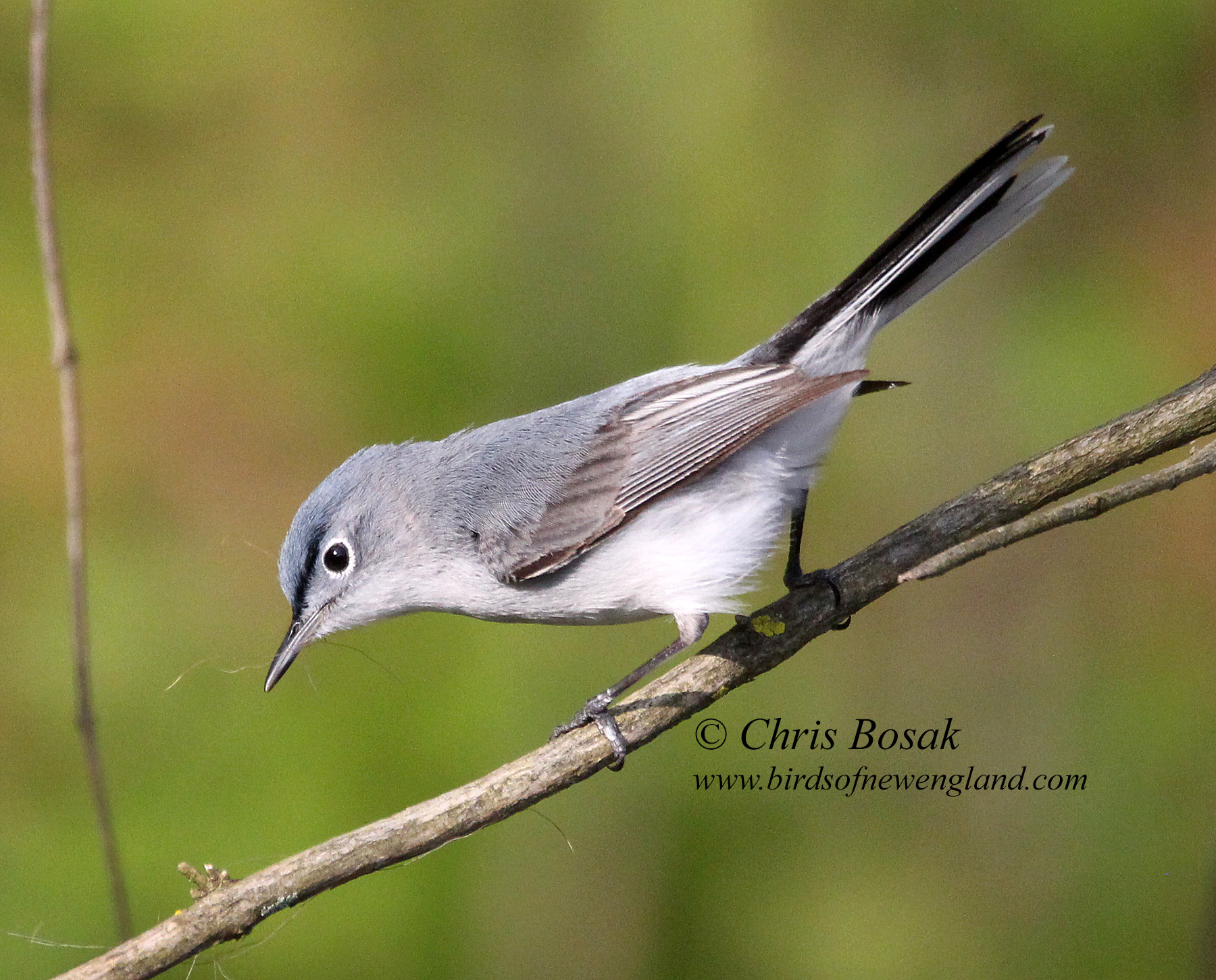
Photo by Chris Bosak – A blue-gray gnatcatcher collecting material for its nest, Presque Isle, 2024.

The birdwatching had already been fantastic as Baltimore orioles, gray catbirds, yellow warblers, and even bay-breasted warblers were overly abundant. The walk got even more exciting as we watched a blue-gray gnatcatcher fly back and forth from a branch to a bush about 30 yards away.

A nest must be up there, I thought, as we now watched two blue-gray gnatcatchers going back and forth to the branch. Blue-gray gnatcatchers are small migratory birds with blue-gray plumage, as the name suggests, long tail and white eye ring. A peek through the binoculars confirmed that a nest was on the branch. I was surprised that the nest had been built in the middle of a dead branch with very little cover from the leaves above.

It took binoculars for confirmation as blue-gray gnatcatchers are tiny birds of only four or five inches. Their nests are just as small as the birds themselves, even a bit smaller at only two or three inches wide.

Continue reading

For the Birds: Red-shouldered hawk perched on car in parking lot

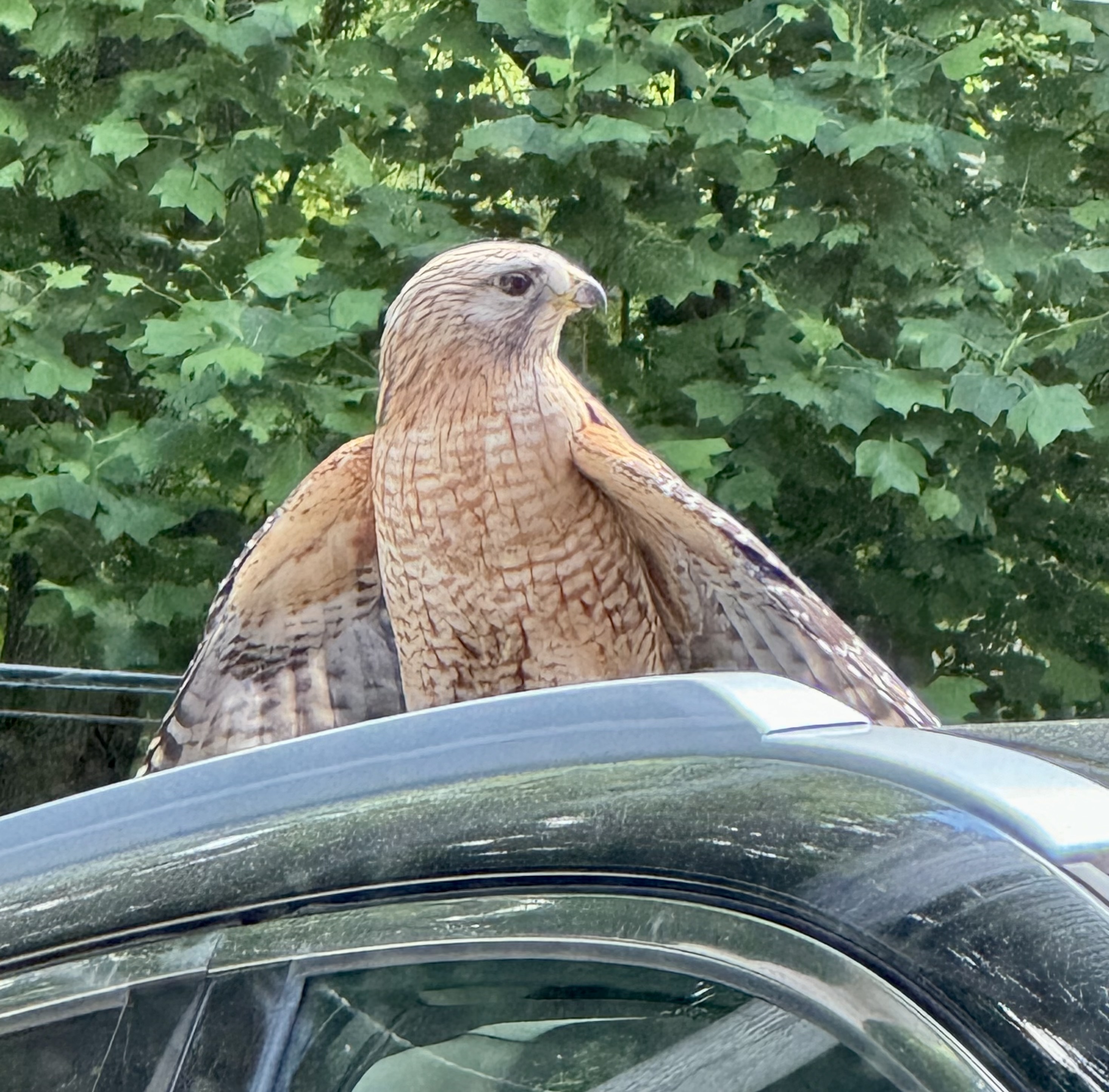
Photo by Chris Bosak – Red-shouldered hawk on car in parking lot in New England, May 2024.

Some birds have adapted to humans and what we have done to their habitat better than others. 

Pigeons, house sparrows and mallards have obviously fared well and thrive in urban environments. Other birds, including many songbirds, have not. Why else would the populations of so many songbirds have decreased so dramatically over the last several decades?

An experience at work the other day got me thinking about how birds adapt to human interference. I was working in my office when I heard a co-worker calling my name in whispered urgency. I rushed out to see what the commotion was about and saw a red-shouldered hawk perched on top of an Infinity SUV right on the other side of the window. 

The impressive bird of prey was a mere 12 feet away from the small crowd that had now gathered inside the building — urgent whispers have a way of drawing a crowd. Everyone broke out their phones and took pictures of the specimen. Red-shouldered hawks nest on the property at work, so seeing the bird was not unusual, but seeing it perched on a car was certainly different.

Continue reading

For the Birds: A visit to Erie – a birding hotspot

Photo by Chris Bosak – Baltimore oriole, New England, 2024.

When the peak of your favorite hobby lasts only a few weeks each year, you better make the most of that time.

For birdwatchers, that is spring. Specifically, the last week of April and the first two weeks of May. Of course, the spring migration started many weeks ago and will last into June, but the sweet spot is those few weeks.

As luck would have it this year, my niece planned her wedding for mid-May. The wedding was held in my old hometown of Erie, Pennsylvania. I didn’t know it when I was growing up, but Presque Isle State Park in Erie is one of the top birdwatching destinations in the country. Presque Isle is a peninsula jutting into Lake Erie and, in addition to the many birds that nest there, several others use the land as a stopover before crossing over into Canada.

Instead of going home for a long weekend, I took the week off and made a vacation of it. I visited the park for several hours on Monday, Tuesday, and Thursday. Each day I saw something a little different. On Monday’s walk, I saw 51 different species. I did not keep track on Tuesday’s walk as I wanted to focus on photographing some of the warblers.

Continue reading