Unknown's avatar

About Chris Bosak

Bird columnist and nature photographer based in New England.

For the Birds: More gift ideas for your birdwatcher

Photo by Chris Bosak Ablack-capped chickadee grabs a sunflower seed from a Christmas decoration during the winter of 2016-17 in Danbury, Conn.
Photo by Chris Bosak
A black-capped chickadee grabs a sunflower seed from a Christmas decoration during the winter of 2016-17 in Danbury, Conn.

A few weeks ago I wrote about the perfect Christmas gift being a membership or donation to a local land trust or other conservation organization. Some of those memberships even come with physical goodies such as stickers, newsletters or magazines.

So now that all those gifts have been granted, it’s time to take a quick look at some more gift ideas for the birdwatcher on your list. These gifts can go under the tree and are guaranteed to put a smile on the face of your birder.

What you get a birdwatcher, as with any hobbyist, depends on their skill level and what they have already. Birdwatchers need a good pair of binoculars, but chances are they already have good optics. If you know them well enough to know what binoculars they are using and know they could use an upgrade, that gift would certainly be appreciated immensely.

Speaking of optics — and now we will jump right to the most expensive gift — consider getting your birder a spotting scope and tripod. Spotting scopes come in a huge range of prices, but you really want to avoid the super cheap ones as they do not do very well for birdwatching. Good scopes start at a couple hundred dollars and go up to several thousand dollars. Don’t forget a good tripod, too, as a scope is pretty much useless without a tripod. That’s another hundred bucks or more.

Now let’s get to the gifts that are more practical and do not have as many zeros on the price tag.

A good bird feeder is always a thoughtful gift. So are birdhouses. Birdhouses serve the dual purpose of attracting birds (hopefully anyway) and being a nice decoration for the yard. I liked the look of one birdhouse I received so much that I kept it inside for a long time on a shelf as a decoration to go along with my modest decoy collection.

When possible, get your feeders, houses, and other bird gifts from a local business. Even the franchise stores such as Wild Birds Unlimited are owned by local people who would love your business.

Birding apparel is getting more popular and many companies make clothes exclusively for birdwatchers. Wunderbird has a nice line of sweatshirts, long sleeve T-shirts, and short sleeve T-shirts that are designed for birders. The apparel features several pockets for your binoculars and other gear. Similarly, Big Pockets has vests and other apparel designed for outdoorspeople.

Bird and wildlife art also make for good gifts. There is the traditional art such as photographs or paintings for the wall, and also not-so-traditional art such as decoys and Christmas ornaments. I know my tree is covered with mostly bird ornaments and my boys razz me about it every time we break out the Christmas boxes.

Field guides or other books about birds are also welcome. There are tons of bird books out there, both old and new, that are highly informational and entertaining. A few print magazines about birds are hanging in there in this electronic age and a subscription would be a gift that gives all year.

Speaking of the electronic age, iTunes gift cards are a good idea if your high-tech birder would rather have his or her field guides and other birding information on the phone. I will admit, I’m not a techie by any means, but I do like having a field guide on my phone while I am birding in the field.

There are plenty of other ideas that I didn’t get to. A few bags of Birds and Beans coffee, anyone? It’s funny. For a hobby that requires very little in the way of equipment, there are certainly a lot of ways to spoil your birder.
Long Island Sound VII: Bonus photos

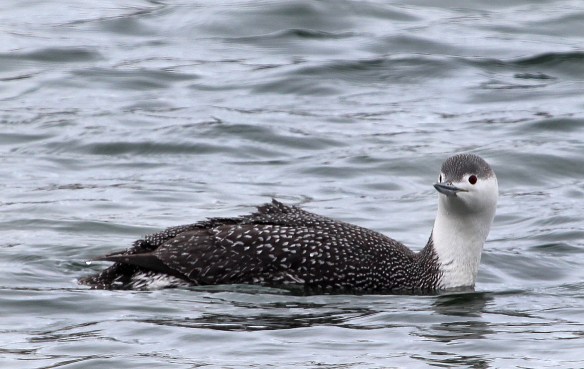
Photo by Chris Bosak
A Red-throated Loon swims in Norwalk Harbor in this March 2014 photo.

As it turns out, a week wasn’t enough to get in all the Long Island Sound shots I wanted in recognition of the Connecticut Audubon Society’s 2019 State of the Birds report. So here are some more. The press release that summarizes the findings may be found here. The full report will be available via PDF on January 1.

Here’s the link to my original posting, which explains why I’m posting so many photos of the Sound.

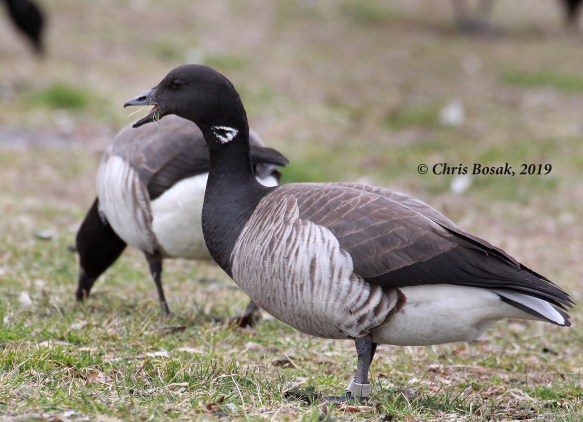
Photo by Chris Bosak Brant at Calf Pasture Beach in Norwalk, Connecticut, 2019.
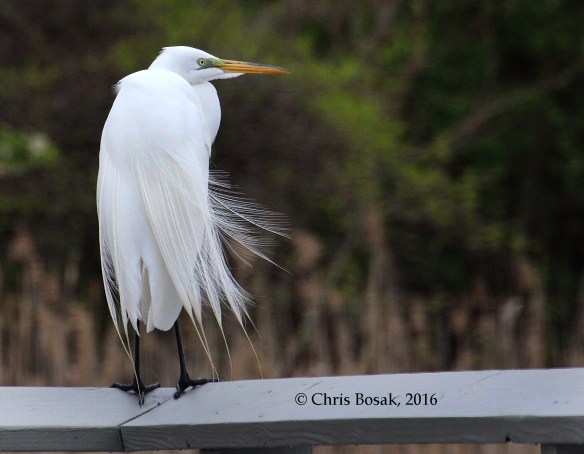
Photo by Chris Bosak A Great Egret stands on a deck railing overlooking the Norwalk River in Norwalk, Conn., April 2016.

Long Island Sound VI

Photo by Chris Bosak A Horned Grebe swims in Long Island Sound off the coast of Darien, Conn., Jan. 2015.

Here’s another shot taken on or near Long Island Sound, in recognition of the Connecticut Audubon Society’s 2019 State of the Birds report. The press release that summarizes the findings may be found here. The full report will be available via PDF on January 1.

Here’s the link to my original posting, which explains why I’m posting so many photos of the Sound.

Long Island Sound V

Photo by Chris Bosak An American Oystercatcher walks along the beach at Milford Point in Connecticut, April 2014.
Photo by Chris Bosak
An American Oystercatcher walks along the beach at Milford Point in Connecticut, April 2014.

Here’s another shot taken on or near Long Island Sound, in recognition of the Connecticut Audubon Society’s 2019 State of the Birds report. The press release that summarizes the findings may be found here. The full report will be available via PDF on January 1.

Here’s the link to my original posting, which explains why I’m posting so many photos of the Sound.

Long Island Sound IV

Photo by Chris Bosak
A Snowy Owl sits on a rock on an island off the coast of Norwalk in November 2008.

Here’s another shot taken on or near Long Island Sound, in recognition of the Connecticut Audubon Society’s 2019 State of the Birds report. The press release that summarizes the findings may be found here. The full report will be available via PDF on January 1.

Here’s the link to my original posting, which explains why I’m posting so many photos of the Sound.

Long Island Sound III

Photo by Chris Bosak
Purple Sandpiper on a rocky island off the coast of Darien, CT. (Dec. 2013)

Here’s another shot taken on or near Long Island Sound, in recognition of the Connecticut Audubon Society’s 2019 State of the Birds report. The press release that summarizes the findings may be found here. The full report will be available via PDF on January 1.

Here’s the link to my original posting, which explains why I’m posting so many photos of the Sound.

Long Island Sound II

Photo by Chrisi Bosak A male Osprey flies above a female Osprey at Veterans Park in Norwalk, Conn., April 29, 2015.
Photo by Chris Bosak
A male Osprey flies above a female Osprey at Veterans Park in Norwalk, Conn., April 29, 2015.

Here’s another shot taken on or near Long Island Sound, in recognition of the Connecticut Audubon Society’s 2019 State of the Birds report. The press release that summarizes the findings may be found here. The full report will be available via PDF on January 1.

Here’s the link to my original posting, which explains why I’m posting so many photos of the Sound.

Photo by Chris Bosak An Osprey flies with a fish in its talons over the Norwalk River in Norwalk, Conn., summer 2015.

Report: Long Island Sound faces uncertain future

Photo by Chris Bosak A Common Loon seen during a recent winter in Long Island Sound off the coast of Norwalk, Conn. Loons feature a more drab plumage in the winter.
Photo by Chris Bosak
A Common Loon seen during a recent winter in Long Island Sound off the coast of Norwalk, Conn. Loons feature a more drab plumage in the winter.

Long Island Sound is a special body of water. The estuary that forms the southern border of Connecticut, the northern border of Long Island (N.Y.), ends up at the East River in NYC to the west and the Atlantic Ocean to the east, is a vital habitat for birds and other wildlife.

I have lived in three cities that border Long Island Sound and have spent countless hours birding the coast and open waters. Each December, I participate in a Christmas Bird Count whose territory includes Long Island Sound. The birdlife is varied and thrilling at all times of the year. The fascinating summer birds are replaced by amazing winter birds.

According to the 2019 State of the Birds report released last week, the Sound is as clean and vibrant as it has been in years. However, it also faces an uncertain future as climate change and rising sea levels threaten to drastically alter its landscape. According to the report, the Sound and its wildlife have already been impacted by changes in climate.

The thoroughly researched and well-written State of the Birds report is issued each year by the Connecticut Audubon Society (@CTAudubon). It includes articles by experts from many other state conservation organizations. When I was a newspaperman, I made it a point to attend the annual release event, at which many of the Report’s authors were present. I still look forward to its release each year.

The press release that summarizes the findings may be found here. The full report will be available via PDF on January 1.

To honor the Sound and, hopefully, draw a little more awareness to the Report and its findings, I will post each day this week a photo I have taken at the Sound over the years.

#CTStateoftheBirds

Photo by Chris Bosak A Common Loon seen during a recent winter in Long Island Sound off the coast of Norwalk, Conn. Loons feature a more drab plumage in the winter.

For the Birds: Welcome mat for the typical birds

Here is the latest For the Birds column, which runs in several New England newspapers. Thanks for checking it out …

Photo by Chris Bosak A blue jay grabs a peanut from a deck railing in New England, fall 2019.

The word typical often has a negative connotation.

It is usually used to describe something boring or mundane. “Just a typical day at the office.” Or worse, as a word of exasperation to draw attention to a recurring negative behavior: “He said what? Oh, that’s so typical of him.”

But I’m going to use typical in a positive way here. After all, Thanksgiving is a fresh memory, the holiday season is upon us, and 311 is my favorite band. The band encourages “positivity” and closes its concerts with “Stay positive. Love your life.” So I will do that here with the word typical.

The other day, all the “typical” birds showed up at my feeder. And that’s a good thing.

My typicals include black-capped chickadees, tufted titmice, white-breasted nuthatches, downy woodpeckers, red-bellied woodpeckers and blue jays. You can throw juncos in there, too, during the winter — and late fall as they have already arrived.

Other birds visit from time to time, but those are the birds that are always here. Many people have written to me lately about a lack of chickadees at their feeders. It’s definitely a trend to keep an eye on, but thankfully, I still have plenty of chickadees visiting my feeders. I still haven’t solved the mystery as to why so many people are experiencing a scarcity of chickadees, but I can tell you that I see them often.

I’m not trying to be boastful about my feeders or the fact that I see a lot of chickadees. There are some obvious bird species that I hardly ever see in my backyard.

Cardinals, for whatever reason, are rare sightings at my feeders. I see them all the time in the bushes along the sides of the road when I am driving through the neighborhood, but they avoid my yard like the plague.

Although I get more than my share of juncos in the winter, I rarely see white-throated sparrows — a usual accompaniment of juncos. At my previous houses, white-throated sparrows were a common winter occurrence and easily outnumbered all other winter birds. Here, I barely see them. I’ve seen more fox sparrows here than white-throated sparrows and that’s just plain odd.

I do see a ton of chipping sparrows in the spring and summer, but not enough to add them to my typical list. I am lucky enough to get good numbers of rose-breasted grosbeaks each spring, but their length of stay is too short to make the list. I do enjoy that short window each year, though.

Ruby-throated hummingbirds miss the cut by the barb of a feather. I see them daily from late April until the end of September, but I couldn’t bring myself to include a bird that is not a year-round New Englander. The hummingbirds are off sunning themselves and gorging on insects in Costa Rica or thereabouts, not like the chickadees, titmice and nuthatches that visit me daily regardless of the temperature.

I don’t just give out the title of “typical” to anything, you know.

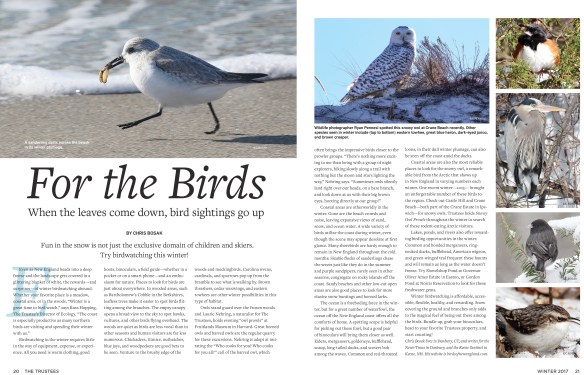
A look back at winter birding article

Story in Special Places, the magazine of The Trustees

With the year’s first major snowfall to hit New England over the next two days, here’s a look back at an article I did a few years ago for The Trustees, a Massachusetts-based conservation organization. Check out the group here to learn more about the good things it does.

Here’s a link to the story, if you can’t read the attached document.