Tip on how to attract birds in the winter

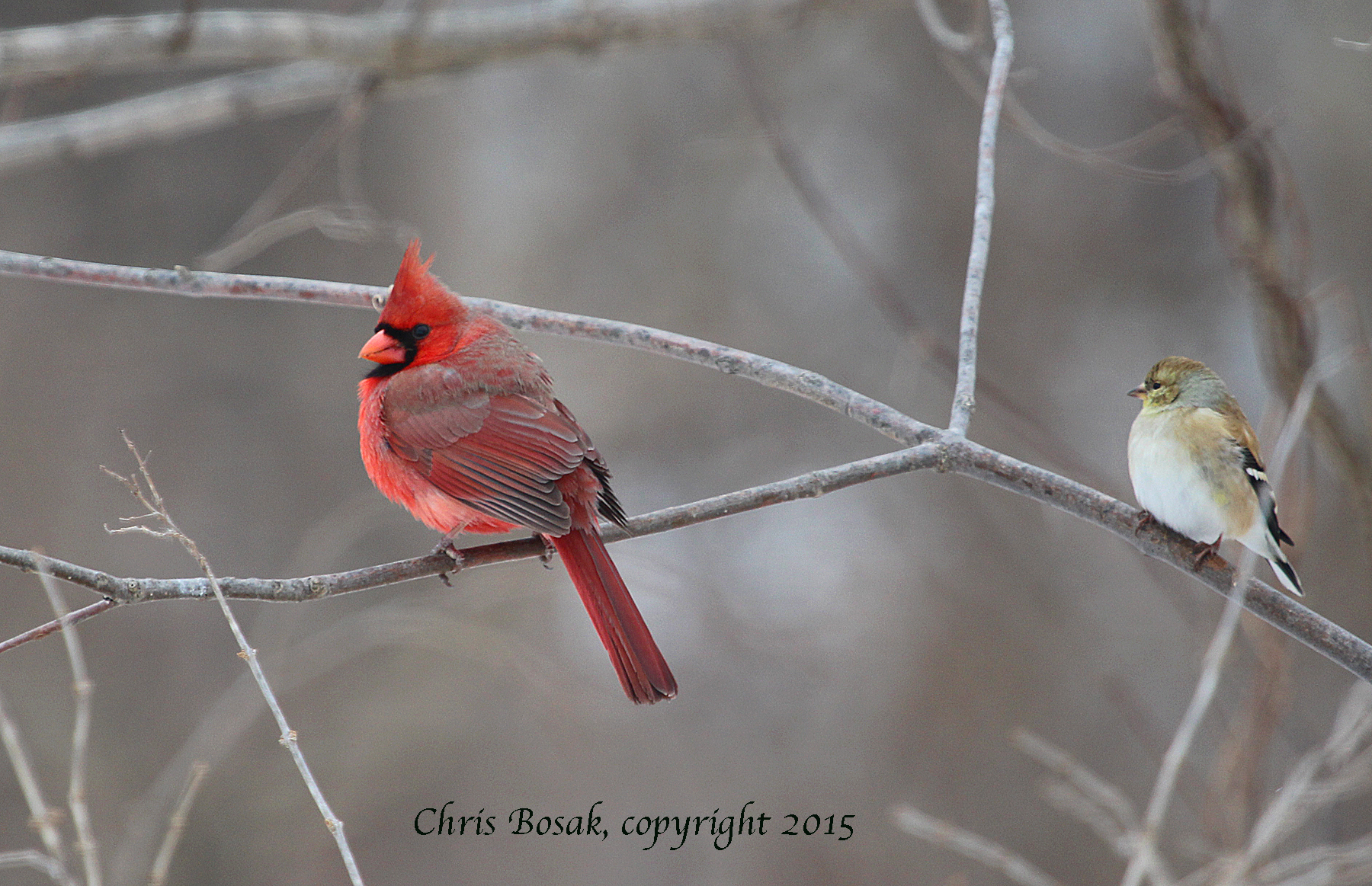
Photo by Chris Bosak A Northern Cardinal, left, and an American Goldfinch perch in a tree near a feeding station at Cove Island Wildlife Sanctuary in Stamford, Conn., in March 2015.

Photo by Chris Bosak
A Northern Cardinal, left, and an American Goldfinch perch in a tree near a feeding station at Cove Island Wildlife Sanctuary in Stamford, Conn., in March 2015.

Here’s a press release shamelessly used in full here from the National Audubon Society. It’s good information, so here it is. (The post is jazzed up by one of my own photo, however.)

TIP SHEET: Winterize Your Yard for Birds

Tips on How to Welcome Winter Birds For Reporters and Bird Lovers

NEW YORK (December 15, 2015) – With winter just days away, and the Christmas Bird Count finally here, there’s no better time to protect the birds you love. Birds have the same needs—food, water, shelter—in winter as they do any other time. Helping these winter visitors could help sustain their populations in both their wintering and summering grounds. The National Audubon Society has compiled the following guide on simple ways you can help.

Bird-friendly Yards and Communities

Where birds thrive, people prosper. One of the most important things we can do to help birds and other wildlife is to make our yards bird and wildlife-friendly.

  • Minimize the amount of manicured lawn in your yard. Reduce the amount of pesticides and fertilizers in your yard and plant native species. The wilder and more varied, the better it is for your avian neighbors.
  • Make a brush pile in the corner of the yard. Collect and set aside fallen branches and logs. This will provide shelter for birds from predators and storms, and a place to roost at night.
  • Rake leaves up under trees and shrubs and leave them there. The resulting mulch will make a lush environment for the insects and spiders that birds love to eat.
  • Create a songbird border of native trees and shrubs to create shelter from wind. Berry and fruit-producing shrubs and trees such as dogwoods, hollies, chokeberries, and elderberries and cherry trees are favored by many types of birds.  Plant native species whenever possible, and avoid invasives.
  • Clean out old nest boxes and feeders. It’s wise to remove old nests and seeds from shelters and feeders to prevent birds from getting sick.
  • Protect Your Windows. About a billion birds die from glass collisions each year. You can reduce this threat by making all your windows visible to birds. Glass appears clear or reflective to birds. Visual cues and markers as window decals on the outside of windows alert birds to the presence of glass.
Continue reading

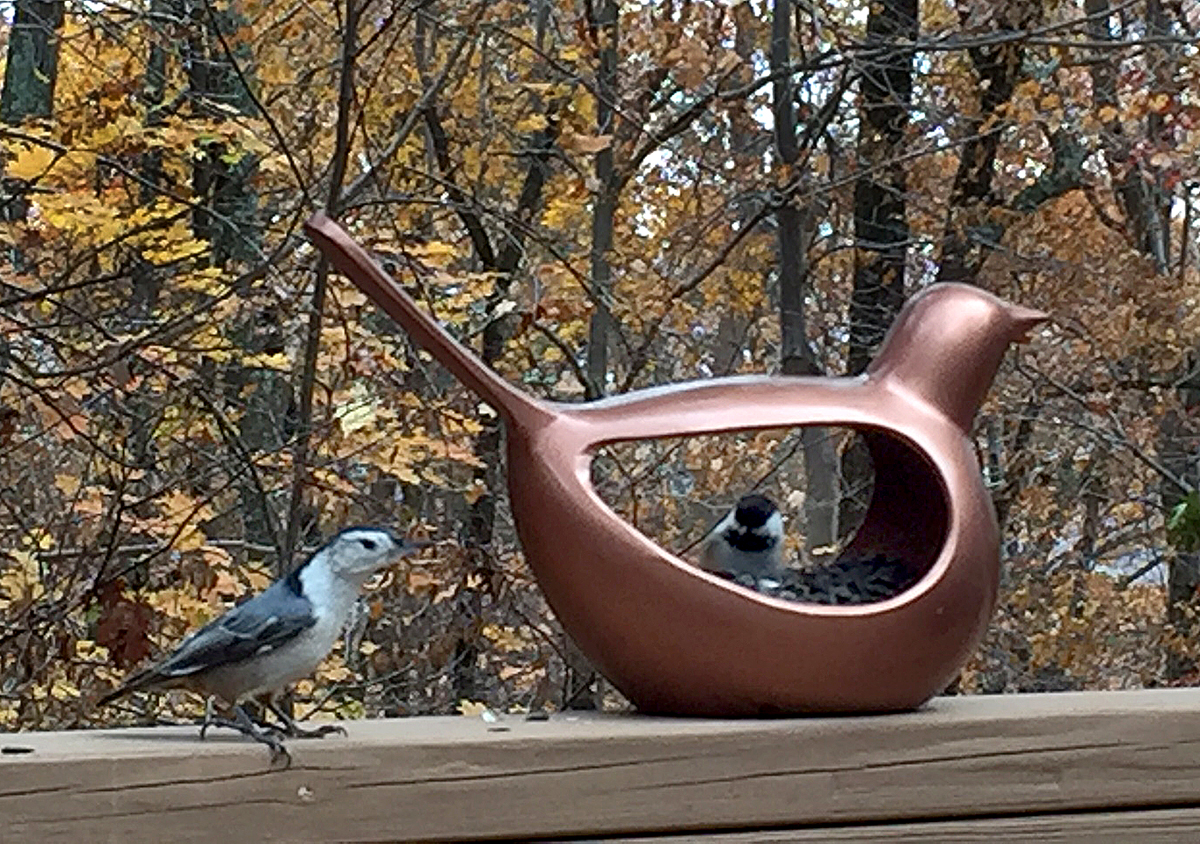
New bird feeder already working

Photo by Chris Bosak A Black-capped Chickadee grabs a seed from a bird feeder as a White-breasted Nuthatch bides its time before grabbing a seed.

Photo by Chris Bosak
A Black-capped Chickadee grabs a seed from a bird feeder as a White-breasted Nuthatch bides its time before grabbing a seed.

I received a neat bird feeder as a house-warming gift recently from a friend. I debated whether to actually use it as a bird feeder or to keep it inside as a decoration. I ultimately figured that it would serve both purposes outdoors on the deck. It would be a nice decoration outside and feed the birds.

But would it really attract birds? It is unlike any bird feeder I’ve ever had before. There’s only one way to find out and that is to put some seeds in it. Within minutes the chickadees came. Then the titmice came. Finally the nuthatches checked it out and took some seeds.

After the seeds were gone, I put some whole peanuts in there and waited. Sure enough, within a day or two, the Blue Jays found it.

It’s been a very popular feeder with the birds — and a nice decoration for the deck. Thanks for the thoughtful gift, Lorna!

For the Birds column: Project FeedWatch underway

Here’s my latest For the Birds column, which ran last Thursday in The Hour (Norwalk, CT) and Monday in The Keene (N.H.) Sentinel.

Photo by Chris Bosak White-breasted Nuthatches are a common feeder bird in New England.

Photo by Chris Bosak
White-breasted Nuthatches are a common feeder bird in New England.

Project FeederWatch gets under way

What will $18 get you these days?

About four cups of coffee from Starbucks. (Served in plain red cups void of evil, offensive snowflake images.)

About eight gallons of gasoline. Way better than the five gallons it used to get you.

Three bundles of the firewood stacked at the entrance of every grocery store, convenience store and hardware store these days. The bundles are each good for about 10 minutes in a firepit.

Two and a half craft beers at just about any bar or restaurant. Oops, forgot about the tip. Make that two beers.

Or, $18 covers your entrance fee to participate in Project FeederWatch, a citizen science project of The Cornell Lab of Ornithology and Bird Studies Canada. It entails keeping track of the birds you see at your backyard feeding stations and submitting your results online. The data collected helps scientists track bird populations in the winter — similar to the Christmas Bird Count and Great Backyard Bird Count.

The fee also gets you a bird ID poster, birdwatching calendar, instruction sheet and newsletter. No guarantee here that the materials will not have images of snowflakes. Try not to be offended if they do.

Project FeederWatch officially started this past Saturday and runs through early April. Don’t worry if you missed the opening day, you can join in whenever. Participants can count the birds as much or as little as they’d like — 24/7 monitoring is not necessary. Being an expert birdwatcher is not required either.

All skill levels welcome. Why not get the entire family involved? Old and young.

I’ve never participated in the Project before, mostly because I’ve never lived in a place where my feeders have been terribly active. Now that I live at a place with very active feeders I’m looking forward to participating this year. (Active feeders, however, are not a prerequisite for participation. Anybody can do it as long as they have a feeder up.)

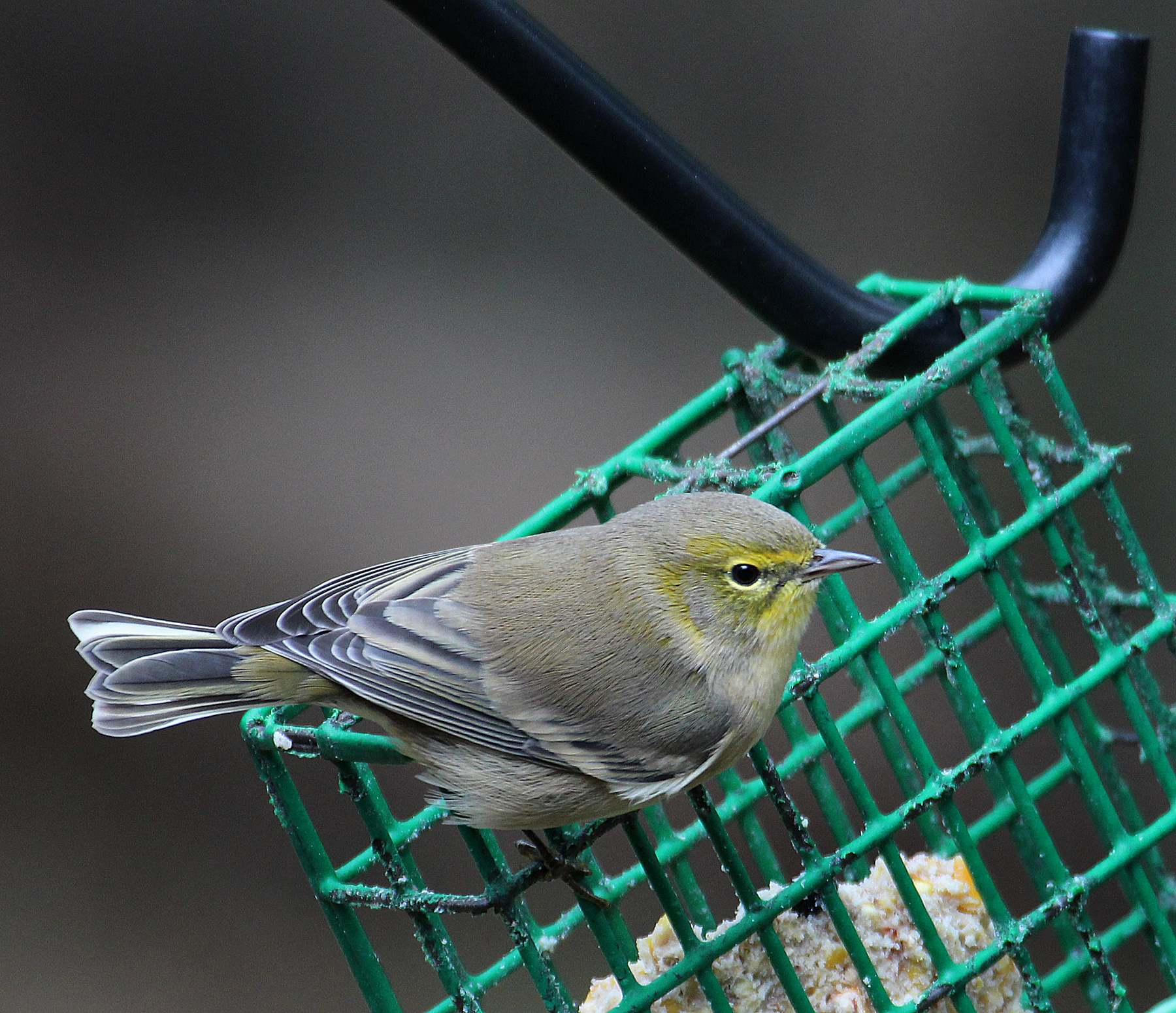
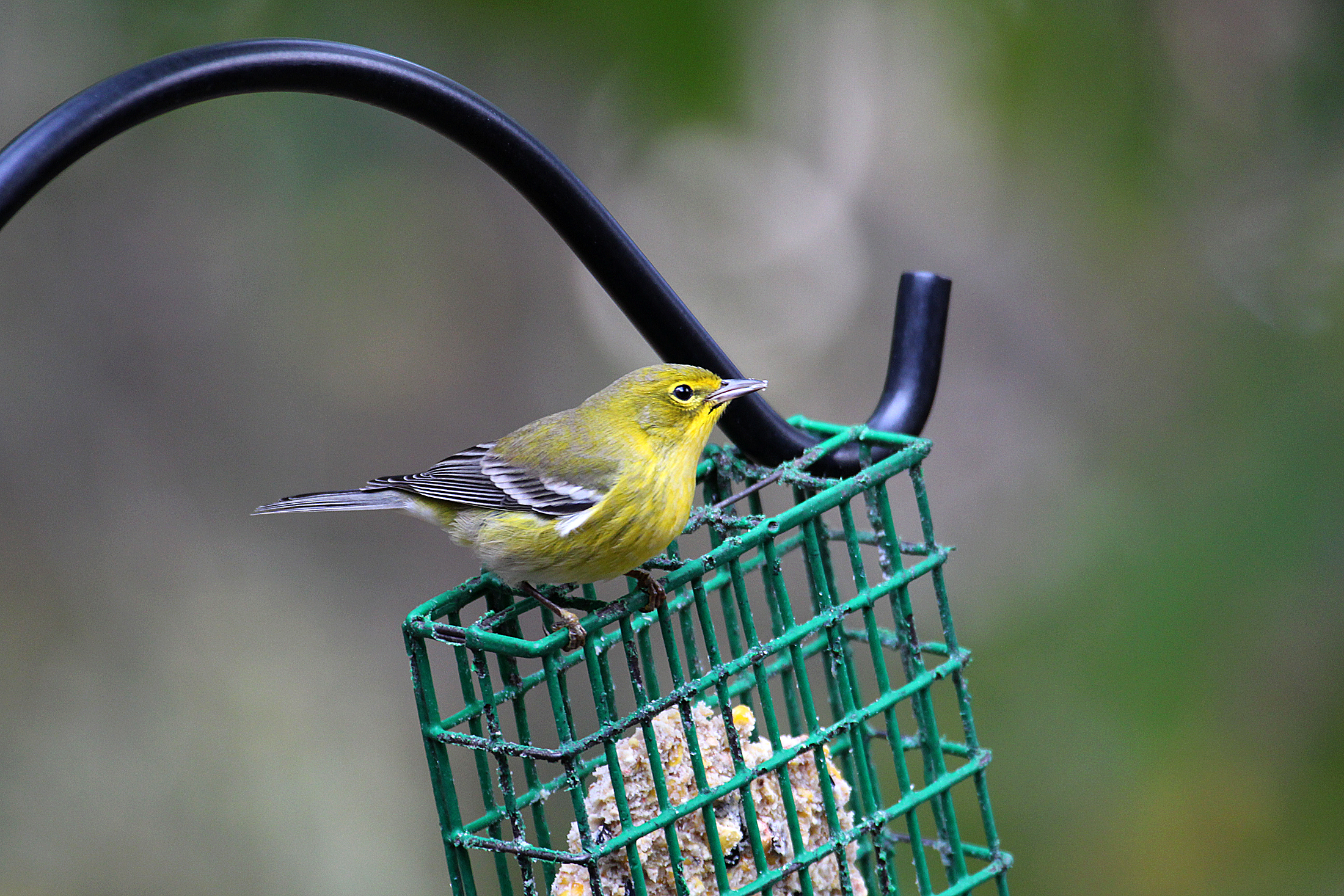
The feeders at my new place are always bustling with the common visitors White-breasted Nuthatches, Black-capped Chickadees, Tufted Titmice and Downy Woodpeckers. I also see Carolina Wrens, Blue Jays, Hairy Woodpeckers, Red-bellied Woodpeckers and American Goldfinches. Lately I’ve noticed a few Dark-eyed Juncos under the feeders. The White-throated Sparrows are not far behind, I’m sure. Will my Pine Warblers I had earlier this fall return to the suet cake? Probably not, but I’ll be watching. Who knows what else will show up?

To join the Project or to get more information, visit http://www.feederwatch.org. The website is full of information and tips on identifying birds (including tricky IDs), feeding birds tips, trend maps, and historical data.

So why participate other than it “helps scientists?” Many bird species are in decline, some seriously so. Tracking the winter abundance and distribution of birds with long-term data offers valuable insight into their lives. It helps scientists track gradual population shifts of bird species. WE know the Carolina Wren and Red-bellied Woodpecker are trending northward. This data quantifies the movement.

That’s more of a positive population shift. What about the negative one? What about the species that are declining year after year?

The data helps scientists recognize the decline and figure out solutions more quickly.

Let me know if join and what birds you see at your feeders.


For the Birds runs Thursdays in The Hour. Chris Bosak may be reached at bozclark@earthlink.net. Visit his website at birdsofnewengland.com

Project FeederWatch starts Saturday

Here’s an email I received recently from The Cornell Lab or Ornithology. With my new home buzzing with bird activity, I’m going to join this important citizen science project this year. Here are the details should you be thinking about it, too, or learning of the project for the first time here:


Dear Friend of the Cornell Lab,

The FeederWatch season begins on Saturday, November 14, so now is the time to sign up! This is the last reminder that we will send to you before the season starts, and we hope you decide to join the fun this year.

What is Project FeederWatch?

Project FeederWatch is a winter-long survey of birds that visit feeders. Participants periodically identify and count the birds at their feeders from November-April. Using our easy online data entry, you can immediately see all of your own counts and view colorful tables, graphs, and summaries.

With Project FeederWatch, you become the biologist of your own backyard.

Anyone interested in birds can participate; you don’t have to be an expert. All you need is a bird feeder, a comfortable chair, a window, and an interest in the birds in your neighborhood.

New participants will receive:

  • FeederWatch Handbook & Instructions
  • Full-color poster of common feeder birds
  • Bird-Watching Days Calendar
  • Our annual report, Winter Bird Highlights
  • Subscription to the Cornell Lab newsletter

Why should I participate?

FeederWatch data help scientists track broad movements and long term trends in abundance of winter feeder-bird populations. Explore the millions of FeederWatch sightings on our website. You can help contribute to a nearly 30-year dataset that helps us understand bird biology while learning about the feathered friends in your own backyard. Join online today.

Sign up for $18 ($15 for Lab members) today so that we can get your research kit in the mail.  Although it takes several weeks for kits to arrive, you can begin counting birds Saturday following our online instructions. Your participation fee helps keep the project running; without it, Project FeederWatch wouldn’t be possible.

We hope you will tell us about the birds at your feeders!

Sincerely,


Emma Greig
Project Leader
Project FeederWatch

One more Pine Warbler photo

Photo by Chris Bosak Pine Warblers squabble over a birdfeeder in Danbury, Conn., during fall 2015.

Photo by Chris Bosak
Pine Warblers squabble over a birdfeeder in Danbury, Conn., during fall 2015.

Last post about the Pine Warblers that visited my feeders recently, I promise. I did an original post and followed that up with a post that included several more photos. I’ll conclude with my favorite (previously unpublished) photo I took of the warblers.

The warblers were there for a total of three days. On day one it was one Pine Warbler, on day two it was three and on day three it was back to only one. At one point all three landed on the feeder at once. From the photo above, you can tell they didn’t like sharing.

Merganser Lake: More on those Pine Warblers

Photo by Chris Bosak A Pine Warbler sits on a deck railing in New England this fall.

Photo by Chris Bosak
A Pine Warbler sits on a deck railing in New England this fall.

I posted some photos last week of Pine Warblers that visited my feeders. It was a nice sighting because warblers typically do not visit feeders. If you do get lucky enough to have warblers visit your feeding station, it’s usually Pine Warblers in the fall. I was fortunate enough to have three visit this fall. To complement those photos, here are some more … Continue reading

Merganser Lake: Warblers at the feeder

Photo by Chris Bosak A Pine Warbler visits a feeder in New England in fall 2015.

Photo by Chris Bosak
A Pine Warbler visits a feeder in New England in fall 2015.

Photo by Chris Bosak A Pine Warbler visits a feeder in New England, fall 2015.

Photo by Chris Bosak
A Pine Warbler visits a feeder in New England, fall 2015.

Never at any of my former homes where I’ve maintained birdfeeders had I seen a warbler at the feeder. A few weeks at Merganser Lake and today alone I had three.

Continue reading

Latest For the Birds column: Answering some more bird questions

Last week I addressed a question that was submitted to me by a reader. This week I’ll continue to draw inspiration from my readers and quickly address some more questions and comments that came my way.

One question regarded a one-legged hummingbird. A reader delighted in the antics of a group of hummingbirds at her feeder. As many as four hummingbirds were visiting at one time. The reader noticed that one of the birds had only a stump for a leg. So, can a one-legged hummingbird survive in the wild?

Before I answer that, just a quick note to say that things are not always as they appear. Many birds appear to have only one leg, but often either the leg is tucked away into the bird’s body or the angle from which you see the bird makes it look like it is missing a leg. Waders (herons, egrets), shorebirds and waterfowl often stand on one leg.

But in this case, since the reader saw a stump instead of a leg, it’s likely the bird did indeed have only one leg. Obviously it’s not ideal, but birds that spend most of their time either flying or perched in trees, such as songbirds and hummingbirds, can indeed survive in the wild. Their wings

Click here for the rest of the column

How do birds know when a new feeder is out?

Here’s my latest For the Birds Column, which runs weekly in The Hour (Norwalk, Conn.) and The Keene (N.H.) Sentinel:

Photo by Chris Bosak A Northern Cardinal, left, and an American Goldfinch perch in a tree near a feeding station at Cove Island Wildlife Sanctuary in Stamford, Conn., in March 2015.

Photo by Chris Bosak
A Northern Cardinal, left, and an American Goldfinch perch in a tree near a feeding station at Cove Island Wildlife Sanctuary in Stamford, Conn., in March 2015.


An interesting question came my way via email the other day. It came from a long-time Norwalk resident who wondered how the goldfinches in her yard knew that she suddenly switched to Nyjer seed. She had never seen goldfinches before at her feeders, but when she put up a sock feeder filled with the small, black seeds, the goldfinches came within one day.

“How did they know? Are they sock experts? Do they have X-Ray eyes that could penetrate the sock and see the thistle? Does thistle smell so they could sniff a trail? Do they have scouts always watching every yard?”

Great question. As a quick aside, what is commonly referred to as thistle seed is really either niger or the trademarked name Nyjer seed.

Whatever you call it, how do the birds know it’s there? Common sense may dictate that they smell it. How else could they know? But most birds, including our favorite backyard birds, have a poor sense of smell. Also, the seeds are largely odorless so even if the birds did have a strong sense of smell, it’s unlikely they’d be able to pick up the scent anyway. It’s not like a neighbor barbecuing chicken on a breezy day. The most likely scenario is that the birds saw the new feeder and recognized it — probably from past experience — as a food source. American Goldfinches are very nomadic  …

Read the rest of the column here.